
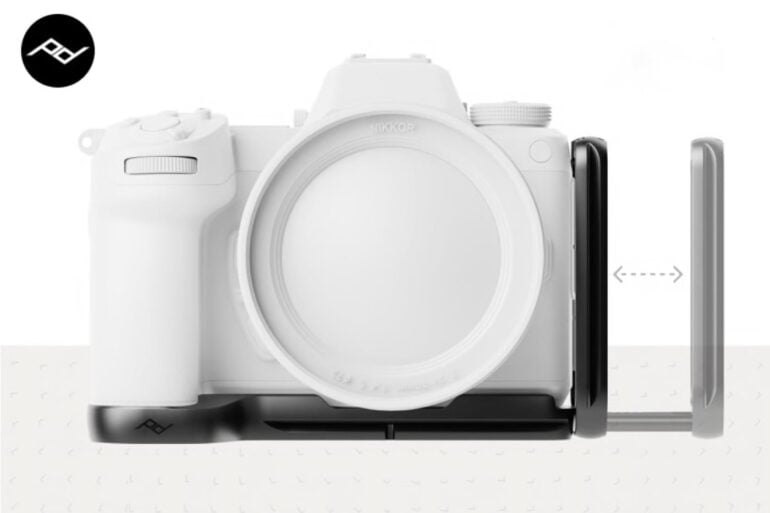

Peak Design is back in the spotlight with the Field Bracket, an L-bracket system designed for modularity. An entire ecosystem of optional accessories can be attached to this base, including a GPS tracker, a grid with screw threads, and even a wrist strap. The Field Bracket is the subject of a Kickstarter campaign running through August 21, 2026.

Sommaire
Peak Design Field Bracket: The L-Bracket, Redesigned
True to form, the San Francisco-based brand is unveiling its new accessory through crowdfunding. This is Peak Design’s 17th Kickstarter campaign—an approach that has enabled the company to raise no less than $59 million across its 16 previous campaigns and rank among the platform’s most funded projects. This approach also allows the company to validate its concepts before large-scale production, while building engagement within its user community.
The L-bracket is a well-known accessory among photographers who work with a tripod. Attached to the bottom and side of the camera body, it allows you to quickly switch from landscape to portrait orientation without touching the tripod head. You simply unclip the camera, reposition it vertically, and then clip it back on. It’s a real time-saver, especially for landscape photography.
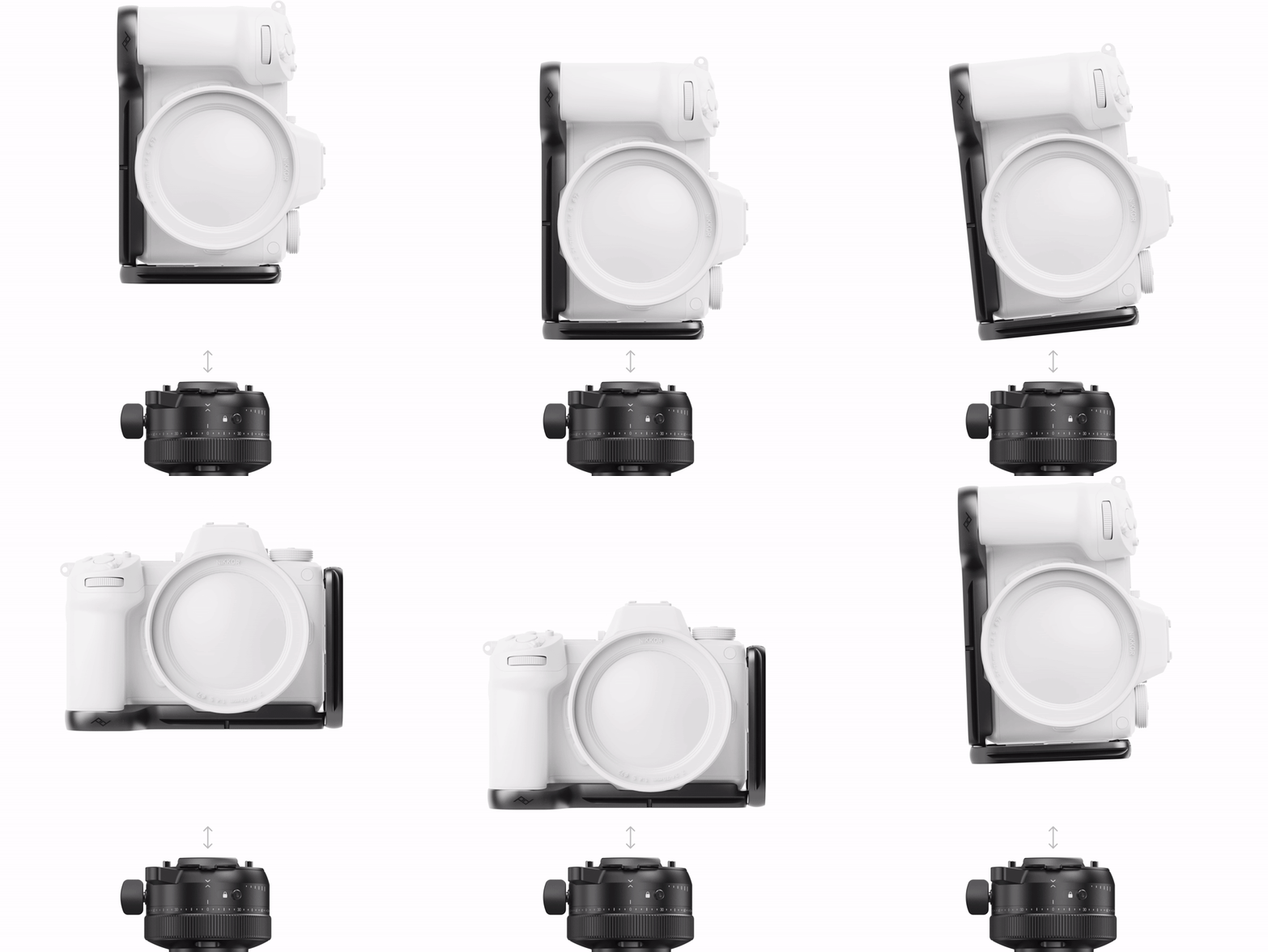
The problem, according to Peak Design, is that the design has remained virtually unchanged for years. Traditional brackets are one-piece designs, can be bulky, and often block access to the camera’s ports and access panels. The Field Bracket aims to address precisely this issue with a modular approach.
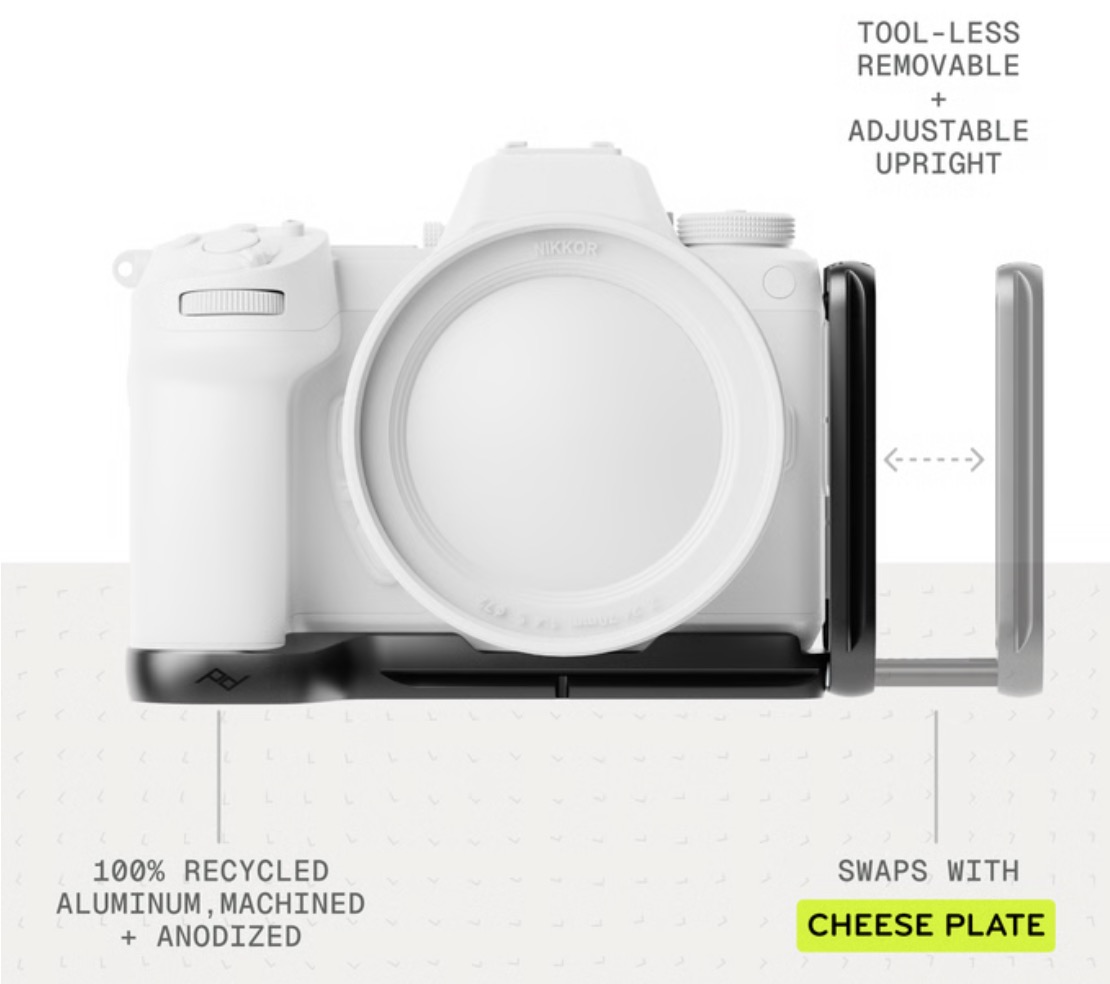
Field Latch: A tool-free, removable L-shaped tray
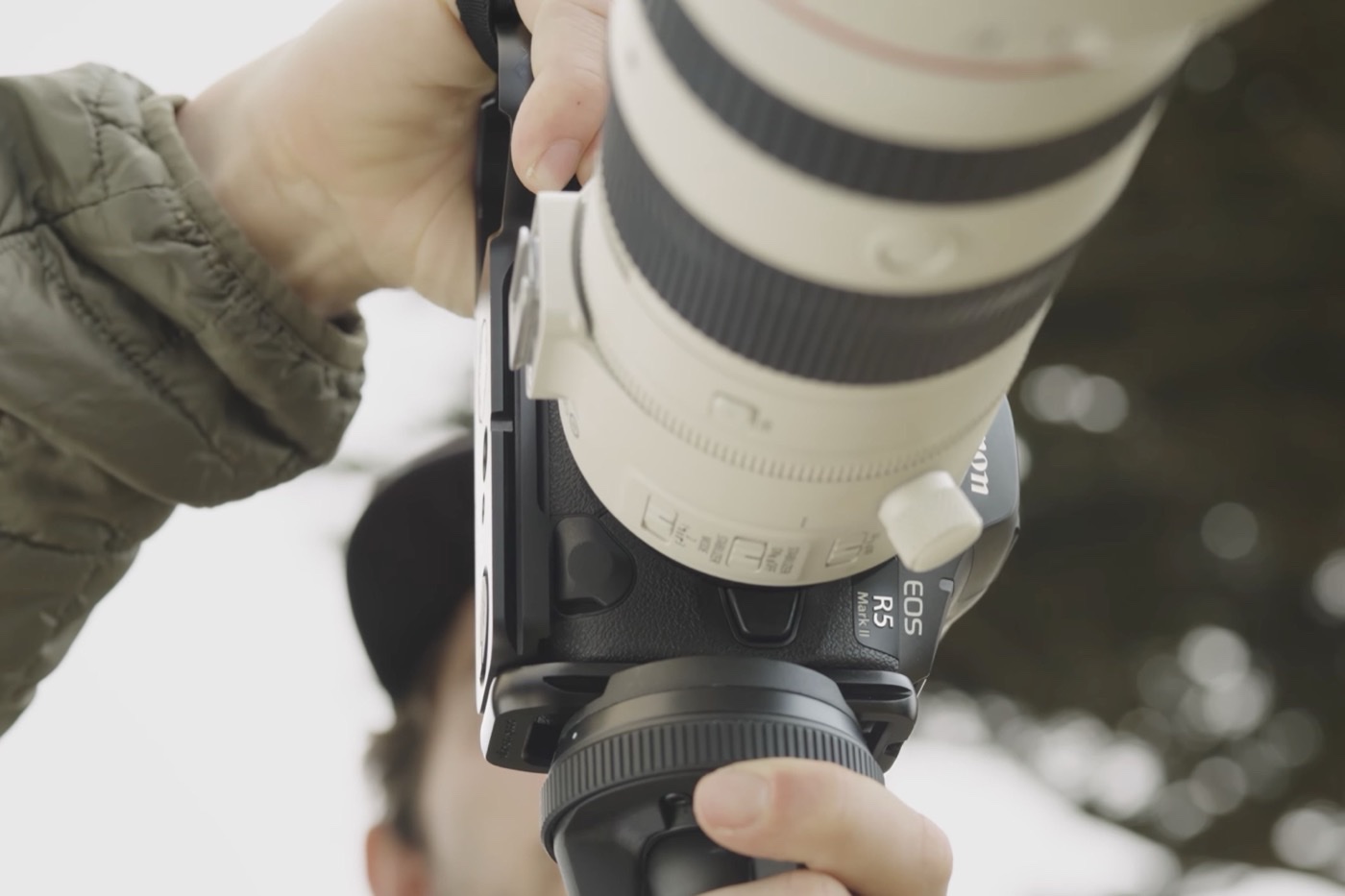
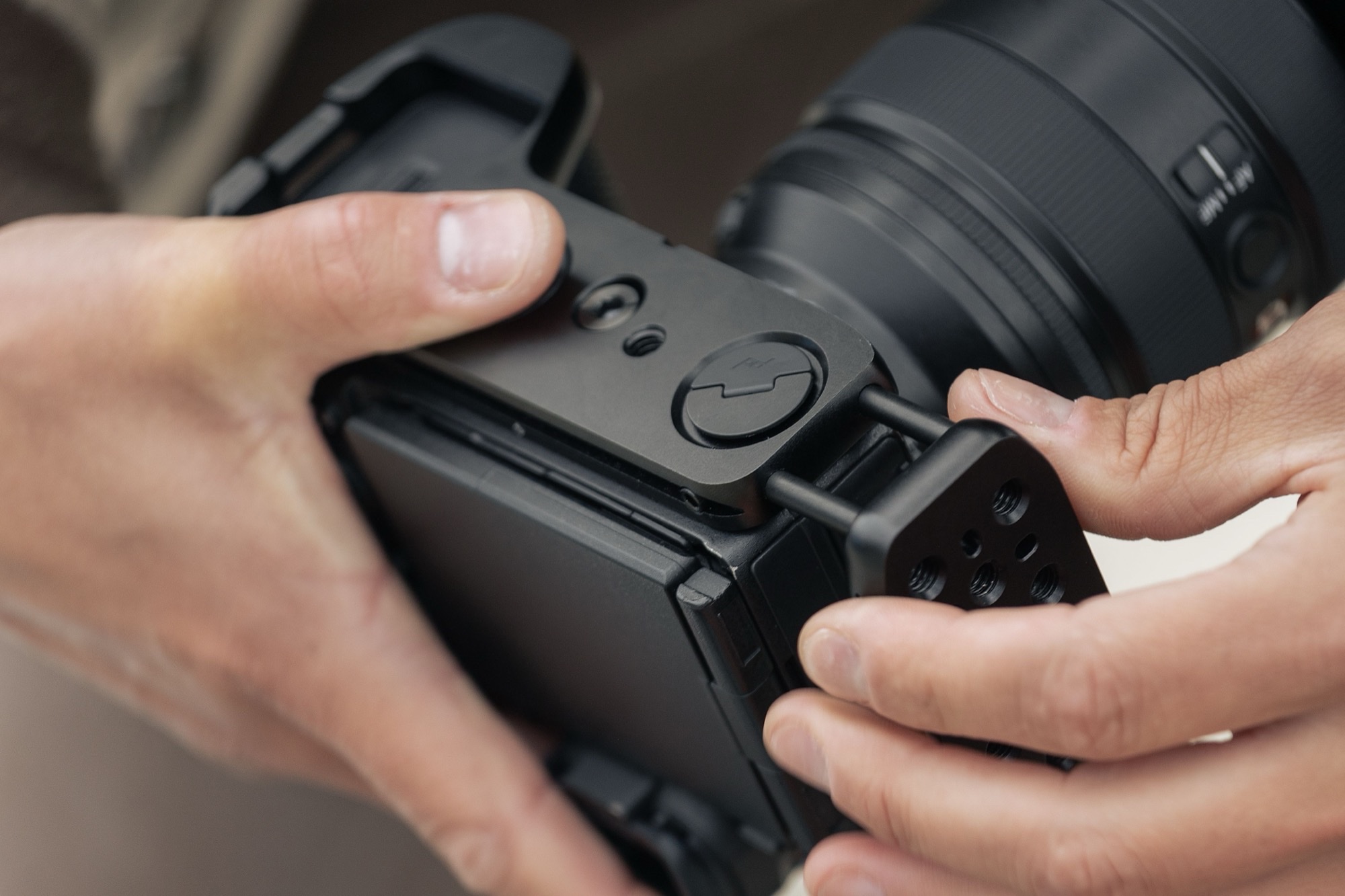
At the heart of the Field Bracket is an aluminum plate, custom-designed for each housing and machined to fit the contours of the camera as closely as possible. But the real innovation lies in the proprietary mechanism called the Field Latch.
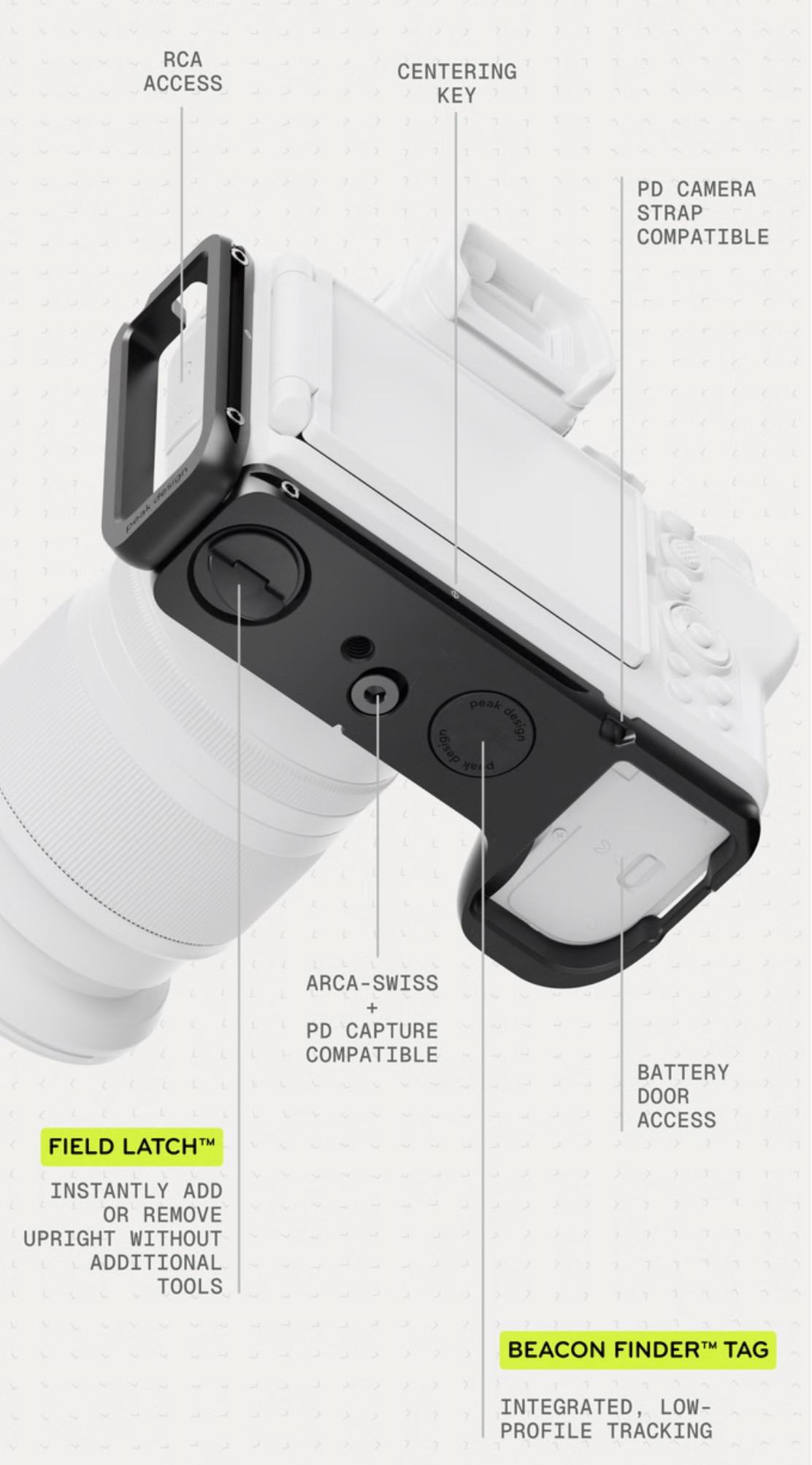
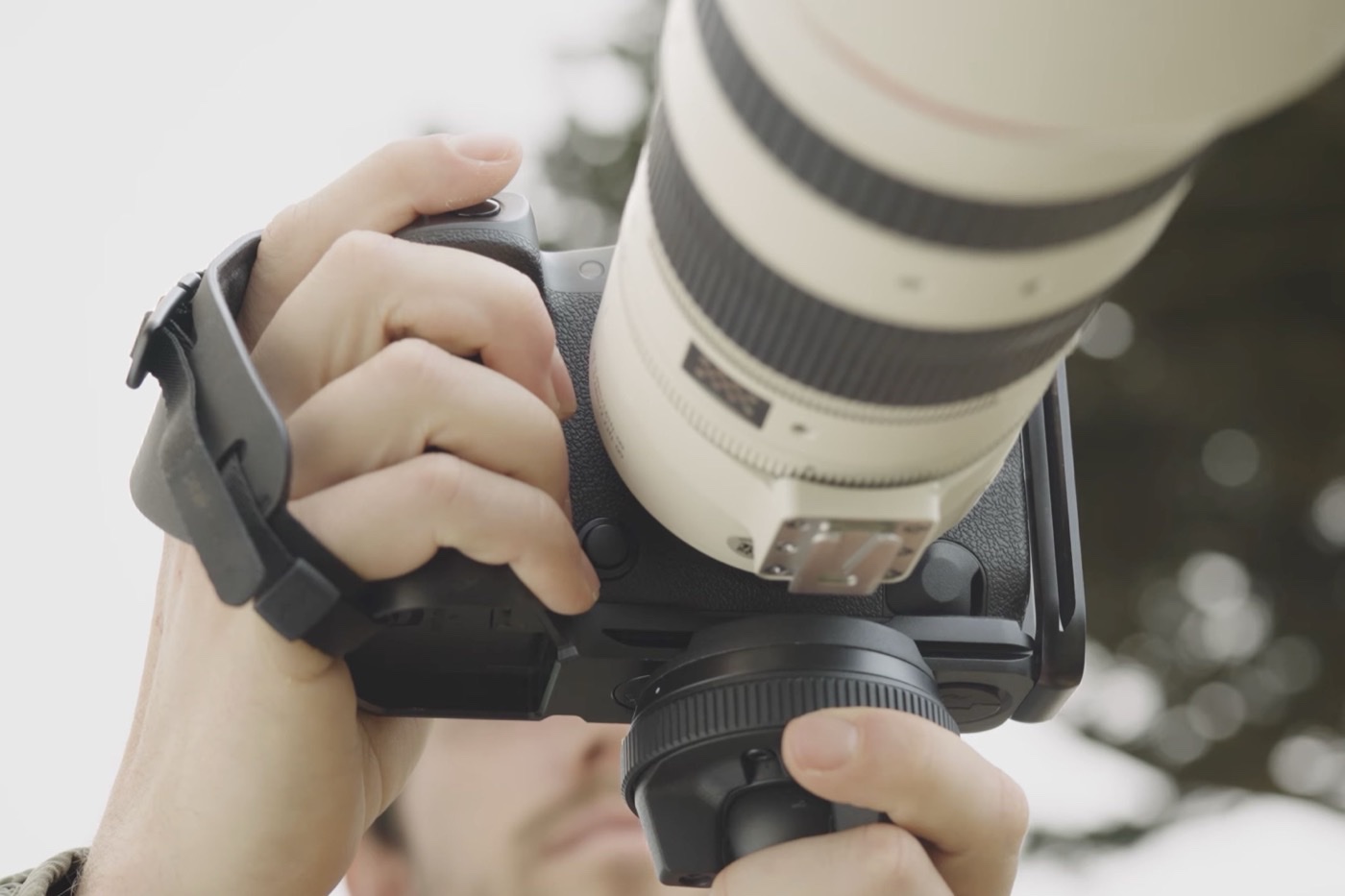
This small key built into the bottom allows you to attach or remove the side panel of the bracket in just a few seconds, without any tools. By leaving only the base attached to the device, you end up with a simple mounting plate that’s compatible with other Peak Design accessories.
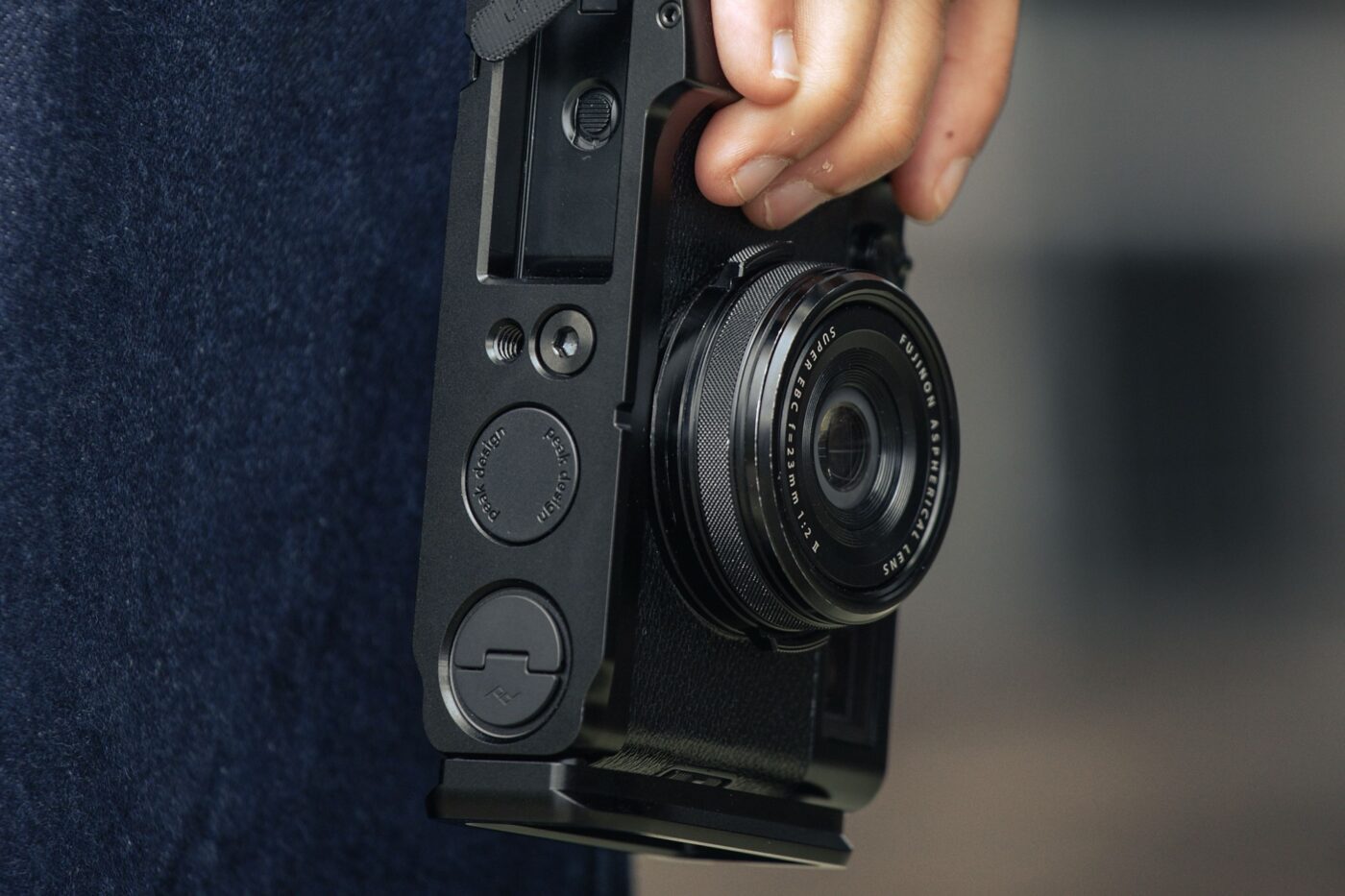
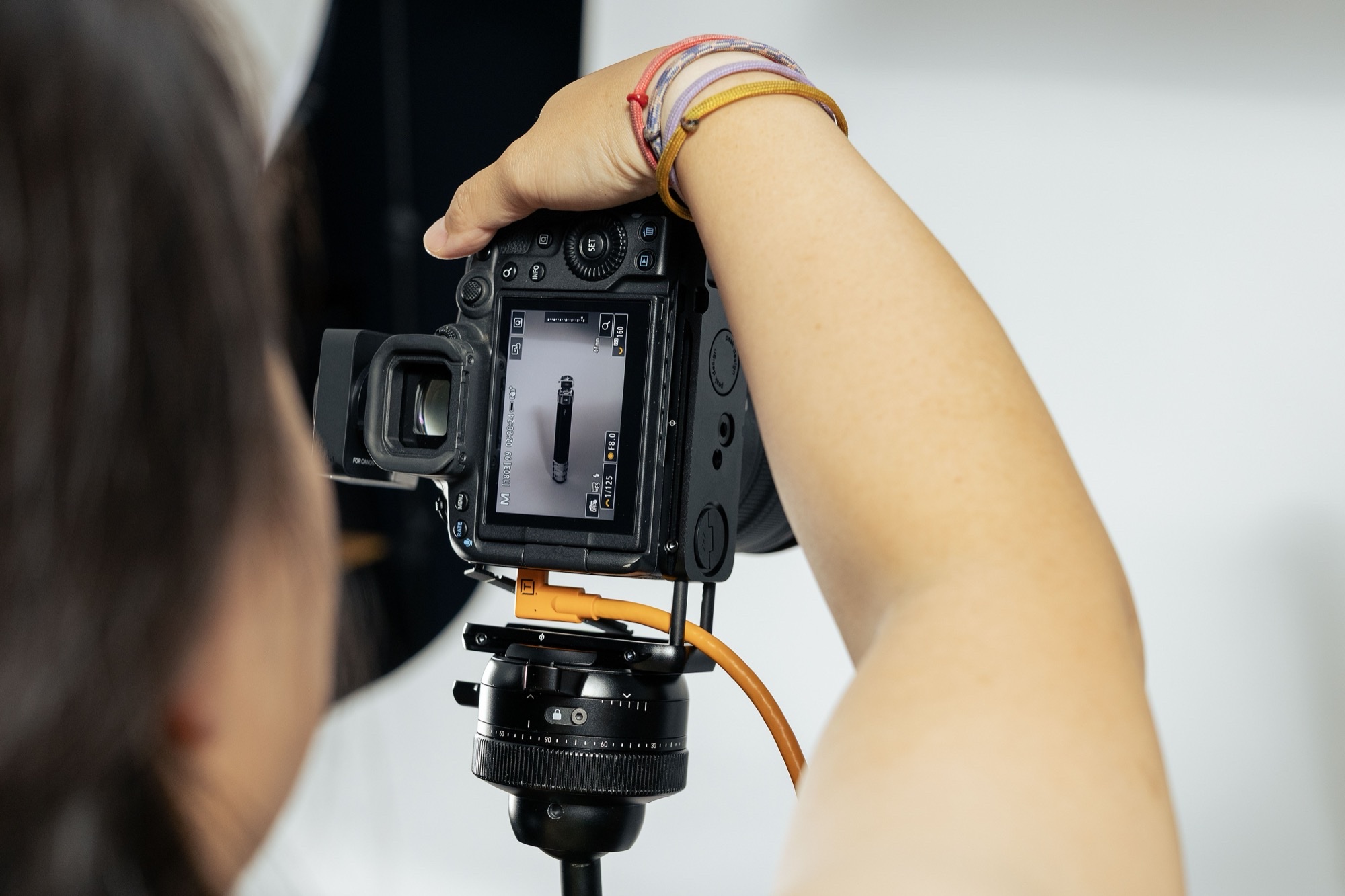
The side panel can also be removed from the camera to provide access to the cables—which is handy when shooting video or using tethering mode. This allows the camera to remain mounted on the tripod without disrupting your workflow.
Peak Design also emphasizes that its system preserves access to the camera’s ports and controls. In addition, both parts of the Field Bracket are Arca-Swiss compatible.
A whole ecosystem of accessories
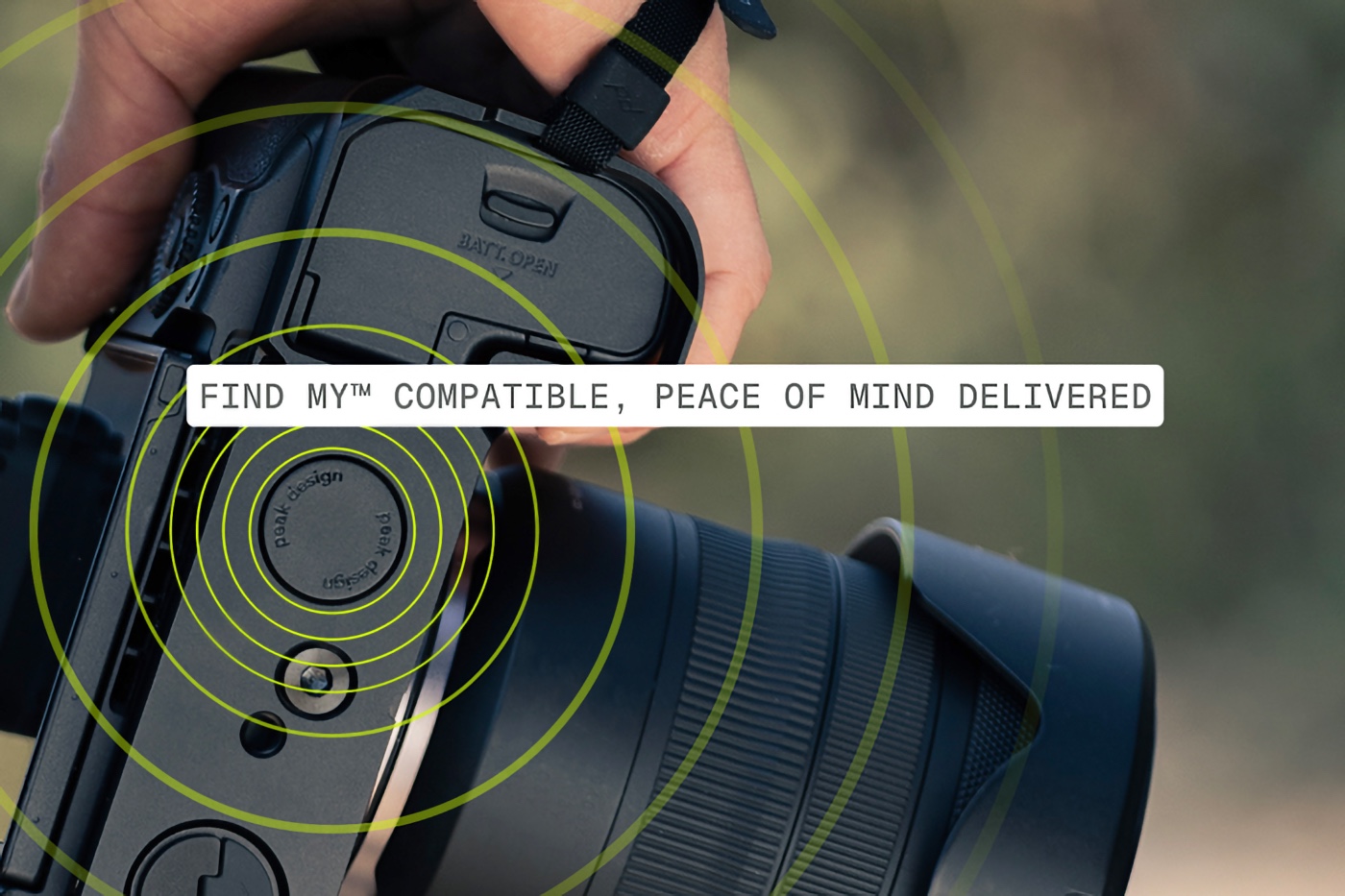
The Field Bracket also (and most importantly) serves as a mount for a whole range of accessories, sold separately. The first is the Beacon Finder Tag, a tracker that Peak Design describes as the first of its kind designed to fit inside an Arca-Swiss-compatible plate. The idea is to be able to discreetly locate your gear without adding a bulky tracker case to the outside. This tracker is compatible with Apple Find My (the technology behind AirTags) and Google Find Hub.
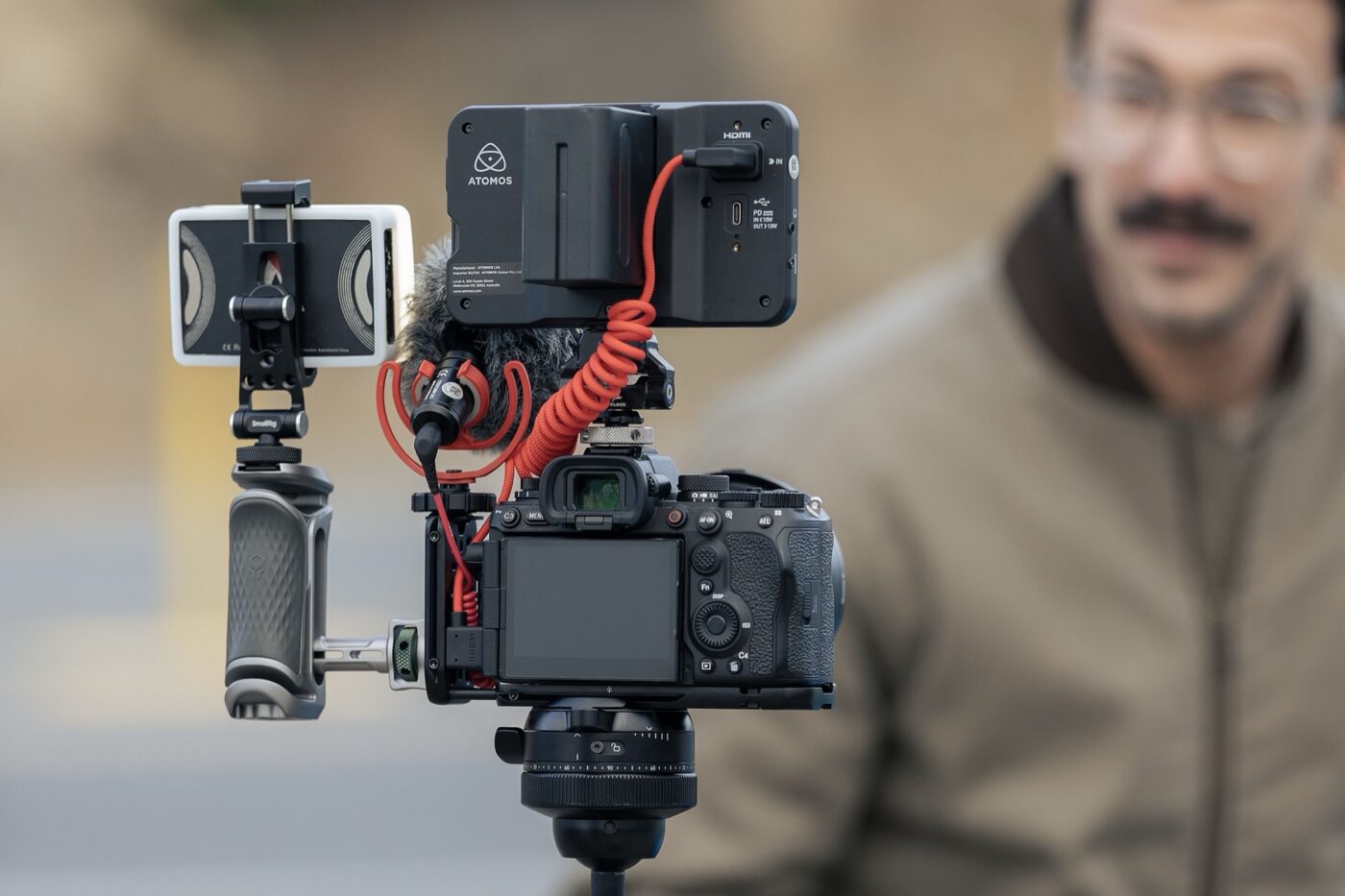
Next is the grid, which can replace the side section of the bracket to create a small, lightweight video rig. It adds mounting points in the form of 1/4″-20 and 3/8″-16 threaded holes, as well as an accessory shoe, allowing you to attach lighting, a microphone, a monitor, or other accessories.
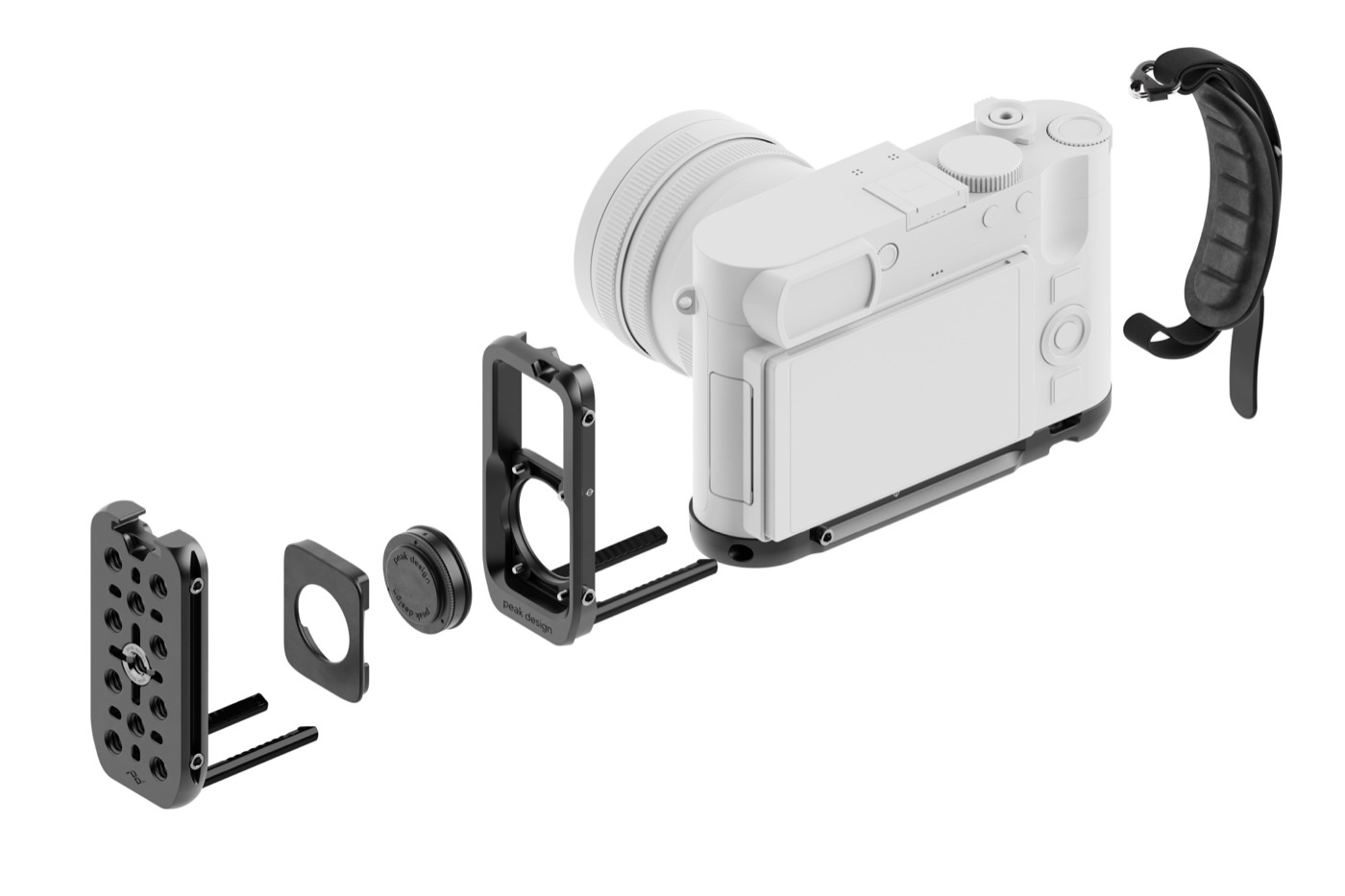
Finally, an optional wrist strap attaches directly to the Field Bracket to ensure a secure grip.
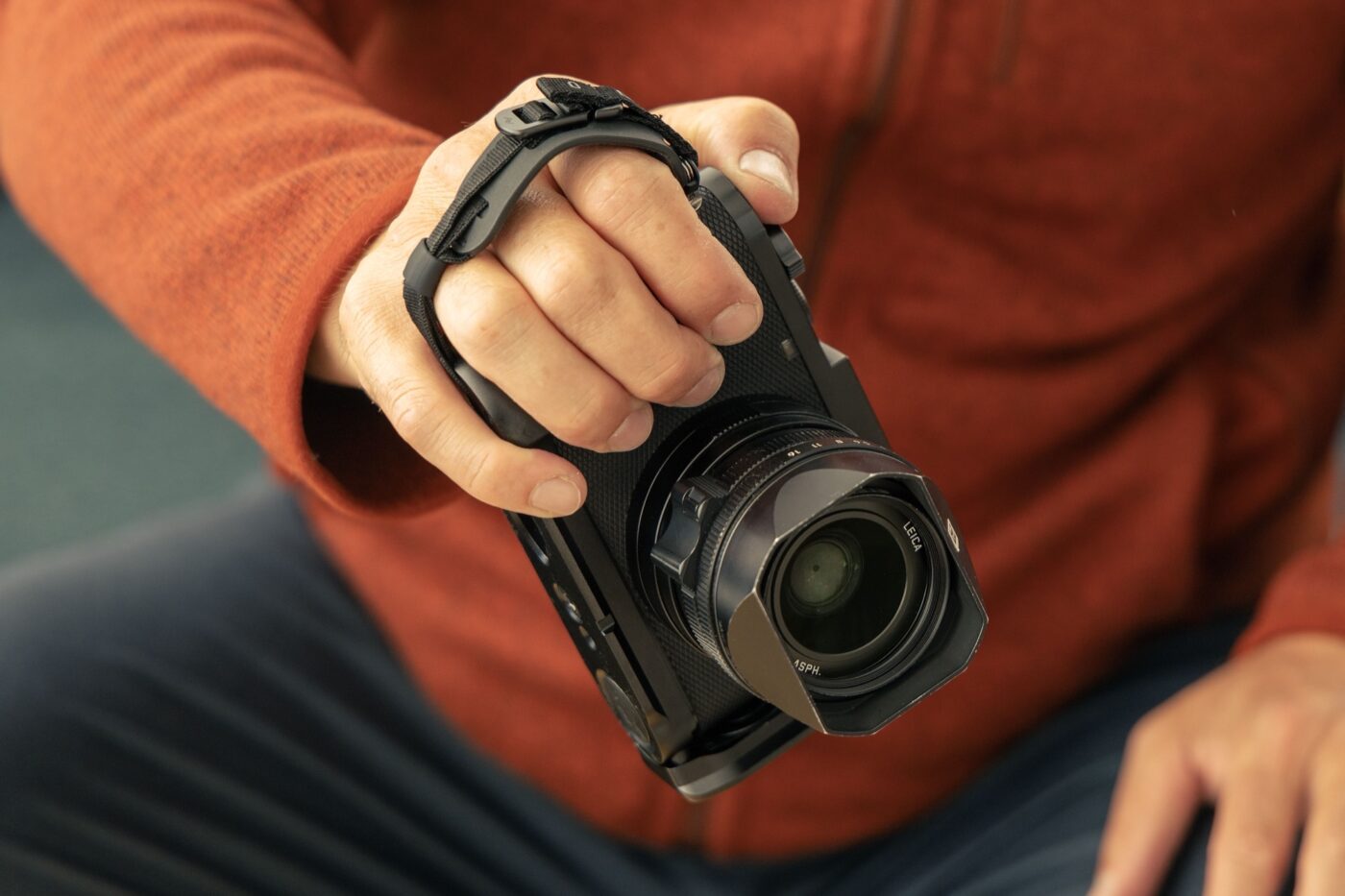
The kit remains compatible with Peak Design’s Capture Clip system, its straps, and numerous third-party accessories (lights, microphones, external recorders, etc.).
Field Bracket Compatibility
Since the mounting plate is specific to each camera body, the Field Bracket is available for a selection of Sony, Canon, Nikon, Fujifilm, and Leica cameras.
Here is the current list of camera bodies compatible with the Peak Design Field Bracket:
- Sony: A1, A1 II, A7C II, A7CR, A7 IV, A7R IV, A7R V, A7S III, A7 V, A9 III
- Canon: EOS R5, R5 Mark II, R6, R6 Mark II, R6 Mark III
- Nikon: Z6 III, Z8, Z5 II*, Z6 II*, Z7 II* (*Compatible, with the base plate extending slightly beyond the camera body.)
- Fujifilm: X-T5, X100VI
- Leica: Q3, Q3 Monochrom
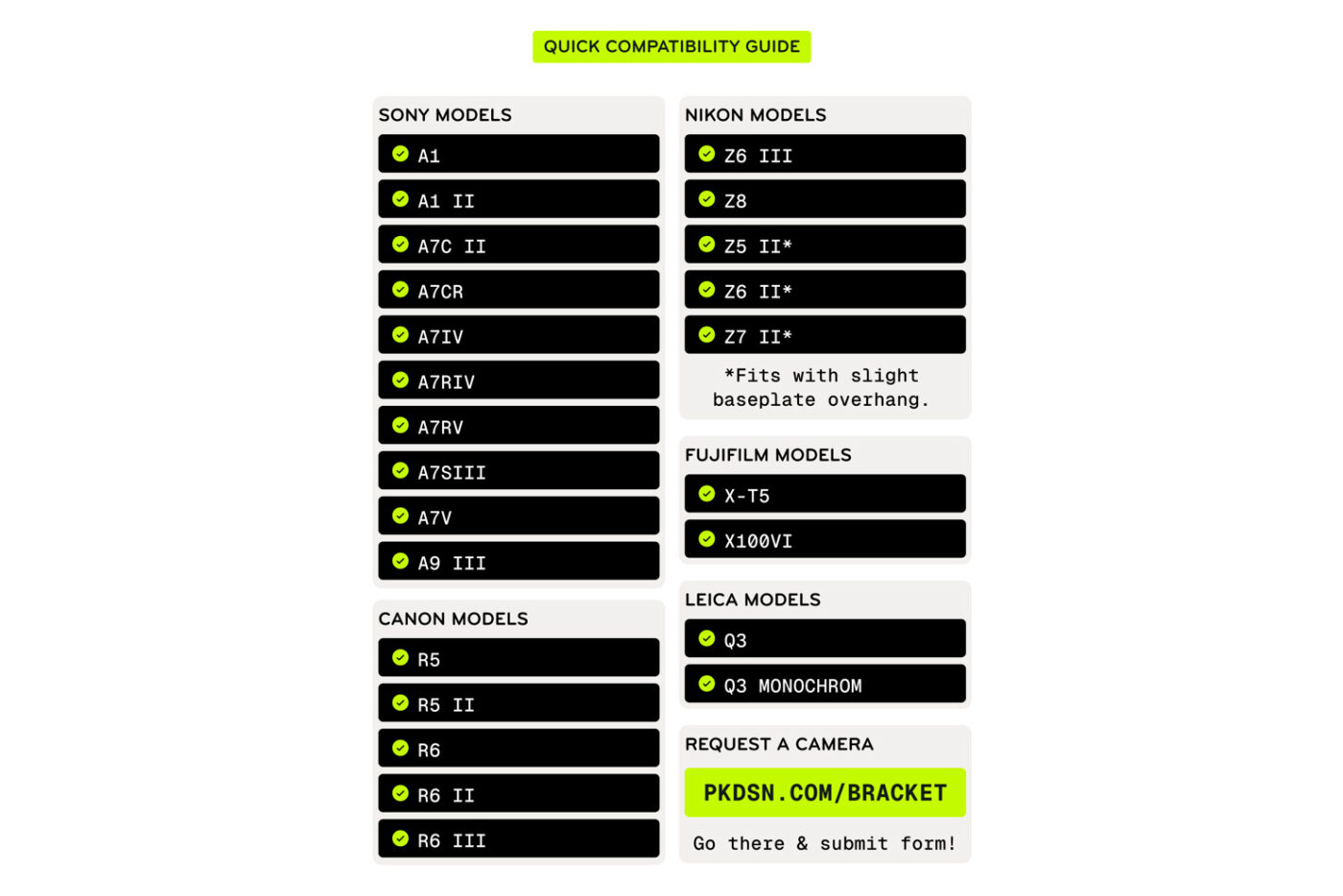
For Sony, Nikon, and Canon, most recent mirrorless cameras are supported, with the exception of compact cameras and APS-C models (or the Nikon Zƒ). As for Fujifilm, only the X-T5 and X100VI are compatible. At Leica, the Field Bracket is only available for the Q3 series.
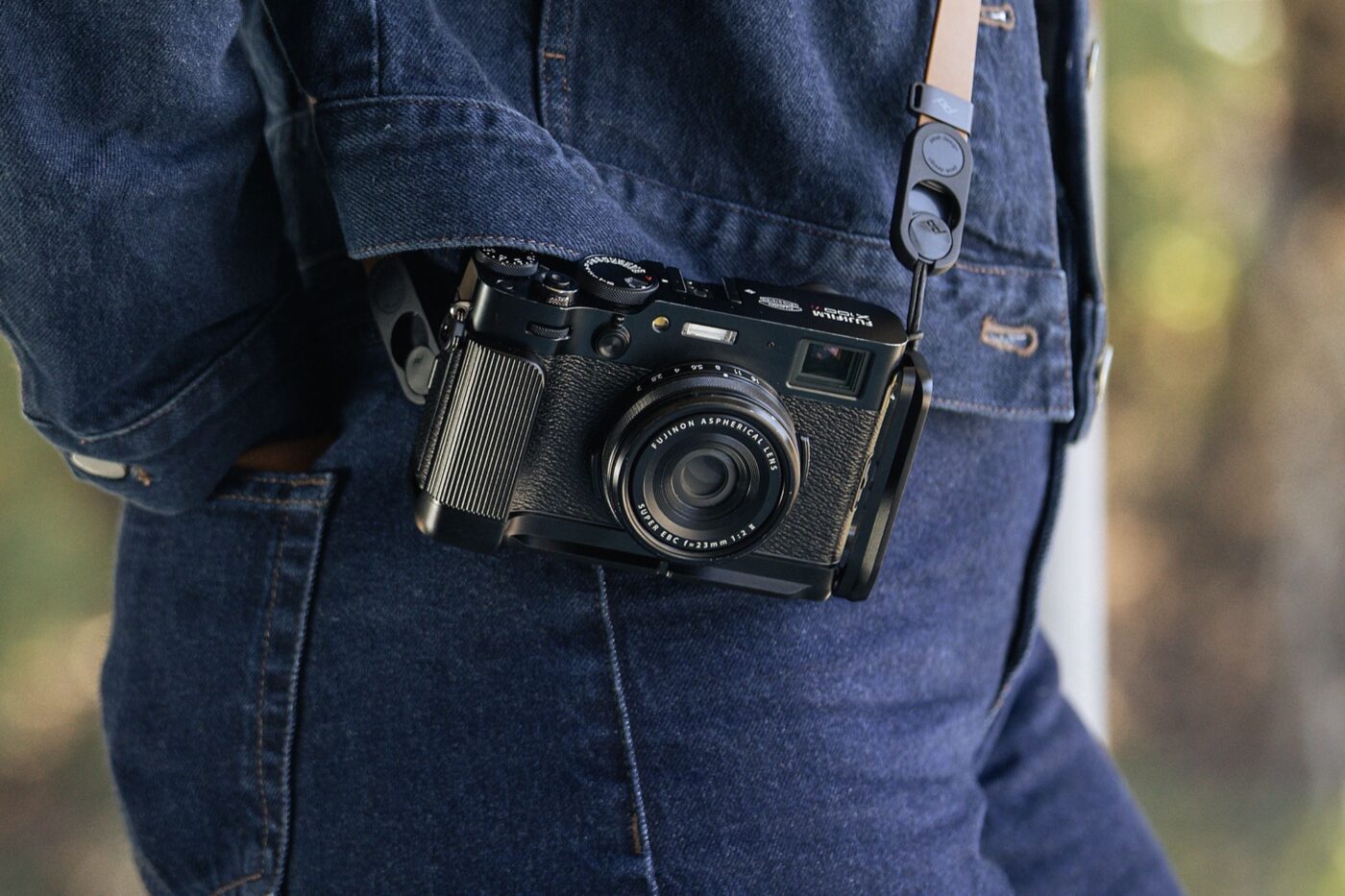
Also, note that for the Leica Q3 and Fujifilm X100VI expert compact cameras, the Peak Design Field Bracket features a slightly different design with an additional small grip. Additionally, on the Leica Q3 and the Fujifilm X-T5, the location tag does not slot under the base of the camera, but rather on the side.
The following device models are not currently supported:
- Canon: R8, R7, the 5D series, and all DSLRs
- Fujifilm: X-Pro series, GFX series, X100V and earlier models, X-E series, X-H series, X-T4 and earlier models, X-T50 and earlier models
- Leica: M Series, Q2 and earlier models, SL Series
- Nikon: Zf, Z9, Z50/Z50II, Z30, ZR, and all SLR cameras
- Sony: A7 series (non-R models), A6000 series
- Olympus: No coverage
- Pentax: Not supported
Price and Availability of the Peak Design Field Bracket
The Kickstarter campaign began on July 21, 2026, and is scheduled to end on August 21. As usual, Peak Design is offering special pricing to early backers before the product launches in stores.
- Field Bracket: $125, or about €110 (instead of the final price of $149)
- Field Bracket and all accessories: $199, or about €175 (instead of the final price of $269)
The accessories will be sold separately at a later date, with prices expected to start at $39, or about €34.
Please note that shipping to France will cost $15. Deliveries are expected to begin in February 2027.
Our Initial Opinion
On paper, the Field Bracket checks a lot of boxes. Its tool-free modularity addresses a common complaint about L-brackets, which are often in the way once you no longer need them. Being able to easily switch back to a horizontal position or clear space for a cable in just a few seconds is a smart feature, as is the cable guide built right into the deck, which eliminates the need for an external accessory.
Adding a grid to create a small video rig further expands the system’s appeal, beyond just tripod use. This stays true to Peak Design’s usual philosophy: an ecosystem of accessories that fit together.
As with any crowdfunding campaign, it’s important to keep in mind the risks inherent in this type of project: possible delivery delays, final specifications that may differ from the prototype, or—in rare cases—the project not coming to fruition. Peak Design, however, remains a model in this regard, with products that are often already finalized by the time the campaign launches. Furthermore, as of this writing, the campaign has already raised over $386,000 of the $50,000 goal—more than 770% of the target.