
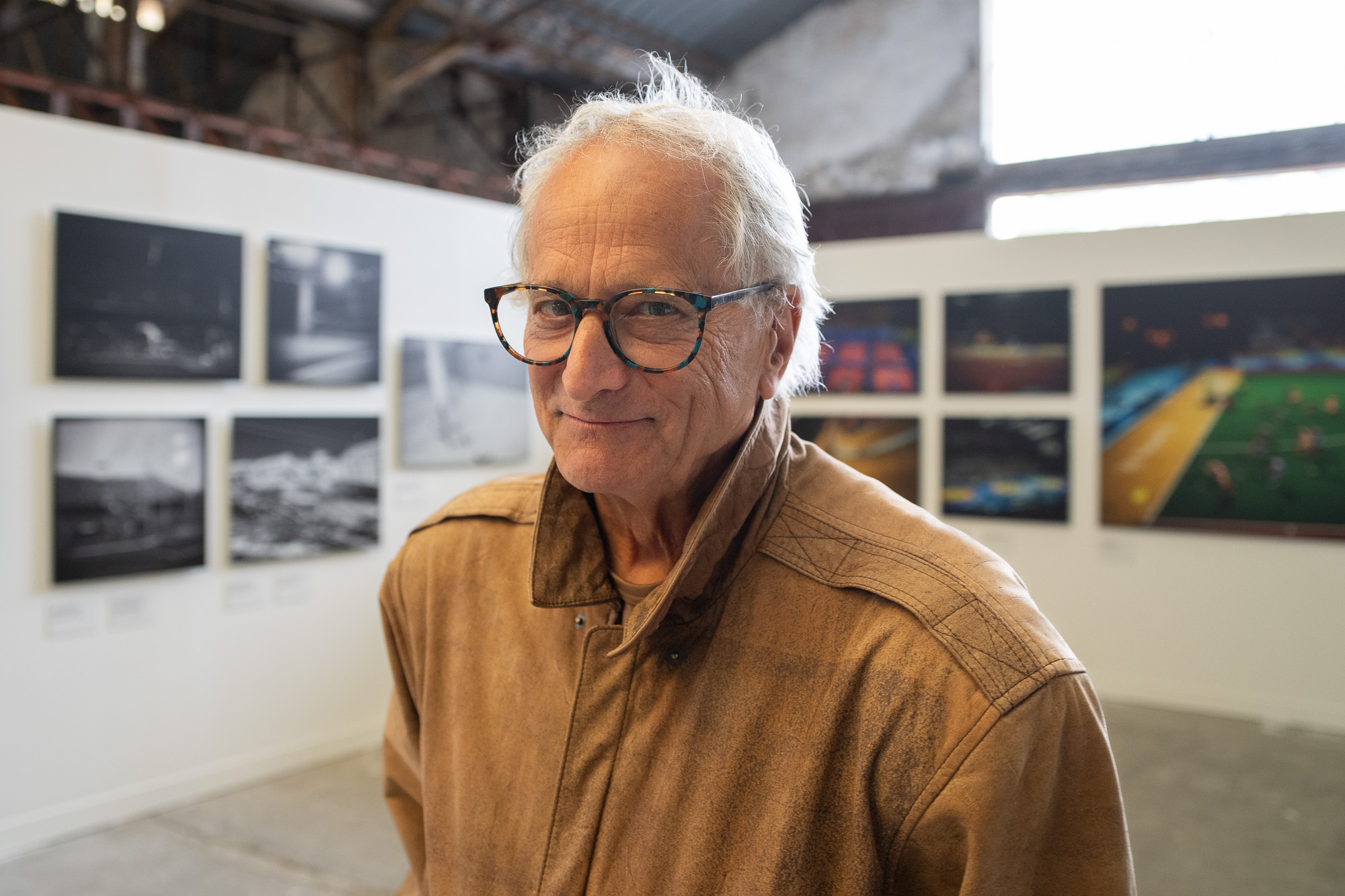

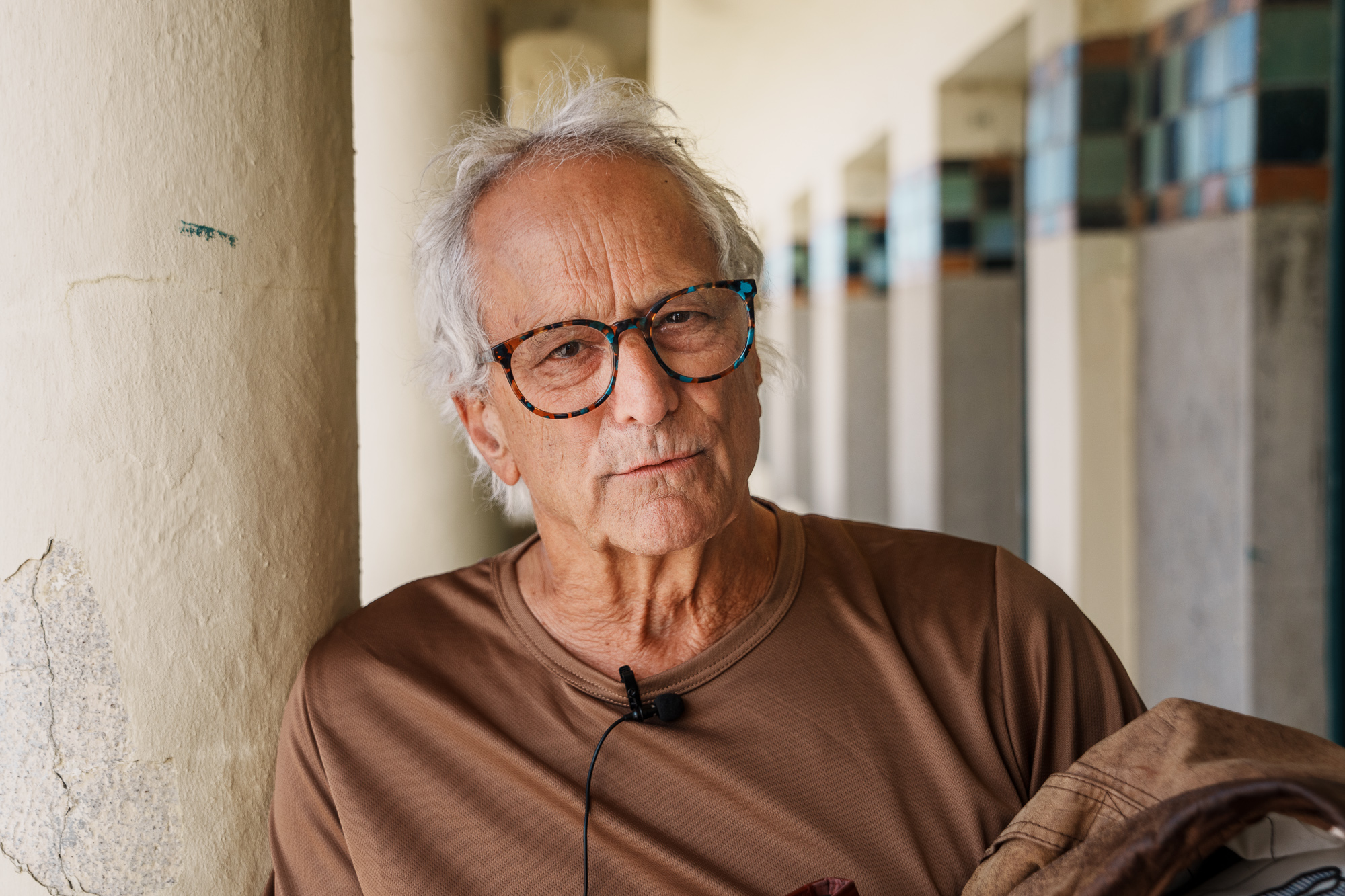
At the 2026 Deauville Sport Images Festival, we had the opportunity to speak with David Burnett, the renowned American photojournalist, co-founder of the Contact Press Images agency, and guest of honor at this second edition, featuring an exhibition on “Olympic Landscapes.“
In this interview, he discusses his approach to photographing the Games, which breaks away from the traditional image of the winner. He also details the equipment he has used in the past and present, and expresses his love for the 4×5 view camera. He also offers advice to young photographers and shares his perspective– concerned yet nuanced – on artificial intelligence. Here is the interview.
Your first Olympics was Los Angeles in 1984. From the start, did you choose to step away from the finish line and shoot the stadium and the crowd, or did that come later?
In 1984, for the first time, like everyone else, I spent some time photographing the finish line. I have a few photos to prove it, including one where you can see shadows approaching: you can’t really make out the runners, just their feet and their shadows as they cross the line.
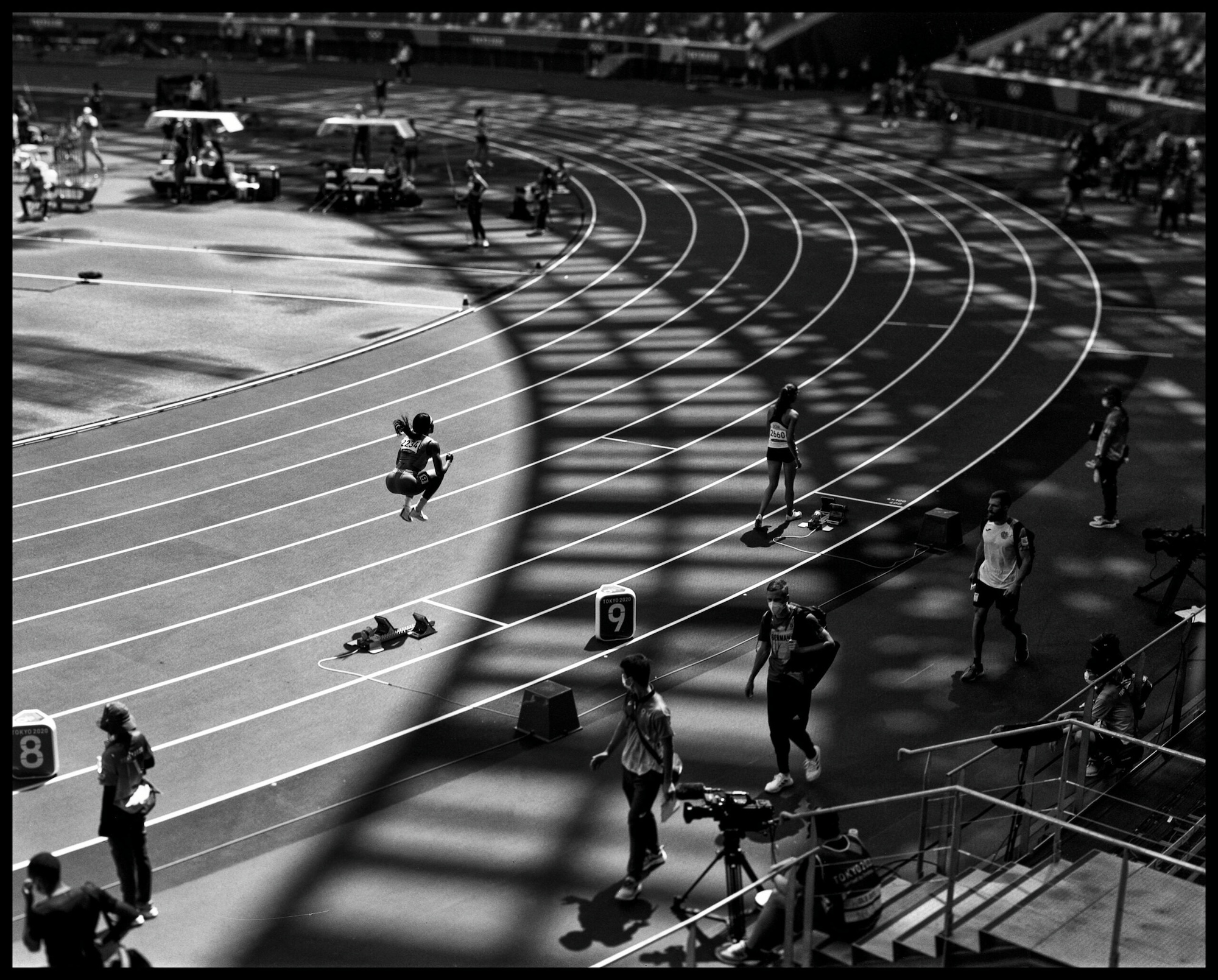
That, to me, is my kind of picture. It’s something you knew existed, something that was lurking out there in the real world, but that doesn’t get the same kind of exposure as the more explicit pictures of competitors.
You wrote that you were never required to shoot “the typical image of the winner.” How has that freedom shaped the way you look at the Games?
While I keep in the back of my head who might win, I then back up and think about what else I’m going to do to cover it.
For example, I have one picture of Bolt from the London Games in 20212, where he’s just breaking the wire, but it’s shot with my Speed Graphic, my old press camera, in a very wide view. You see the stadium, you see the big electronic scoreboard with everybody’s name and which lane they’re running in, and then you see the clock down by the finish line.
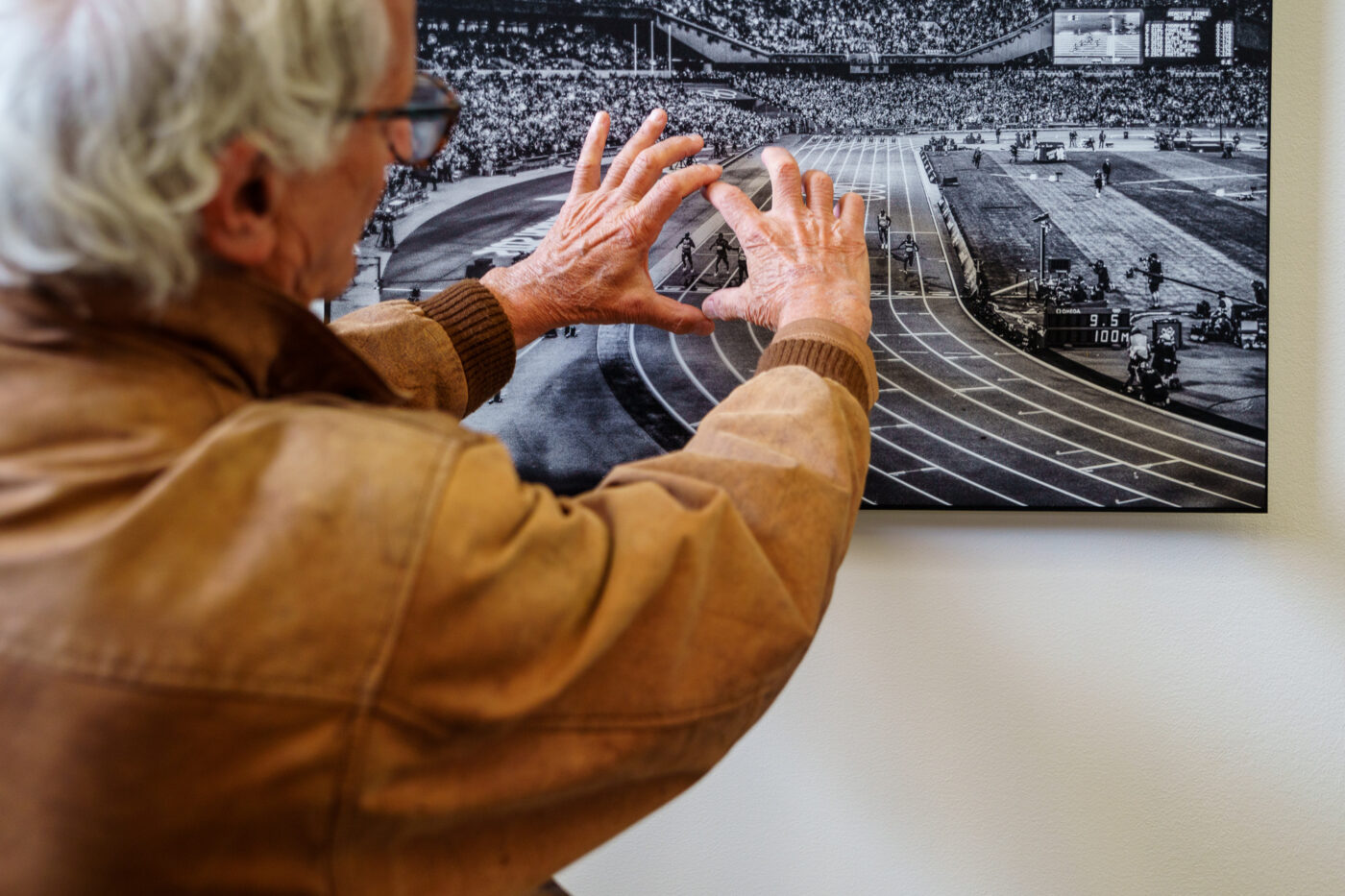
There’s so much information in there, more than just somebody winning the race. Those are the kind of pictures that become interesting to me, when you can bring some other emotion or information into the frame beyond the obvious one of “so-and-so finished first and won the gold medal.” Sometimes there’s much more to it than that, and I’ve always tried to find something a little special about a situation or a moment, even if it doesn’t necessarily appear that way at first.
Can you explain for us the story behind the Mary Decker shot, the most famous pictures you took during this Games ?
During the Mary Decker race (3000 mm final). So I wandered down the side of the track and saw a very small bench with a couple of guys on it, and I said, “You got room for one more?” I’ve been in a couple of war zones where I tried to get out and was told there was no room in the car. In my way of thinking, there’s always room for one more, but not everybody believes that.

Anyway, I sat down, and it happened to be a really good spot coming out of the last turn. That’s where Mary collided with Zola Budd and crashed down on the infield, right opposite where we were, and I took the shot. It was a very tumultuous moment, because after four years of waiting, the American team hadn’t gone to Moscow. So Mary Decker and a bunch of athletes who had skipped Moscow, were all counting on finally getting their chance. For her it was a real heartbreak.
You’ve covered every Summer Games since Los Angeles, all the way to Paris in 2024. How has your way of working a stadium evolved over forty years, and what hasn’t changed?
The only thing that hasn’t changed, is my understanding and appreciation of the great athleticism you see at the Olympics. Pretty much everybody who gets there put in the hard work and the competition in their own country to qualify. Nobody gets a free ride. So, as someone trying to make pictures of these matches and races, I feel it’s a kind of responsibility to really pay homage to all the work that’s gone into that athleticism. That’s what I try to do, but it doesn’t always work out.
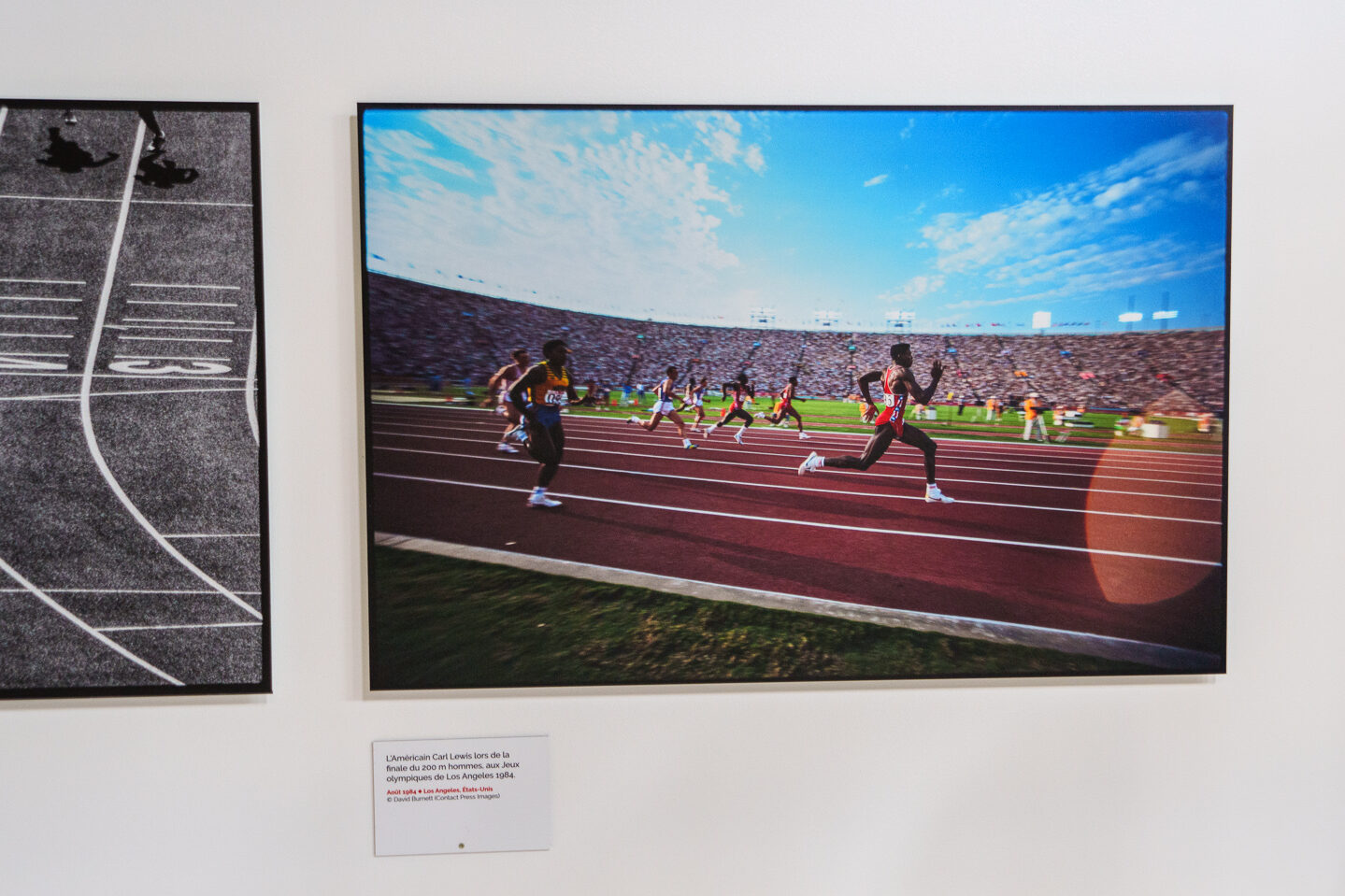
Sometimes I have an idea that ends up being nothing, and sometimes you go somewhere nobody else is and you make a picture. You don’t have to be where everybody else is. With live competitions you usually don’t even have that many options for where you can stand, but I’m always looking around, trying to find something else, trying a camera or a format I hadn’t used before in that kind of situation, something a little different from what I’m used to. Sometimes these crazy ideas pay off, and sometimes there’s a reason it was a crazy idea.
I’m always looking around me, searching for a different angle, trying out a camera or format I hadn’t used before, or something a little different from what I’m used to.
Is there a picture you’re particularly proud of, or one you’d still want to make?
I don’t know whether “the one I’m most proud of” really means much, but there is one photograph I’m particularly fond of. It’s included in the exhibition and features the Chinese synchronized swimming team at the Tokyo 2020 Olympics (which were actually held in 2021).
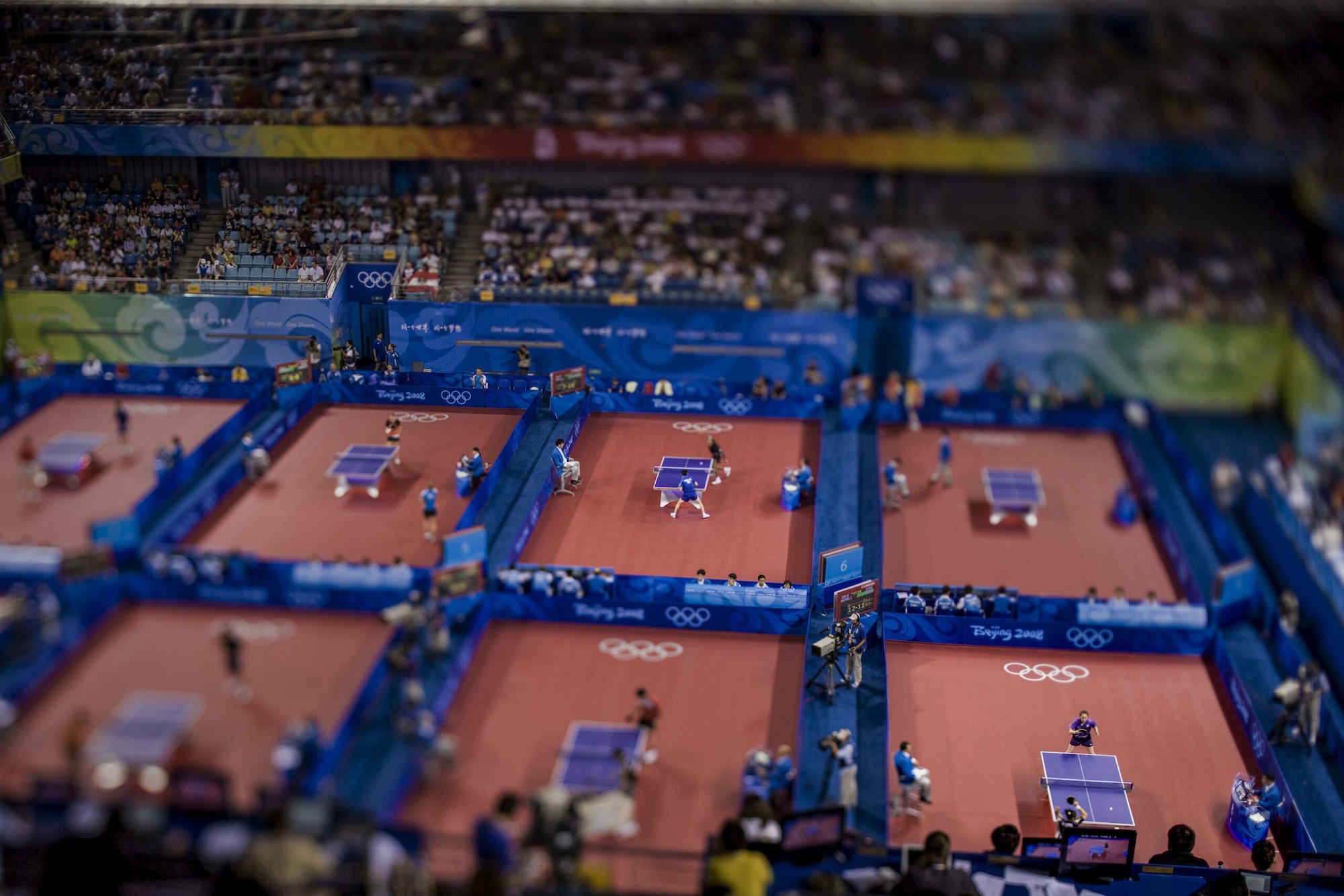
I was following the teams with a 4×5 large-format camera fitted with a tilt lens. When the swimmers burst out of the water, launching one of their teammates into the air, I pressed the shutter. They were all connected to one another, ready to execute that kind of maneuver, and my timing – anticipating exactly where they would emerge – was perfect.
During those Games, I also went to an early training session and used my infrared camera, which produces striking black-and-white images, to photograph the Egyptian women’s team. I’m pretty sure they finished around eighth place, but watching them train, they worked just as hard as the medal-winning teams. There was something in the energy and commitment they brought to it that I genuinely respected and admired.
This year the festival theme is women in sport. Do you think women’s sport is getting more visibility and consideration?
The men’s professional leagues are still a bigger commercial enterprise, and that’s what drives so much of the information and the financial interest. It’s all about money and the ability to make money. But I’m happy to see that, for example, this year, in the United States and Canada for the first time, a professional women’s hockey league started.
But people are interested in women’s sports, and some of the most dramatic events in sport now are in women’s sports as much as in the men’s.
Where do you feel most at home: at the Olympics, on a news assignment, or in a conflict zone like Vietnam or Chile?
There are days when the boredom gets to you, but I liked covering political campaigns. I didn’t really do anything in 2024, or much in 2020, but up until about ten years ago I did a lot of that.
I grew up partly in Washington and was, at least partly, a political animal. I liked some of the intrigue, and it always seemed to offer something.
You are known for making extensive use of large-format photography with a 4×5 view camera. Why is it so important to you?
That’s precisely what I’m trying to do: force myself to slow everything down enough that I can think about where that one picture is going to be, that one flash of a second when you hit the cable release one time. You don’t get do-overs. You don’t get a second or third shot right away like you do with the new digital cameras.
They’re great, they’re fantastic, but the film world still forces you to look for something that goes beyond what has been so normalized by the great digital cameras we all have now.
The film world still forces you to look for something that goes beyond.
Everyone is making great cameras now. I use Sony, but Nikon, Fuji, Leica, everybody is making good cameras. So the thing is to find something that mirrors what you feel and what you see, and how you can put that together. Whatever feels good to your eye and in your hand, that’s the camera you should use.
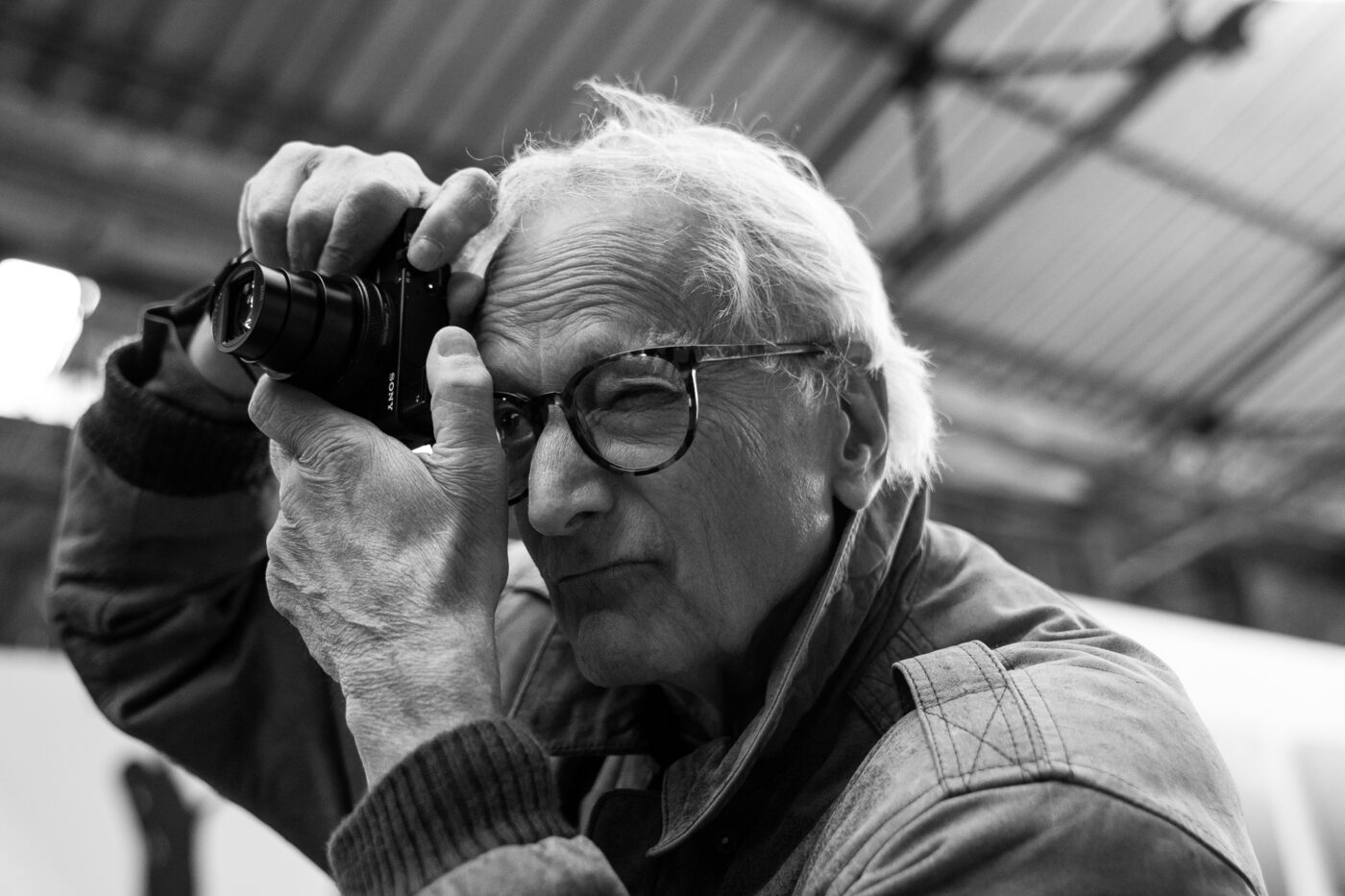
But I love going from the digital to a film camera, because in most cases you have less film, so you have to be more selective about what you shoot and really decide when the moment is going to be and commit to it.
I think most photographers would improve, and would find themselves appreciating their own work more, if they were in that place where you had to ask, “Is this really the one picture I want, or is it just pretty good?” It forces you to wait, to keep looking, and to move around as needed, even if you’re moving a big tripod and camera.
Between digital, film, and an 80-year-old view camera, at what point did you decide you wanted more of that big 4×5 camera in your workflow?
I started at the beginning of the Iraq War, around 2003. I’d owned an old press camera for ten or fifteen years. I bought it for $200 from a friend who worked for the newspaper in Salt Lake City, where I grew up. They were cleaning out a closet and found all this old gear. The $200 was probably more than it was worth, but it was this funky old camera and it still worked.
Then, I started shooting with it a little at the beginning of the Iraq War in 2003, because I thought, “I’m not going to Iraq, I’m too old to do that stuff, but let me find something else.” There was a hearing up on Capitol Hill that had to do with funding the war, and I took that camera up and shot some pictures that were very different from the usual pictures you’d get at a Capitol Hill hearing.
Then, every time I took the camera out and shot something, I’d sell that picture, the first five or ten times, and it was like, “Wow, maybe I’ve got something going here.”
Then I really got into it. I got this old World War II-era lens from an aerial reconnaissance camera, a Kodak Aero Ektar 178mm F2.5, that let me see things more clearly, and I was off and running shooting 4×5.
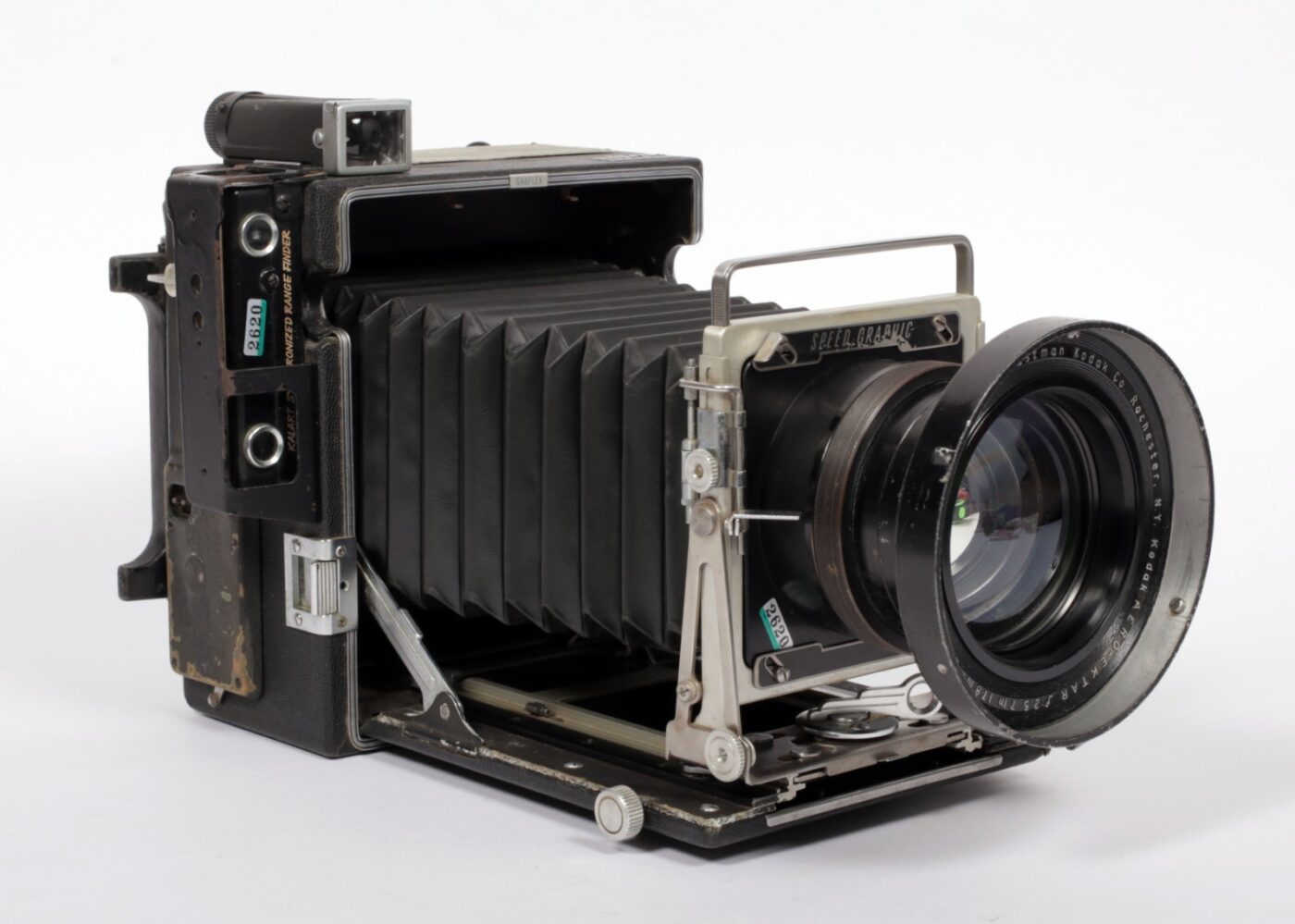
In the beginning, I sort of wondered myself what I was doing with it, but then it started to make me analyze what I was doing in a more direct and forceful way, and from that I think I started getting pictures I wouldn’t have had before.
If a young photographer asked you where to start today, would you advise going through film and manual formats?
The one thing I’d say about film is : no matter how sure you were that you’d nailed it, you never really knew if you had the picture. You take the film out of the camera, hold it in your hand, stuff it in your pocket, and it still has to be shipped to the lab, processed, looked at, and maybe scanned or printed. It was never the same immediate reaction you get with a digital camera.
As a friend of mine used to say, “the real advantage of digital is that you know right away when you screwed up, and it gives you a chance to recapture something you missed”. Indeed, you see it right away, instead of having to wait a day or three days or a week for the film to come back to find out you didn’t get it.
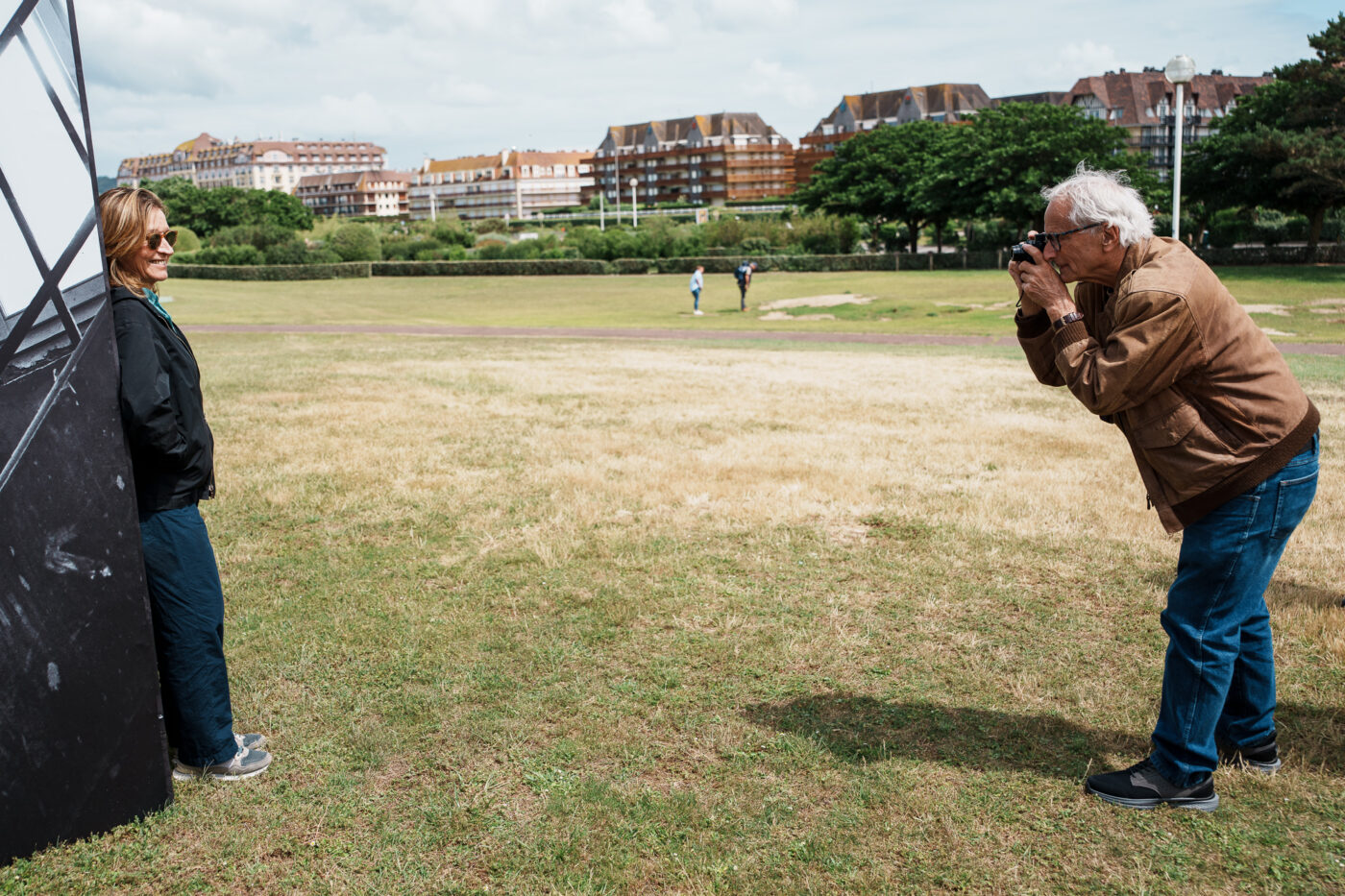
When I’m out shooting film, if I get one picture out of eight or ten or twelve shots, I feel like I’ve really accomplished something, because so much of it is that ethereal moment. And if you don’t catch it, which happens a lot, you feel like, “Well, I’d better start over with something else.”
I think film photographers bring something to the party now, in a world where everything has such instant feedback. The idea that the big camera slows me down and makes me wonder a little more about what I’m doing before I just go snapping the shutter has been a really good thing.
We all have many more pictures we missed than ones we got, and if somebody tells you they don’t, they’re lying. Nobody’s that good. The thing is, if you get one good picture, that’s all ready very good. You kind of wish you could get more, but if you get one, that at least proves your worth and lets you keep going.
We all have many more pictures we missed than ones we got, and if somebody tells you they don’t, they’re lying.
Finally, what is your take on artificial intelligence, and on generative AI?
I see all these funky creations, the kitten videos and the dogs and things, and more realistic things. I like dog videos. I’ve got a dog, and my dog should be in a video, and sometimes is. But I do worry, like a lot of people, that that all this generated content, would undermine public trust and no-one will one day believe that what you’re looking at is a real photograph.
Today, it easy to conceive a fake, but I hope it would be nice if we could eventually figure out something that proves it’s a real picture, and I’m sure someone will work something out. They’re talking about all these solutions that implant something, but it’s very hard to get to a place where everybody will play along.
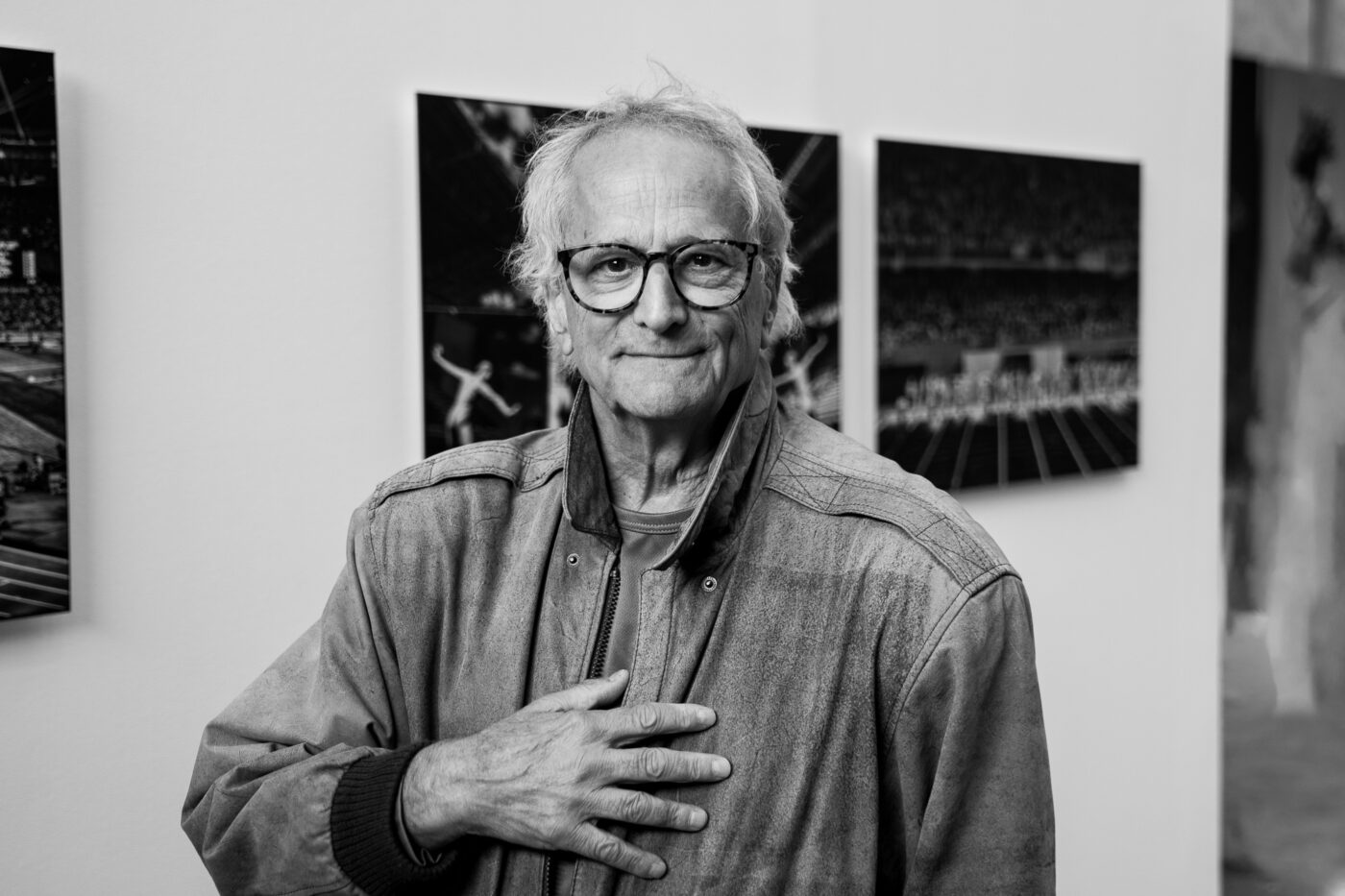
Thank you to David Burnett for granting us this interview. Thank you also to Martial Hobeniche of 2e Bureau for organizing this interview.