

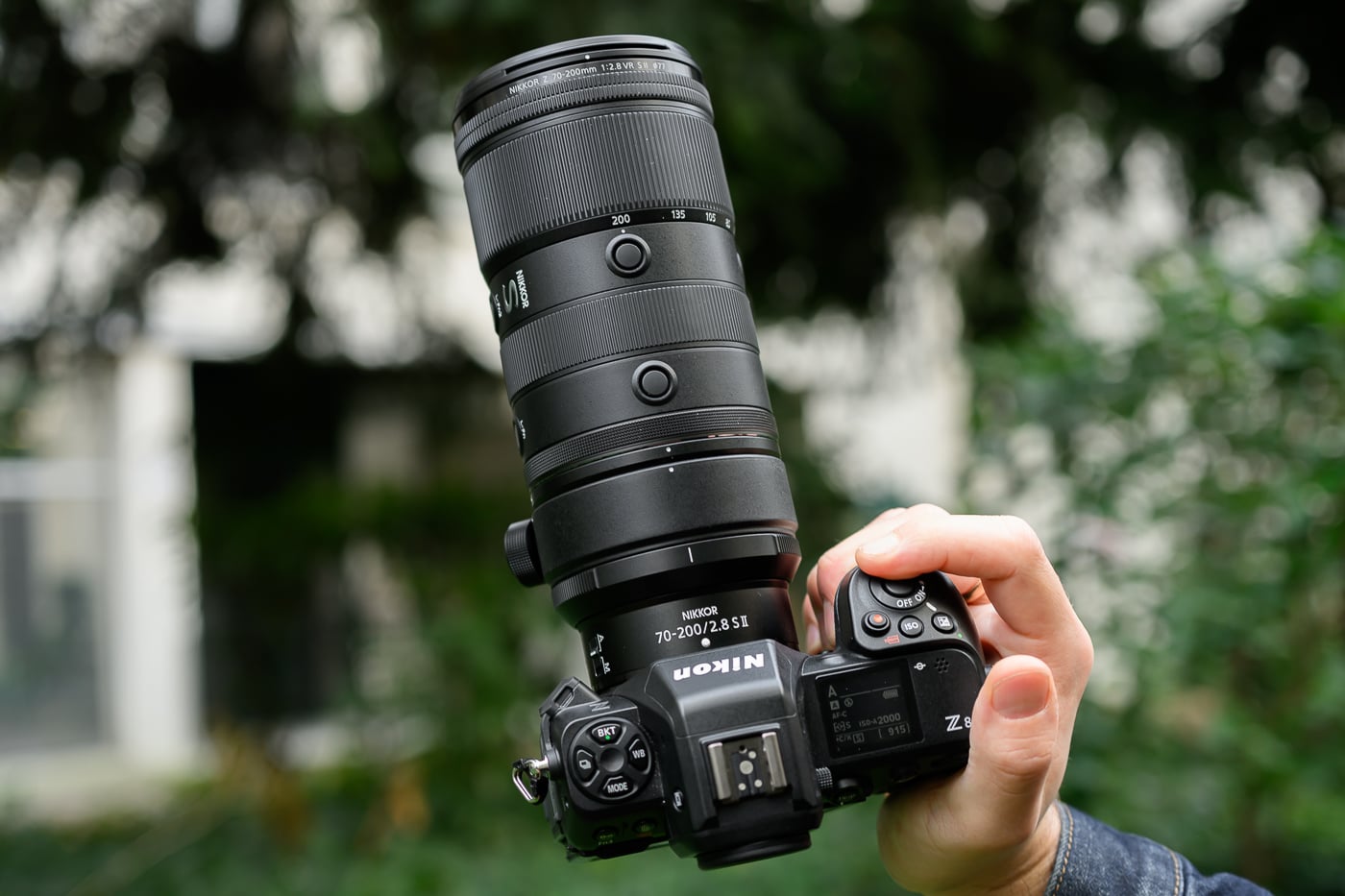

With the Nikkor Z 70-200mm f/2.8 VR S II, launched on February 24, 2026, Nikon revisits one of the most iconic zoom lenses in its full-frame Z-mount lineup. More than a simple refresh, this telephoto aims to be a true showcase of the brand’s optical expertise: lighter, better balanced, featuring a faster autofocus, it promises tangible real-world improvements while maintaining the optical excellence that has made the S-line’s reputation.
After an already impressive 24-70mm f/2.8 S II, does this Nikkor Z 70-200mm f/2.8 VR S II truly deliver on its promises against an ever-sharpening competition? The answer in our full review.
Sommaire
Introducing the Nikkor Z 70-200mm f/2.8 VR S II
The 70-200mm f/2.8 holds a special place in the history of photographic optics: it’s the “do-it-all” zoom, the Swiss Army knife for professionals, equally at home shooting tight portraits, sports, or editorial work. At Nikon, this focal length is practically an institution, marked by legendary successes in the F-mount era.
The transition to the Z-mount in 2020 had already set a very high bar with a first iteration that was technically flawless, though its bulk stood out against increasingly aggressive competition on the compactness front.
In early 2026, Nikon introduces the Nikkor Z 70-200mm f/2.8 VR S II. This launch is part of a renewal strategy for its f/2.8 zoom trinity — the famed “dragons” — with radical optimization as the guiding principle. Following a particularly successful Nikkor Z 24-70mm f/2.8 S II, this new telephoto follows the same philosophy: simplify to dominate.
By breaking through the psychological one-kilogram barrier, Nikon addresses a growing demand from field photographers, who often criticized Z-mount lenses for being too heavy.
By integrating Silky Swift VCM motors, the brand also promises autofocus that is 3.5 times faster — a compelling argument for users of pro bodies like the Z8 or the Z9. Nikon also includes video-oriented features, such as a de-clickable control ring.
All of this comes with a simplified yet optimized optical formula. We count 18 elements in 16 groups — down from 21 elements in 18 groups previously. In detail, there is 1 ED element, 1 Super ED element, 2 aspherical elements, 1 aspherical ED element, 1 fluorite element, and 1 SR (Short-wavelength Refractive) element.
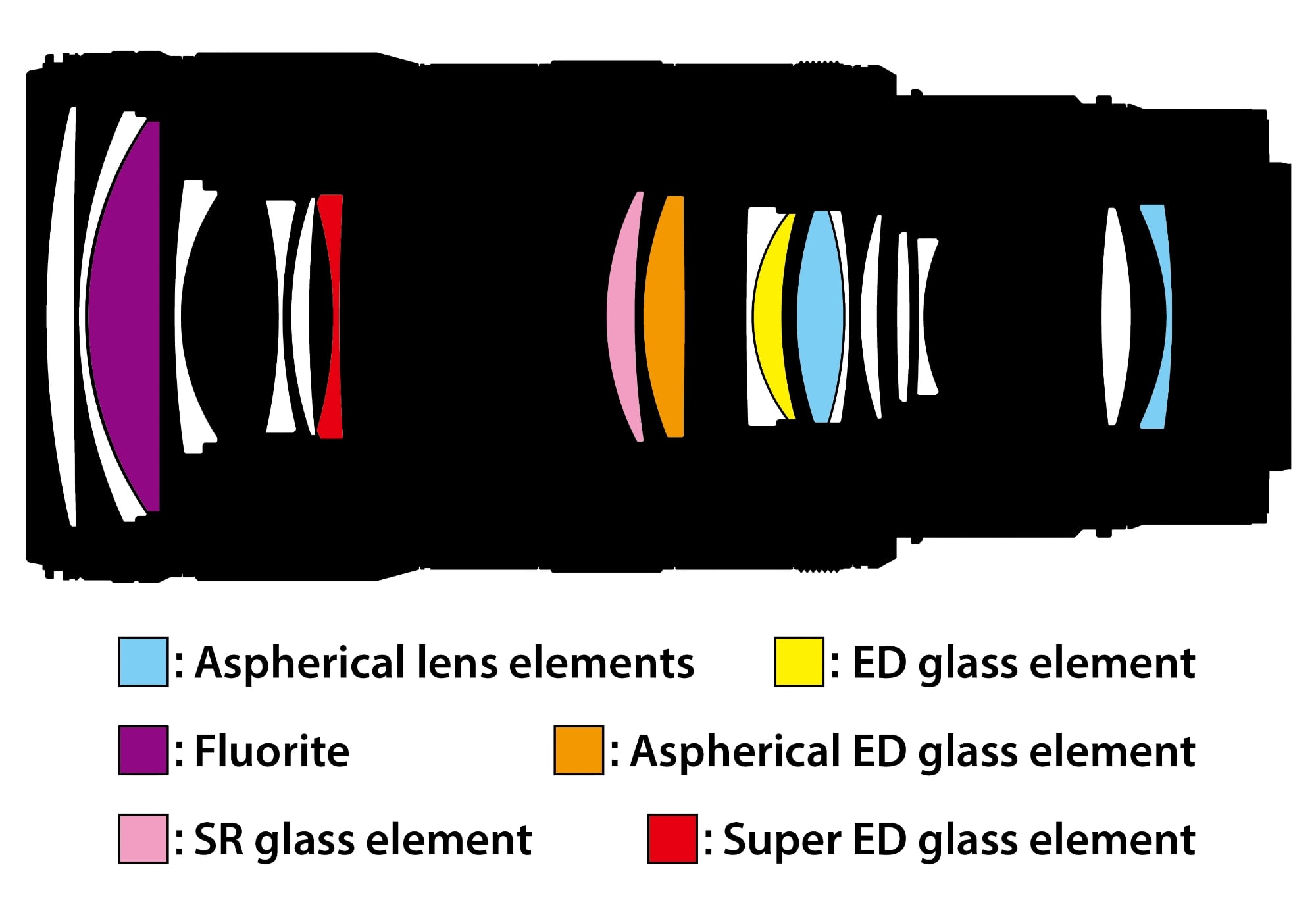
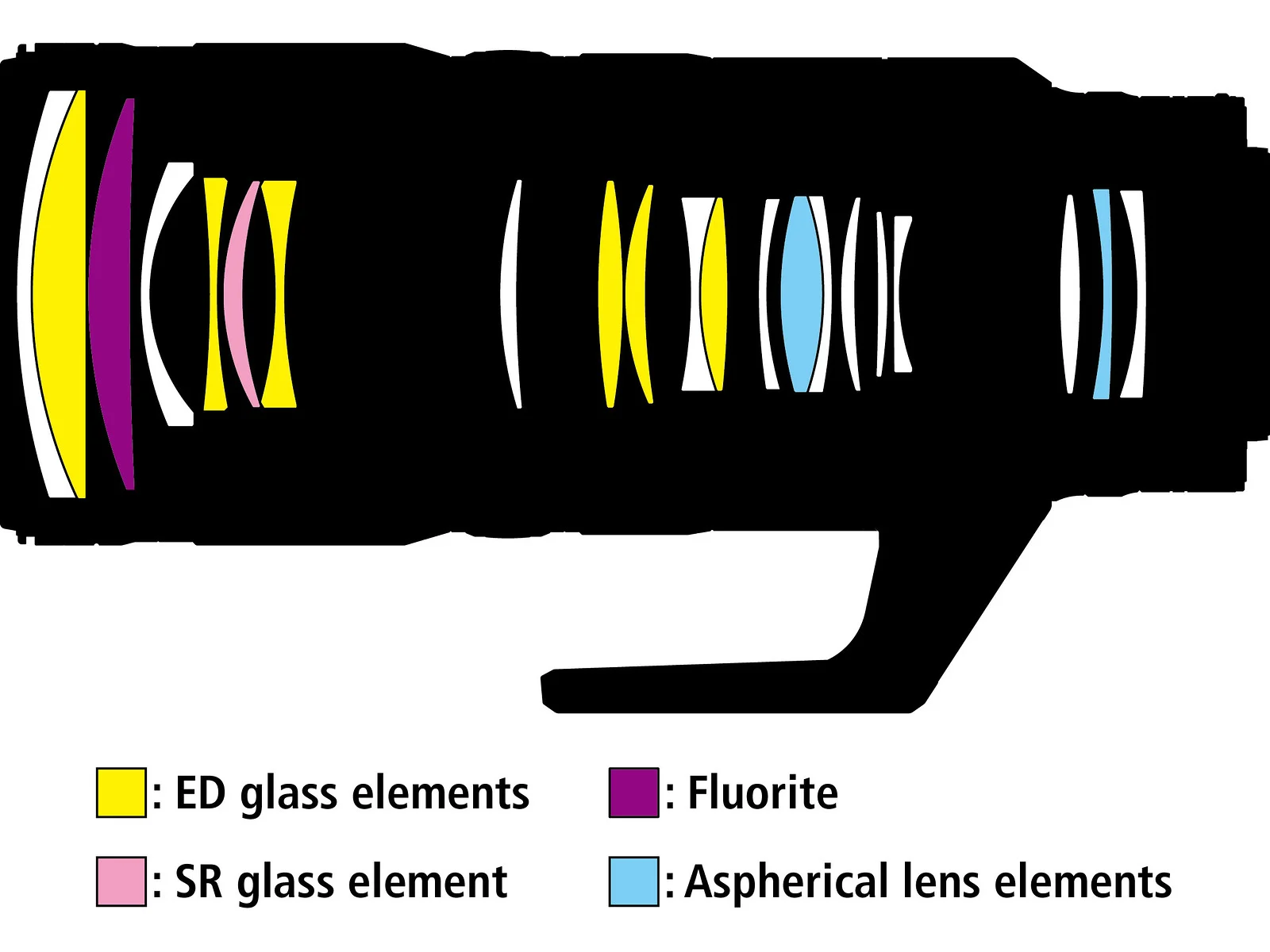
The lens elements feature Arneo and Meso Amorphous anti-reflective coatings, also found on the Nikkor Z 24-70mm f/2.8 S II. These coatings are designed to eliminate chromatic aberrations and unwanted reflections. Additionally, the diaphragm now features 11 blades instead of 9, delivering smoother transitions between the subject and its background.
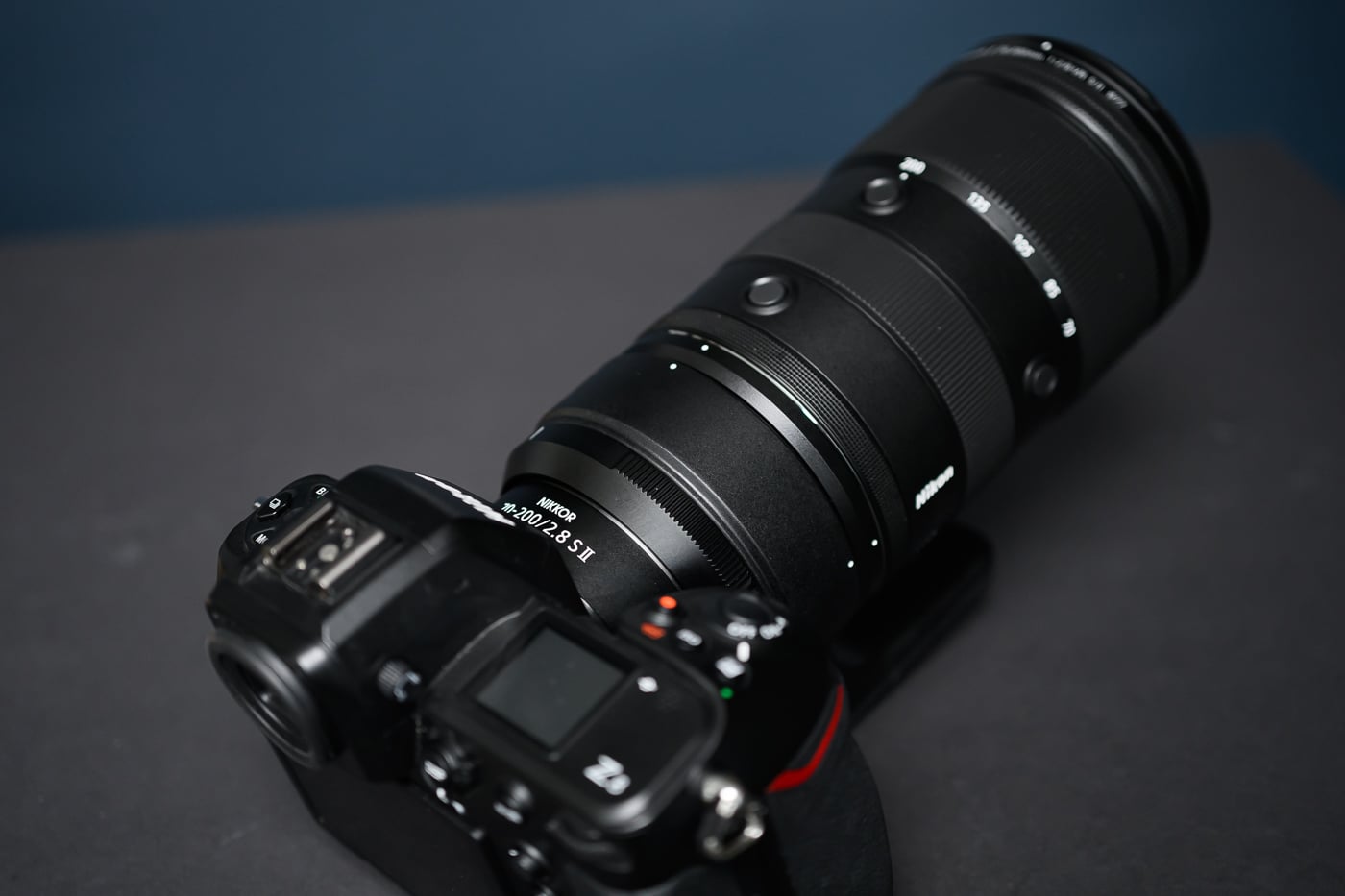
We also note the shortened minimum focus distance of 38 cm (at 70mm) and 80 cm (at full zoom). The maximum magnification ratio is 0.25x at the wide end and 0.3x at 200mm. Finally, for videographers, full focus breathing compensation (focal length shift during focusing) is included.
Here are the specifications of the Nikkor Z 70-200mm f/2.8 VR S II, compared to those of the Nikkor Z 70-200mm f/2.8 VR S:
| Caractéristique | Nikkor Z 70-200 mm f/2,8 VR S II | Nikkor Z 70-200 mm f/2,8 VR S |
|---|---|---|
| Plage focale | 70-200 mm (éq. 105-300 mm en APS-C) | 70-200 mm (éq. 105-300 mm en APS-C) |
| Compatibilité capteur | Plein format | Plein format |
| Ouverture max | f/2.8 | f/2.8 |
| Ouverture min | f/22 | f/22 |
| Angle de champ | 34° 20′ - 12° 20’ (FX) / 22° 50’ - 8° (DX) | 34° 20′ - 12° 20’ (FX) / 22° 50’ - 8° (DX) |
| Construction optique | 18 lentilles en 16 groupes (1 verre ED, 1 verre Super ED, 2 lentilles asphériques, 1 lentille asphérique ED, 1 élément en fluorine, 1 lentille SR) | 21 lentilles en 18 groupes (6 lentilles en verre ED, 2 lentilles asphériques, 1 lentille en fluorine, 1 lentille SR) |
| Diaphragme | Circulaire, 11 lamelles | Circulaire, 9 lamelles |
| Distance minimale de mise au point | 38 - 80 cm | 50 - 100 cm |
| Stabilisation d’image | oui, gain 6 stops | oui, gain 5,5 stops |
| Tropicalisation | Résistant aux projections d’eau et de poussière | Résistant aux projections d’eau et de poussière |
| Grossissement max | 0,25x (70 mm) / 0,3x (200 mm) | 0,2x |
| Mise au point | Motorisation AF Silky Swift VCM multigroupe | AF multi-groupes (STM) |
| Diamètre du filtre | 77 mm | 77 mm |
| Dimensions | ø 90 x 208 mm | ø 89 x 220 mm |
| Poids | 998 g (nu), 1030 g (avec bague), 1180 g (avec collier trépied) | 1360 g (sans sabot trépied), 1440 g (avec sabot trépied) |
| Accessoires fournis | Bouchons avant/arrière. pare-soleil. étui souple | Bouchons avant/arrière. pare-soleil. étui souple |
| Monture compatible | Nikon Z | Nikon Z |
| Prix au lancement | 3349 € | 2949 € |
Ergonomics and handling: the shock of “lightness”
The first sensation upon unboxing is almost… disorienting. For a lens of this class, you instinctively expect a certain heft. Yet, at just 998 g on the scale (compared to 1,360 g for the previous version), the lens is 27% lighter — a striking difference.
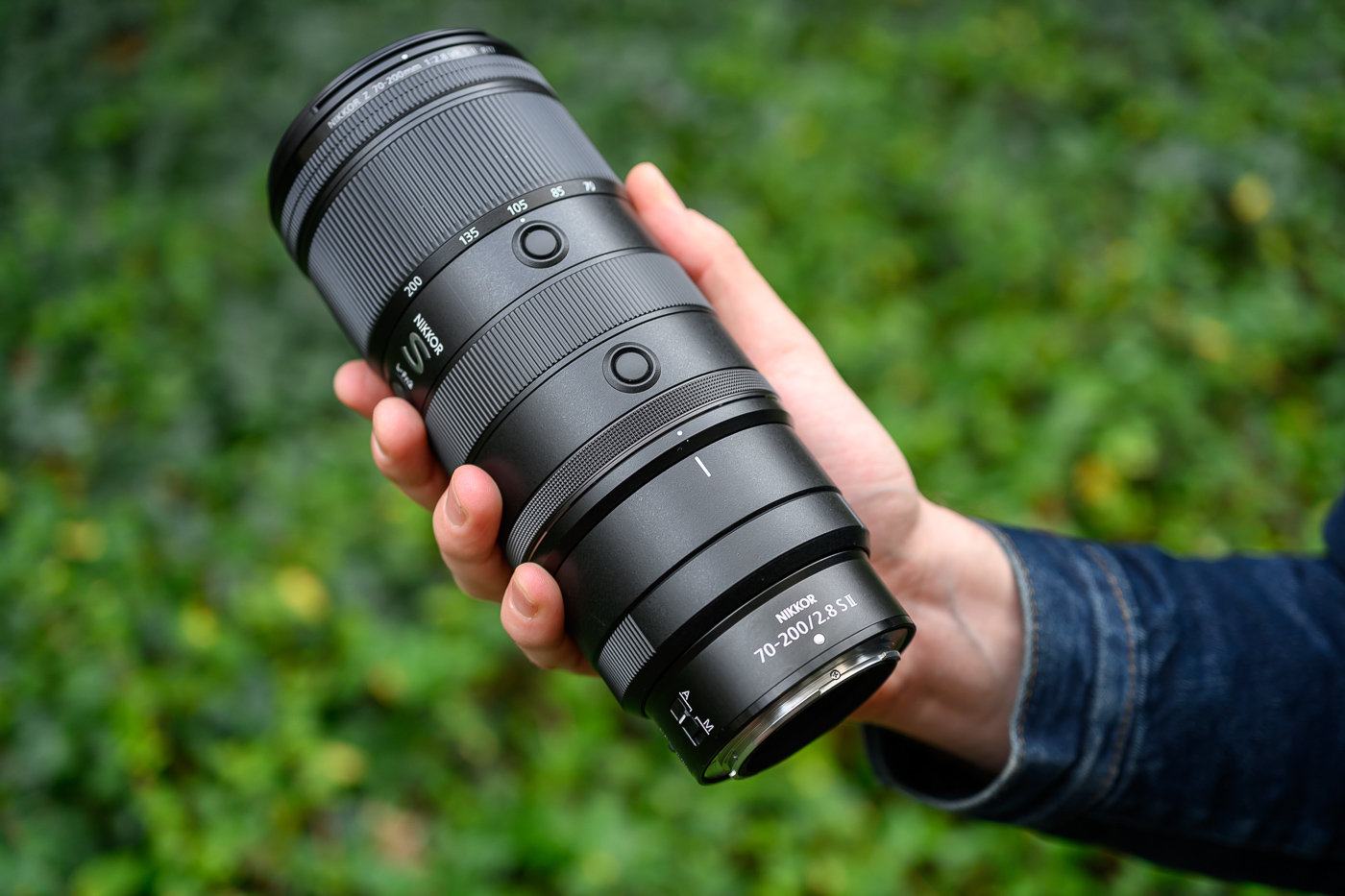
Nikon drops below the symbolic one-kilogram mark, making the setup perfectly balanced, even on a more compact body like the Nikon Zƒ, and even more so on a Z8, obviously. This makes the Nikkor Z the lightest 70-200mm f/2.8 on the market for full-frame mirrorless systems! A first for Nikon.
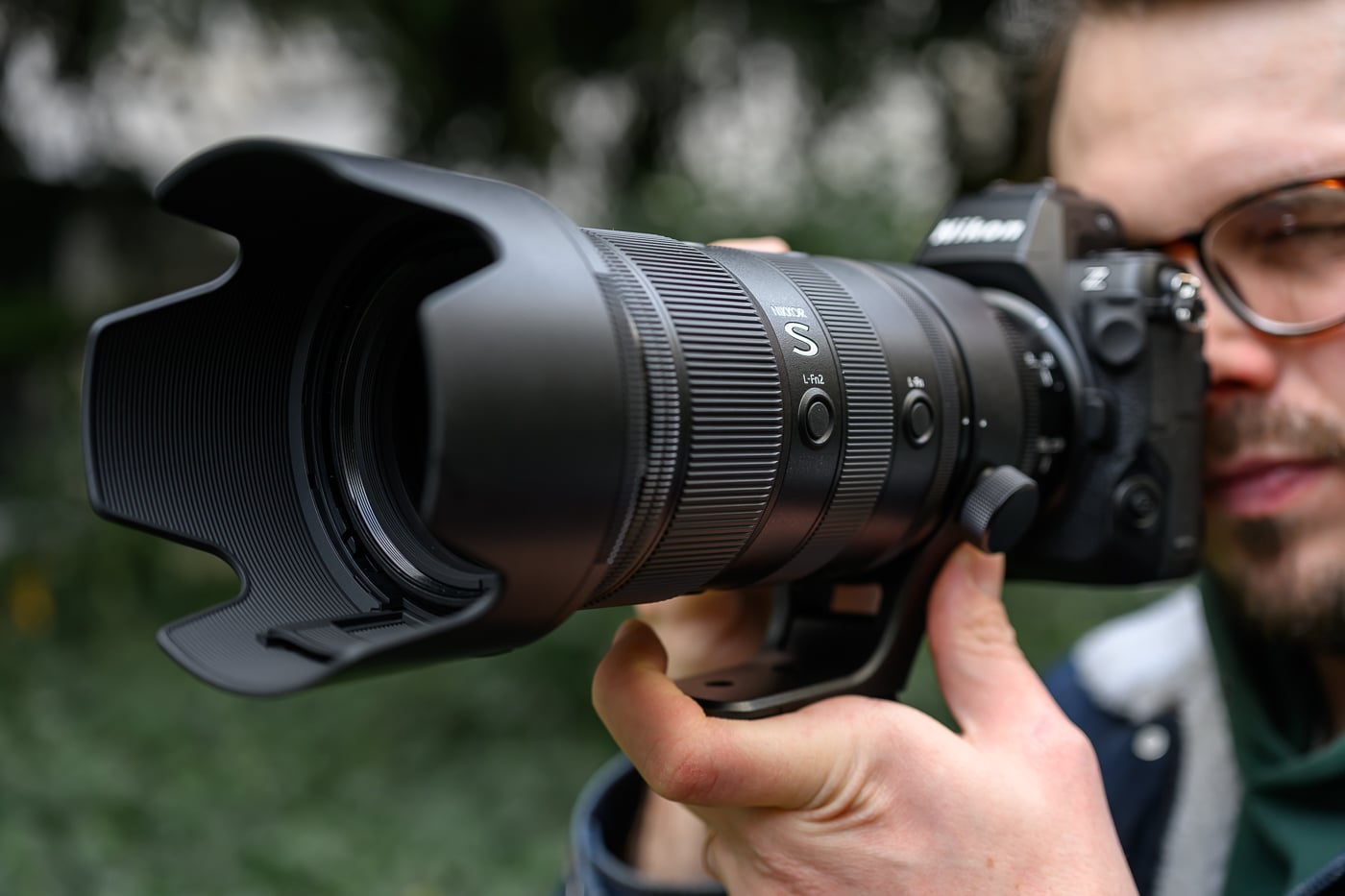
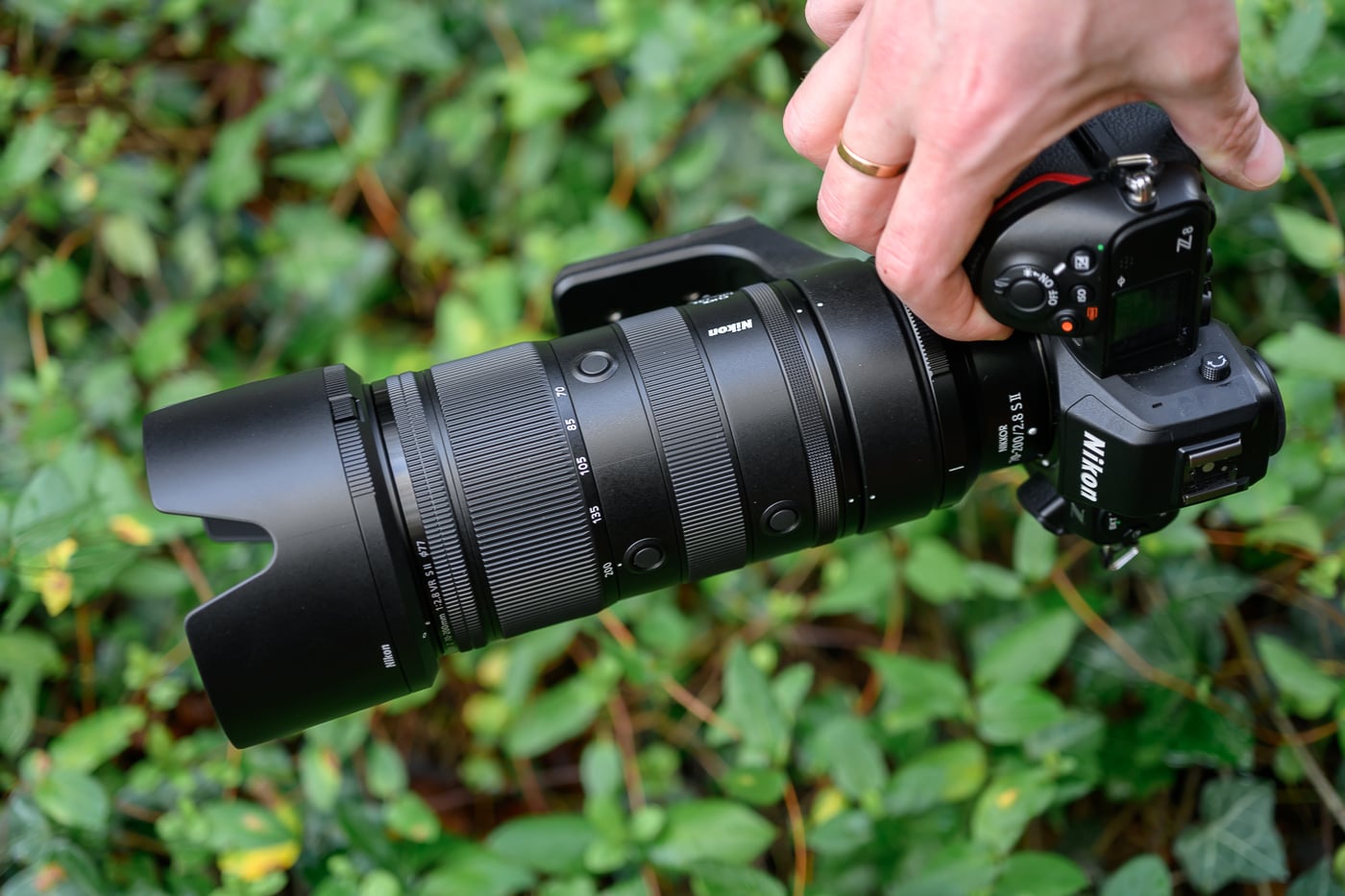
An interesting change concerns the tripod collar. The zoom comes with two rings that slide on and lock near the mount. The first features a tripod foot with Arca-Swiss compatible attachments, while the second has… nothing at all.
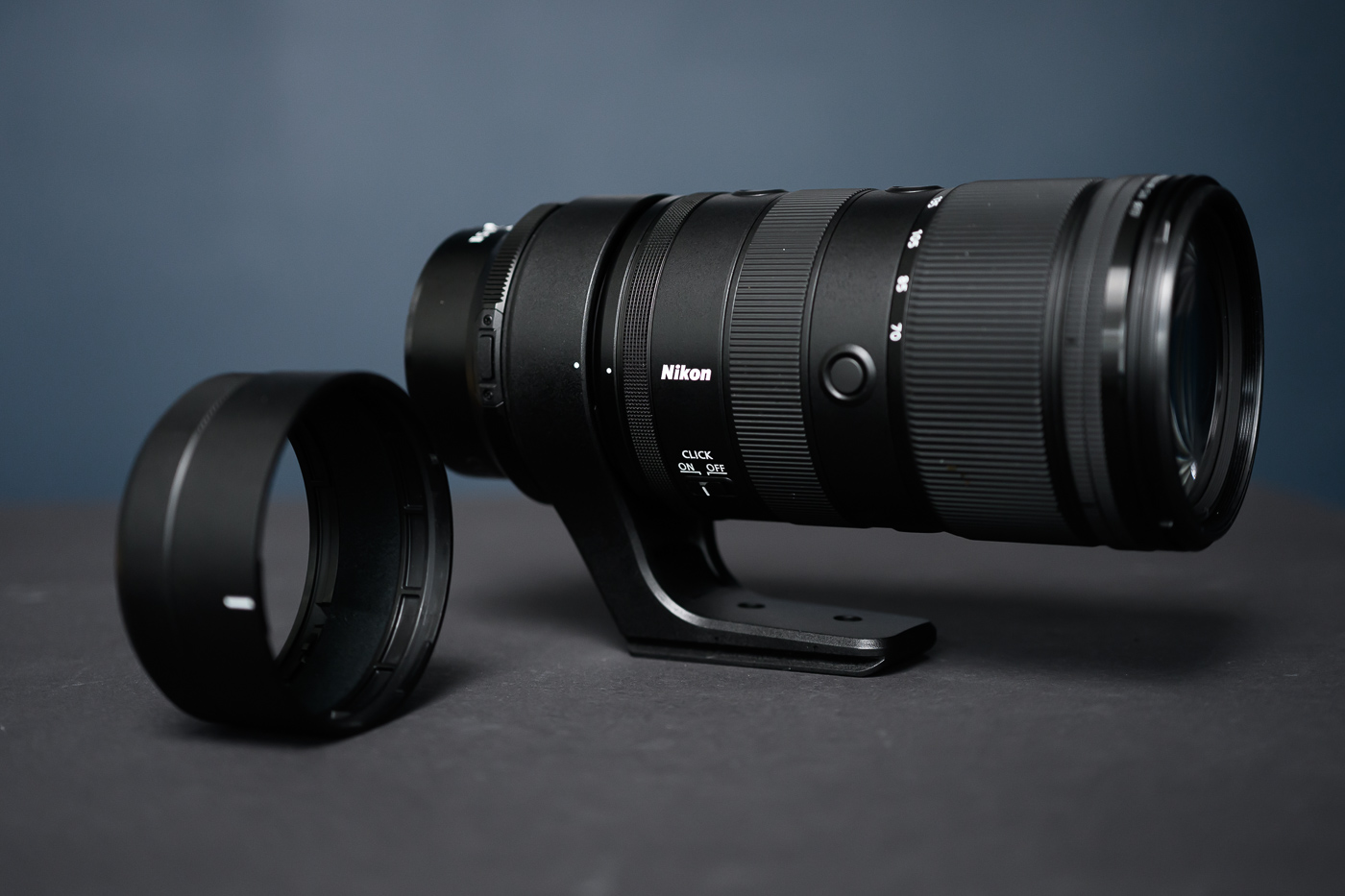
With this ring (which only serves to protect the base of the barrel), the zoom weighs in at 1,030 g, roughly equivalent to the Sony FE 70-200mm f/2.8 GM OSS II. And with the tripod foot ring attached, the weight climbs to 1,180 g (compared to 1.44 kg in the same configuration with the old model). To reach 998 g, you need to remove everything — at the risk of scratching the unprotected section. A system that’s not always easy to figure out at first.
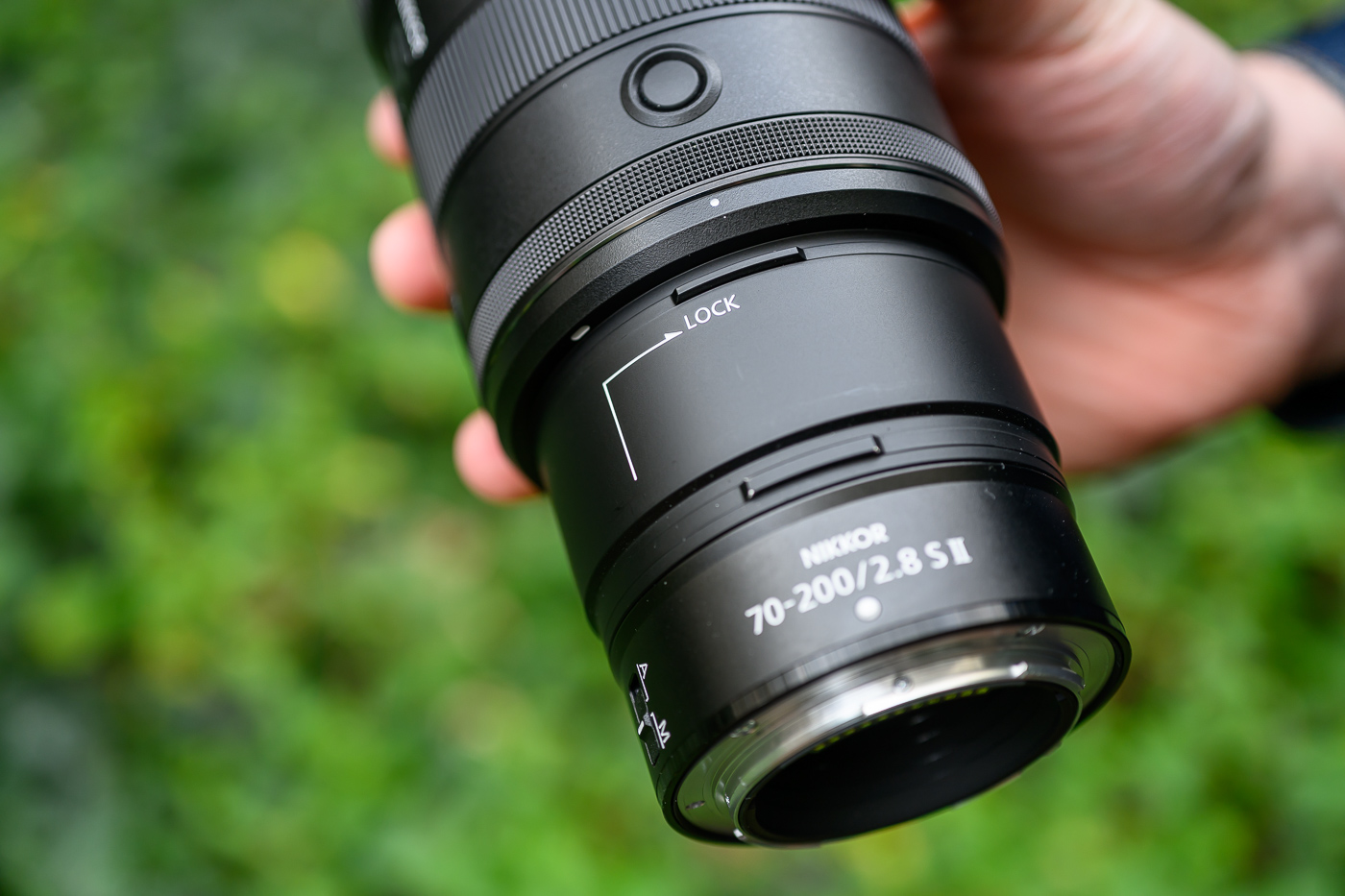
With 20.8 cm in length, this new zoom is also over a centimeter shorter, which is always handy for transport in a bag. Zooming remains internal, as is customary with a 70-200mm.
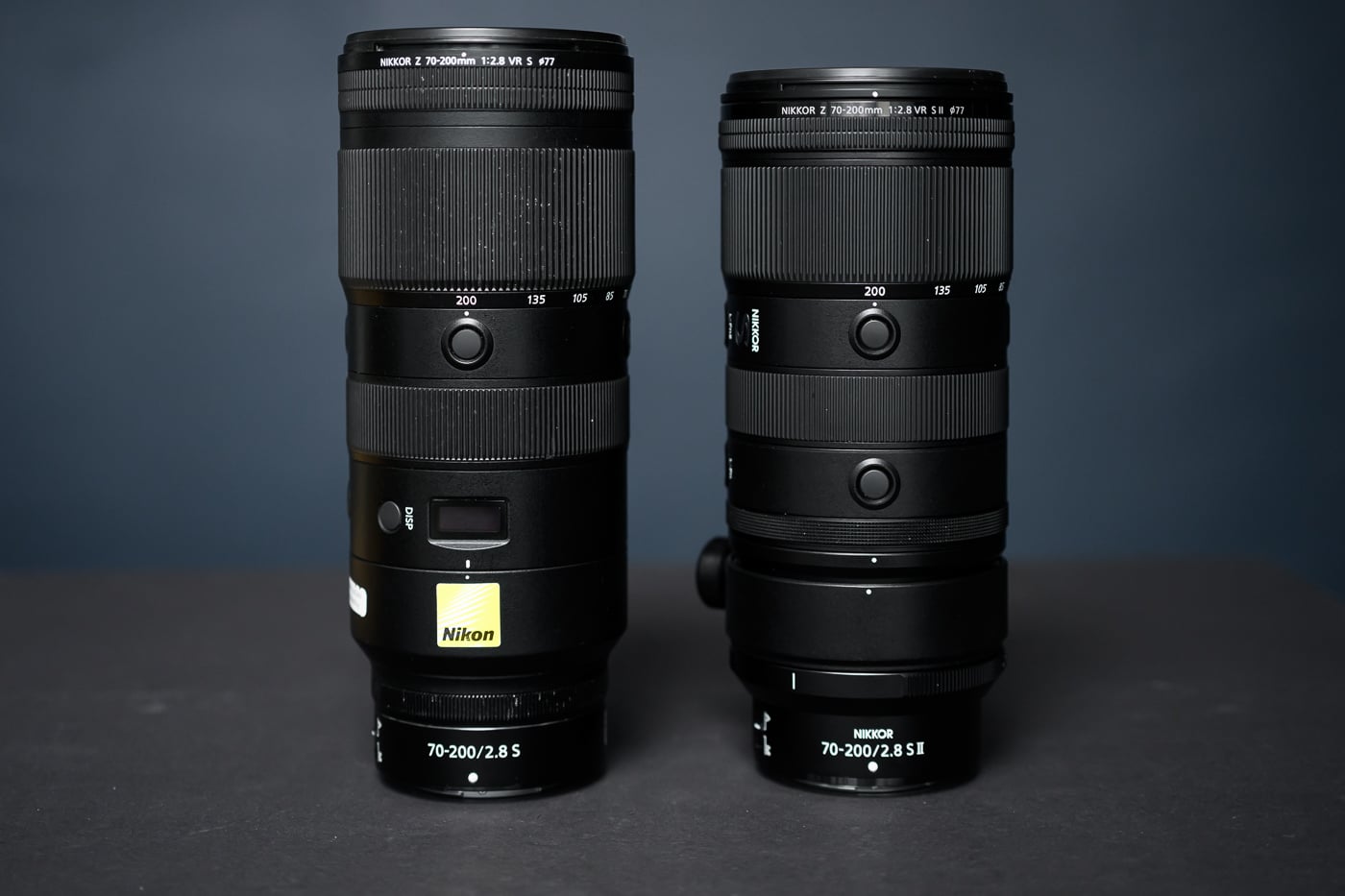
On the barrel, Nikon drops the OLED display, often considered superfluous and fragile in case of impact. This choice saves a few grams and reinforces the monolithic appearance of the barrel. The construction combines magnesium alloy and high-density polycarbonate, all protected by a set of weather sealing gaskets placed at critical points.
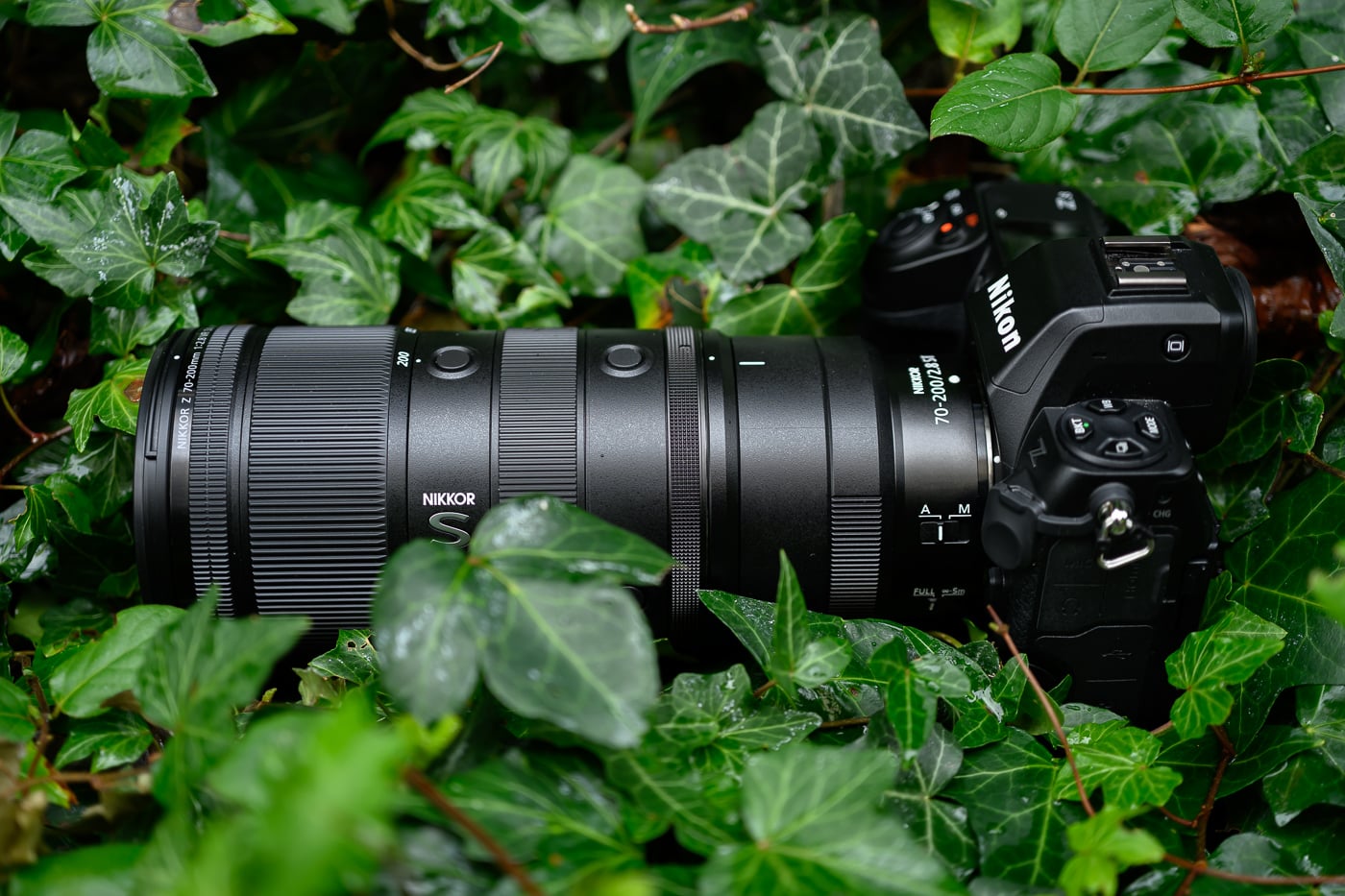
While effective, the finish typical of Z-mount Nikon lenses still feels a bit too “plasticky” for our taste and doesn’t quite do justice to the overall quality of lenses priced above €3,000.
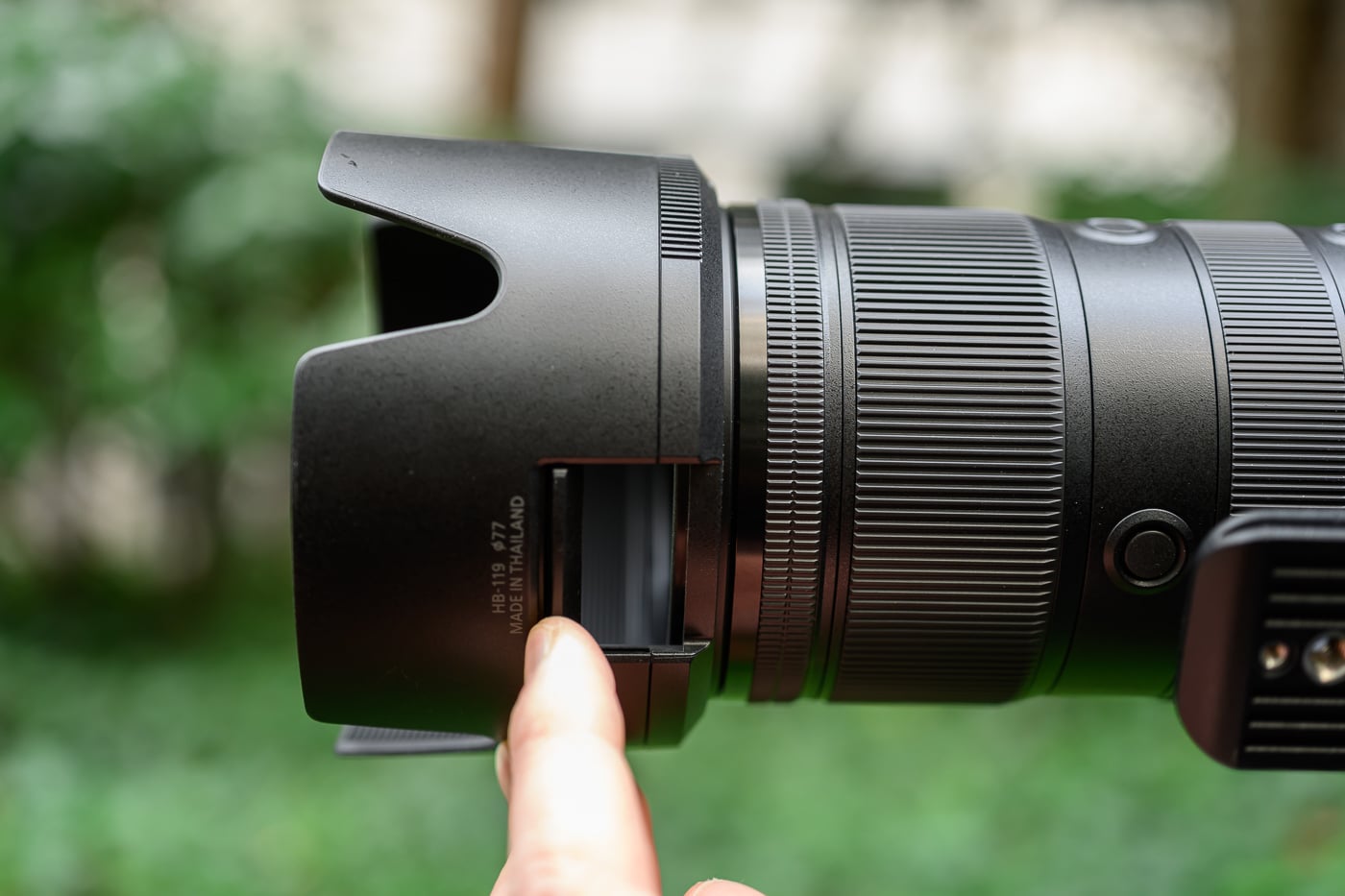
The fluorine coating on the front element is still present to make cleaning easier. A small hatch has been added to the lens hood to facilitate handling circular filters.
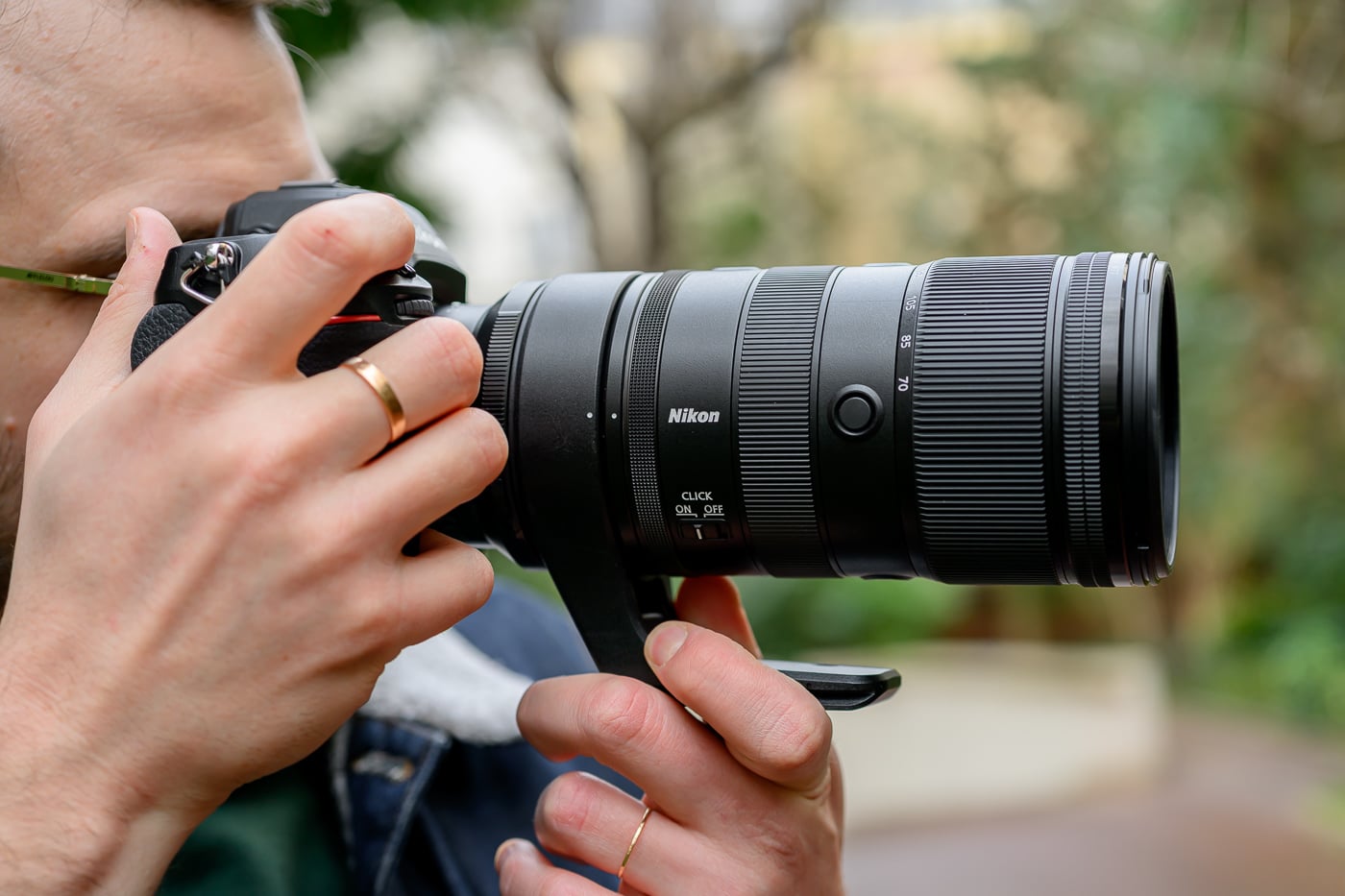
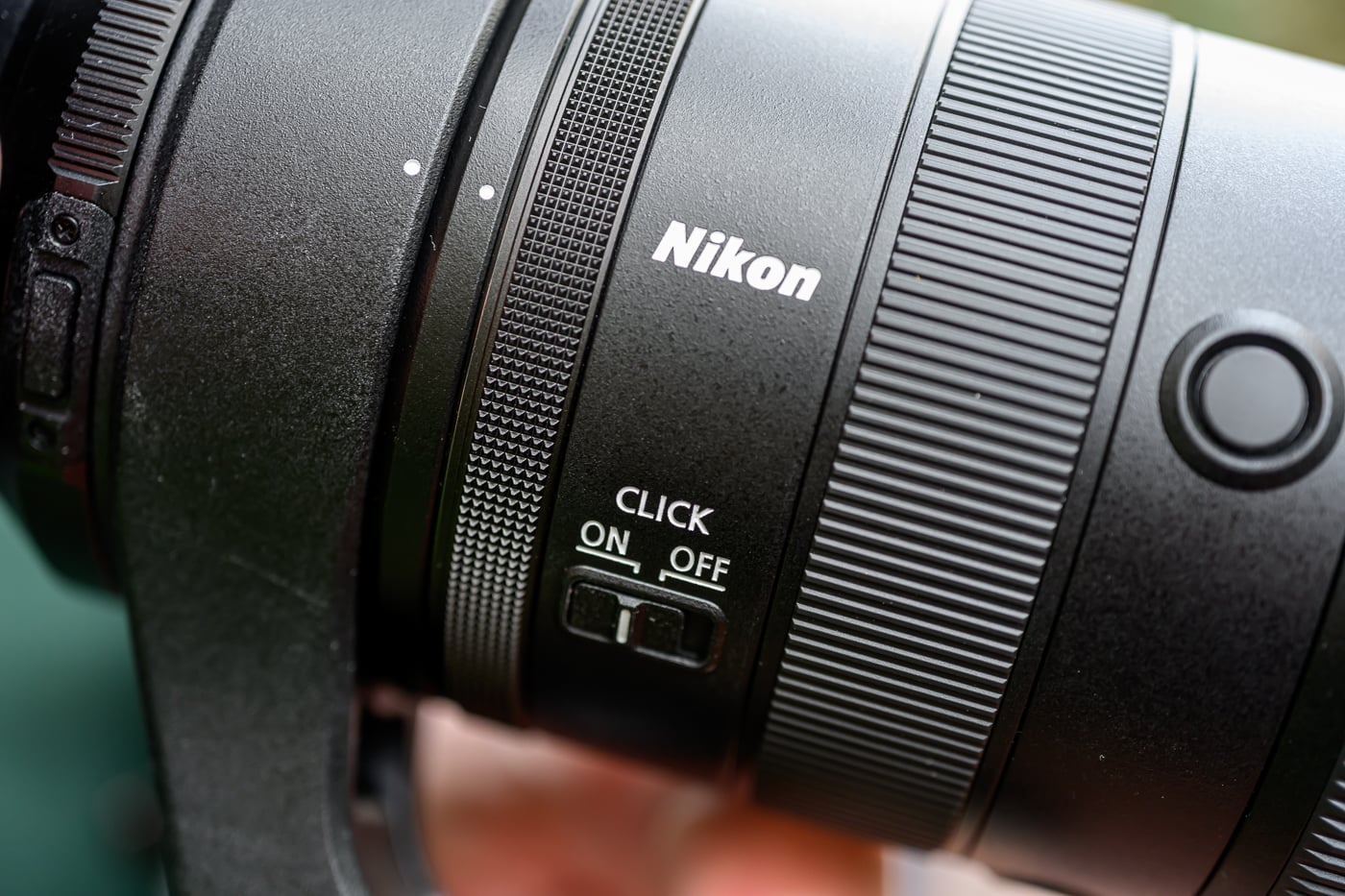
The other major ergonomic addition is the control ring with a click switch. A physical toggle now lets you switch between clicked operation (ideal for aperture or exposure compensation in stills) and perfectly smooth rotation for video.
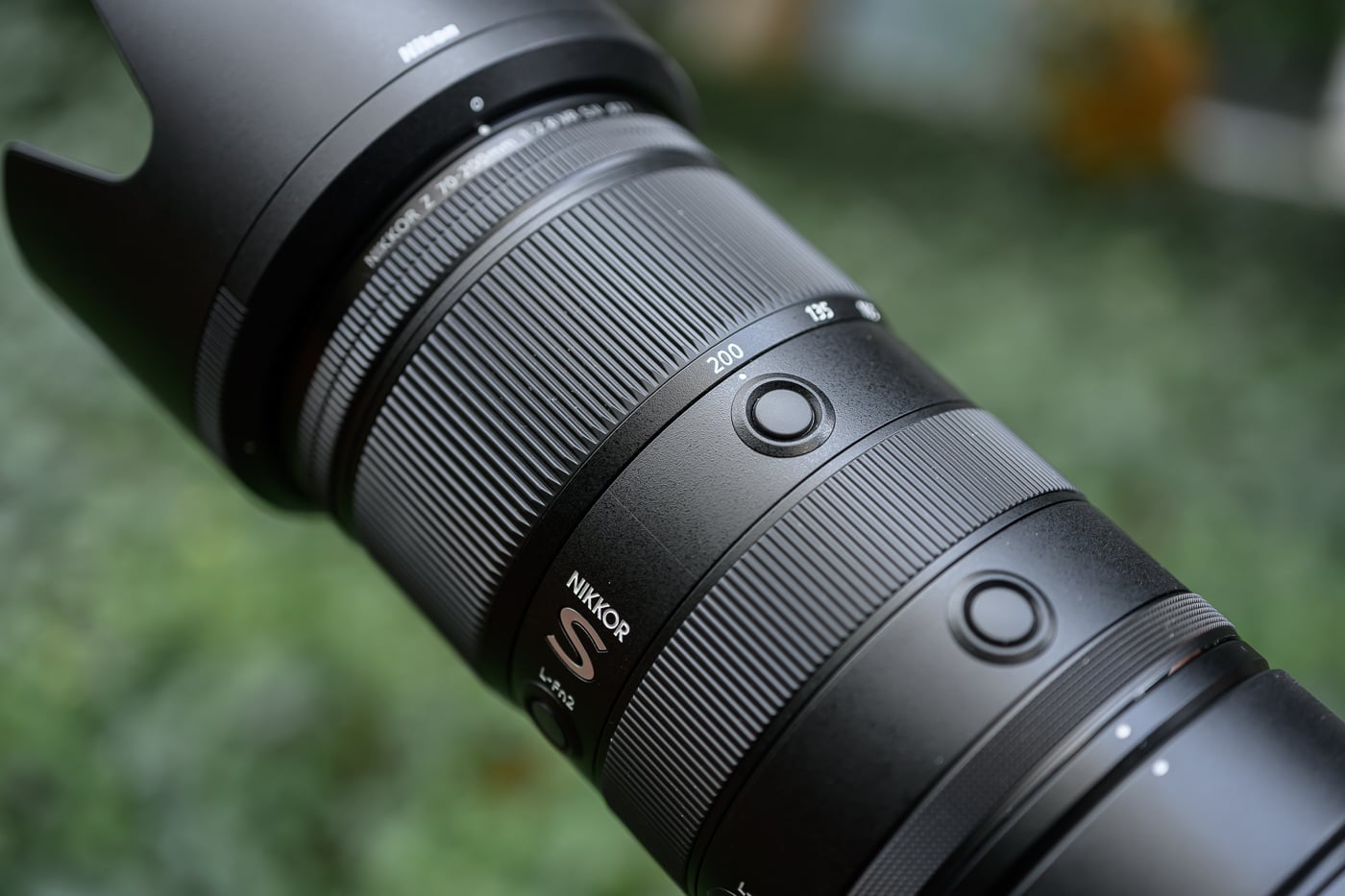
We get six customizable buttons (L-Fn and L-Fn2) placed around the barrel and easily accessible whether shooting in landscape or portrait orientation. The zoom ring, narrower than before, offers optimal resistance. However, its slimmer profile and closer proximity to the end of the lens makes it trickier to operate when the hood is reversed. We also find an AF/MF switch and a focus limiter. We might also have expected a stabilization switch.
We should also note that the lens is compatible with Nikon Z teleconverters TC 1.4x and 2x.
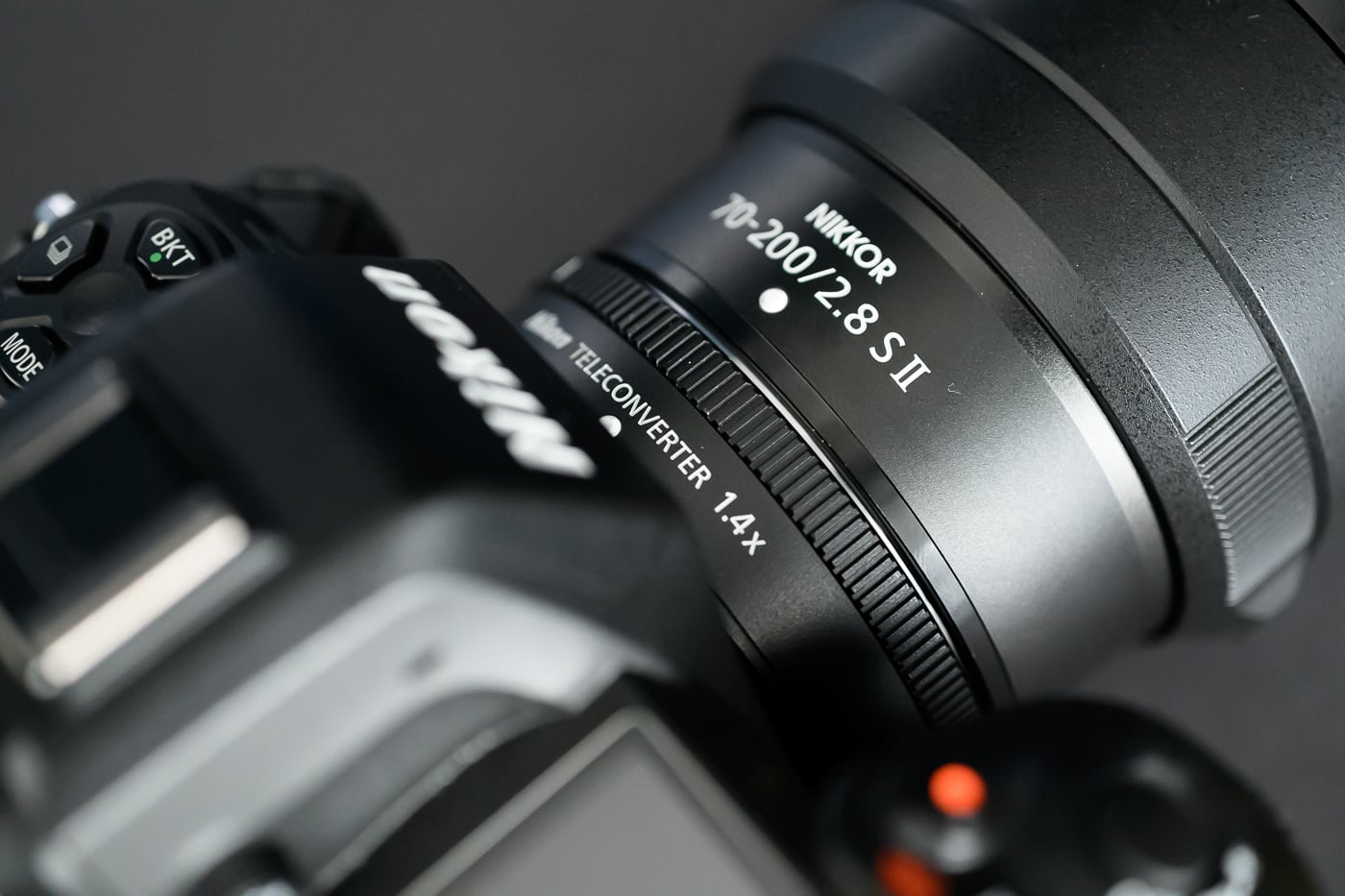
The handling of this new Nikkor 70-200mm is more than successful. The lighter construction and numerous control options make this zoom one of the most pleasant to use in its class.
Optical performance
With this telephoto zoom, Nikon has revised the optical formula by reducing the number of elements — a bold choice that relies on more advanced specialty glass. To fully assess this zoom, we used it with a Nikon Z8 and its 45.7 MP full-frame sensor.
Feel free to click on each image to view it at optimal quality.




Sharpness and resolution
At 70mm and wide open at f/2.8, sharpness is simply outstanding. While the center of the frame is very good, it’s the edges that truly impress with excellent detail rendition.


At f/4 and f/5.6, we reach peak sensor performance, with micro-contrast delivering a stunning sense of three-dimensionality to the images.

As with the previous model, behavior is broadly similar as you zoom in, with very good sharpness from f/2.8, excellent at f/4, holding strong all the way to f/8.

However, as with the first version, sharpness does decrease slightly as focal length increases — while remaining very good throughout.


The drop in performance at full zoom is much more limited than before, as is the uniformity. The level of detail remains impressive, and we can observe all the nuances of our subjects with ease. Similarly, on a body like the Z8 or Z9 with its 45 MP sensor, heavy cropping is entirely viable to fully appreciate this surgical sharpness.

Even when pairing the zoom with the 1.4x teleconverter, quality is still up to par, although adding a TC does tend to degrade the image somewhat.

Distortion
On a telephoto zoom, distortion is often less of an issue than on a very wide-angle lens. In this case, we can observe noticeable barrel distortion at 70mm.


However, unless you disable the correction profile — whether in-camera or in Lightroom — you’ll never notice it. But if you prefer uncorrected images, note that this distortion gradually shifts to pincushion as you zoom in.
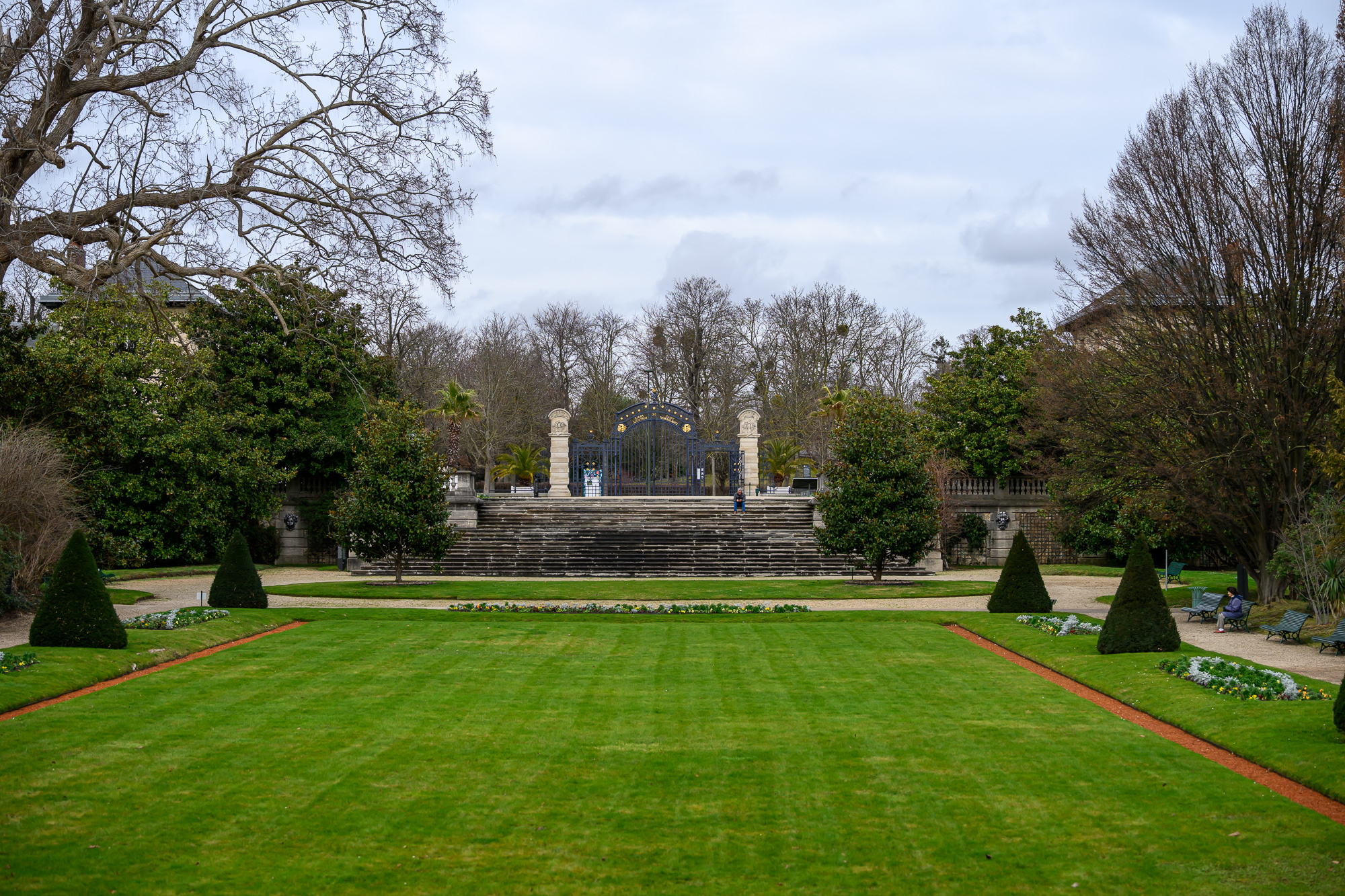

Moreover, at 200mm, even without a correction profile, distortion is virtually imperceptible.
Chromatic aberrations and vignetting
The use of SR (Short-wavelength Refractive) elements and ED glass enables exemplary control of chromatic aberrations. Even on subjects with strong backlighting, such as reflections on water or metallic structures, virtually no color fringing disturbed our shots. Quite an achievement.

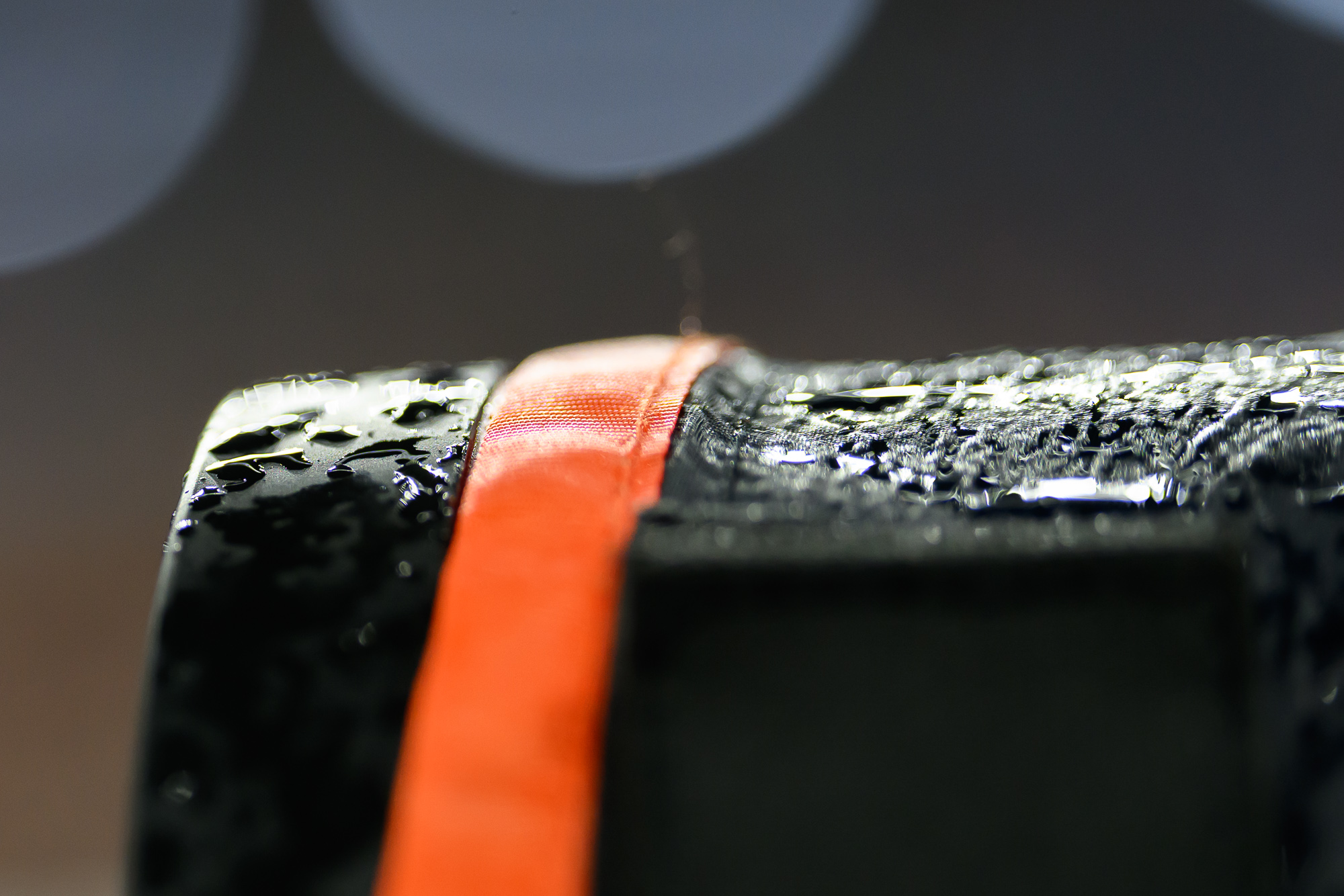
As for vignetting, while it is noticeable at 70mm wide open, it’s hardly intrusive, reasonably well corrected, and fades quickly.
Bokeh
Thanks to the f/2.8 maximum aperture, background blur is very pronounced, especially at full zoom. And with an 11-blade diaphragm, bokeh balls are highly aesthetic and show no onion ring effect. That said, depending on the context, they can exhibit a cat’s-eye shape toward the edges of the frame.

Transitions are remarkably smooth, isolating the subject with elegance. At full zoom, we get a lens with strong subject separation that easily rivals most dedicated portrait primes.


Additionally, with a minimum focus distance of just 38 or 80 cm (depending on focal length), you can get very close to your subject, which, combined with a good maximum magnification, can yield very compelling results.

Autofocus
By integrating Silky Swift VCM (Voice Coil Motor) motors, Nikon claims autofocus speed 3.5 times faster than the previous version.

On a Nikon Z8, focus lock is instantaneous. On subjects approaching head-on at high speed, the lens shows no hesitation. The motors allow for extremely rapid lens element movements.


Most of the time, the AF locks on effectively, and we can be very satisfied with the autofocus performance overall.

However, during more hectic action sequences with multiple subjects, we noticed that the Nikon Z8’s autofocus can sometimes struggle to lock onto the right person — which isn’t really related to the lens’s performance itself.


The AF can occasionally lose the subject for a moment when something passes in front of it, or during rapid burst sequences. But we’re nitpicking here — during a rugby match, with sometimes erratic action and bursts at 20, 60, or even 120 fps, the reject rate remains quite marginal, as we can see in this animation of an ultra-fast burst that breaks down the action.

Stabilization
The vibration reduction system has been optimized to work better in tandem with the sensor-shift stabilization of Nikon Z bodies. We managed to obtain sharp images down to approximately 1/6 s at 200mm, corresponding to a gain of about 5 stops. A figure roughly in line with the 6 stops claimed by the manufacturer.






Beyond that, it is nearly impossible to obtain usable shots unless you have particularly steady hands — which isn’t the case for everyone.

Below is a selection of photos captured with the Nikkor Z 70-200mm f/2.8 VR S II:

















Versus the competition
Since the Z-mount is only partially open for full-frame, direct competitors are few and far between.
Tamron 70-180mm f/2.8 Di III VC VXD G2
We can point to the Tamron 70-180mm f/2.8 Di III VC VXD G2. Launched in October 2025 for the Z-mount, this second-generation telephoto zoom from Tamron is a more than relevant alternative. This zoom delivers very good optical quality, a lighter (and shorter) build, and a highly effective autofocus.
Those looking for an internal zoom mechanism and compatibility with Nikon teleconverters may be less drawn to this Tamron, which nevertheless stands out with a price tag of $1,149 — more than 3 times lower than our Nikkor.
Nikkor Z 70-180mm f/2.8
We can also consider the Nikkor Z 70-180mm f/2.8, which is essentially a rebranded version of the first-generation Tamron 70-180mm f/2.8 RXD. It delivers good optical performance and is compatible with Nikon teleconverters — unlike the Tamron version.
It falls short, however, with a slower autofocus and no optical stabilization. Priced at $1,196, it remains a less substantial investment than our hero of the day.
Nikkor Z 70-200mm f/2.8 VR S
Finally, with some remaining stock still available, we can also consider the first-generation Nikkor Z 70-200mm f/2.8 VR S. Heavier, larger, and slightly slower, it is nonetheless an excellent zoom.
Moreover, although it is still listed at around $2,896, stock will dry up fairly quickly as production is expected to wind down soon, making it worth keeping an eye on the used market.
Conclusion: the Nikkor Z 70-200mm f/2.8 VR S II — the ultimate Z-mount telephoto zoom?
The Nikkor Z 70-200mm f/2.8 VR S II pulls off the remarkable feat of significantly improving an already excellent lens. By dramatically reducing weight and supercharging the autofocus without compromising image quality, Nikon directly targets those seeking a (virtually) no-compromise zoom.
Likewise, ergonomics have been reworked, and this lens proves as nimble as the best competitors in its class. Better yet, it boasts the distinction of being the lightest stabilized 70-200mm f/2.8 on the market today — and possibly in the history of photography!
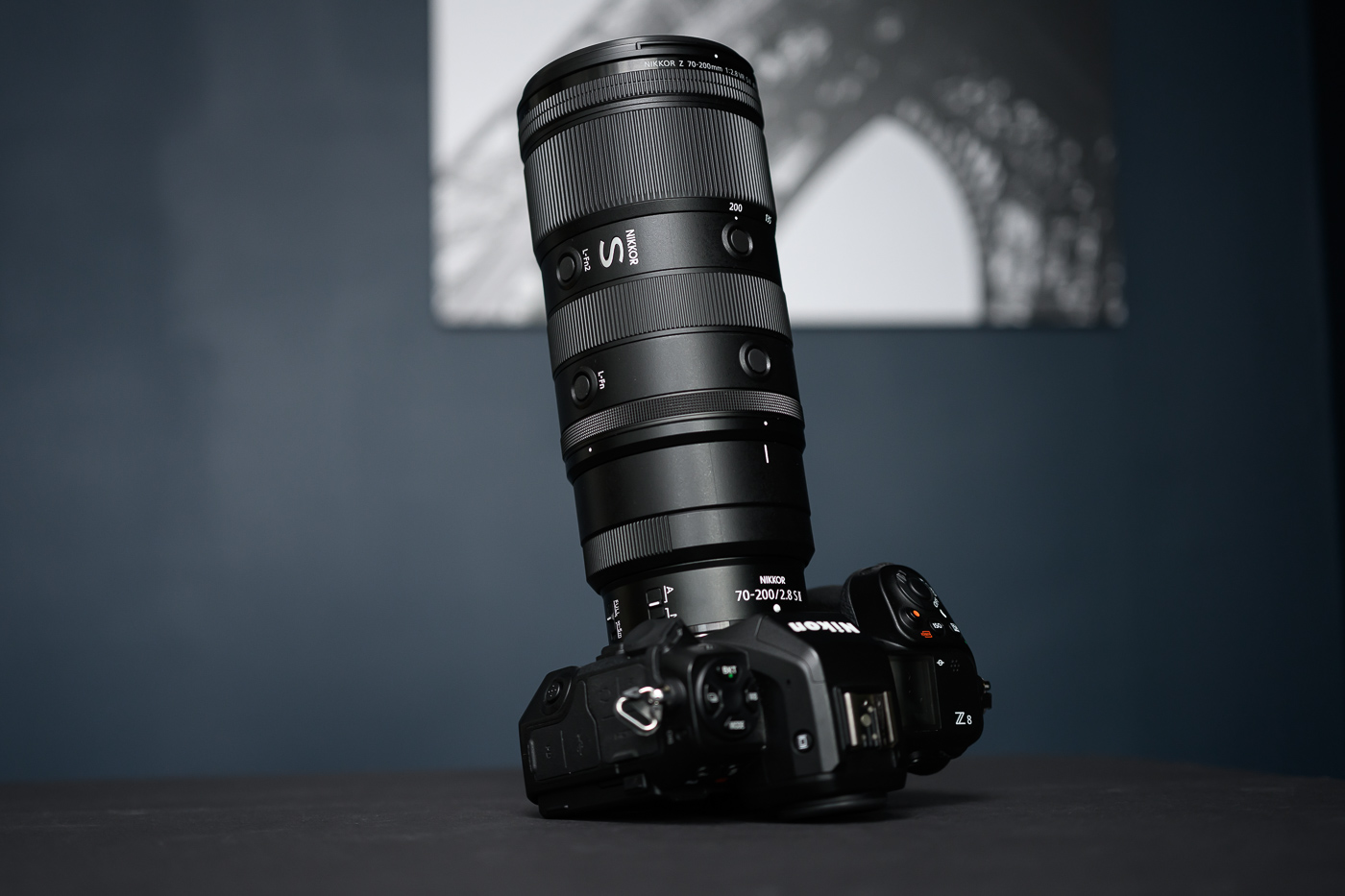
Nikon impresses on multiple fronts by delivering a lens that may be even more accomplished than its Nikkor Z 24-70mm f/2.8 S II. Granted, the price remains a significant investment, but for the demanding photographer, this zoom represents the best available in Z-mount today — and perhaps beyond.
The Nikkor Z 70-200mm f/2.8 VR S II is available for pre-order at a price of $3,196. It will go on sale starting March 19, 2026.