


Launched on February 19, 2026 for full frame mirrorless cameras in Sony E and Nikon Z mounts, the Tamron 35-100mm f/2.8 Di III VXD aims to combine an extended focal range with a constant f/2.8 aperture, along with responsive autofocus and very good image quality. Within the manufacturer’s portfolio, it can also serve as an alternative to the 35-150mm f/2-2.8 Di III VXD, while being considerably lighter, more compact and more affordable.
This lens also inaugurates the Tamron Link, an accessory designed to enable a wireless connection with the Tamron Lens Utility app, which thus becomes iOS compatible.
In the field, does this versatile and fast zoom deliver on its promise? Are its optical and AF performance up to our standards? We tested it on a daily basis over several weeks. Here is our full review of the Tamron 35-100mm f/2.8 Di III VXD.
Sommaire
- Introducing the Tamron 35-100mm f/2.8 Di III VXD
- Ergonomics and handling
- Tamron Link: customize your lens… wirelessly – and with an iPhone!
- Image quality of the Tamron 35-100mm f/2.8 Di III VXD
- Autofocus of the Tamron 35-100mm f/2.8 Di III VXD
- Against the competition
- Tamron 35-100mm f/2.8 Di III VXD, a surprising, lightweight and accomplished zoom
Introducing the Tamron 35-100mm f/2.8 Di III VXD
It’s no secret: Tamron has a real fondness for unconventional focal lengths. Back in 2021, the manufacturer made a splash with the Tamron 35-150mm f/2-2.8 Di III VXD, a highly ambitious zoom designed to replace an entire range of prime lenses.
This philosophy carries over today with the Tamron 35-100mm f/2.8 Di III VXD. Admittedly, its focal range is slightly less extensive, and its constant aperture is f/2.8. Nonetheless, it can be seen as a competitor to the 28-105mm f/2.8 DG DN Art zoom offered by Sigma.
However, it differs with a 35mm wide end that is less wide, but very well suited to reportage. To “go wider,” you’ll need to complement this lens with a 20mm or 24mm prime – or with a zoom such as the Tamron 20-40mm f/2.8 Di III VXD.
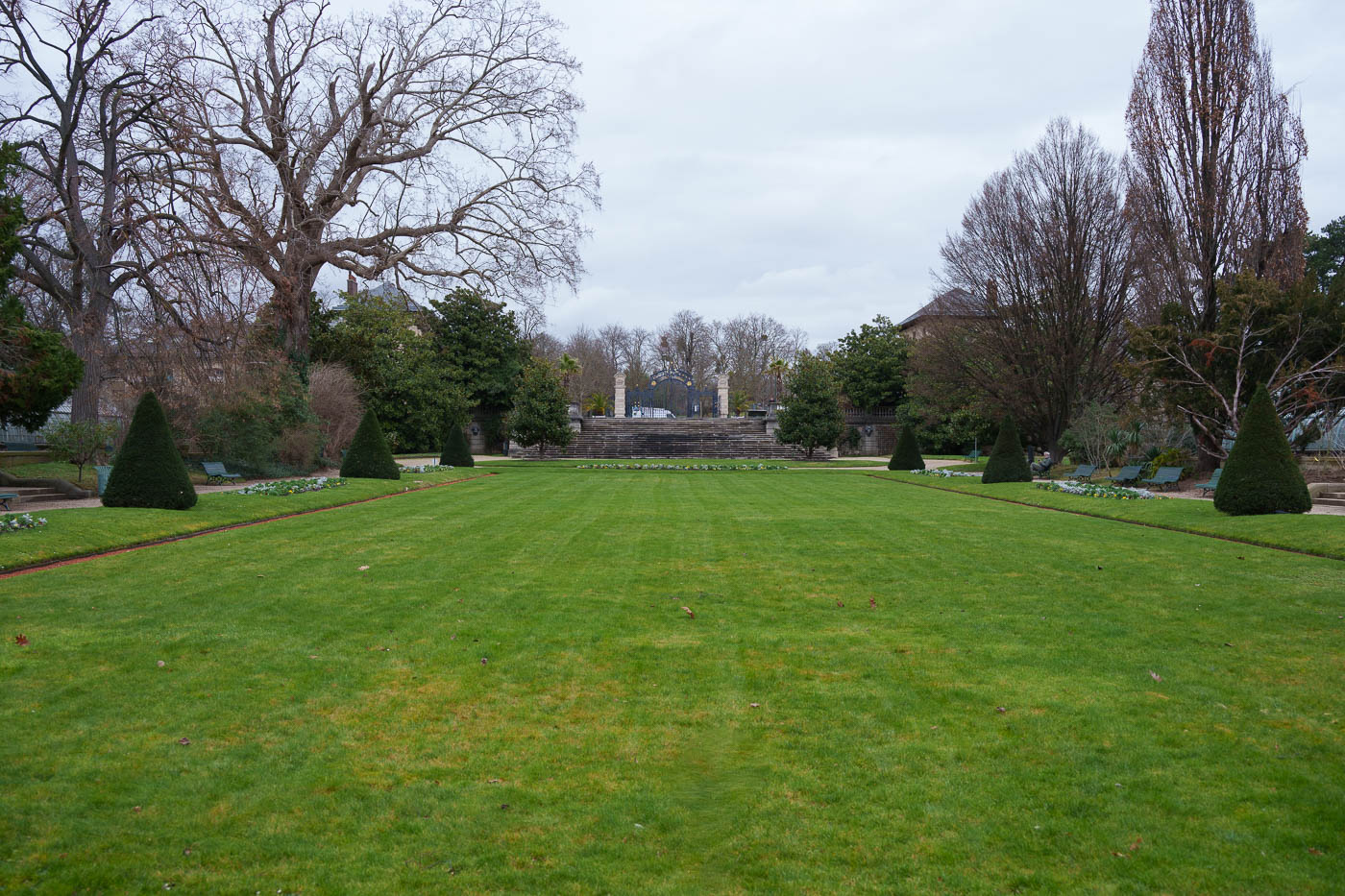
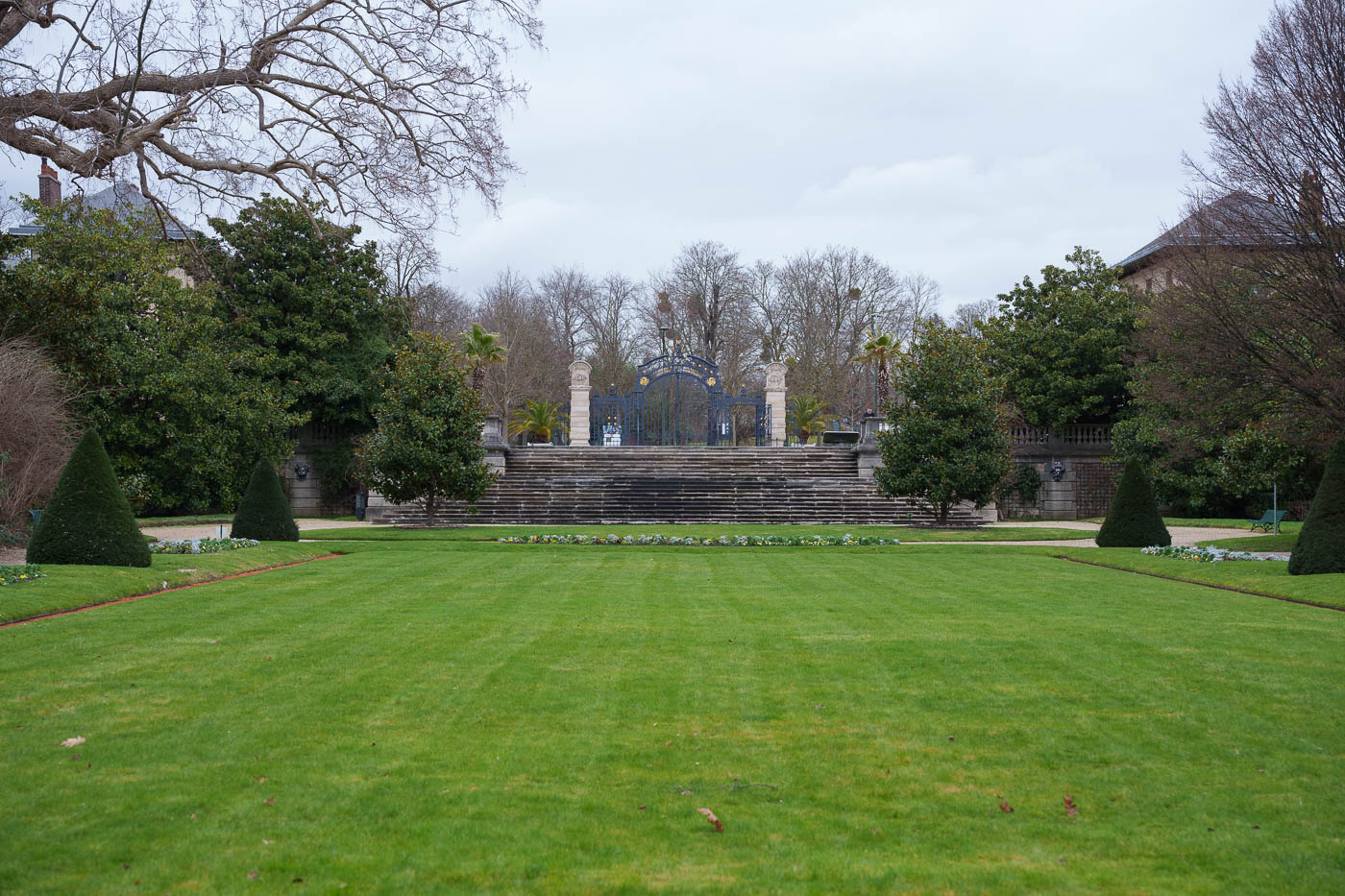
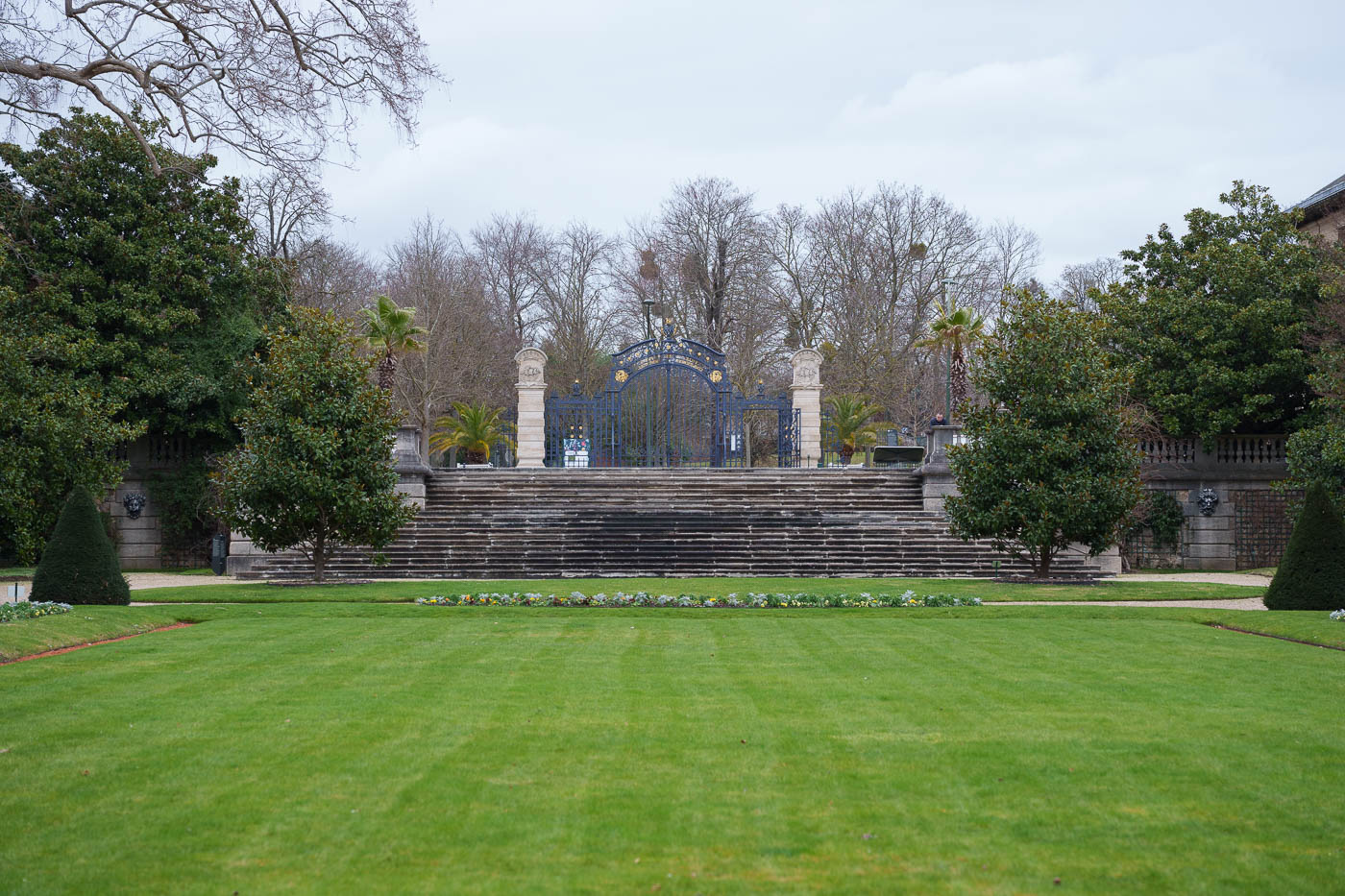
To successfully combine an extended focal range with image quality, the Tamron 35-100mm f/2.8 Di III VXD relies on a complex optical formula. It features 15 elements in 13 groups. The number and type of special elements have not been disclosed.
The constant f/2.8 aperture is delivered by a circular 9-blade diaphragm. The minimum focusing distance is quite short: 22cm at the wide end and 65cm at full zoom. This allows you to get very close to your subject. The maximum magnification ratio is 0.33x (at 35mm) and 0.16x (at 100mm).
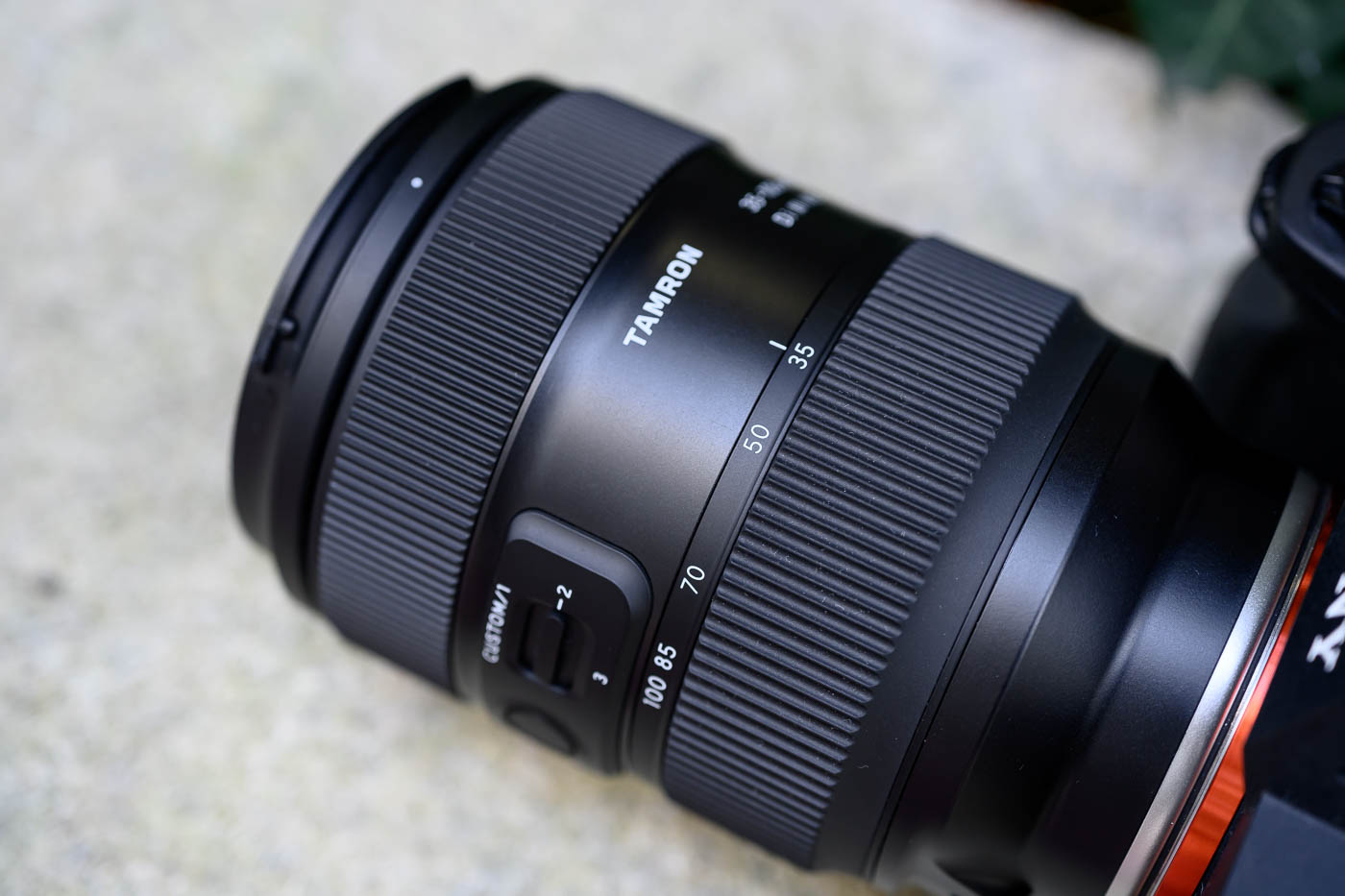
We also find the VXD autofocus motor (VoiceCoil eXtreme Torque drive), for fast and accurate focusing. Finally, the lens is not stabilized and relies entirely on the IBIS of Sony or Nikon camera bodies.
The Tamron 35-100mm f/2.8 Di III VXD is also the first lens to be compatible with the Tamron Link USB-C accessory, which enables a wireless connection with the Tamron Lens Utility app. Already compatible with Android, the app (finally) becomes compatible with iOS.
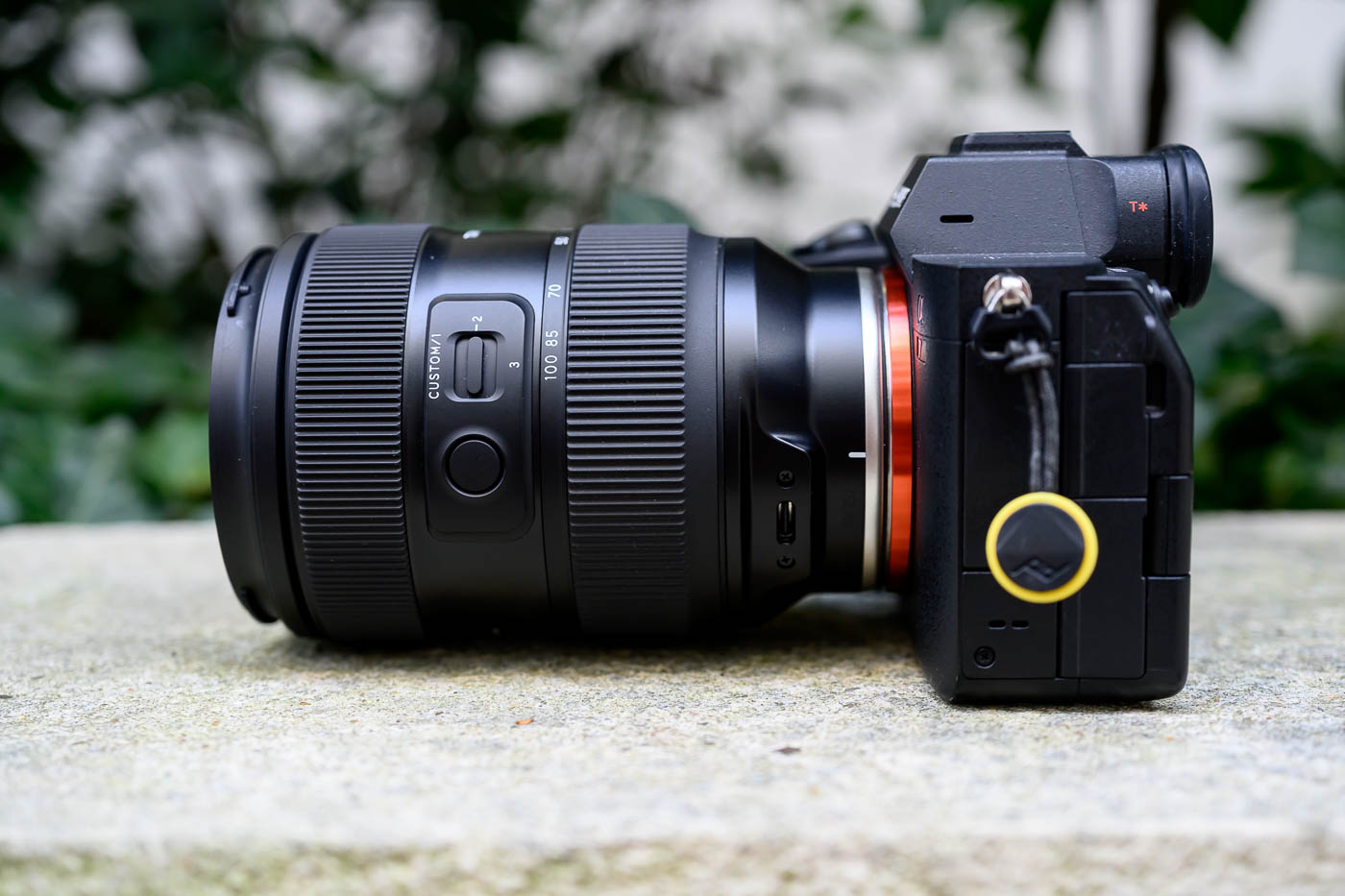
Finally, this new zoom can be seen as the distant descendant of another unconventional lens, the Tamron SP AF 28-105mm f/2.8 LD Aspherical IF, launched back in… 1990.
Here is the full specifications list for the Tamron 35-100mm f/2.8 Di III VXD:
- focal range: 35-100mm (52.2-150mm equivalent on APS-C)
- lens for sensor: full frame
- max aperture: f/2.8
- min aperture: f/16
- angle of view: 63°26′- 24°25′
- optical construction: 15 elements in 13 groups
- diaphragm: circular, 9 blades
- minimum focusing distance: 22cm (35mm) / 65cm (100mm)
- image stabilization: no
- weather sealing: water and weather resistant
- max magnification: 0.33x (35mm) / 0.16x (100mm)
- focusing: VXD motor
- filter diameter: 67mm
- dimensions: ø 80.6 x 119.2mm (Sony E) / ø 80.6 x 121.5mm
- weight: 565g (Sony E) / 575g (Nikon Z)
- included accessories: front and rear caps, lens hood
- compatible mounts: Sony E, Nikon Z
- launch price: $899 (Sony E) / $929 (Nikon Z)

Ergonomics and handling
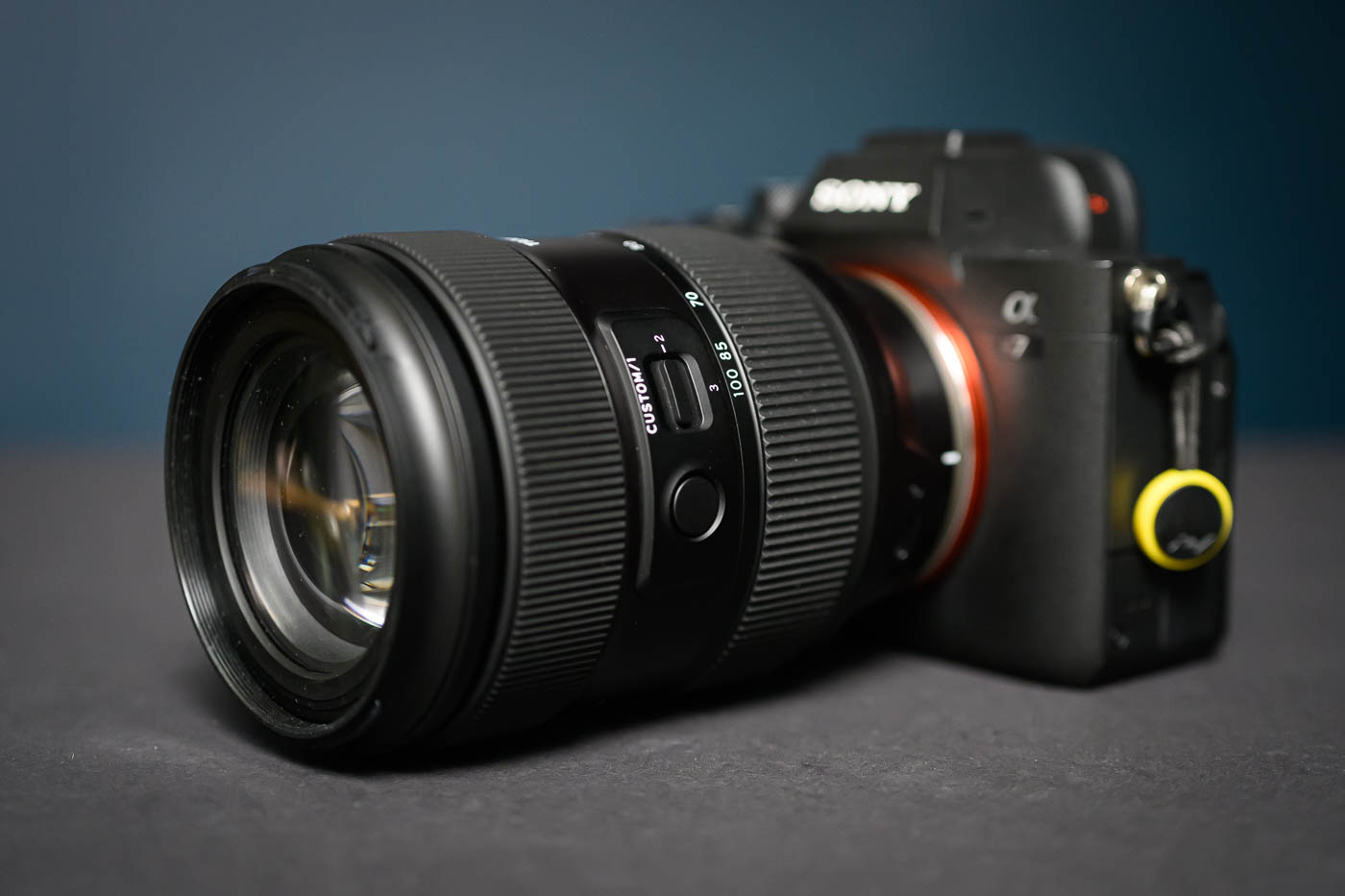
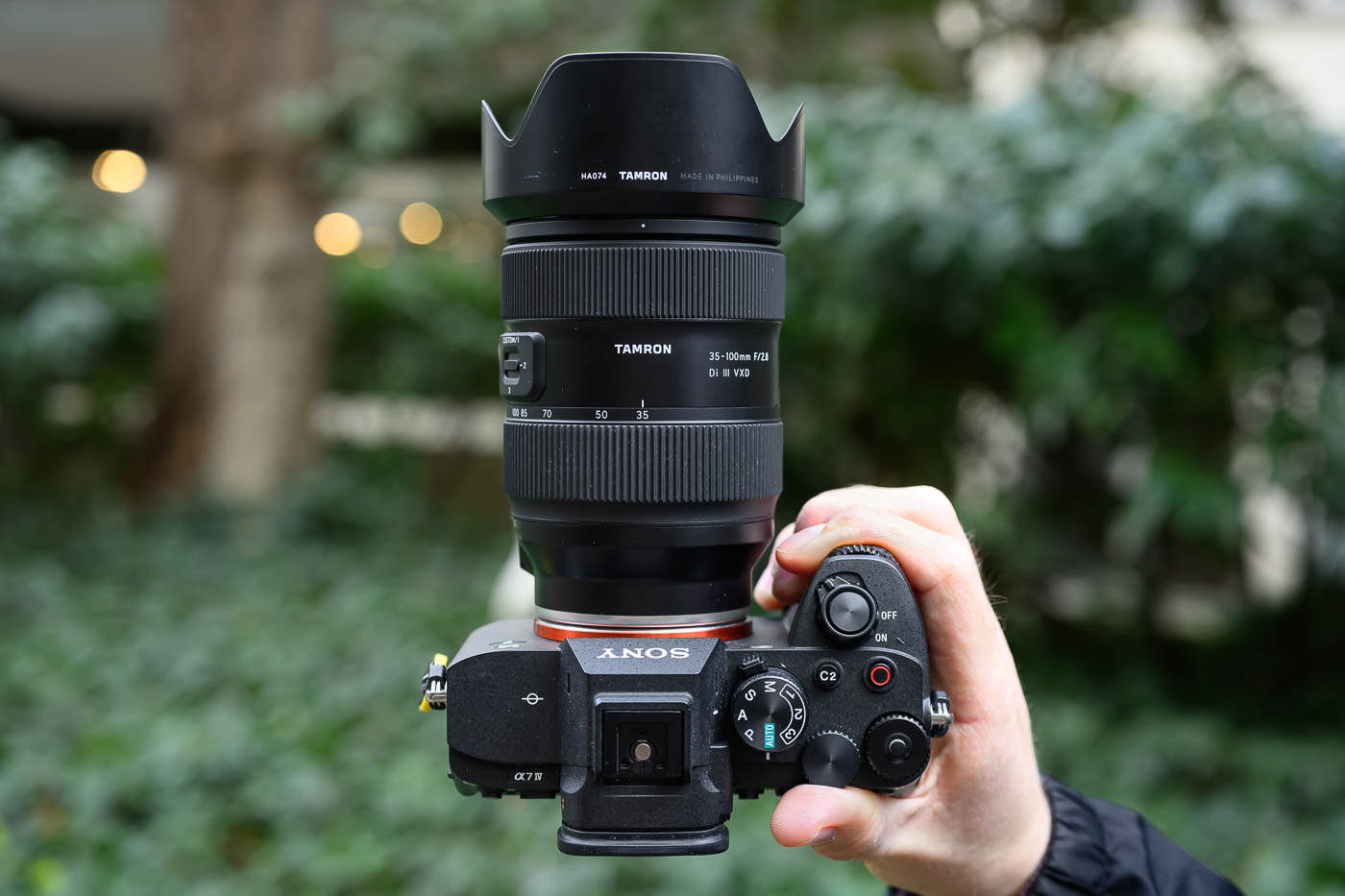
At first glance, the Tamron 35-100mm f/2.8 Di III VXD is surprisingly compact, at 12.2cm long, with a maximum diameter of 8cm and a weight of 565g (in E mount). It manages the feat of being (almost) as small and light as the 28-75mm f/2.8 Di III VXD G2 – although the latter has a slightly smaller diameter. Most importantly, it is considerably lighter than the 35-150mm f/2-2.8, which tips the scales at nearly 1.2kg!
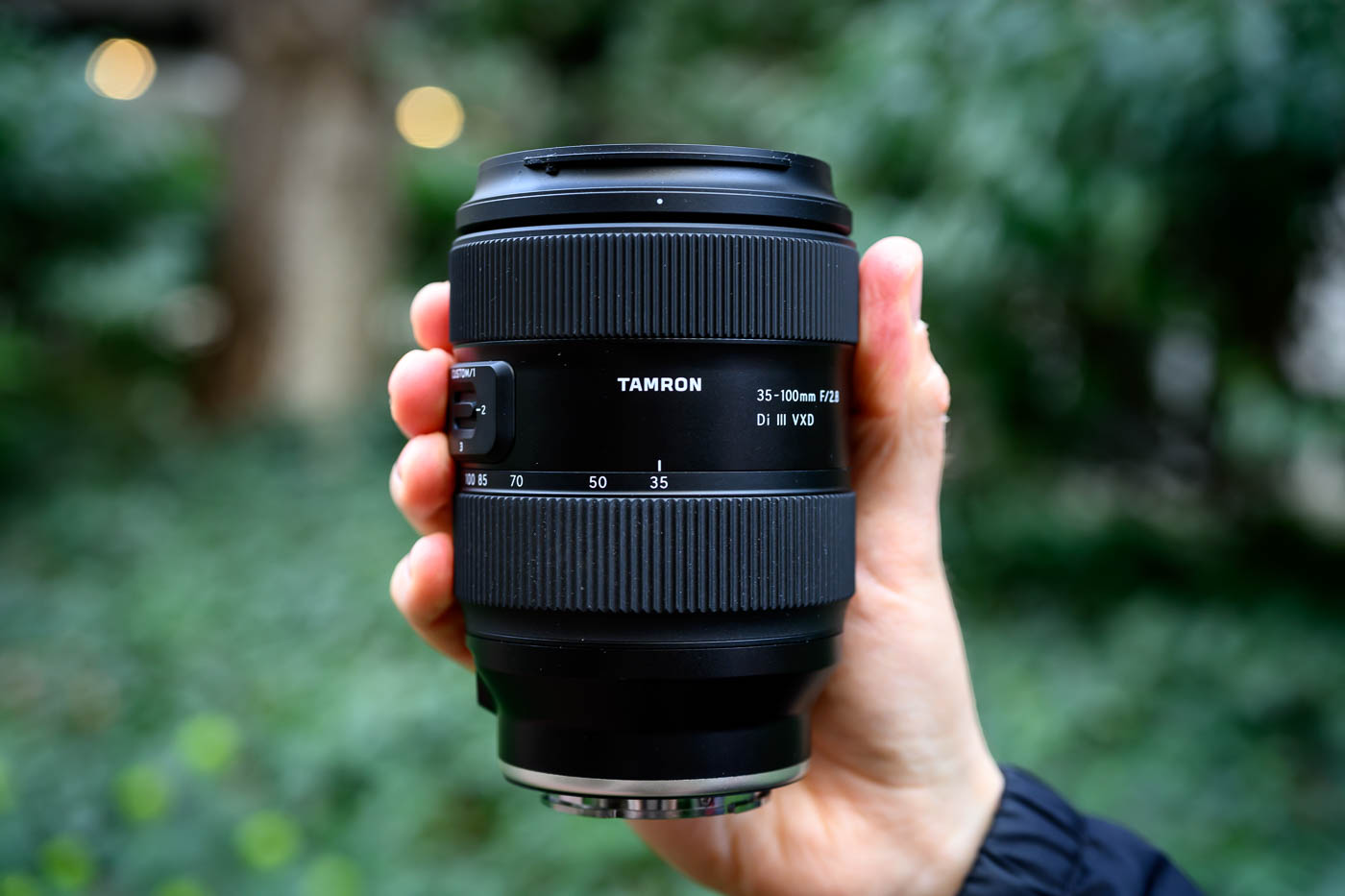
Unsurprisingly, zooming is not internal: expect an extra 2cm at full zoom – and 3cm with the included petal-shaped lens hood. The filter diameter is 67mm, as on nearly all Tamron zooms.
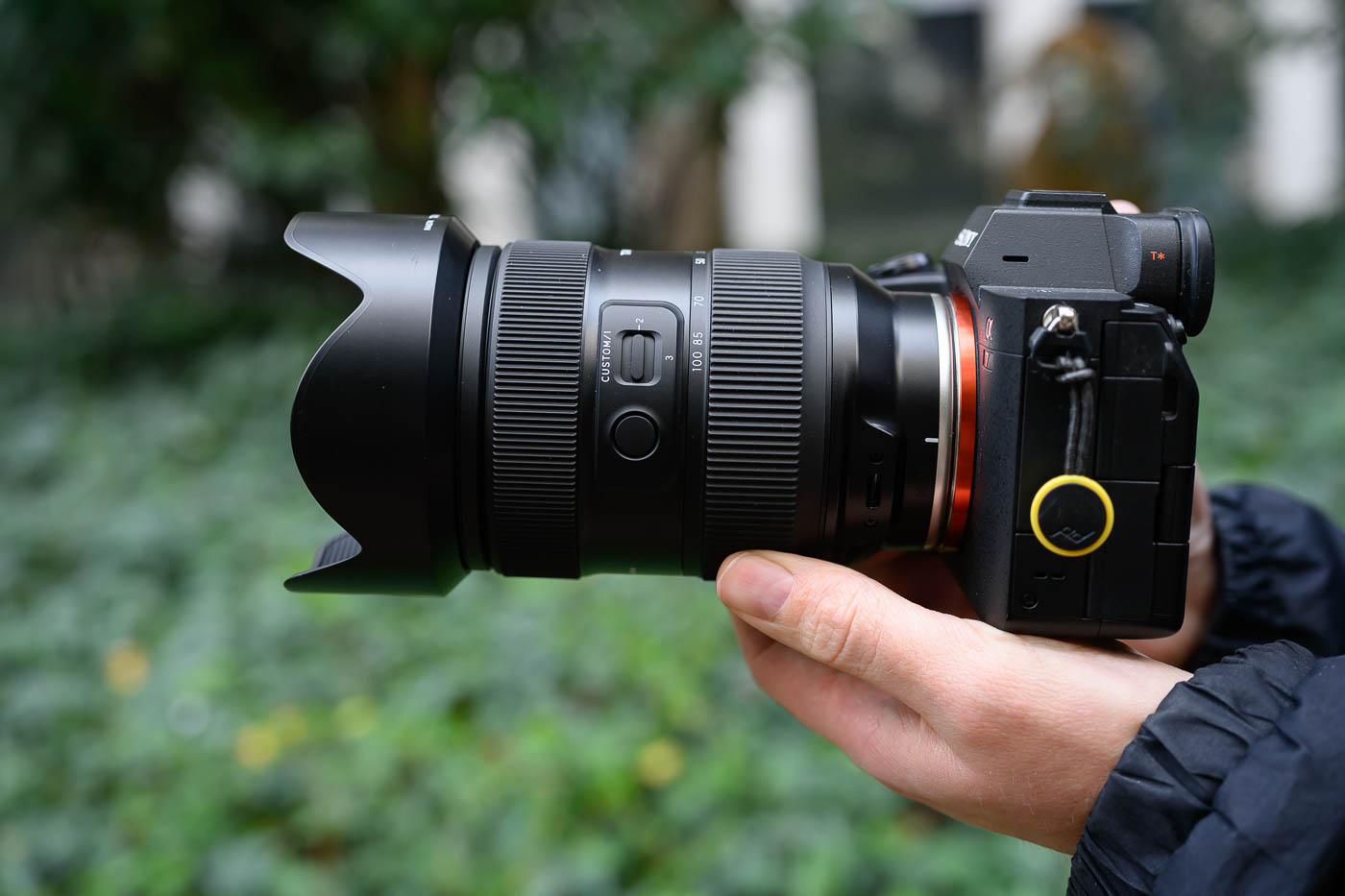
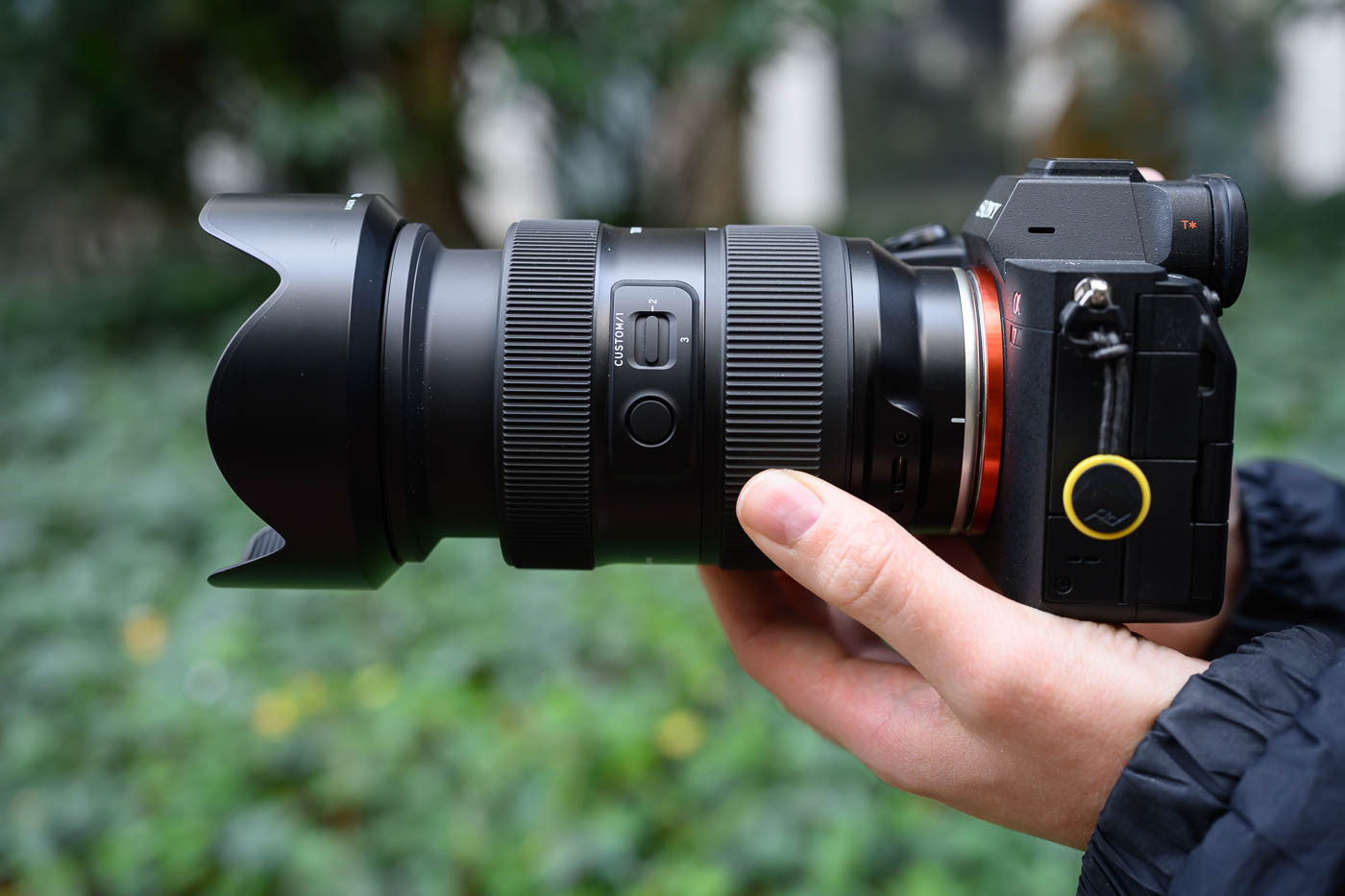
In terms of manual controls, we find a fairly wide zoom ring positioned at the rear, near the mount, as well as a thin focus ring at the very front. There is also a button and a Custom 1/2/3 switch, both configurable through the Tamron Lens Utility software (macOS, Windows, Android and now iOS), thanks to the USB-C port on the side. No zoom lock switch is present – but the lens does not extend when pointed downward.
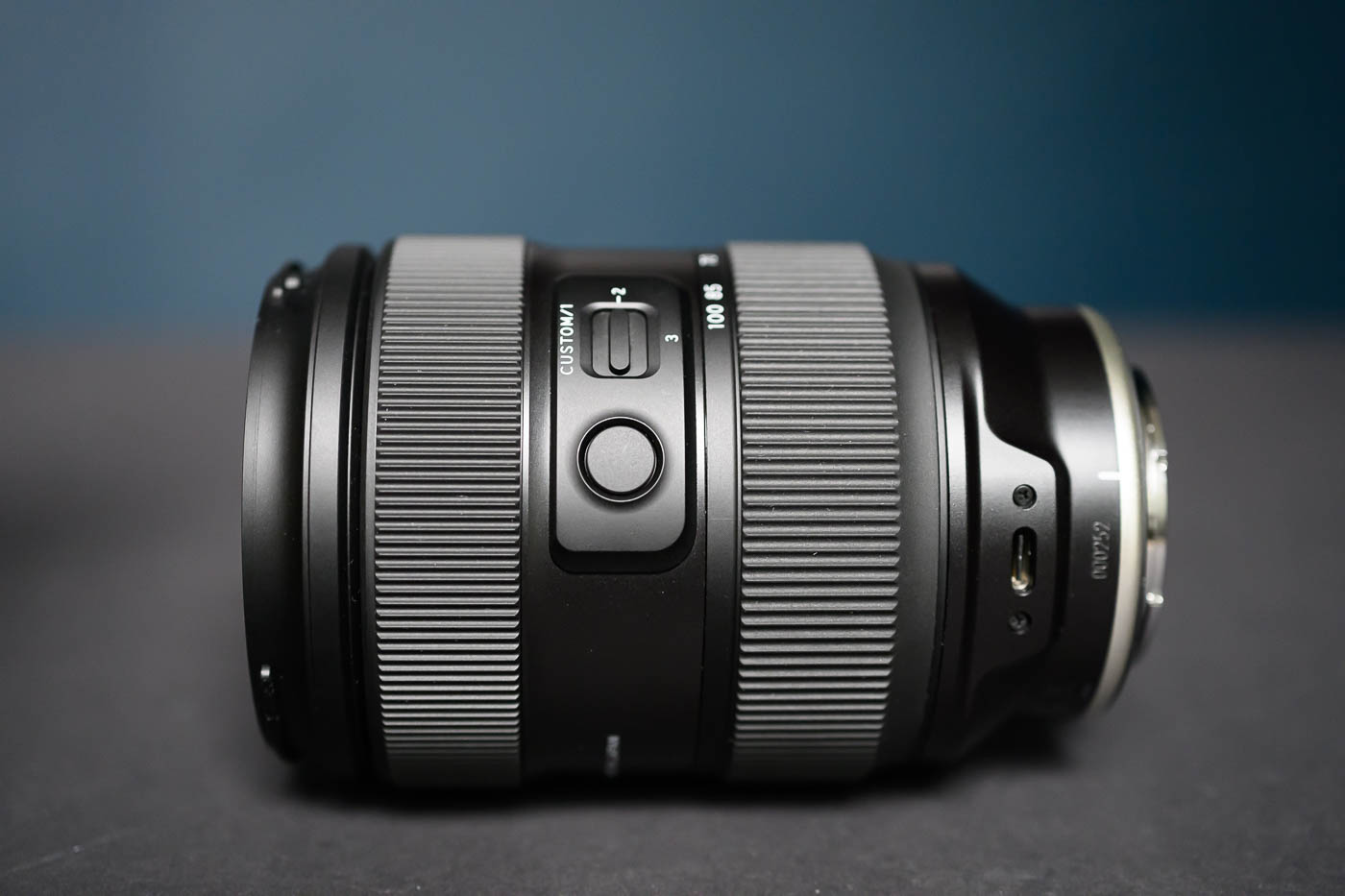
We also find the matte black finish common to other Tamron lenses. The polycarbonate feels quite smooth to the touch. Furthermore, the lens features weather sealing gaskets. We were therefore able to use it in a dusty environment or under a rain shower without any difficulty other than catching a nasty cold.
Tamron Link: customize your lens… wirelessly – and with an iPhone!
Since 2021, the manufacturer has offered its Tamron Lens Utility software to customize lens behavior. Thanks to the USB-C port mentioned above, you can connect it (via cable) to a PC, a Mac or a smartphone running Android.
However, the brand takes a decisive step here with the Tamron Link. This small accessory plugs directly into the lens’s USB-C port, and for the first time enables wireless communication with the Tamron Lens Utility app, including with iPhones.
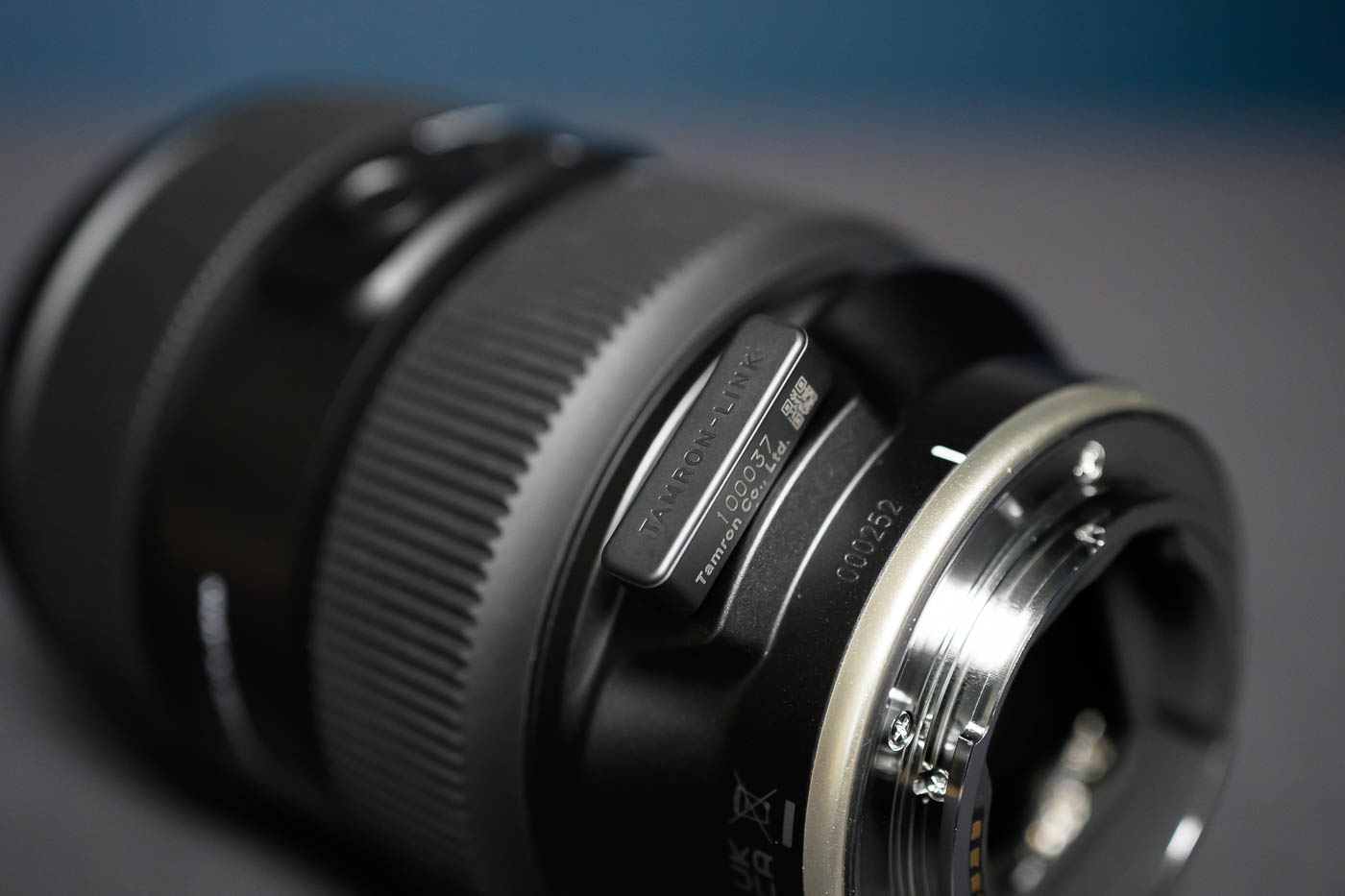
Once connected, you can modify the functions assigned to the Custom 1/2/3 modes, which control the behavior of the button on the lens (via a short or long press).
We assigned mode 1 to the AF/MF toggle, mode 2 to the toggle between focus ring and clickless aperture ring, and mode 3 to the Astro Fine adjustment function. You can also remotely control aperture and focus adjustments (with a marker system well known to filmmakers), or select and switch between 3 focus presets.
For more details, feel free to refer to this article.
Image quality of the Tamron 35-100mm f/2.8 Di III VXD
We used the Tamron 35-100mm f/2.8 Di III VXD on a Sony A7 IV and a Sony A1, equipped with full frame sensors of 33 and 50 MP respectively. But also on a Nikon Z8 (45.7 MP) via the Megadap ETZ21 Pro+ adapter.
Feel free to click on each image to view it in optimal quality.

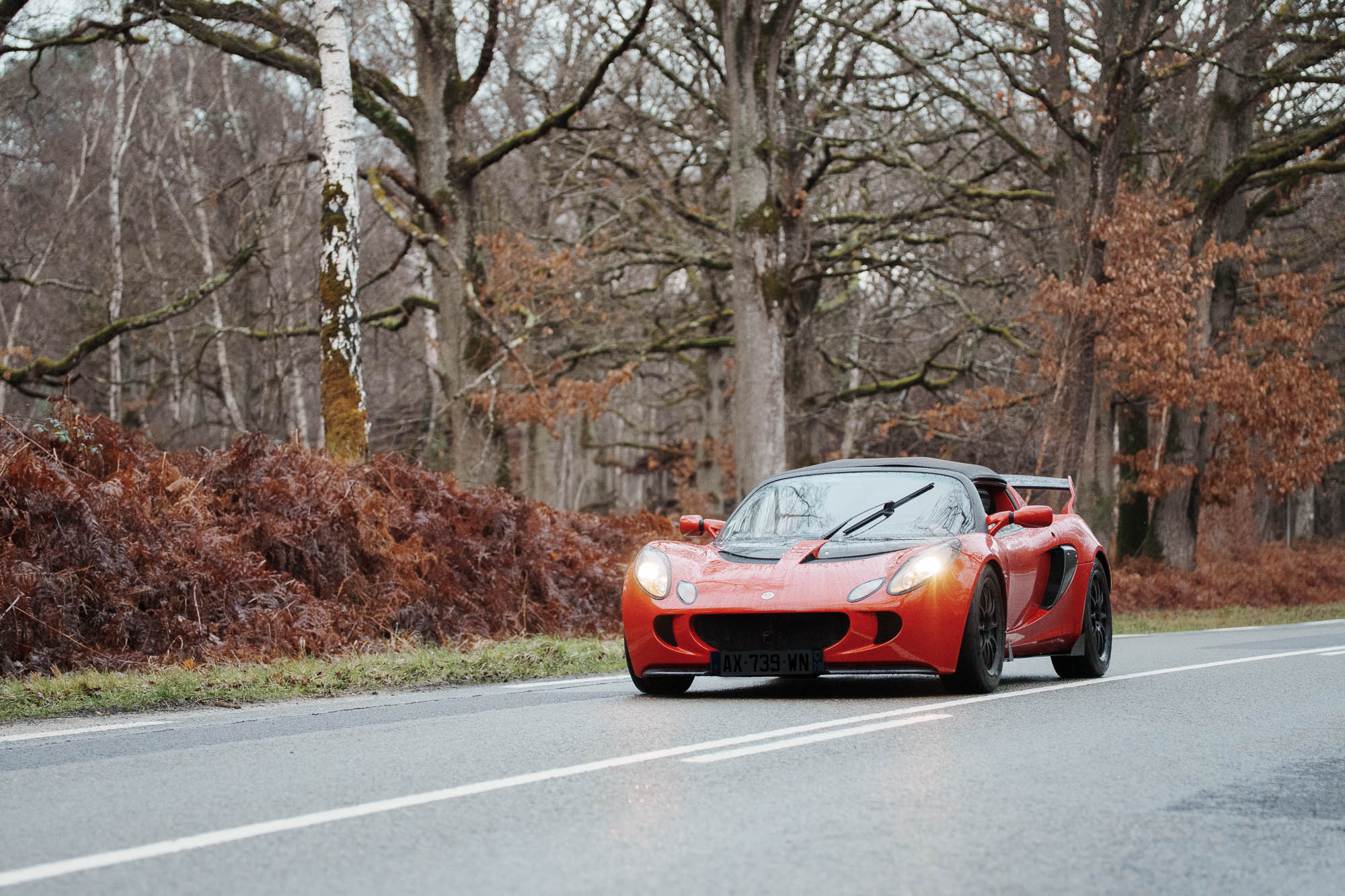
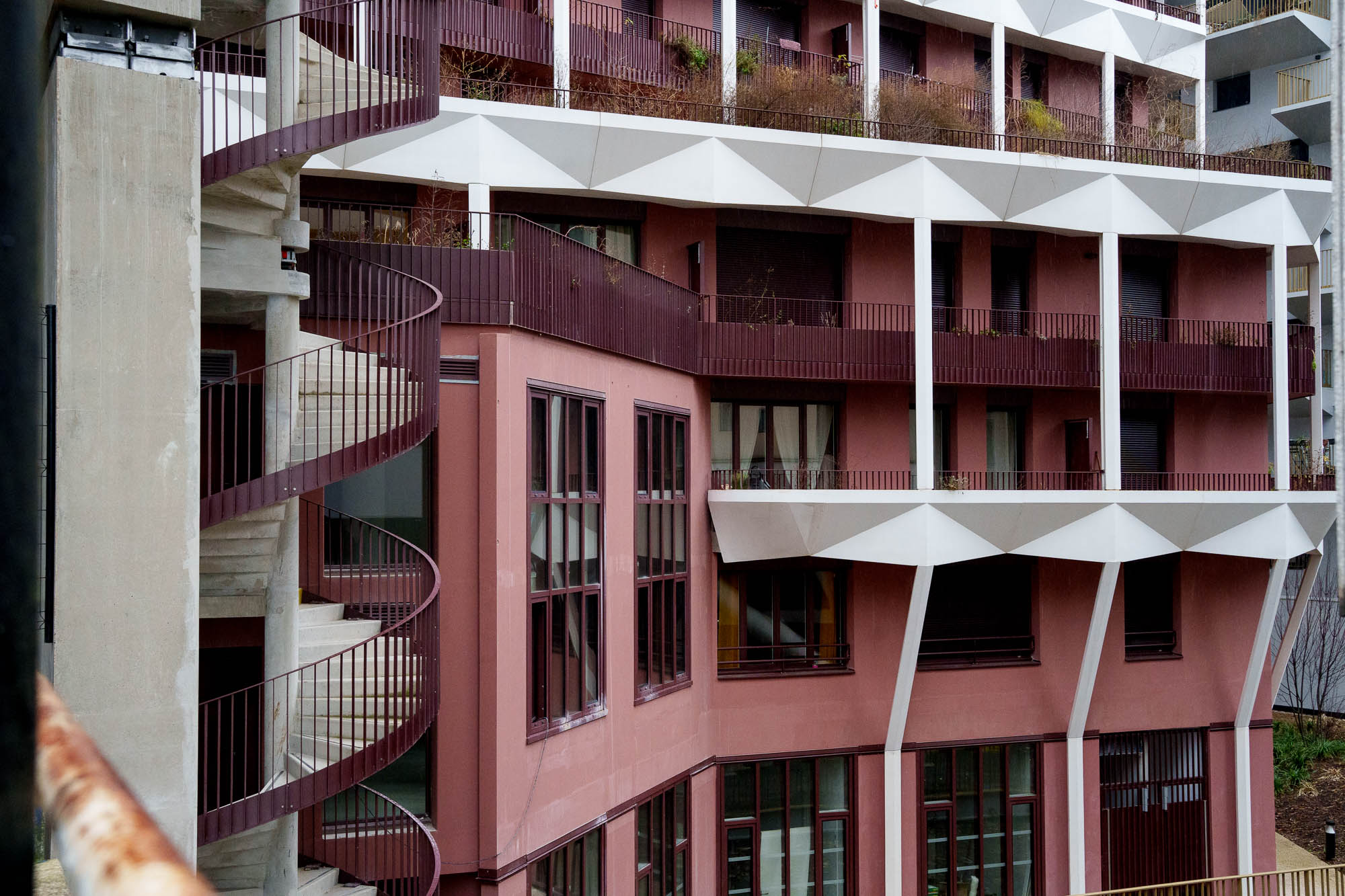
Sharpness and resolution
In terms of image quality, the Tamron 35-100mm f/2.8 Di III VXD is a strong performer. Sharpness is well defined in the center from wide open (f/2.8) at all focal lengths, and color rendition and contrast are refined. For an extra touch of creativity however, we sometimes took the liberty of using Sony’s in-camera color profiles.
In detail, the lens delivers good performance at the wide end (35mm) in the center of the frame, from wide open. However, edge rendering lacks precision, and you need to stop down to f/5.6 for a real improvement. Good edge-to-edge sharpness is achieved at f/8, which architecture and landscape photographers will appreciate. Diffraction appears at f/11, and logically becomes more noticeable from f/16 onward.
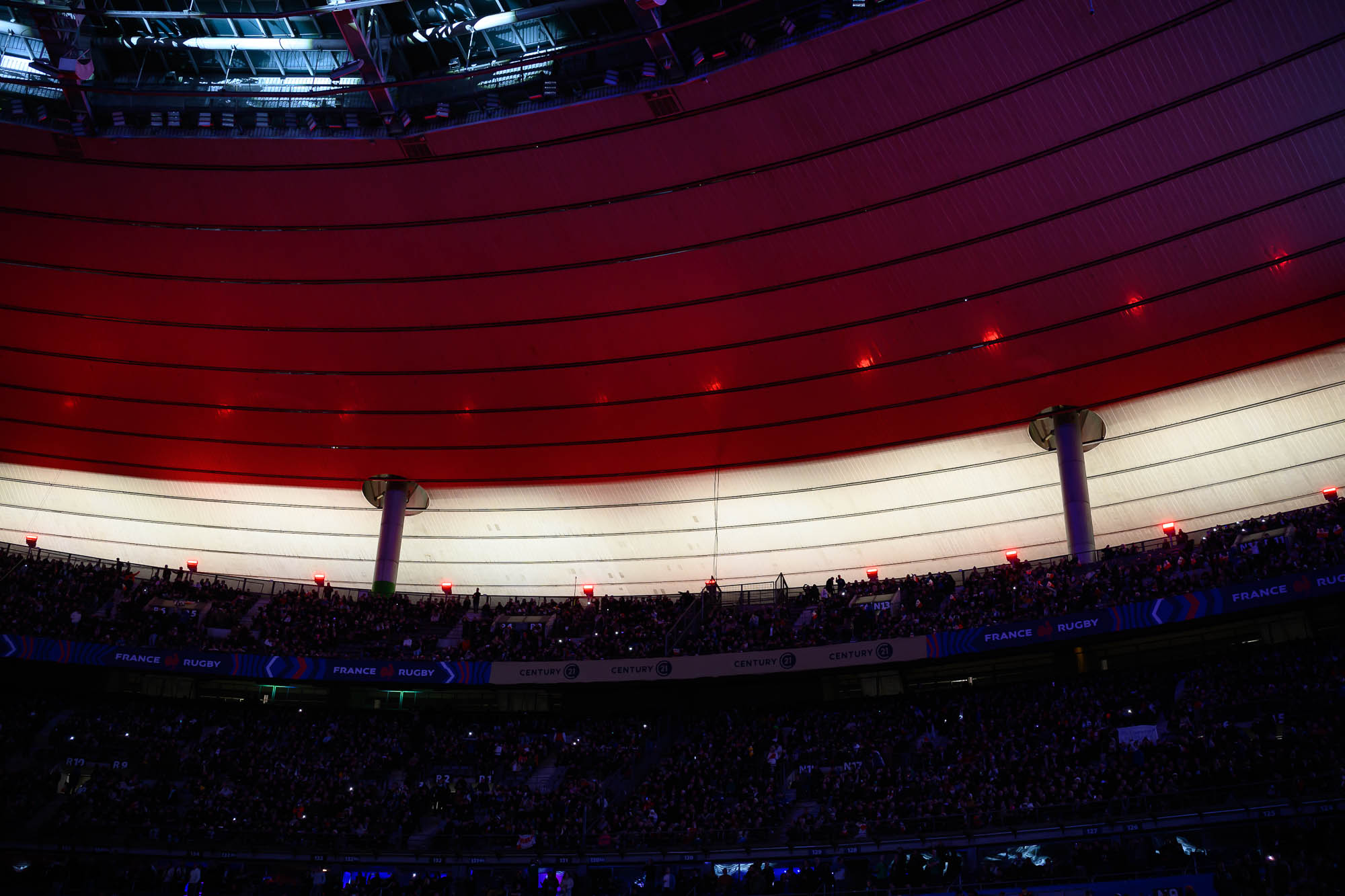

We observe a real improvement in performance from the mid-range focal lengths (around 70mm). Sharpness is excellent in the center and proves very good at the edges from f/2.8. Stopping down to f/4 further improves edge-to-edge consistency, which remains excellent up to f/8. These very good results hold up to f/11. Diffraction is mild at f/16 – and quite noticeable at f/22.


Our findings at 70mm also hold true at full zoom (100mm). We note excellent center sharpness from f/2.8. Stopping down to f/4 delivers very good edge-to-edge consistency, observable up to f/8. However, diffraction kicks in a bit earlier (f/11), and becomes more pronounced from f/16 onward.
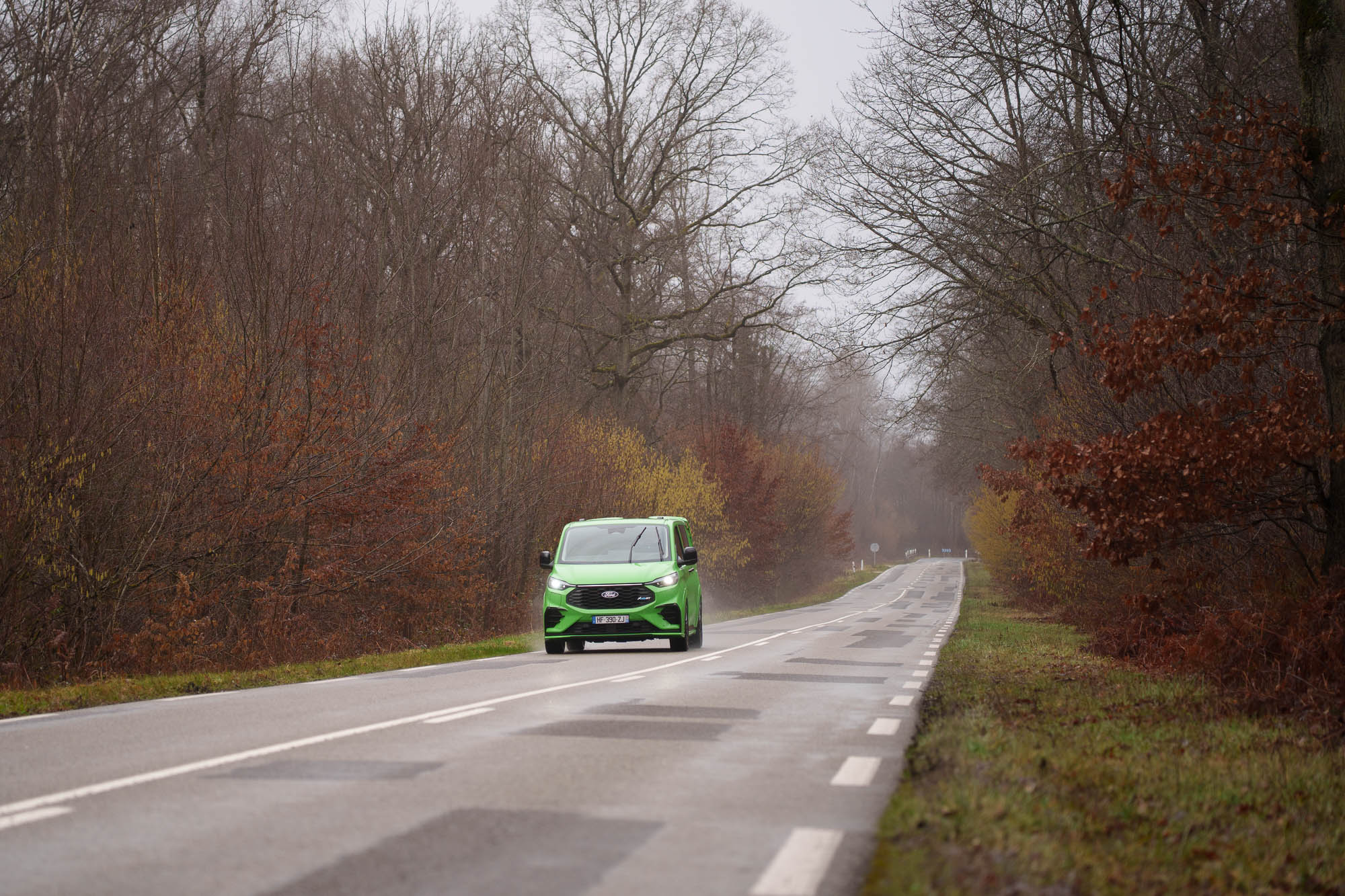
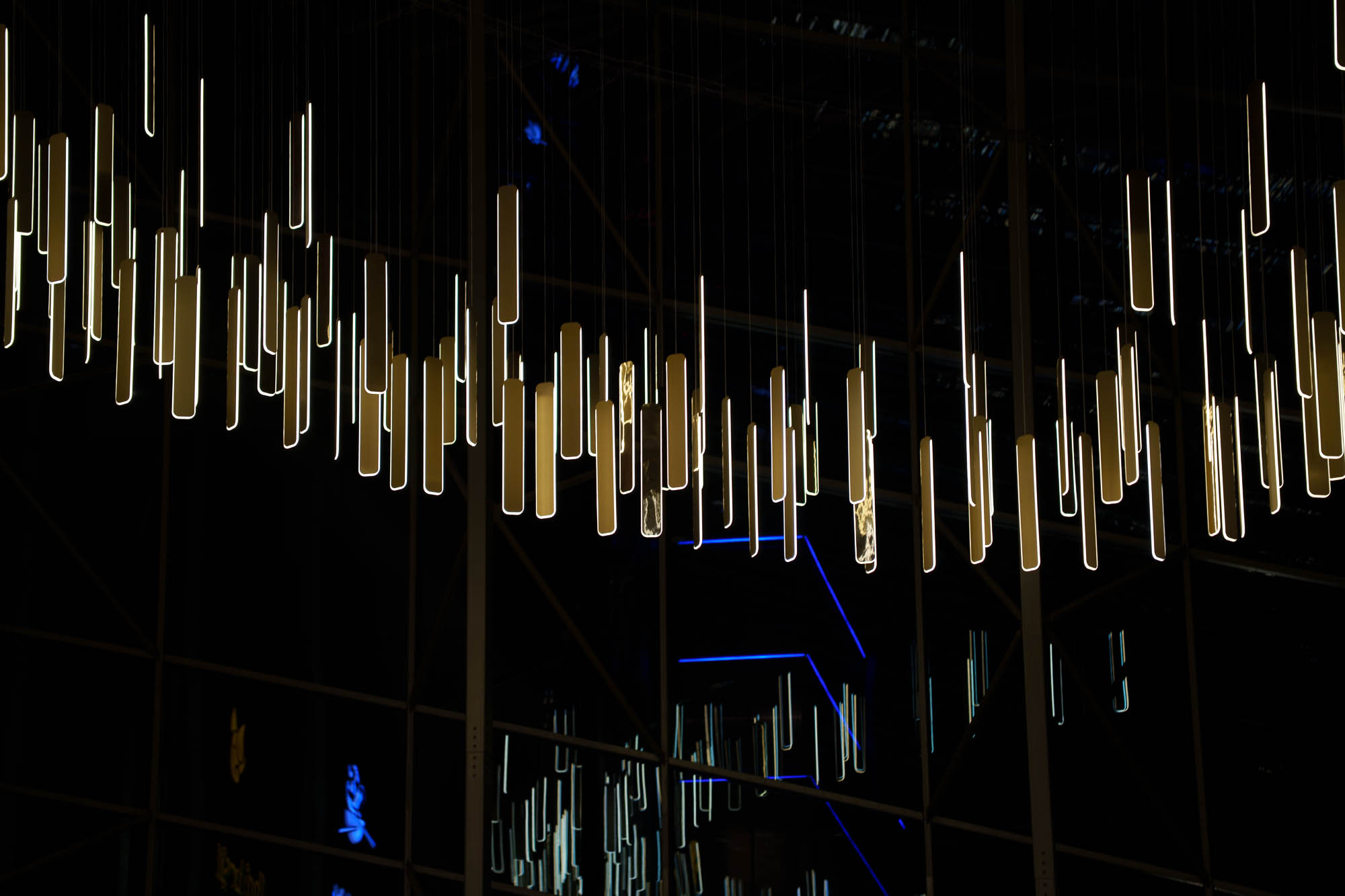
Overall, the performance of the Tamron 35-100mm f/2.8 Di III VXD is a very pleasant surprise given its extended focal range. At mid-range focal lengths, edge-to-edge consistency is excellent when stopping down slightly – and performance holds up well at full zoom. From this standpoint, Tamron has delivered a very accomplished lens.
Short minimum focusing distance and pleasing bokeh
The Tamron 35-100mm f/2.8 Di III VXD also stands out with its short minimum focusing distance. At 35mm, it’s just 22cm from the focal plane. This provides a maximum magnification ratio of 0.33x: close-up photography enthusiasts will be delighted. At full zoom, the minimum distance increases to 65cm.


Thanks to the constant f/2.8 aperture, you can easily play with depth of field. The bokeh effect is pleasing, with nicely rounded bubbles. However, we observe some chromatic fringing around the edges of the bokeh balls, an onion ring effect and a slight “cat’s eye” effect from 70mm onward.

Distortion and vignetting
On the Tamron 35-100mm f/2.8 Di III VXD, flare is generally well controlled, although some (rare) green artifacts can occasionally appear. The starburst effect is rather modest, but does produce 18-pointed stars.
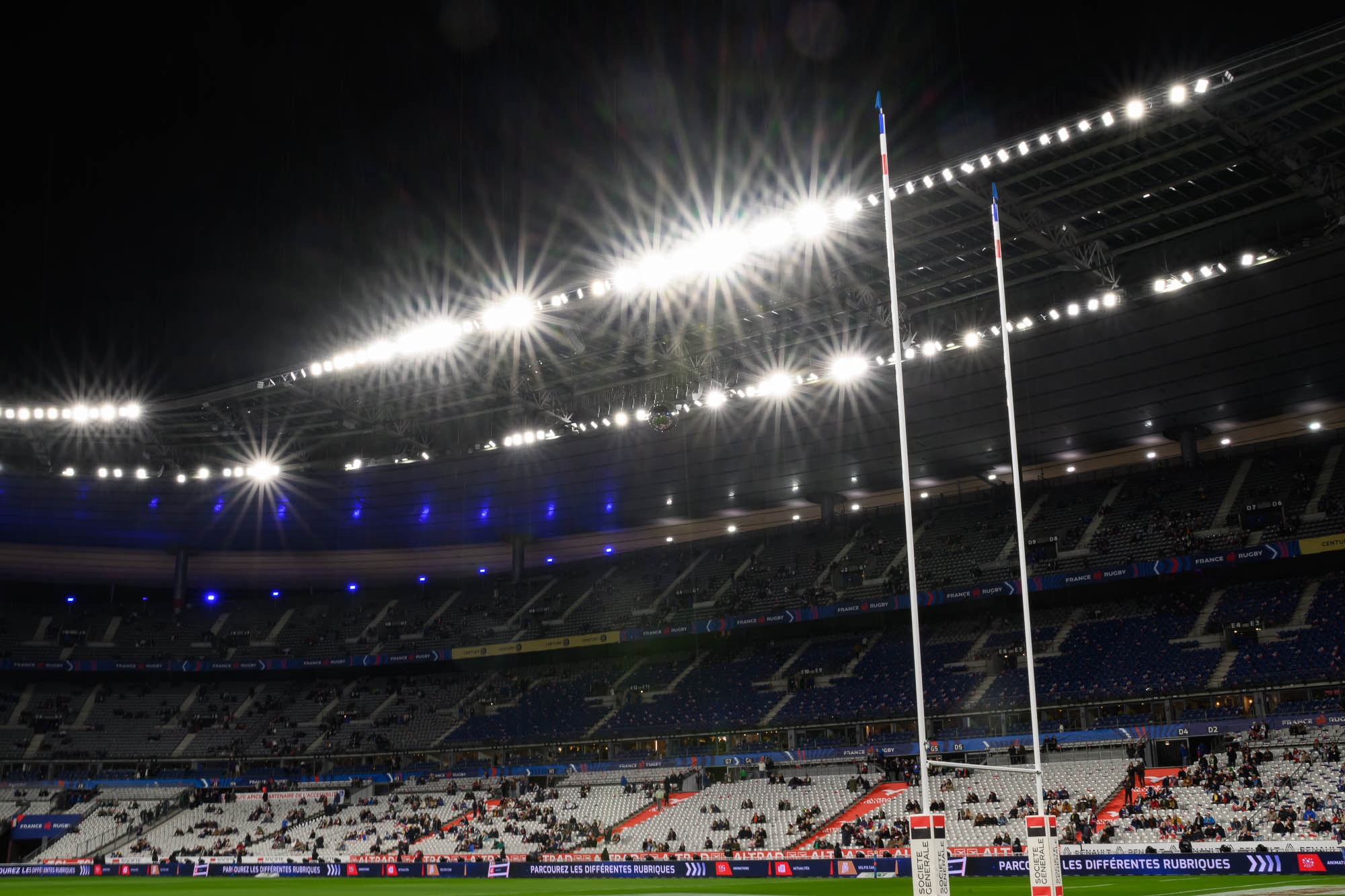
Chromatic aberrations are also well controlled by the lens. However, you can sometimes spot a noticeable green and pink fringe on elements placed at the periphery of the frame. A point we had already noted on the recent Tamron 25-200mm f/2.8-5.6 Di III VXD.

The lens is supported by our post-processing software – but only for vignetting compensation. At the wide end, barrel distortion and corner darkening are virtually invisible.


On the other hand, we observe noticeable pincushion distortion at full zoom, along with slight corner darkening. Both phenomena are well corrected automatically by Sony camera bodies.


Autofocus of the Tamron 35-100mm f/2.8 Di III VXD
Like other (recent) Tamron zooms, this 35-100mm zoom uses a VXD autofocus motor. The goal: to deliver fast, accurate and silent focusing.
In the field, the autofocus of the Tamron 35-100mm f/2.8 Di III VXD delivers solid performance. Subject acquisition is fast and accurate. For static subjects or those with gentle movements, the lens presents no difficulty. It is of course compatible with subject detection/tracking modes, making it a good companion for portraits.

Performance remains very good with fast-moving or erratically moving subjects. Tracking proves very effective, with no loss of the subject mid-burst. Whether at 10 or 15 fps on Sony bodies, or at 20, even 60 or 120 fps on a Nikon Z8, the zoom doesn’t falter and proves fully up to the task. Sports and action photographers will find a reliable companion here – although the 100mm maximum focal length may be a bit too short on the sidelines of some sporting events.


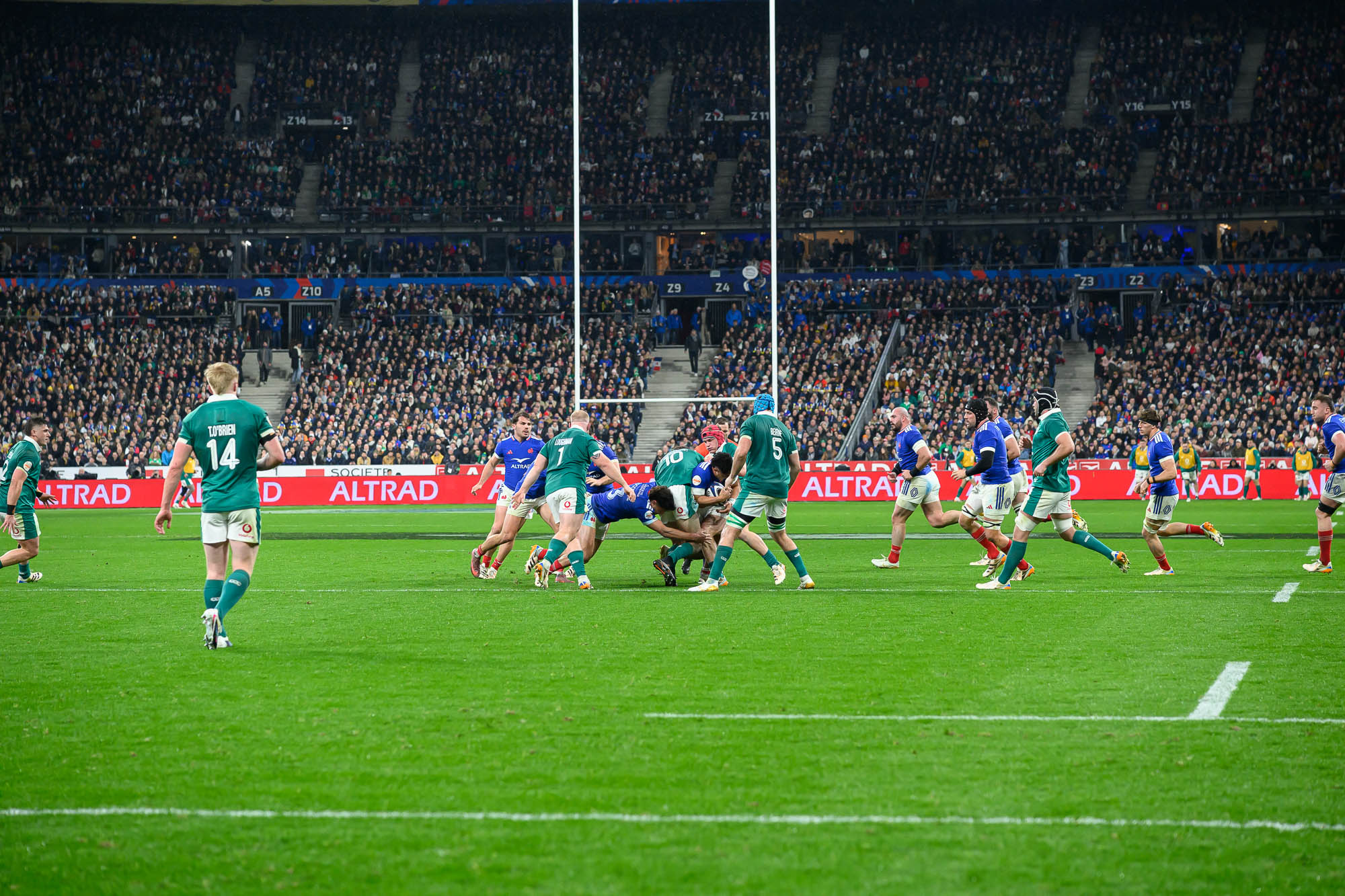
Likewise, low light doesn’t intimidate this 35-100mm and the AF remains responsive. Once again, Tamron has delivered a polished effort.
Finally, the lens is not stabilized and therefore relies entirely on the camera body’s IBIS. At 35mm, we managed to go down to 0.4s. At 100mm, we were able to capture a whole series of images at 1/3s without much difficulty. Top-tier performance.
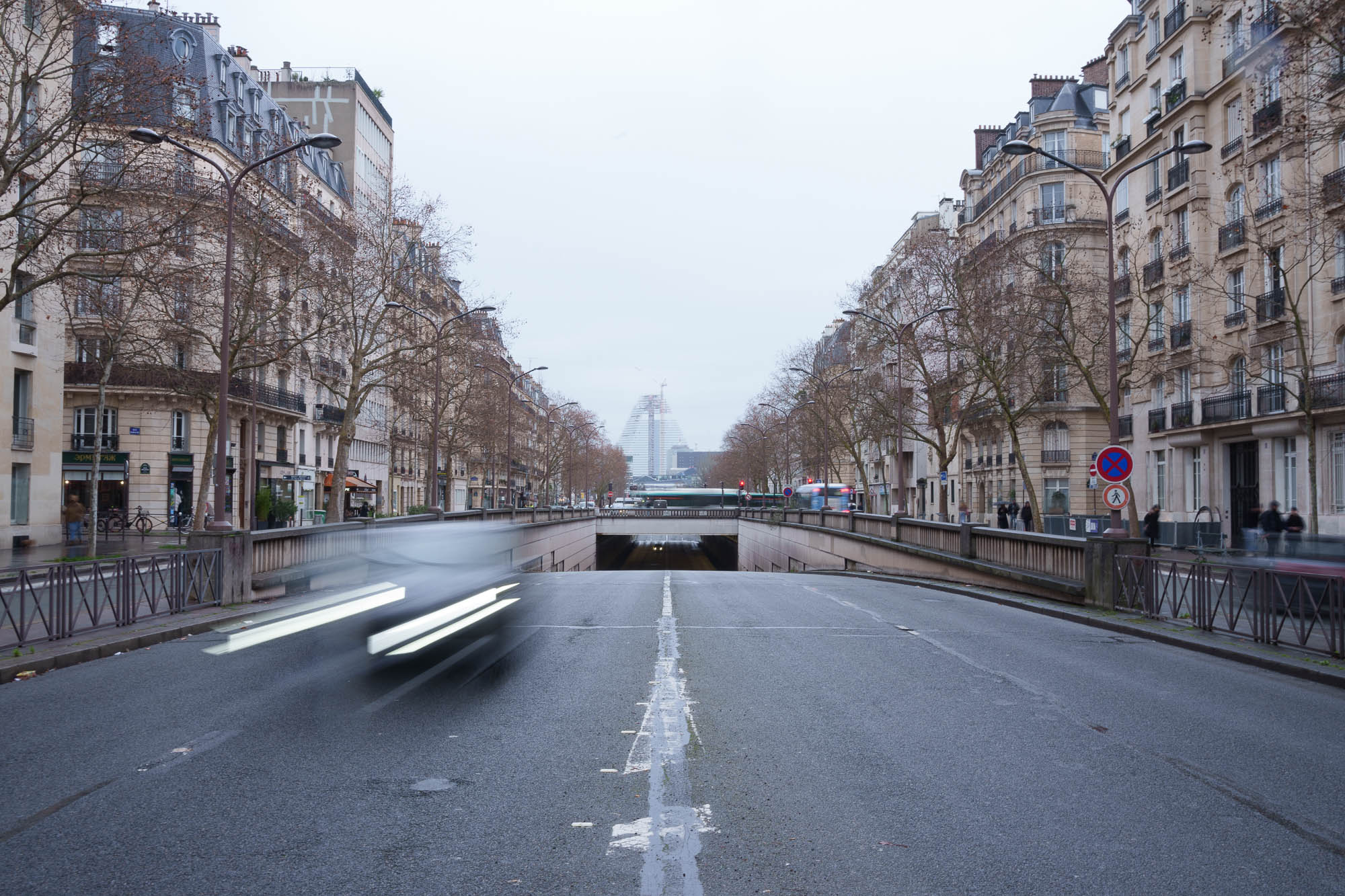

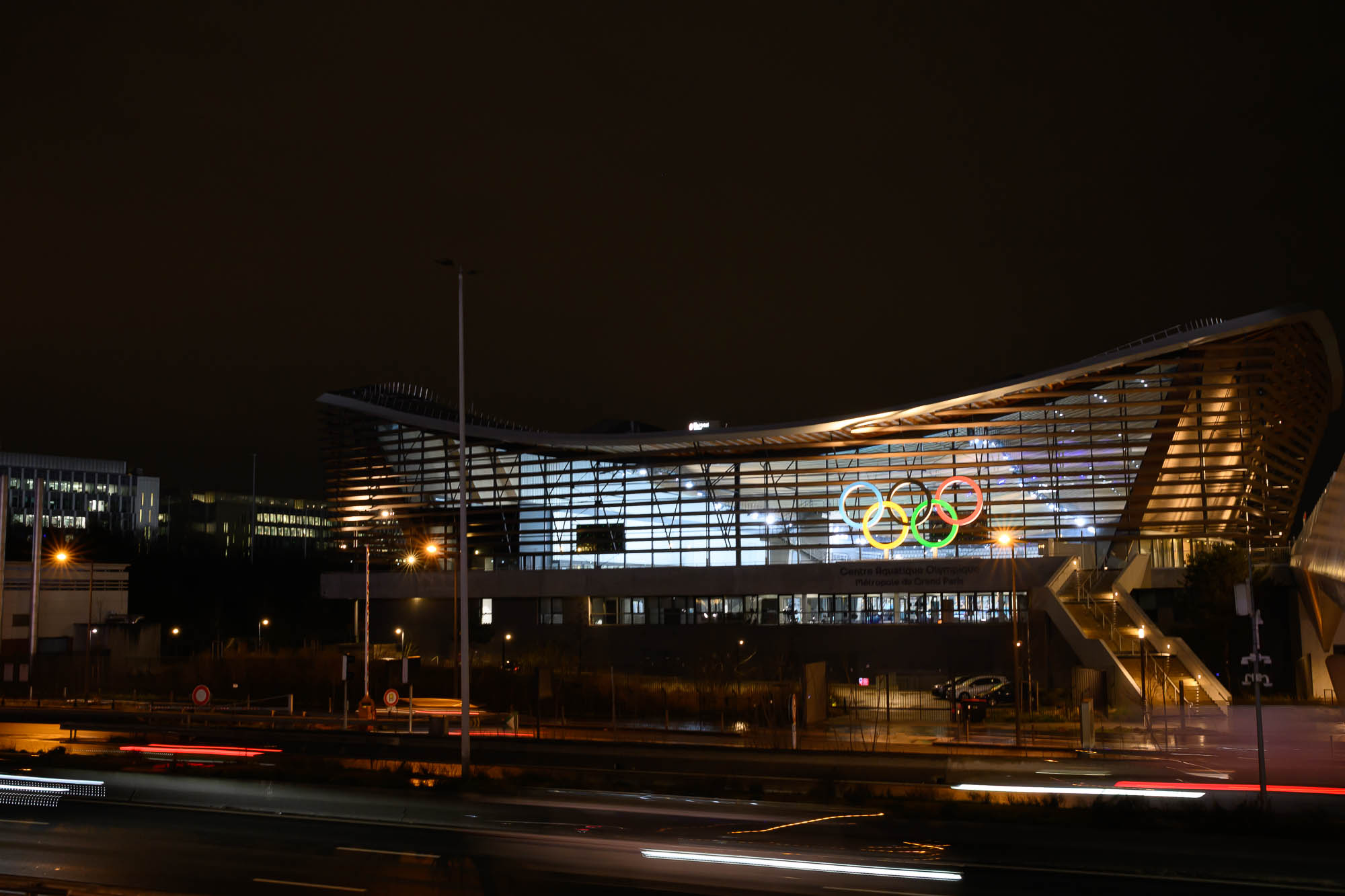
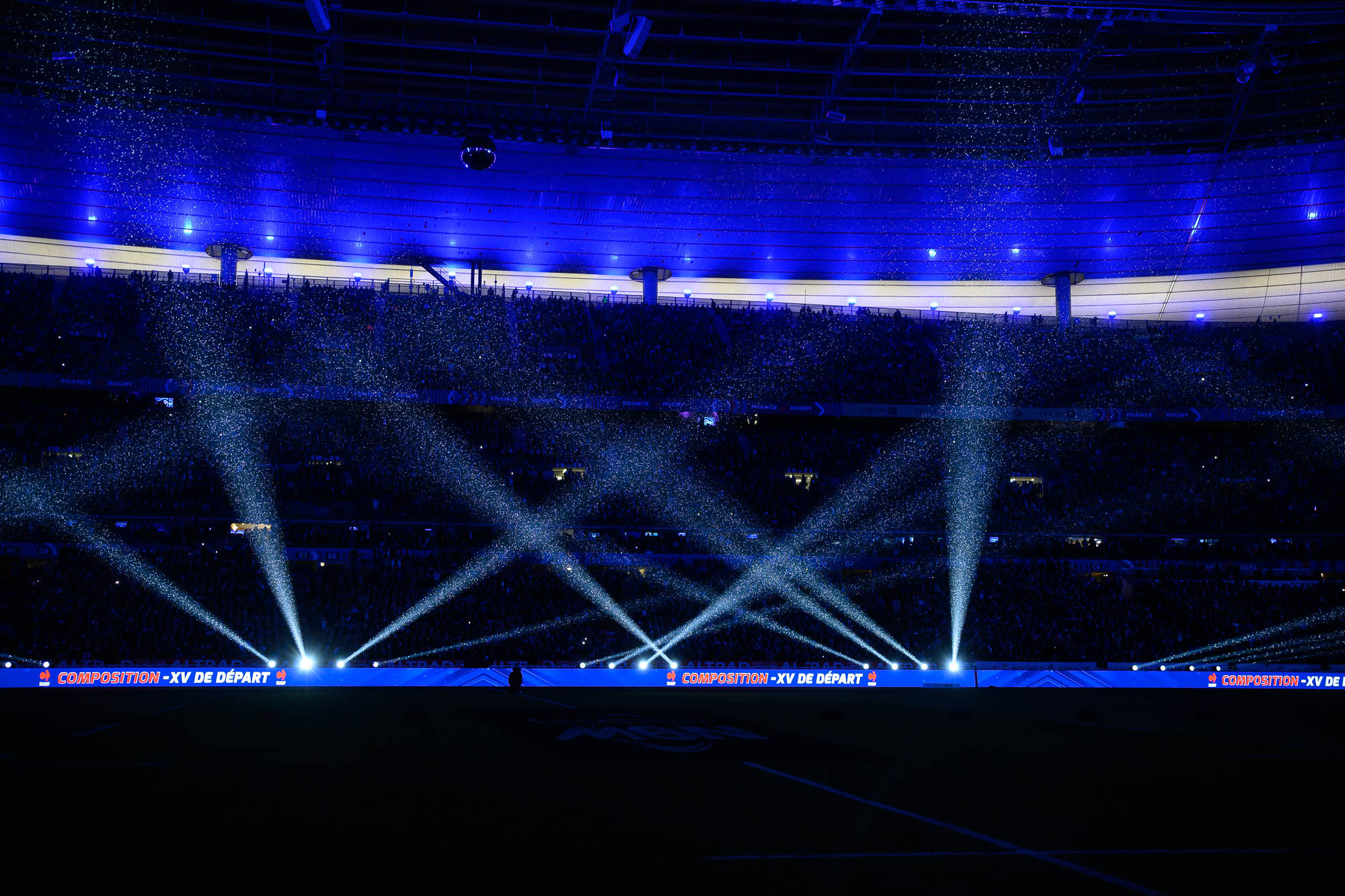
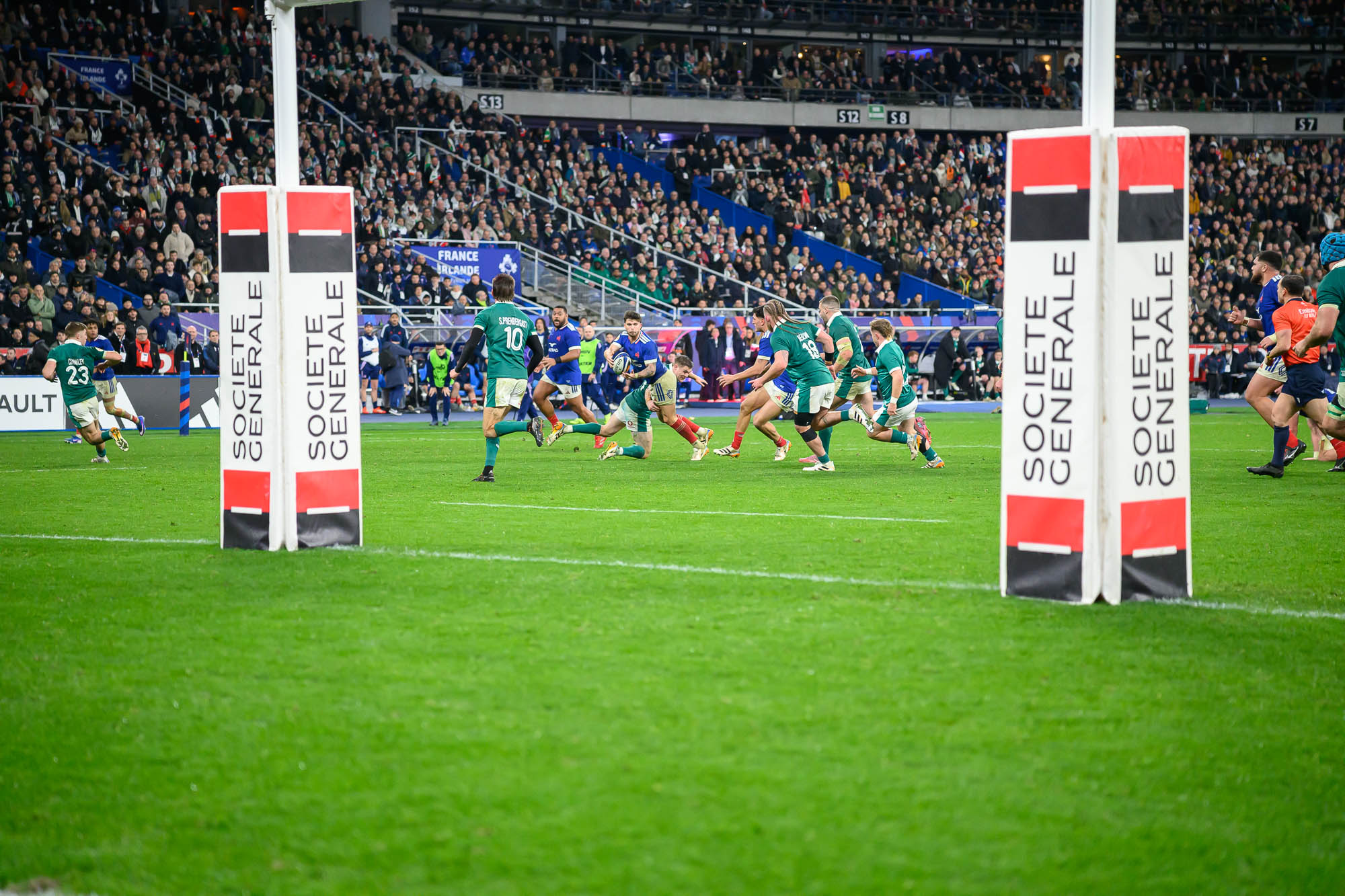
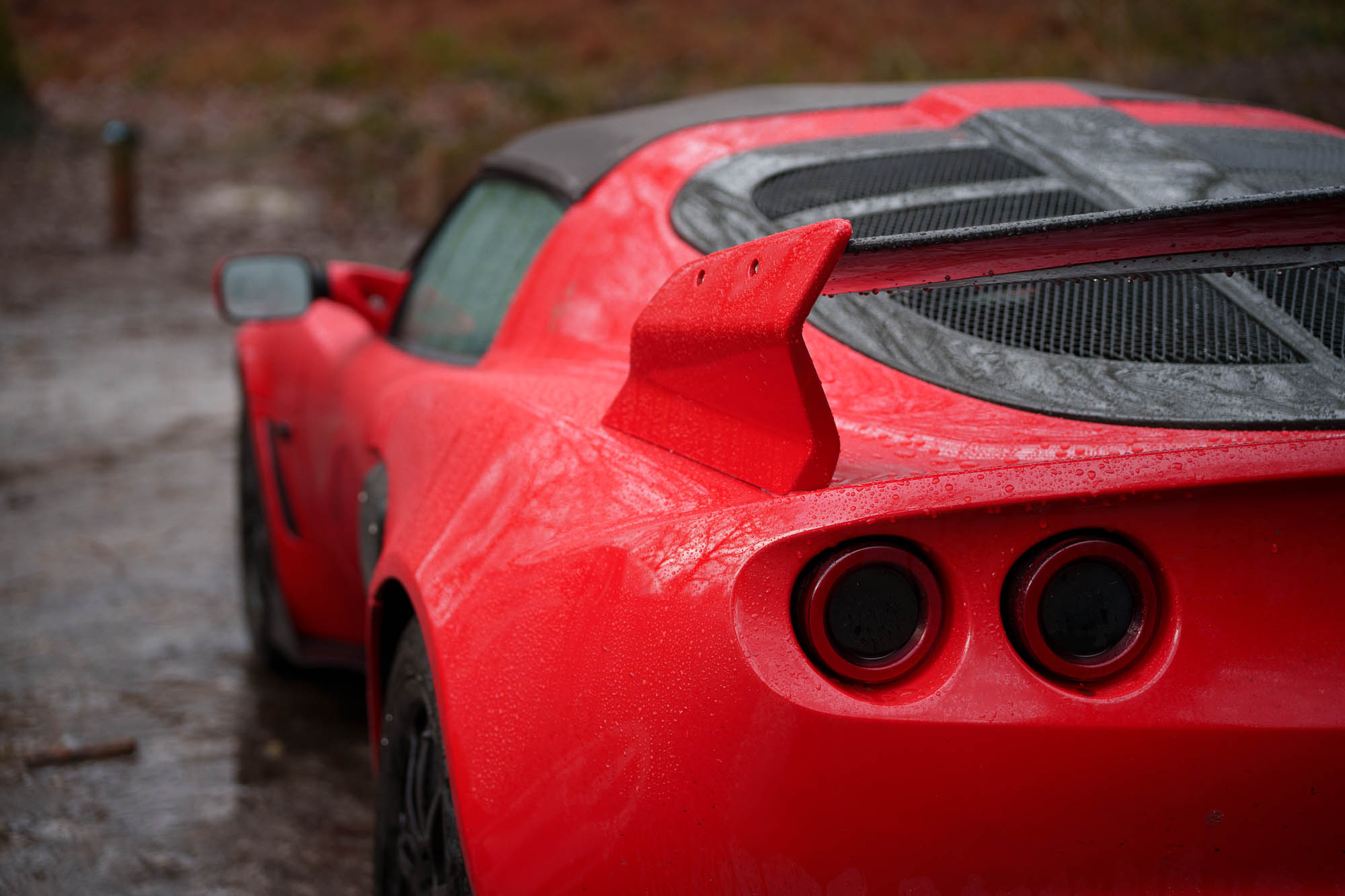
Below is a selection of photos captured with the Tamron 35-100mm f/2.8 Di III VXD:












Against the competition
With this 35-100mm zoom featuring a constant f/2.8 aperture, Tamron offers a highly original lens. It is therefore quite difficult to find direct competitors – especially since its price tag of $899 (E mount) or $929 (Z mount) is particularly aggressive. Positioned halfway between the “classic” 24-70mm and 70-200mm, it can be compared to the (numerous) 24-105mm f/4 lenses – but these are one stop slower.
That said, the expansion of Sony’s E mount ecosystem allows our 35-100mm to encounter several relevant rivals along the way.
Sigma 28-105mm f/2.8 DG DN Art
Launched in September 2024 in E and L mounts, the Sigma 28-105mm f/2.8 DG DN Art is a very serious competitor. It offers a more extensive focal range, while also providing a constant f/2.8 aperture. Its optical performance is also excellent – although in its case, sharpness is slightly better at the wide end than at full zoom (the opposite of our Tamron). Its AF is also very responsive and, as expected from Sigma, its build quality is truly impeccable, with slightly more refined ergonomics.
This excellent zoom ultimately has only 2 drawbacks: a rather bulky form factor (15.9cm long when retracted and 990g) and a price tag of $1,649 that is significantly higher than the Tamron 35-100mm.
Tamron 35-150mm f/2-2.8 Di III VXD
Unveiled in September 2021 in E mount – and in September 2023 in Z mount – the Tamron 35-150mm f/2-2.8 Di III VXD is one of the manufacturer’s most premium lenses. Beyond a more extensive focal range at the long end (150 vs 100mm), it stands out with its even faster aperture (f/2-2.8).
In the field, it delivers top-tier optical performance, with very high center sharpness. However, we regret a certain lack of edge-to-edge consistency at all focal lengths, as well as the (very) generous dimensions of this zoom (15.8cm long, 1.2kg). Not to mention a price tag of $1,699 (E mount) or even $1,799 (Z mount) that remains quite steep.
Samyang 35-150mm f/2-2.8 FE
In April 2023, Samyang took everyone by surprise with this zoom, which features the same focal range and the same f/2-2.8 aperture as the Tamron lens mentioned above.
Available in E mount, the Samyang 35-150mm f/2-2.8 FE delivers good optical performance – although you need to stop down to f/5.6 for the best sharpness at the wide end. Things improve markedly when zooming in, though edge-to-edge consistency remains improvable. Its bokeh is beautifully smooth, and its AF is very accurate. Like the Tamron lens, its dimensions are generous (15.7cm long, 1.2kg), but its price of $999 gives it a very good value proposition.
Finally, note that the South Korean lens maker presented at IBC 2025 a prototype of an upcoming Samyang AF 28-135mm f/2.8 FE lens. A very ambitious formula, combining a very extended focal range with an f/2.8 aperture. For now, this lens has not yet been officially unveiled and we therefore do not know its availability or pricing.
Tamron 35-100mm f/2.8 Di III VXD, a surprising, lightweight and accomplished zoom
With this new 35-100mm f/2.8 Di III VXD zoom, Tamron succeeds in effectively combining an extended focal range, an f/2.8 aperture, solid optical performance and responsive autofocus.
In detail, image quality is very good in the center from wide open at all focal lengths – while edge-to-edge consistency is remarkable at mid-range focal lengths and at full zoom. Moreover, the f/2.8 aperture is highly relevant for portraits or detail photography.
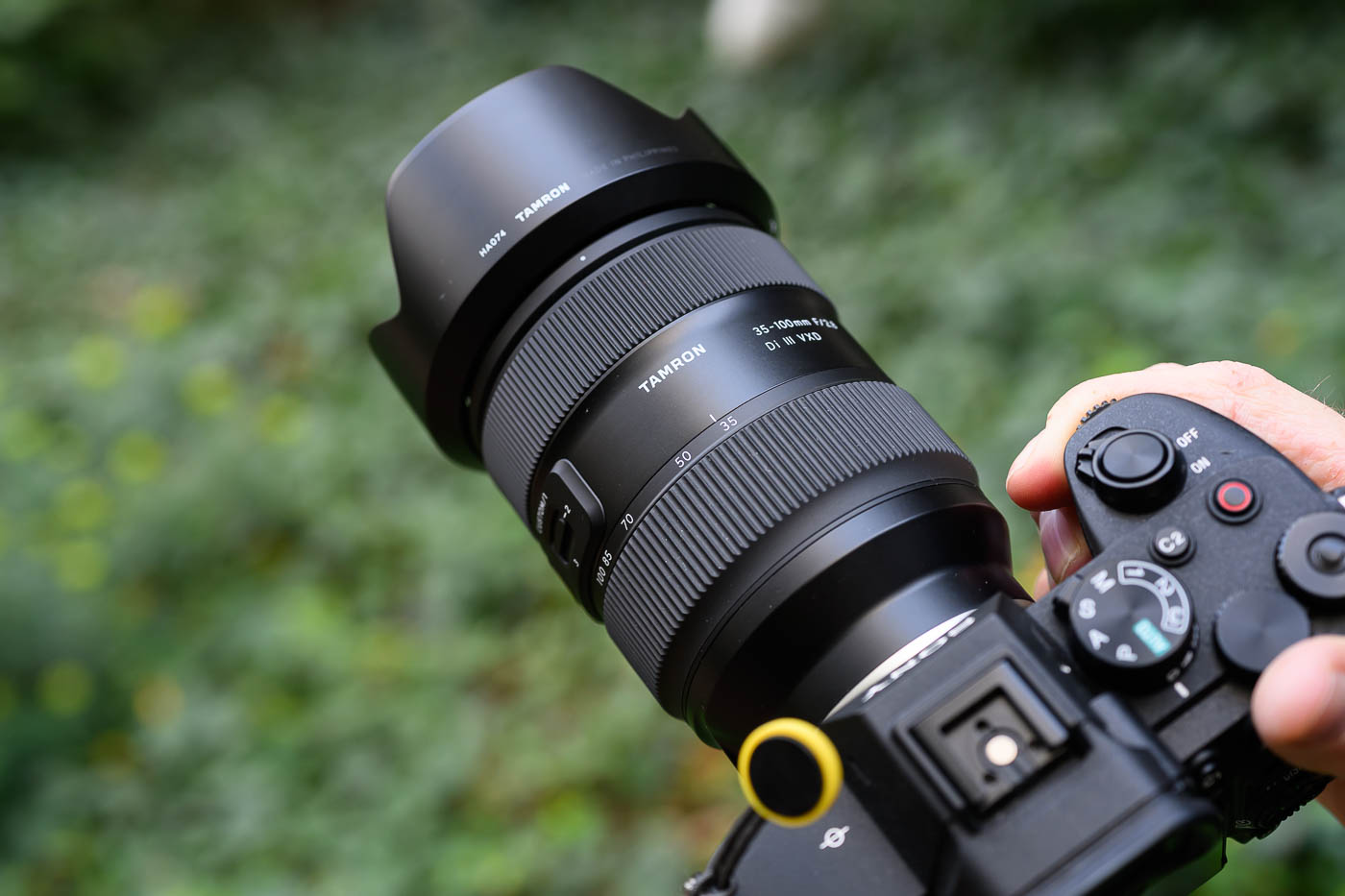
Furthermore, this lens manages to be considerably lighter and more compact than its “big brother,” the Tamron 35-150mm f/2-2.8 Di III VXD (see above), thus addressing its 2 weak points. Despite its extended focal range and fast aperture, this 35-100mm is barely larger than the brand’s 28-75mm f/2.8 Di III VXD G2.
That said, the focal range chosen by Tamron can sometimes be disconcerting, particularly with its 35mm minimum focal length. However, it allows for a wide variety of framings, and proves highly relevant for street photography, reportage or more distant subjects.
Available at $899 (Sony E mount) or $929 (Nikon Z mount), the Tamron 35-100mm f/2.8 Di III VXD offers a value proposition that is hard to beat. And we recommend it without hesitation.