

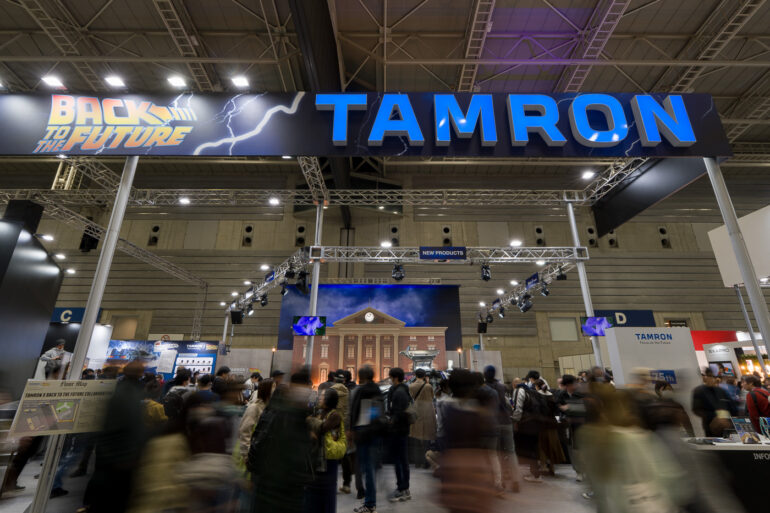

At CP+ 2026, we sat down with Keiya Nishimura, head of product development at Tamron Co., Ltd. It was an opportunity to discuss the design of the new 35-100 mm f/2.8, the long-awaited arrival of the Tamron Lens Utility app on iOS, and more strategic topics: the rise of Chinese lens manufacturers, the outlook for full-frame Canon RF mount, and Tamron’s ambitions for its 75th anniversary, with no fewer than 10 launches planned for fiscal year 2026. Here is the interview.

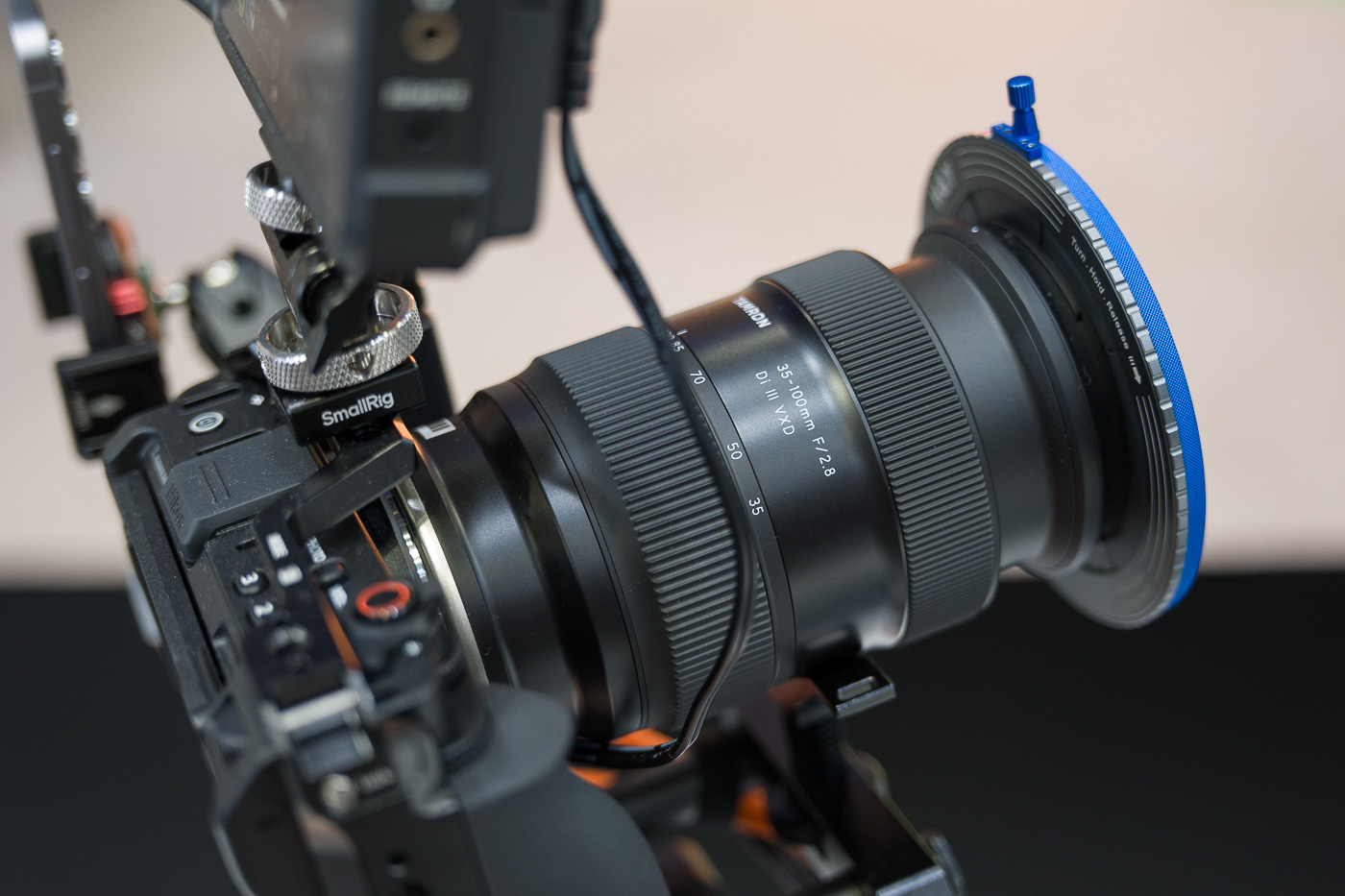
The 35-100mm f2.8 Di III VXD weighs just 565g for a constant f/2.8 aperture. What specific optical innovations (new glass elements, lens coatings, optical design) enabled achieving this level of compactness without compromising the f/2.8 aperture?
Keiya Nishimura : While there wasn’t a single optical breakthrough, we achieved this balance between performance and size through countless cycles of rigorous simulation and design refinement. We iterated the design repeatedly to make it compact, that was our goal.
By optimizing the choice of glass materials, the number and arrangement of moving lens groups, and the strategic placement of GM (glass molded) aspherical elements, we reached the ideal specifications within this compact form factor. It took ten or more iterations to reach this result.
This zoom arrives five years after the renowned 35-150mm f2-2.8 Di III VXD (A058). Why did you create a shorter zoom rather than a G2 version of the 35-150mm? Are you responding to specific market demands (weight for reportage, travel, video)?
While both lenses share the same core concept of being portrait zooms, they serve slightly different purposes. The 35-150mm f/2-2.8 prioritizes high performance and extended zoom range.
In contrast, with the new 35-100mm, we focused on mobility, making it a more accessible choice for travel and everyday shooting. We also envision this lens as the perfect companion for the compact 20-40mm f/2,8 Di III VXD zoom lens, offering a lightweight, high-performance two-lens setup for a wide variety of shooting scenarios.
So maybe the second generation of the 35-150mm f/2-2.8 will be smaller as well, if you decide to make it?
Yes, if we do try, it may become smaller, but may not as compact as this 35-100mm.
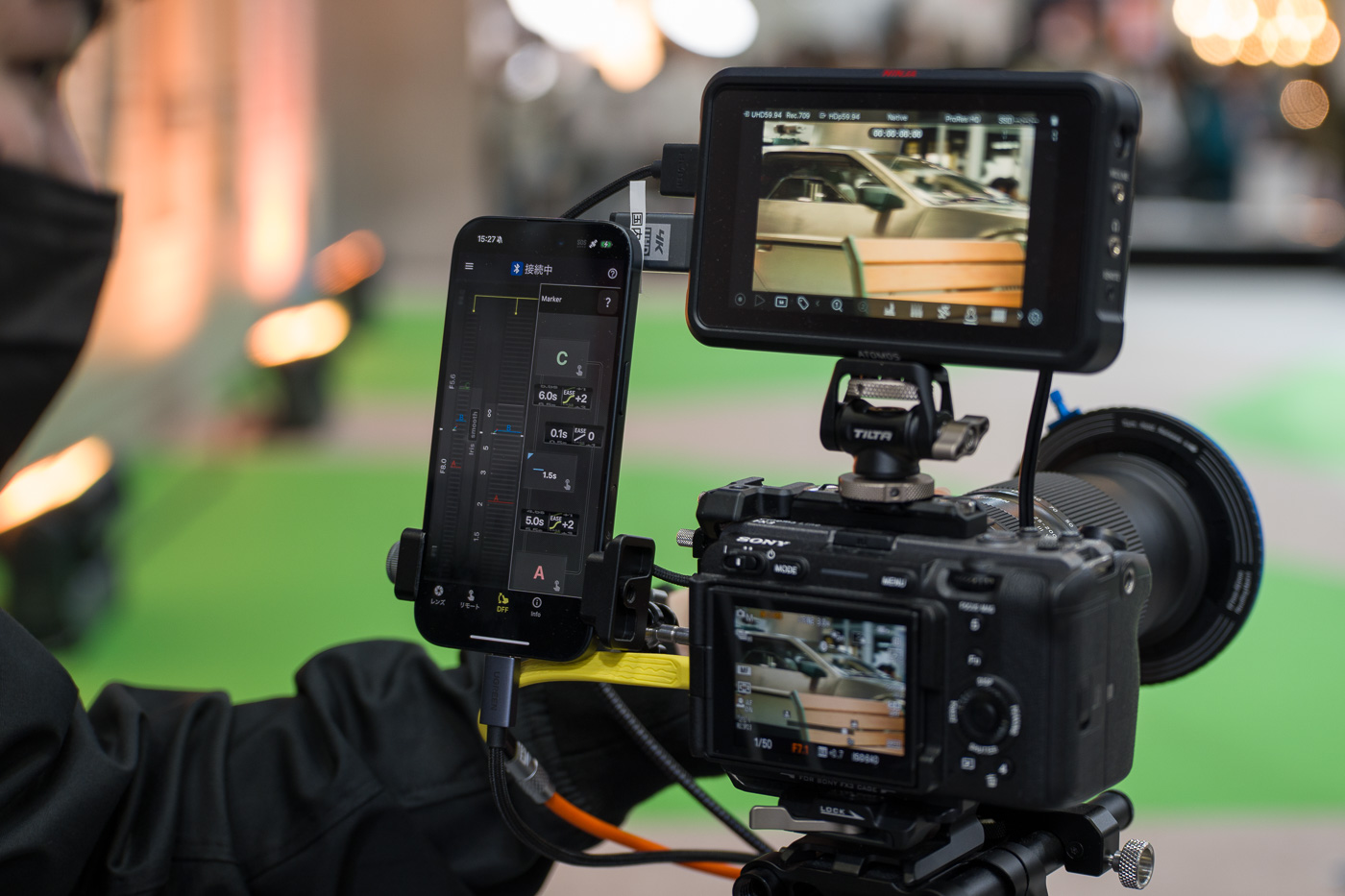
TAMRON-LINK finally brings iOS compatibility to Lens Utility Mobile, and version 5.0 introduces professional video functions (IRIS markers, Ring Stopper, Focus Time Lapse). What is the actual adoption rate of Lens Utility among your users? Have these advanced features become a major purchasing argument?
By overcoming the long-standing challenge of iOS compatibility, we’re now positioned to raise awareness of Tamron Lens Utility and pursue continuous functional improvements.
While the adoption rate is still growing, and not yet significant, we see substantial potential in the video segment and are committed to delivering the unique value that only Tamron can provide with Tamron Link.
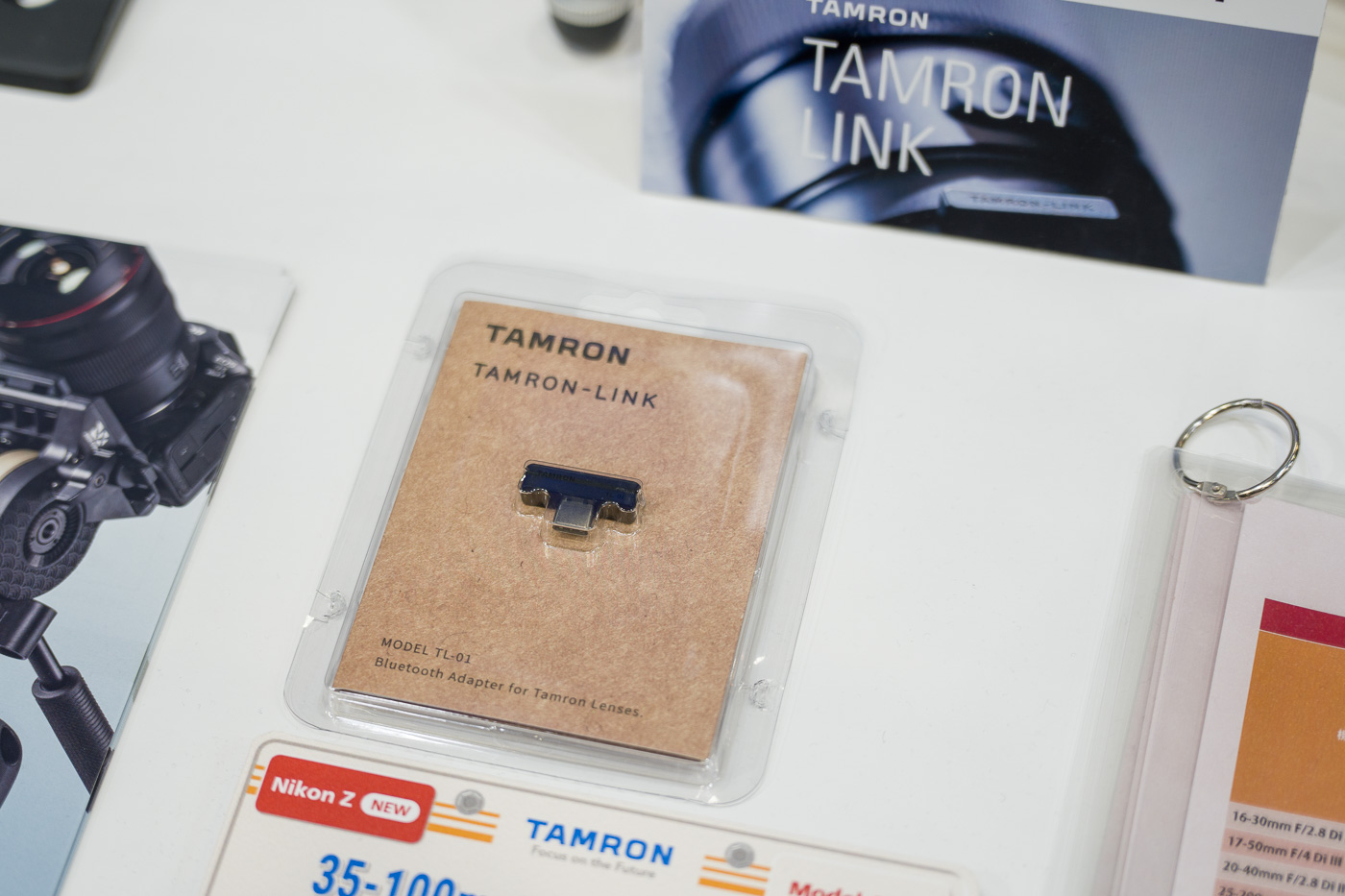
The new features in version 5.0 are geared toward advanced users, but they also include functions accessible to beginners, and we encourage everyone to try them. We’ll continue adding and refining features to enhance the appeal of our lenses, making TLU a key factor in customers’ decisions to choose Tamron.
[Editor’s note: All Tamron lenses equipped with a USB-C port are compatible with TAMRON-LINK, with the exception of the Tamron 28-75mm f/2.8 G2 with a Z mount and the 35-150mm f/2-2.8 with an E mount. Support for these lenses will be available via a firmware update in spring 2026.]
For 2026, Viltrox is announcing premium prime lenses at f/1.2 and f/1.4, as well as a range of compact primes. Why isn’t Tamron developing premium prime lenses to counter this Chinese offensive? Is it a deliberate strategic choice to remain “zoom-centric,” or do you consider that the prime lens market is no longer profitable for a Japanese manufacturer facing Chinese competition?
Currently, our primary focus is on the compact zoom lenses that we excel at. But we certainly have no intention of ignoring the prime lens market. However, given that the market is already saturated with a wide variety of prime lenses, we are constantly engaged in internal discussions regarding the most effective way to allocate our R&D resources to deliver the greatest value to our users.

For a long time, Tamron and Sigma were the only third-party optical competitors to Canon, Nikon, and Sony. But beyond Viltrox, brands like 7artisans and TTArtisan are moving upmarket with aggressively priced AF lenses. How is Tamron concretely responding to this competition?
We are closely monitoring these emerging manufacturers, as their performance and rapid product cycles, not just their pricing, are truly remarkable.
While they currently focus primarily on prime lenses, we expect them to gradually expand into zoom lenses as well. In response, we will leverage our decades of accumulated expertise to develop lenses that are not only highly reliable but also truly inspiring, offering the kind of excitement that only a Tamron lens can provide.
You’ve launched two lenses in Canon RF mount, but only in APS-C (18-300mm and 11-20mm). What are your concrete plans for RF full-frame mount? Is it a matter of licensing agreements with Canon, strategic priorities (Sony E and Nikon Z first), or technical development?
We cannot currently share specific information about RF mount for full-frame cameras. However, we are aware of the high market demand and are carefully evaluating our development priorities.
Your FY2026 plan forecasts 10 product launches (vs. 6 in FY2025). Can you give us an overview of the priority product categories for these 10 launches? Will there be focal lengths or lens types still missing from your catalog?
Our roadmap is driven by careful analysis of Tamron’s current lineup, overall market trends, and evolving user needs, focusing primarily on filling gaps in our existing catalog.
We can’t share specific details, but we’re always searching for those gaps and identifying where we can fill them. While our recent development efforts have centered on full-frame lenses, we also recognize that the APS-C market remains significant and impossible to ignore.
Tamron uses LD (Low Dispersion), XLD (eXtra Low Dispersion), and molded aspherical elements. Are you working on new types of glass or manufacturing technologies for next generations?
Yes, absolutely. We are actively engaged in R&D across all fronts, optical, mechanical, and electronic controls, to pave the way for the next generation. This includes groundbreaking technologies that will serve as powerful assets for our future products, as well as system-level innovations that significantly streamline our development process.
While we have no specific announcements to share at this moment, we encourage everyone to stay tuned for what’s coming next. And of course, one of them is going to be TLU, an additional feature that we can add to our lenses, not just optically or mechanically.
Some manufacturers integrate computational corrections (distortion, chromatic aberrations, vignetting) processed in real-time by the camera body or via software profiles. What is Tamron’s philosophy on this subject? Do you favor pure optical correction, or are you considering integrating more digital corrections in your future designs to reduce optical complexity?
We incorporate appropriate digital corrections throughout our product planning and development process. Since many of our lenses are designed to be remarkably compact and lightweight, leveraging digital corrections often leads to direct benefits for users in terms of portability and performance balance.
However, certain optical aberrations, such as axial chromatic aberrations and coma, cannot be fully resolved through digital processing alone. We believe it’s essential to address these fundamental challenges through superior optical design to ensure the highest image quality.
With recent cameras, do you see more possibilities in terms of digital image correction? Is it easier to rely on digital corrections in lens design?
Yes, as camera technology advances, we gain more ability to correct aberrations digitally, which helps our lens design. This leads to smaller and lighter designs. When we want to correct something optically, we need multiple glass elements. But if we can rely on digital correction instead, say, fixing five out of ten aberrations in-camera, we can eliminate the extra optical elements. That makes the lens more compact.
We’ve noticed that some functions aren’t available with third-party lenses, for example, the high burst rate on Sony E mount, which can reach up to 120 fps with Sony lenses. Why can’t Tamron lenses achieve this burst rate?
We’re using the best capabilities we can access from the camera. That’s all we can say.
According to your internal sales figures, which mount is currently the most dynamic for Tamron: Sony E, Nikon Z, or Canon RF (APS-C)? Do you observe different purchasing behaviors depending on the mount (preferred lens types, G2 version adoption, price sensitivity)?
Yes, Sony E-mount products remain our primary driver, they’re our best sellers. However, we see certain lenses performing even better on other mounts, depending on the competitive landscape within each ecosystem. While purchasing behavior varies somewhat due to different user demographics across mounts, we believe the presence and availability of competing lenses are the more dominant factors influencing sales.
E-mount is our biggest mirrorless market, but Nikon is growing rapidly, and we need to keep pace with that momentum. We also can’t overlook Fujifilm and Canon.
On Z mount, what is your most successful lens in terms of sales?
So far, the 28-75mm standard zoom lens is our best seller on Z mount, but we’re also seeing strong performance with telephoto lenses in certain markets.



A recent patent reveals a compact 28-70mm f/2 zoom. Is this an actively developed project, or a technical exploration? If it’s a real project, which mounts would be available first?
I’m sorry, but we cannot comment on plans for specific models at this time. However, we are constantly reviewing and updating our roadmap based on market feedback to ensure we meet user needs.
Why do you think Tamron and other manufacturers no longer release lens roadmaps?
We listen to the market and come up with something different from others. Everyone knows the standard focal lengths, 24-70mm, 70-200mm. But when we develop something, it’s always new and unique. That’s why we don’t want to announce it in advance or even show a silhouette. When we launch, it’s a surprise, a new addition to the market.
That’s the history of Tamron. We’ve always been pioneers. We come up with something new, establish the market, and then others follow. Take the 28-200mm f/2.8-5.6 high-power zoom, for example. We were the first to launch a small, compact 28-200mm in 1992.
At that time, nobody had anything like it. We launched it, made it a success, and now all the manufacturers have followed. We’re always the first to introduce something unique, and when we succeed, everyone else comes in. If you look at our history, there are many innovations that Tamron made first.
The interchangeable lens market remained stable in volume (+3% in FY2025) but flat in value. How do you analyze this stabilization after years of growth? Do you expect a recovery in value growth driven by premium upgrades, or a durably stabilized market?
We recognize that the mirrorless lens market is reaching maturity. However, we believe there’s still significant room for growth by addressing untapped and latent user demands.
We see great potential in products that cater to unmet or undiscovered needs, such as seamless integration of stills and video, lighter mobility, and unprecedented expressive power. If we continue to release products that spark these new desires, there’s ample opportunity for further expansion.
We remain committed to listening closely to the voices of users. That’s what we do. We’re not just coming out with standard focal lengths, we’re constantly listening to what customers need. That’s why we develop unique focal lengths and features, because that is the voice of the market.
One last question about your booth: every year we see a beautiful display. We remember the Nebuta festival, then BMW, Godzilla, and now Back to the Future. How do you come up with these ideas?
We hold a competition every year to select the best partner for our booth design. For this year’s show, we’re working with an agency that truly understands our vision. We have deep discussions with them, asking, “Okay, what can we do next?”

They come up with brilliant ideas based on our requirements. This year’s agency has been excellent, they have the right connections to facilitate these partnerships. For example, this “Back to the Future” set was secured through their link with Universal Studios, just as last year’s Godzilla display was made possible through the film company’s cooperation.

And what does “Back to the Future” mean for Tamron?
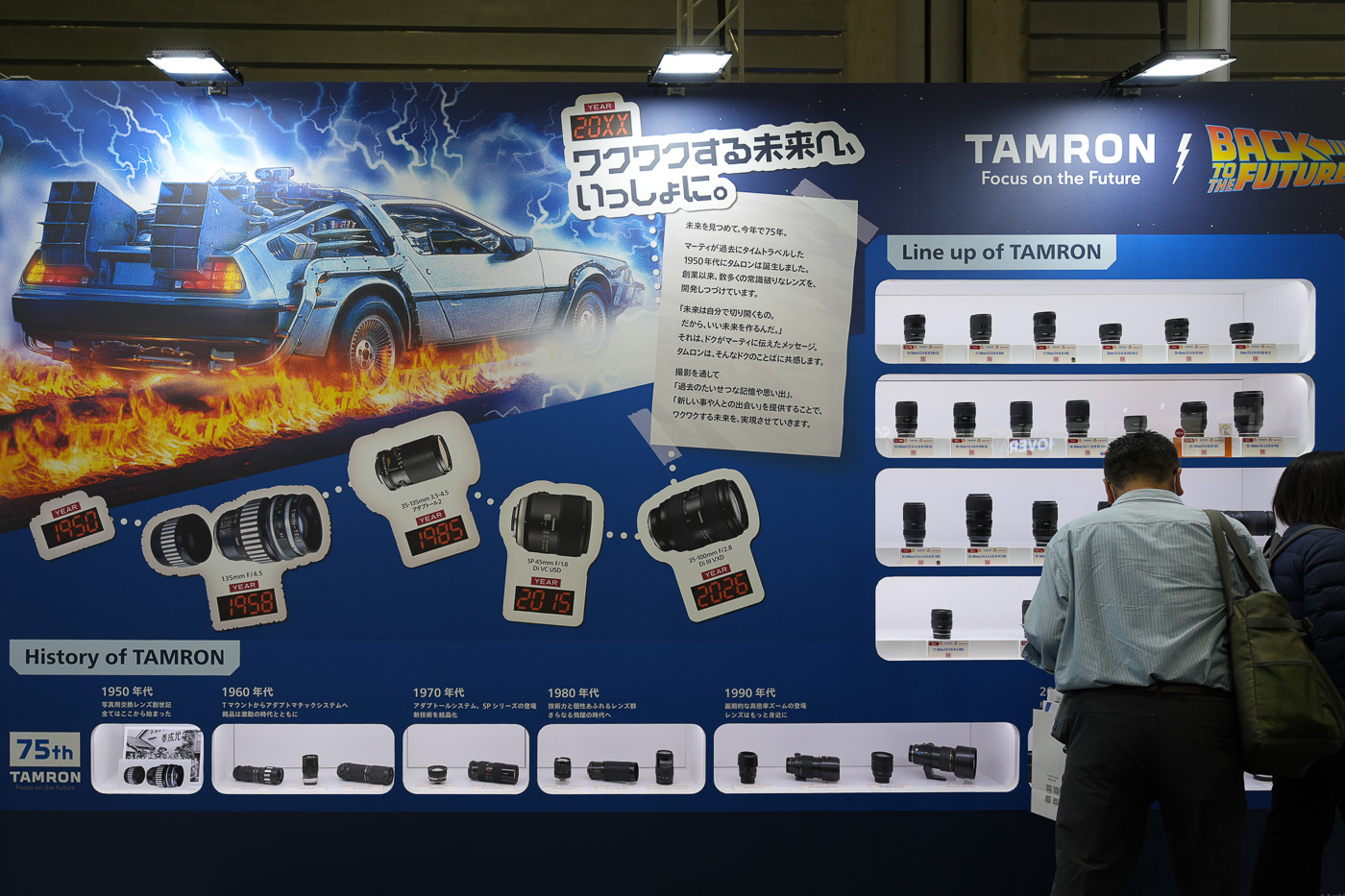
This year marks Tamron’s 75th anniversary. We’re looking back at our history while simultaneously looking forward. Our company tagline is “Focus on the Future.” So we’re reflecting on what we’ve accomplished over 75 years while also envisioning what Tamron can provide in the years ahead.
Looking back and looking forward, that is Tamron.
Thank you to Mr. Keiya Nishimura and Tamron Co., Ltd. for this interview. We would also like to thank the Tamron France team for organizing this meeting.