

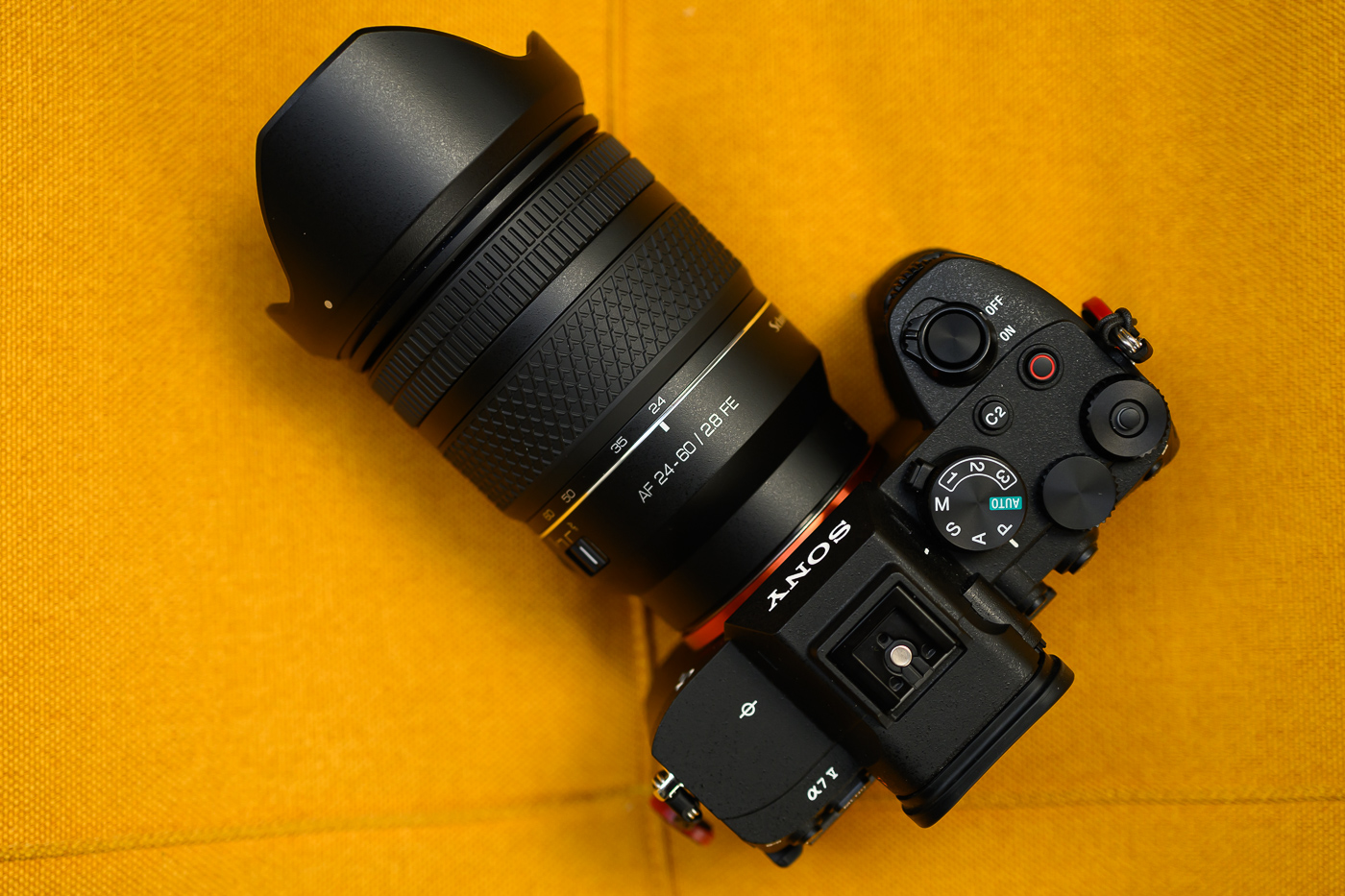

Launched in fall 2025, the Samyang AF 24-60 mm f/2.8 FE is the second lens developed in partnership with German optician Schneider-Kreuznach. This standard zoom lens for full-frame mirrorless cameras for Sony E mount features a truncated focal range at the long end, which it compensates for with a reduced form factor and price tag.
Following a Samyang AF 14-24 mm f/2.8 FE already noted for its compactness, this new lens rounds out a lineup of fast zooms designed for photographers on the move. But does the formula work just as well over the most commonly used focal range on the market? The answer in our full review of the Samyang AF 24-60 mm f/2.8 FE, which we were able to use for several weeks in Japan.
Sommaire
Introducing the Samyang AF 24-60 mm f/2.8 FE
The f/2.8 standard zoom holds a central place in the full-frame mirrorless ecosystem. Versatile by definition, it is equally suited to reportage, portraiture, street photography and travel.
Samyang surprised many in 2022 with the AF 24-70 mm f/2.8 FE, its first autofocus zoom. This new 24-60 mm is not simply a successor. It embodies a different ambition: further reducing the form factor by slightly trimming the focal range at the long end. An approach already explored by Panasonic, for instance, with its Lumix S 24-60 mm f/2.8, launched in spring 2025.
The collaboration with Schneider-Kreuznach, a German company founded in 1913 and renowned for its precision optics in industrial and cinematographic applications, lends the project a degree of technical credibility. This partnership had already proven its worth with the Samyang AF 14-24 mm f/2.8 FE.
To achieve optimal image quality, Samyang opted for an optical formula comprising 14 elements in 11 groups. It includes 3 HR (high refractive index) elements, 2 ED elements and 3 aspherical elements, designed to improve sharpness and minimize aberrations.
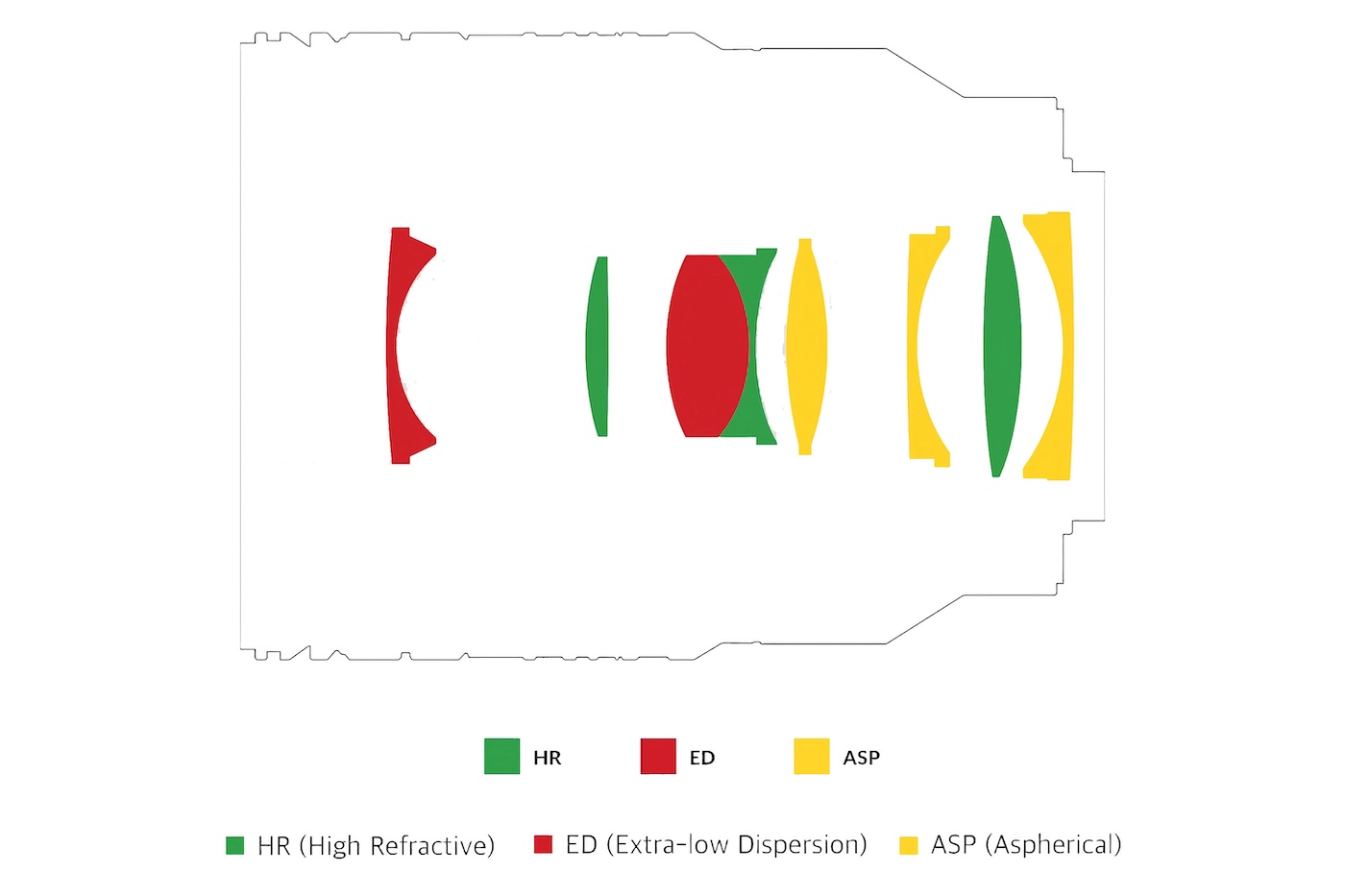
Here is the full list of specifications for the Samyang AF 24-60 mm f/2.8 FE:
- focal range: 24-60 mm (equivalent to 36-90 mm on APS-C)
- sensor coverage: full frame
- maximum aperture: f/2.8
- minimum aperture: f/22
- optical construction: 14 elements in 11 groups, including 3 HR (high refractive index) elements, 2 ED elements and 3 aspherical elements
- diaphragm: circular, 9 blades
- minimum focusing distance: 18 cm (at 24 mm) / 32 cm (at 60 mm)
- maximum magnification: 0.27x (at 24 mm)
- AF motor: linear STM motor
- optical stabilization: none (relies on in-body IBIS)
- weather sealing: dust and splash-resistant seals
- filter diameter: 72 mm
- dimensions: ø 78 mm x 102 mm (at 24 mm) / 126 mm (at 60 mm)
- weight: 494 g
- mount: Sony E (FE)
- launch price: $899
Ergonomics and handling: a lightness that stands out
The first thing that strikes you with this Samyang is its weight. Under 500 grams on the scale, 494 g to be precise, for a full-frame zoom with a constant f/2.8 aperture is simply remarkable. By comparison, modern 24-70 mm f/2.8 zooms typically weigh between 600 and 800 g. The Samyang is barely heavier than the Sony FE 24-50 mm f/2.8 G. The difference is immediately noticeable on a camera body.
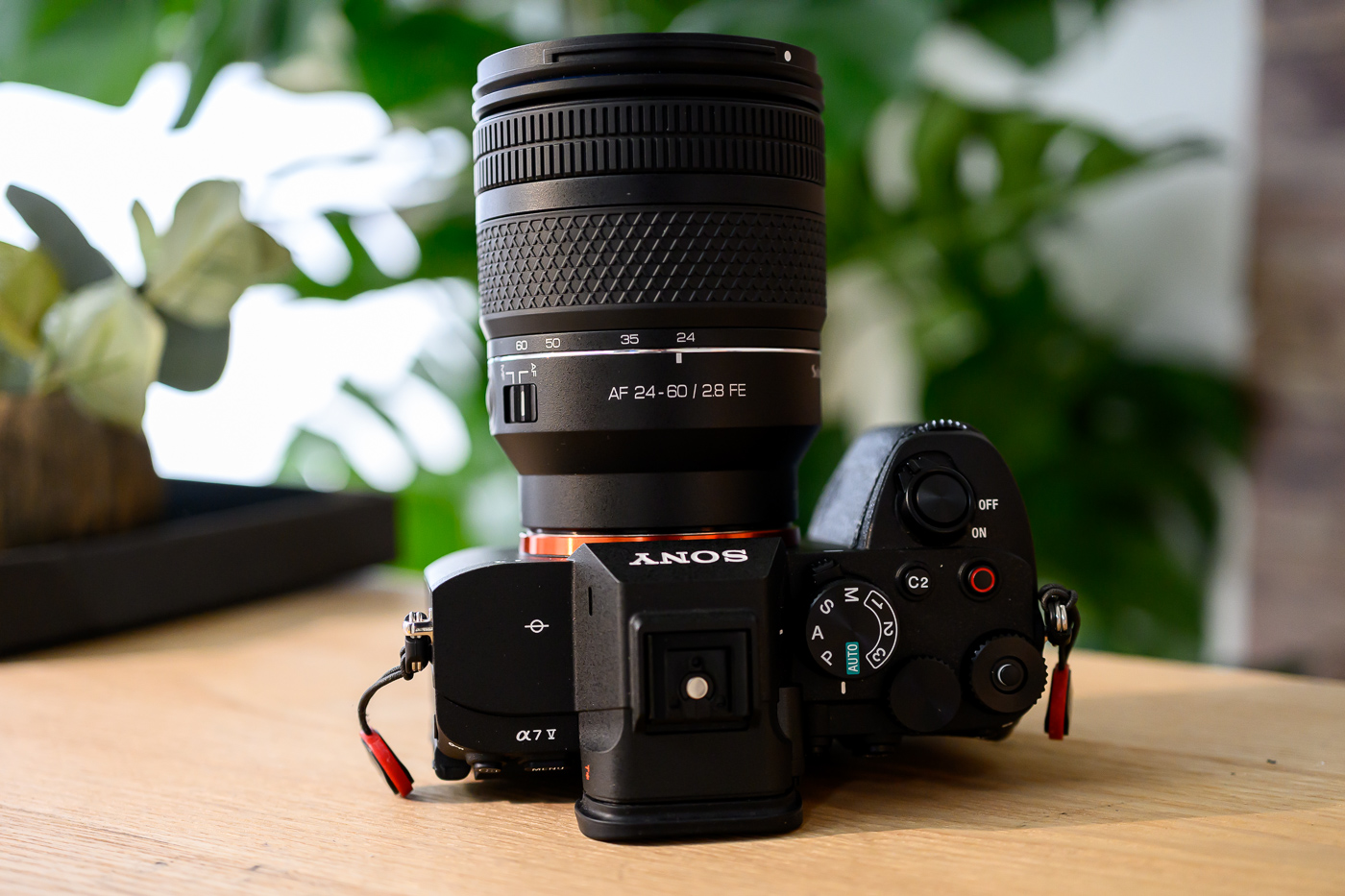
Mounted on a Sony A7 V, the lens offers excellent balance: it does not pull the setup forward, and extended shooting sessions, whether reportage, street photography or otherwise, are less tiring.
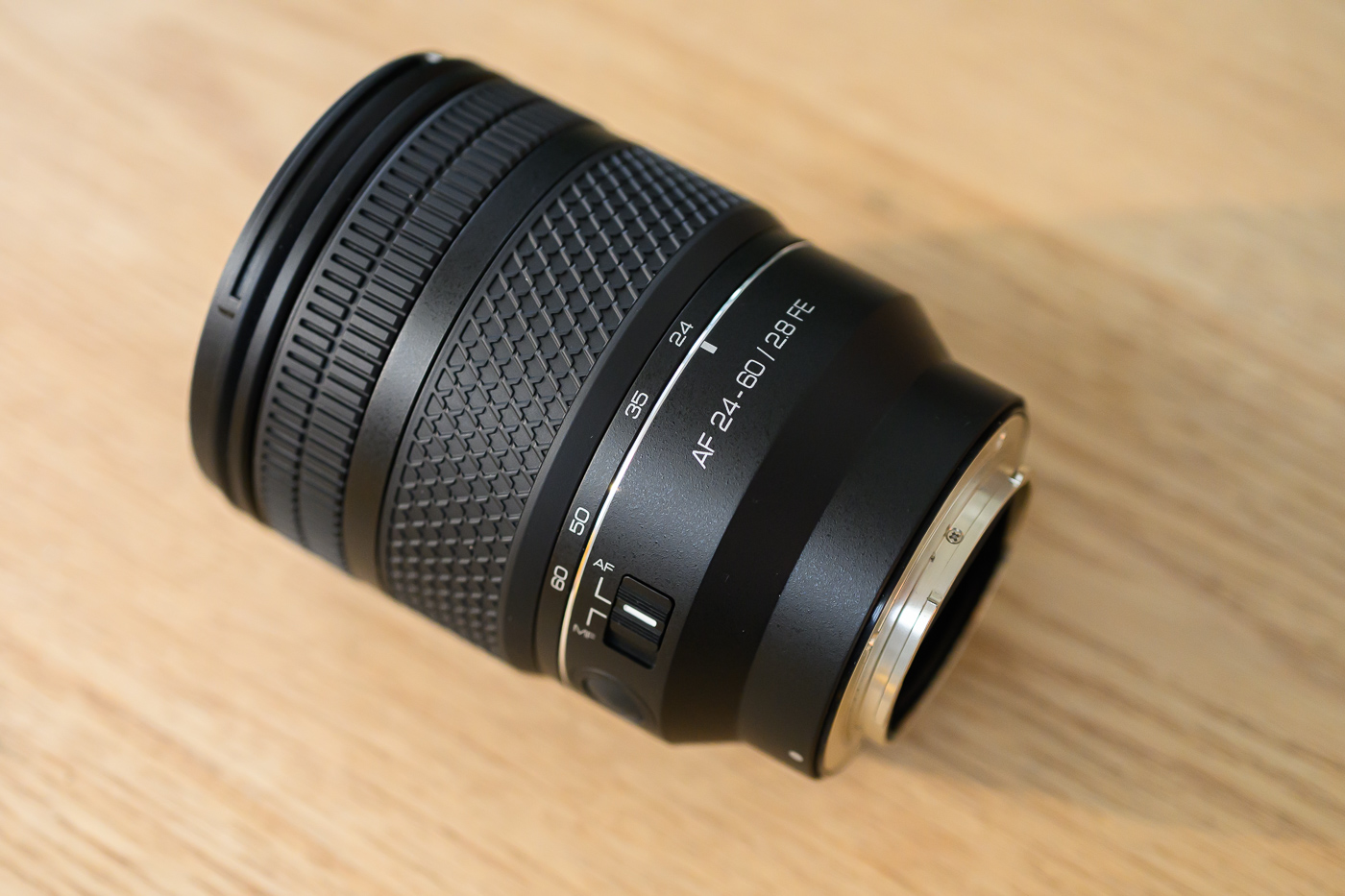
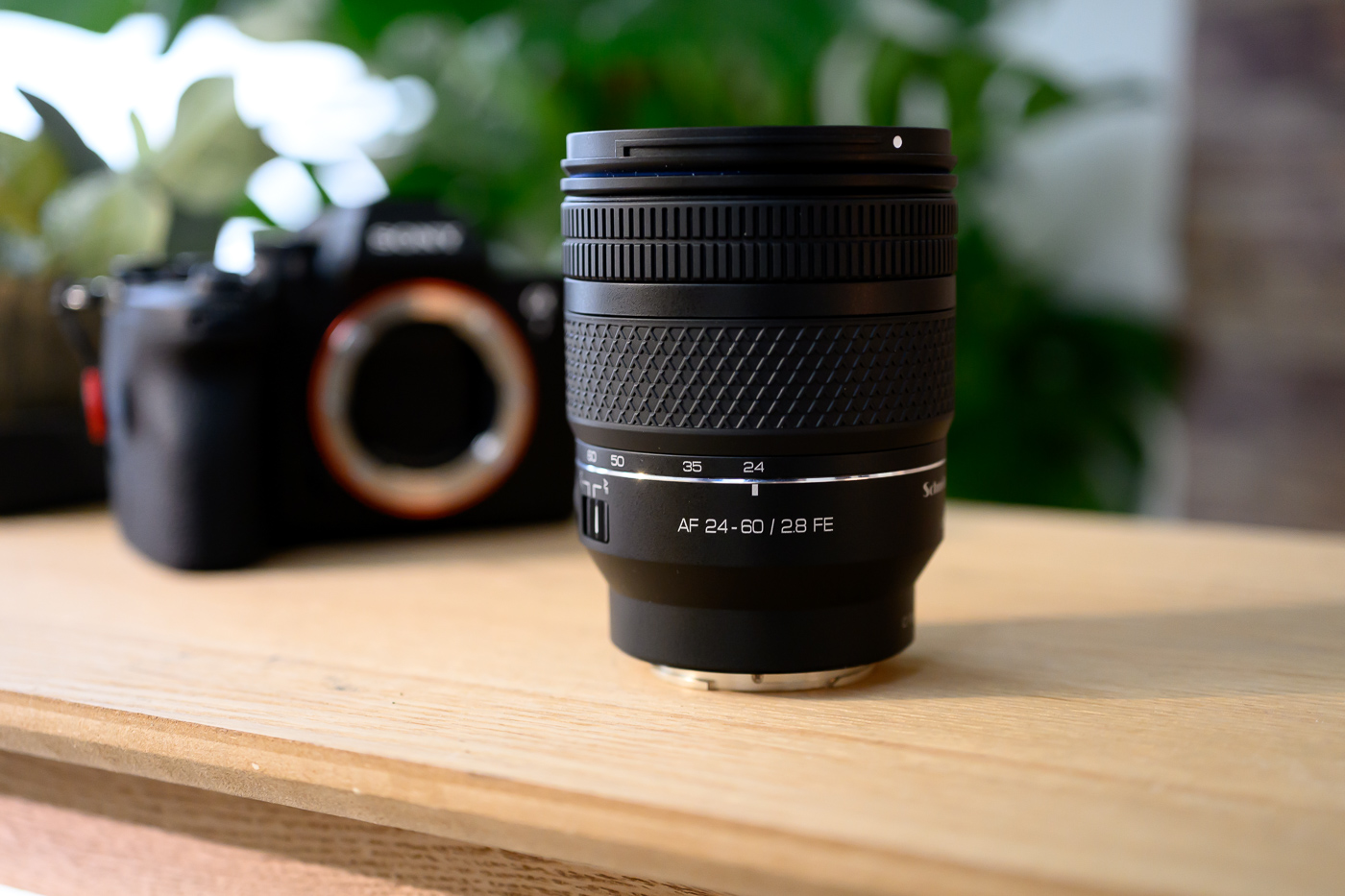
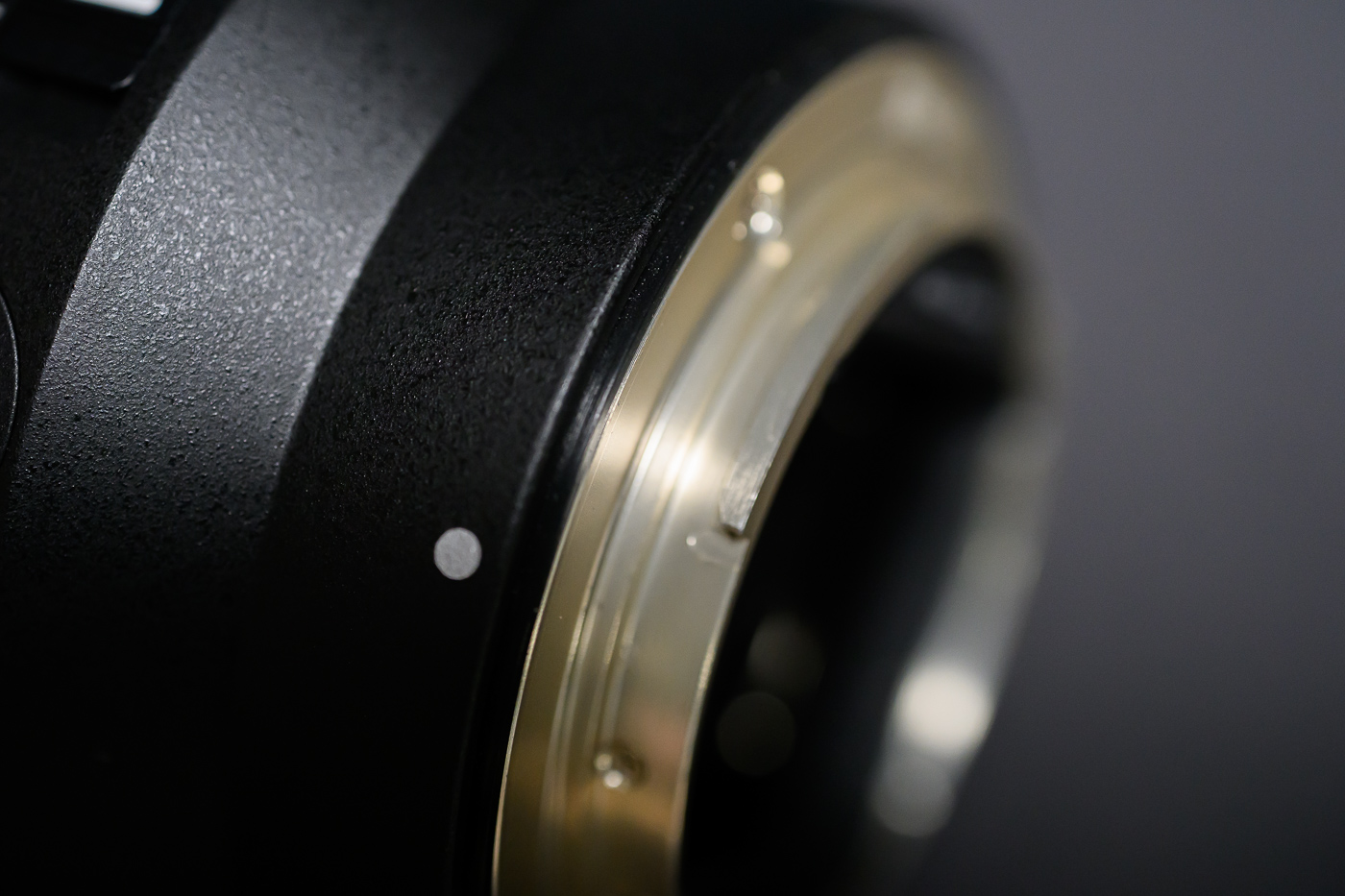
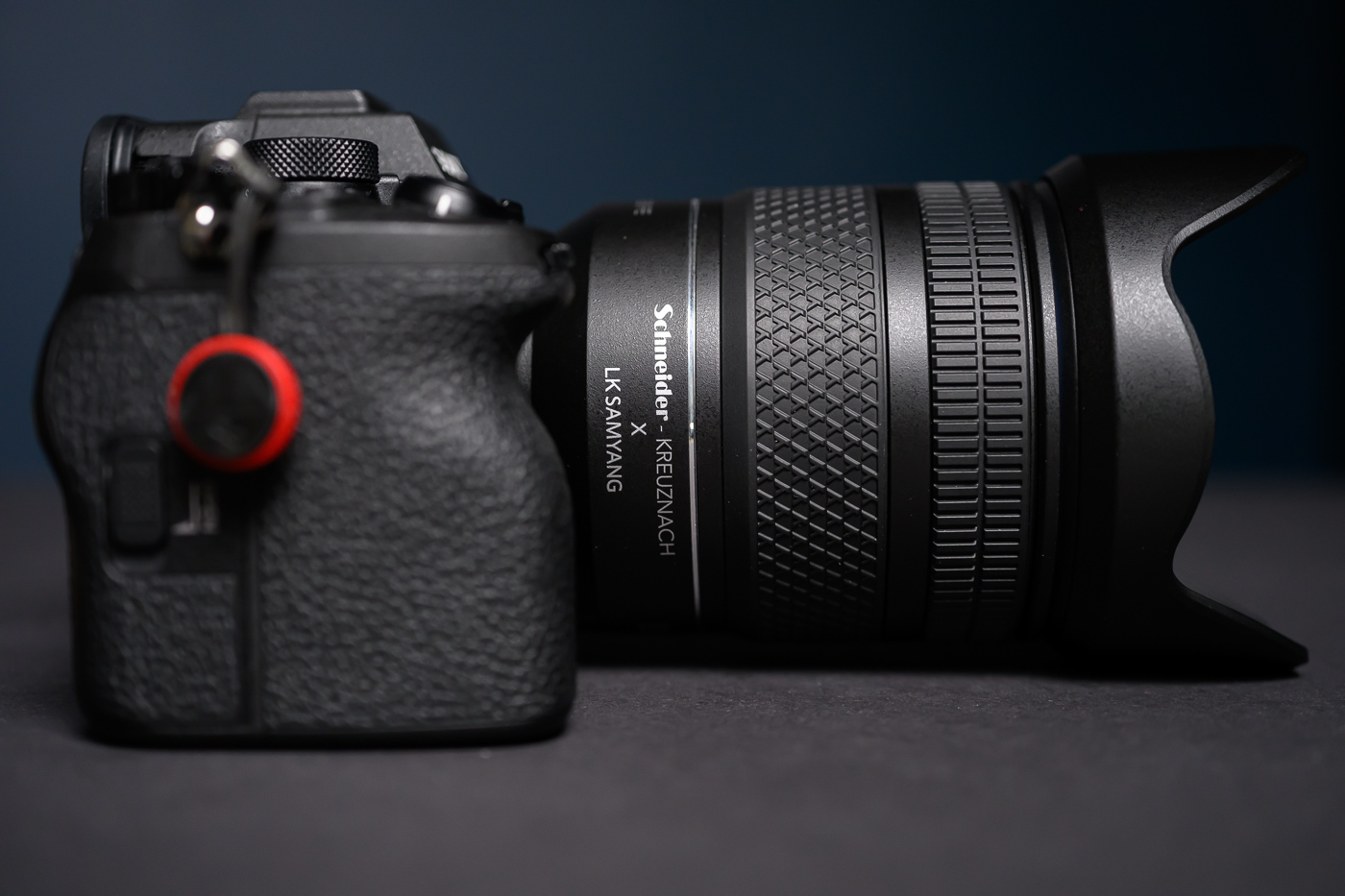
This lightness is largely explained by the shorter focal range and the choice of materials. The lens makes use of polycarbonate, with a finish identical to that of the 14-24 mm f/2.8. The two lenses actually make a nice pair. Worth mentioning is the subtle blue accent ring near the front element.
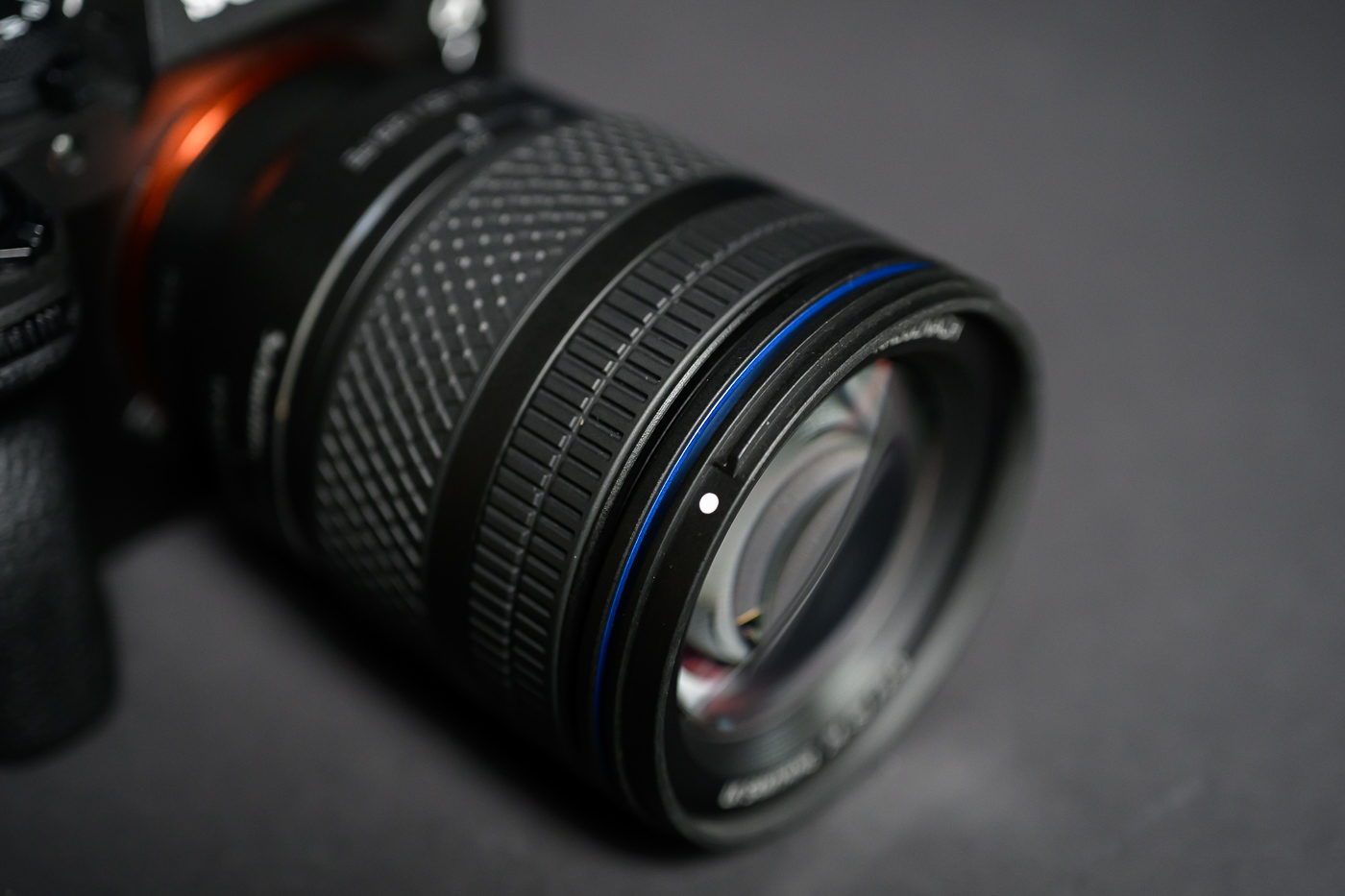
In terms of dimensions, the lens measures 10.2 cm in length with a maximum diameter of 7.8 cm. Unsurprisingly, zooming is external and the barrel extends to 12.6 cm at the long end. Build quality is solid. Weather sealing is present at critical points, which is reassuring in humid or dusty conditions.
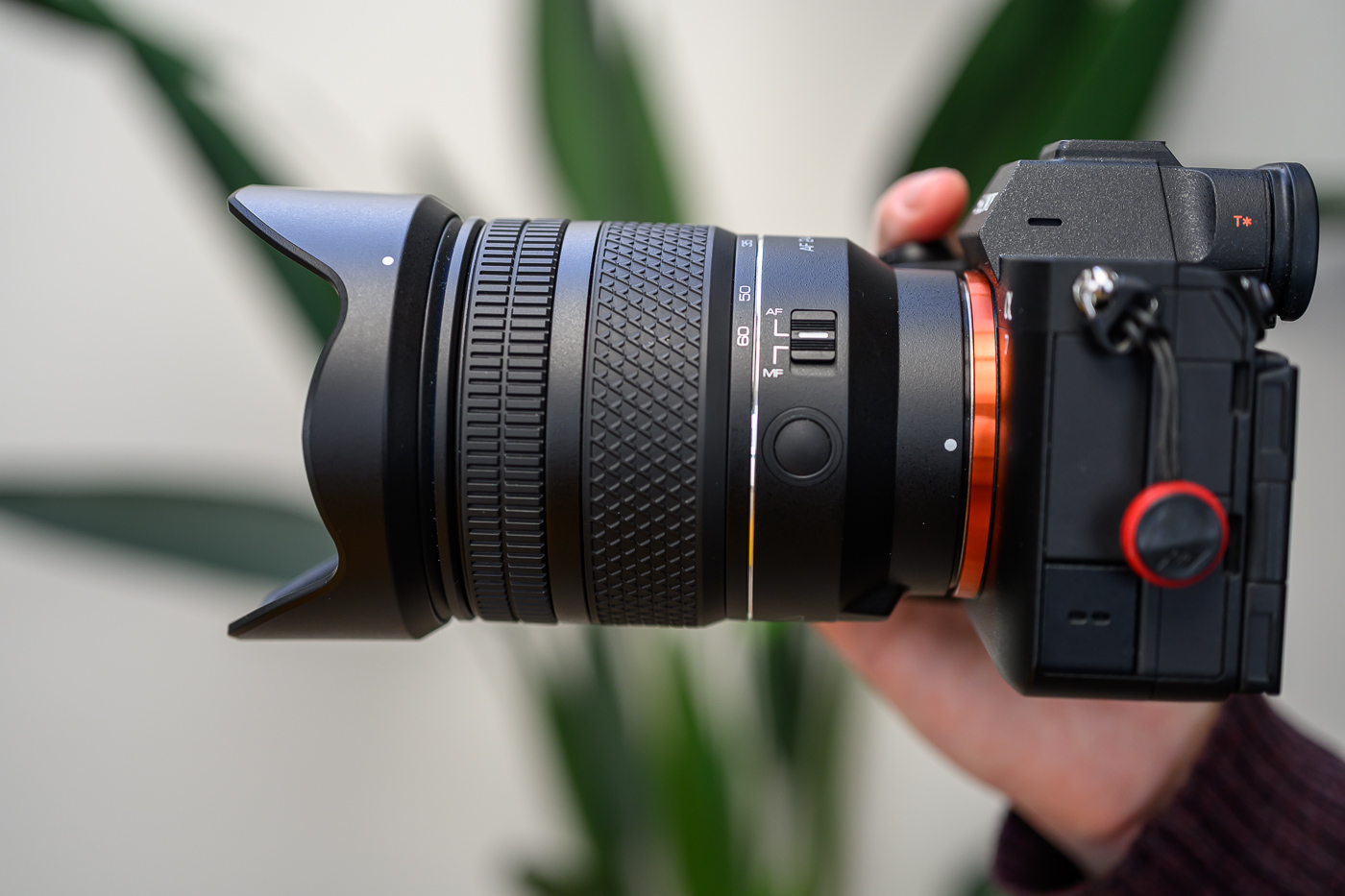
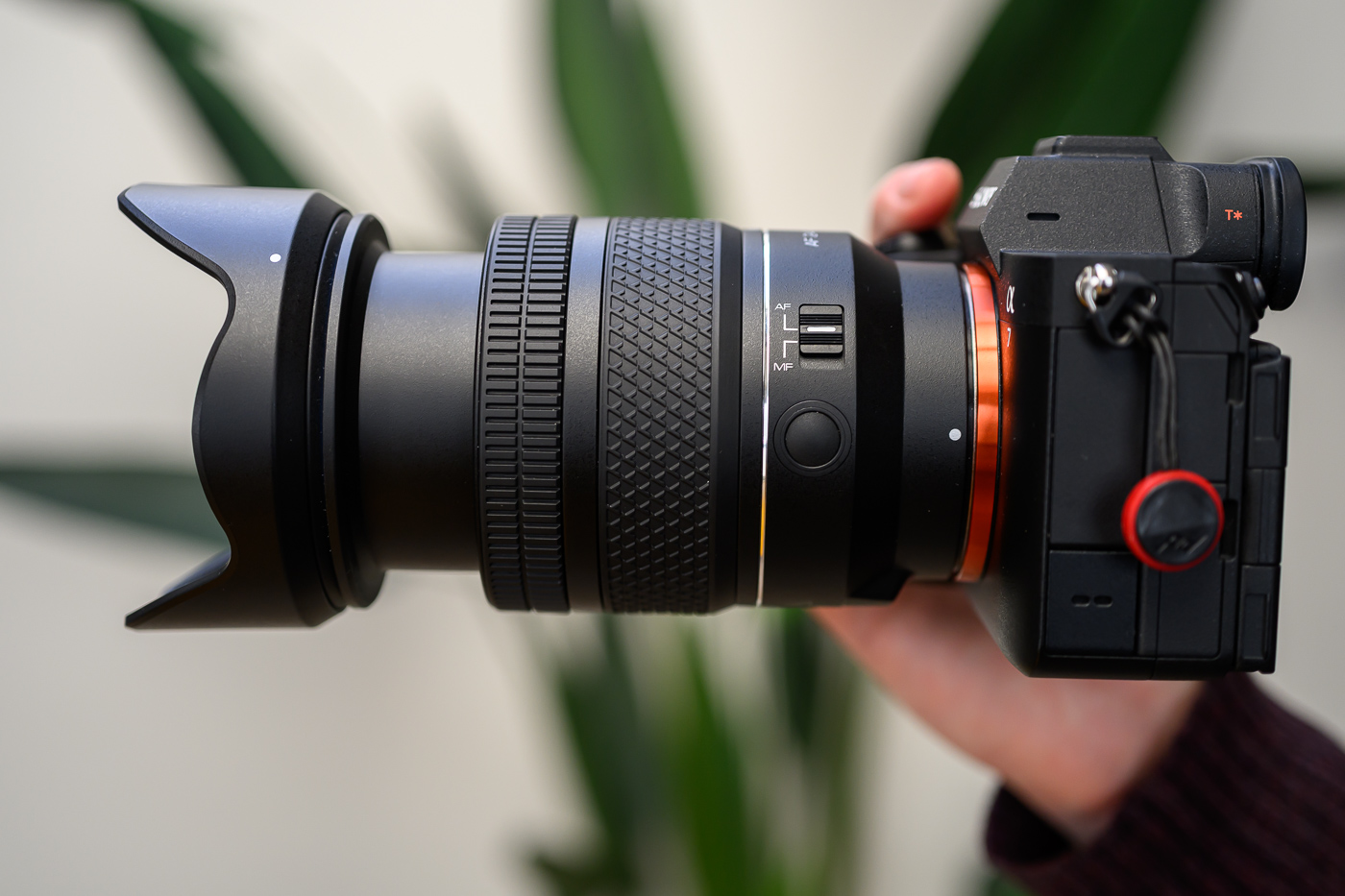
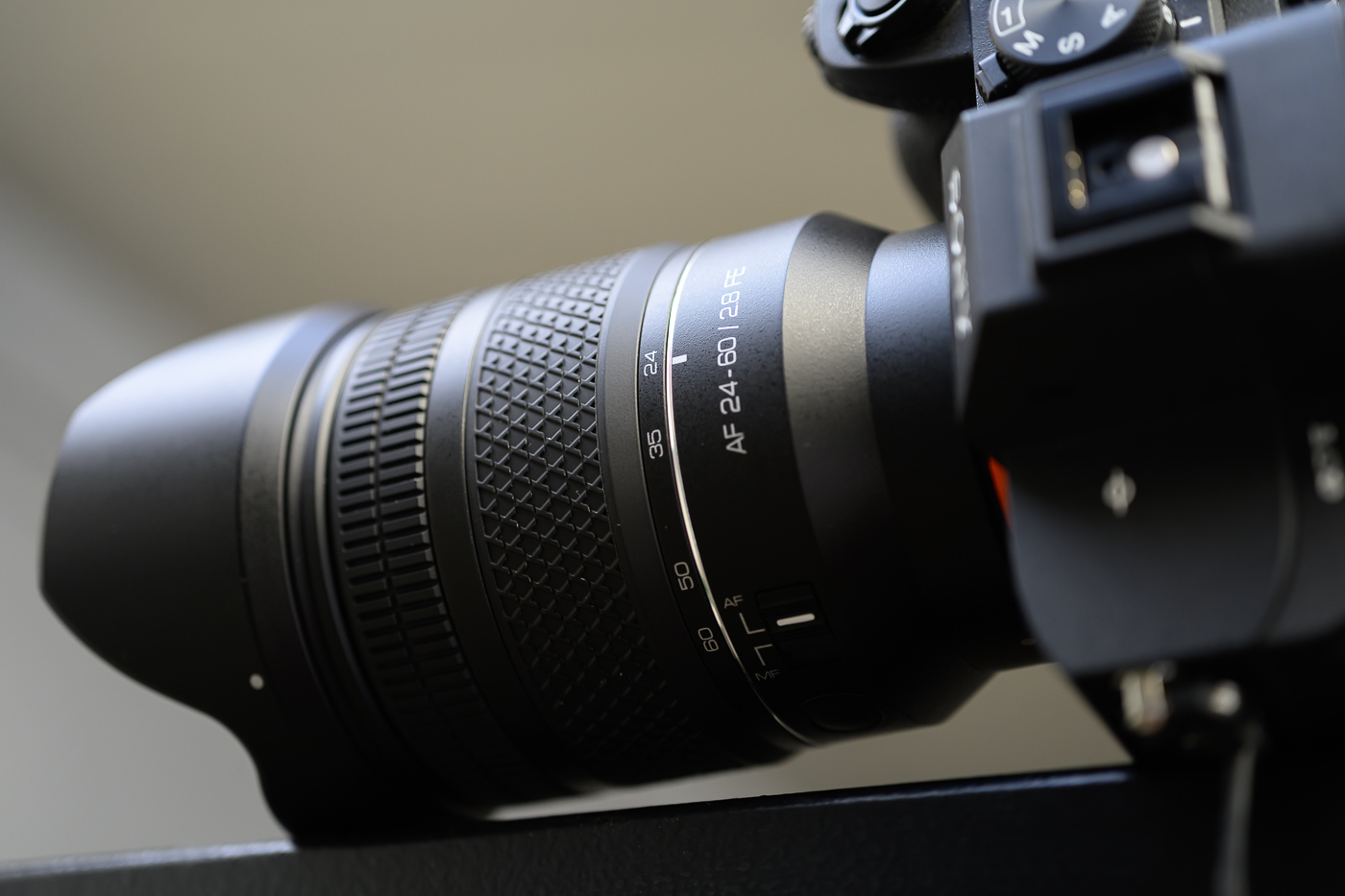
The zoom ring is well positioned in the middle of the barrel, with a smooth and even rotation. The narrower manual focus ring responds with precision. The coating is finely textured, and we appreciate the two different patterns used for the zoom and focus rings.
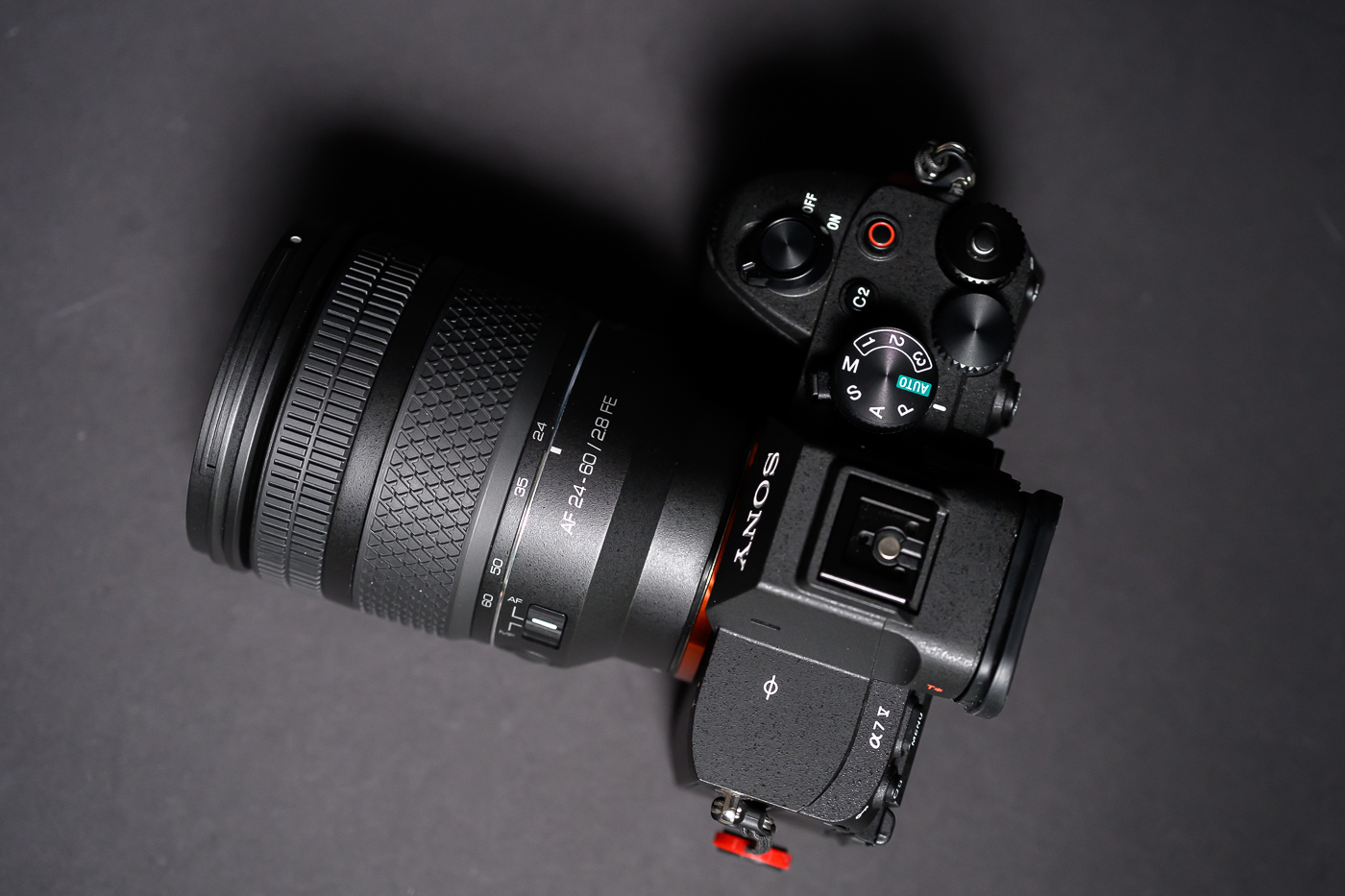
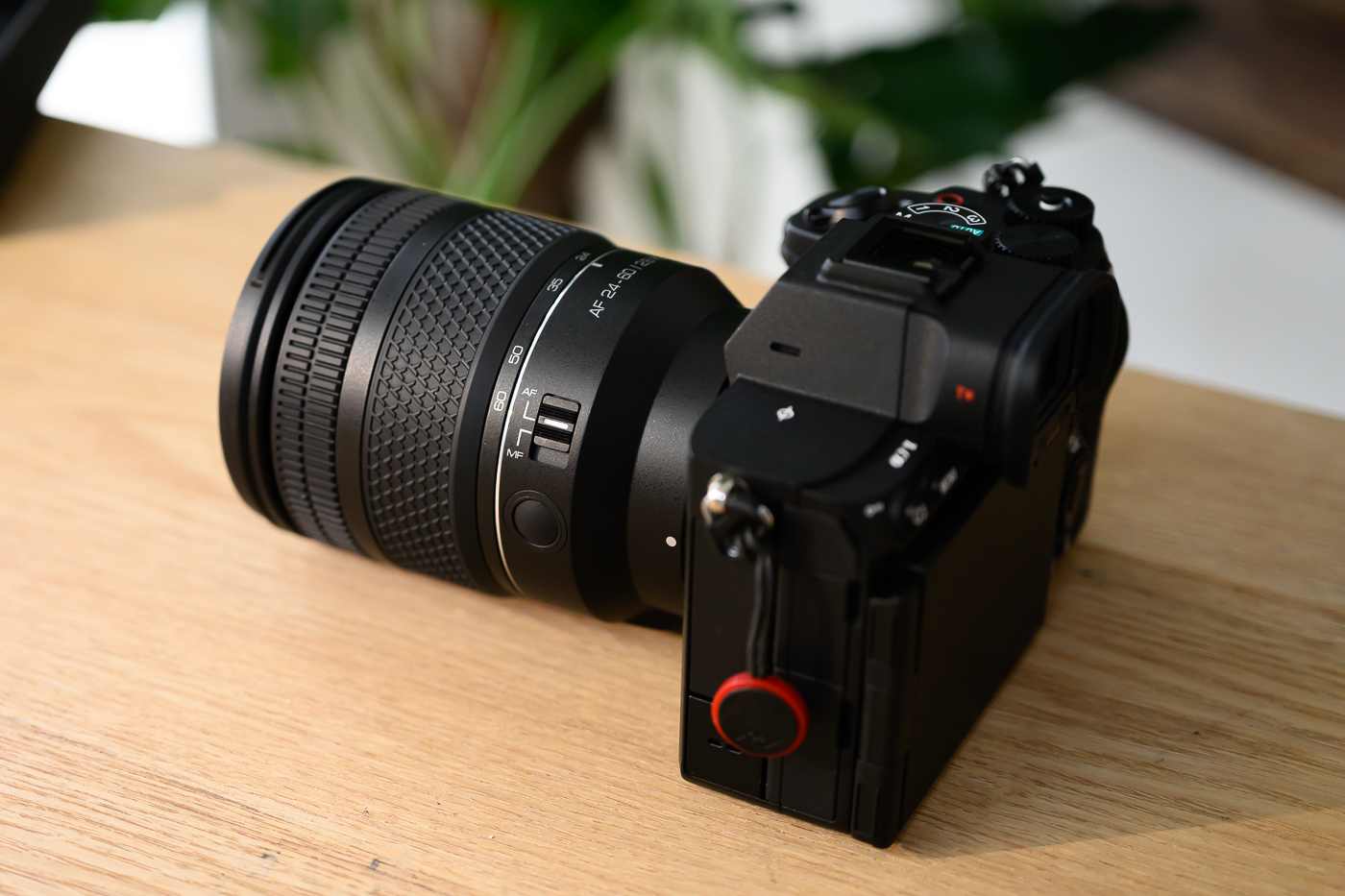
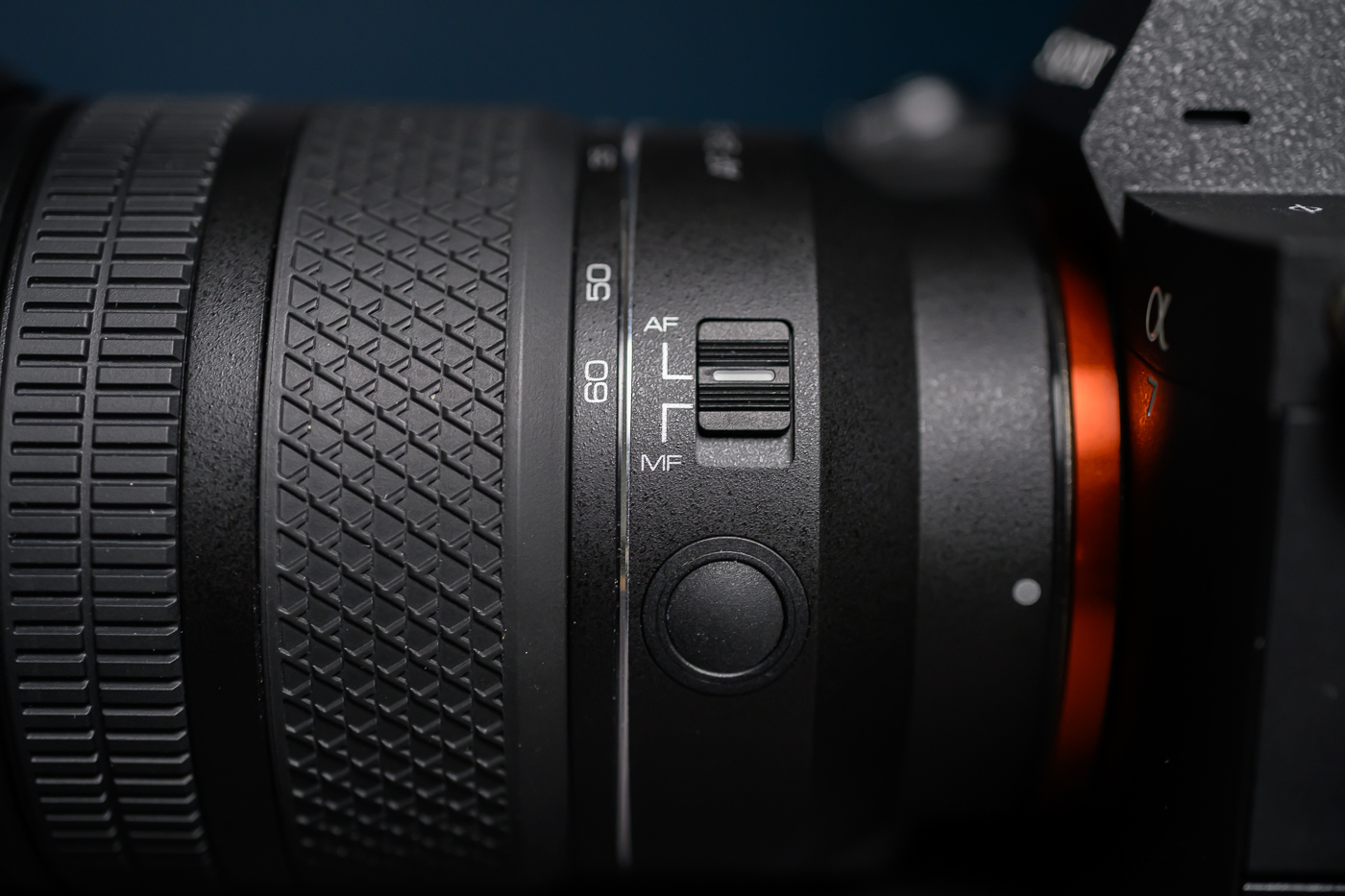
The lens also features an AF/MF switch and a customizable control button, handy for locking focus or accessing other functions.
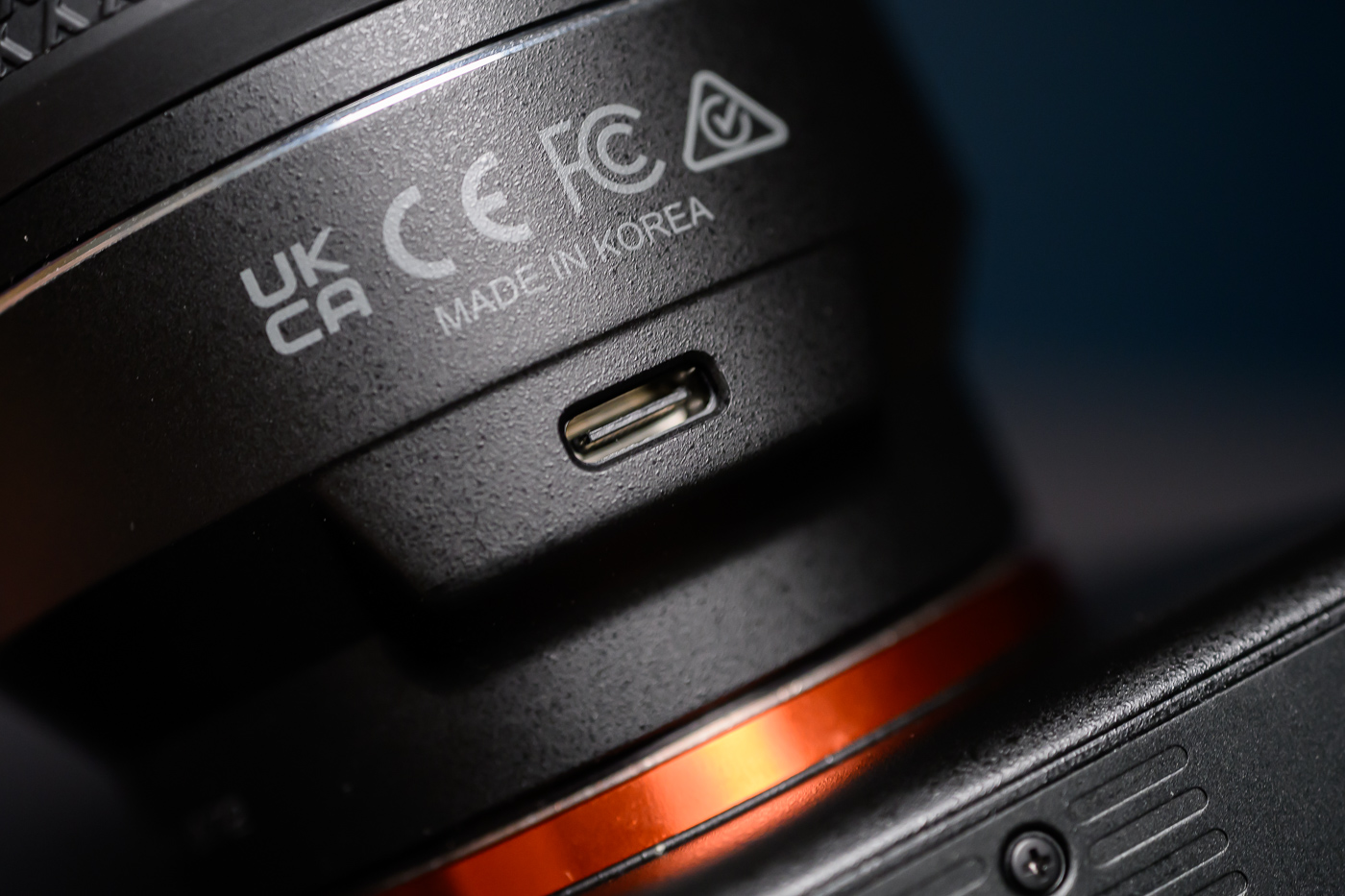
Worth noting is the presence of a USB-C port for updating the lens firmware without requiring a dedicated dock. A welcome feature for the product’s longevity.
Performance and image quality
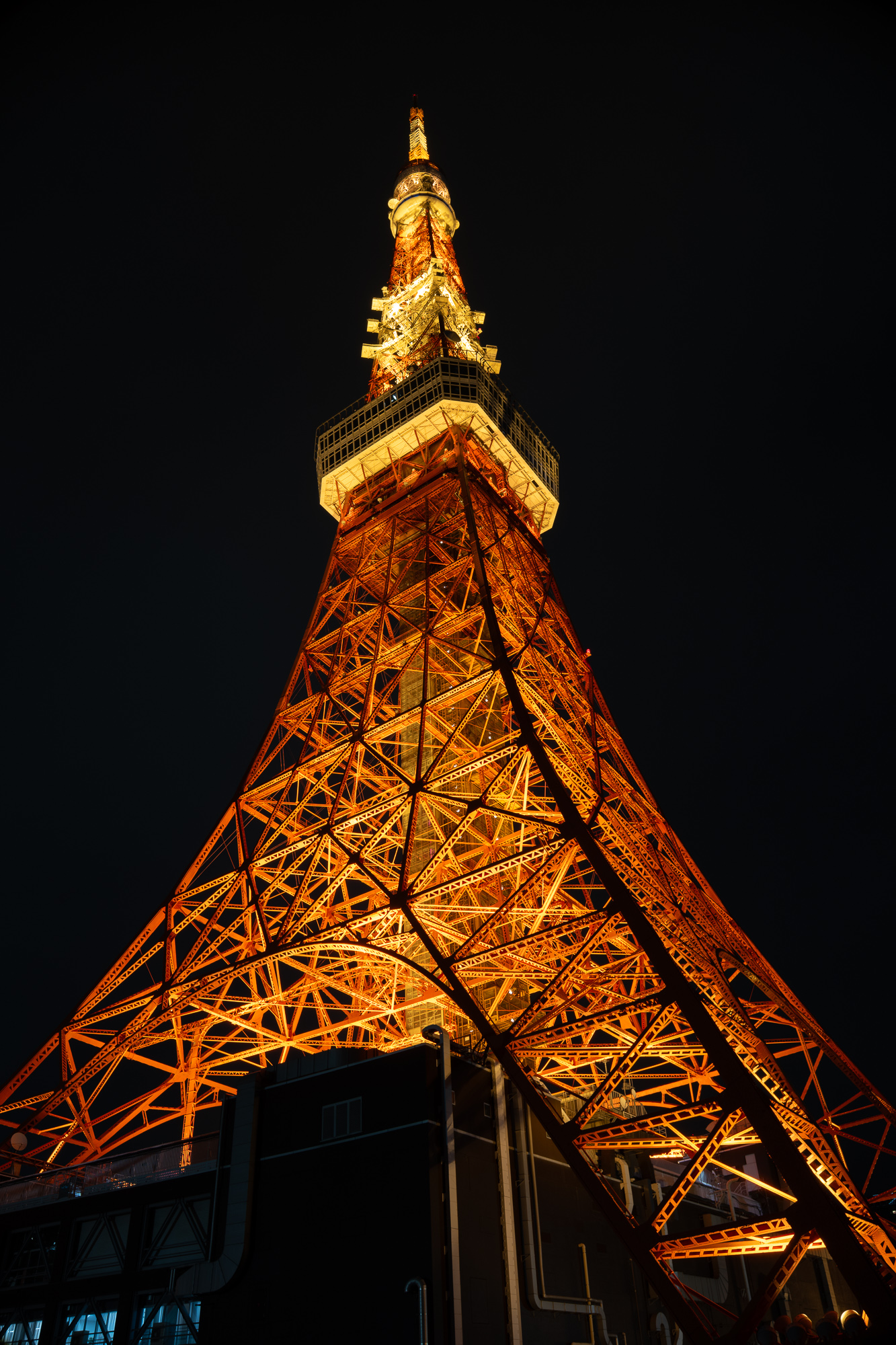
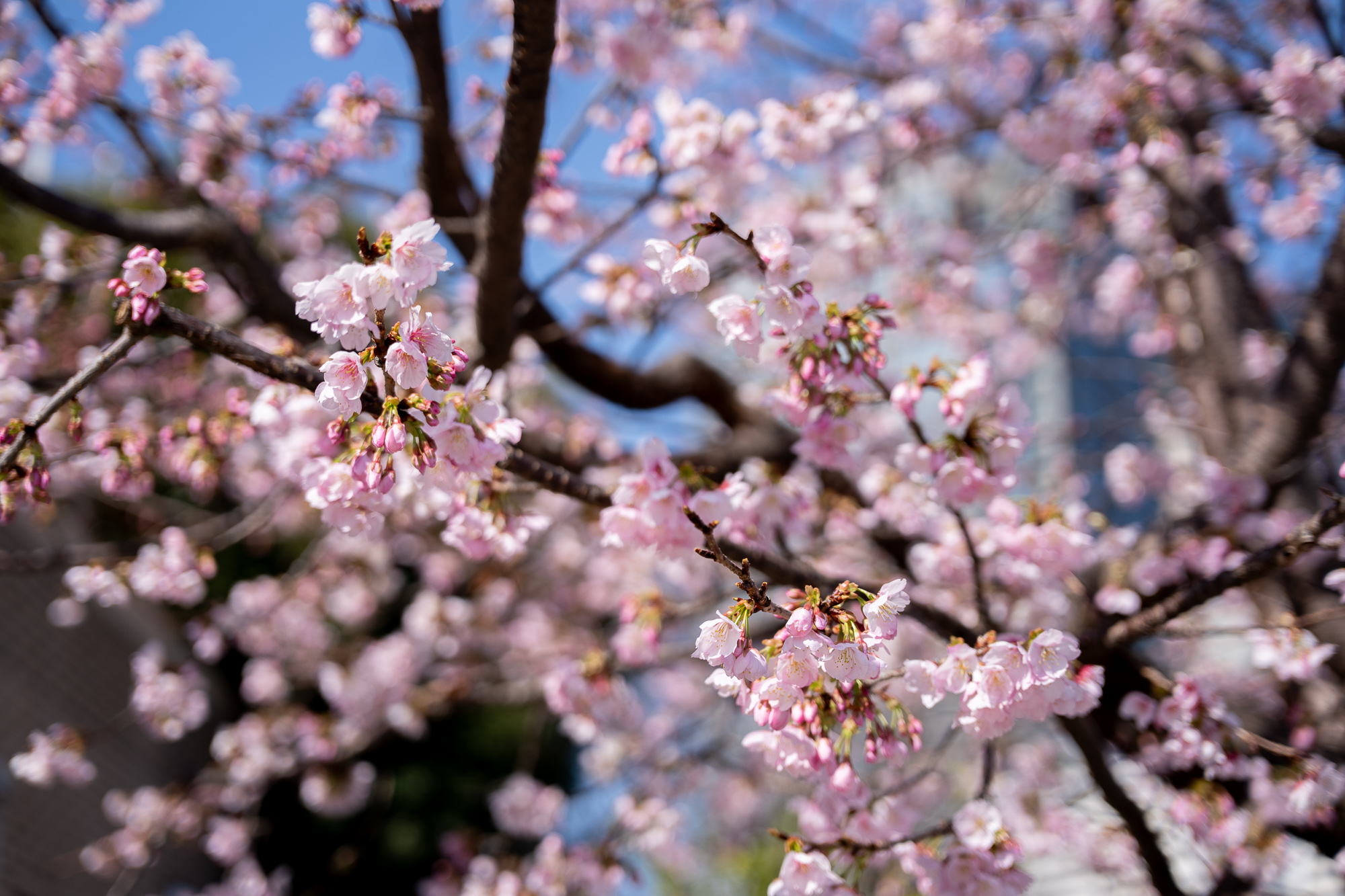
To test this Samyang zoom lens, we primarily used it on a Sony A7 V with its 33 MP full-frame sensor, as well as on a Sony A1 with its 50 MP sensor.
Feel free to click on each image to view it at full quality.
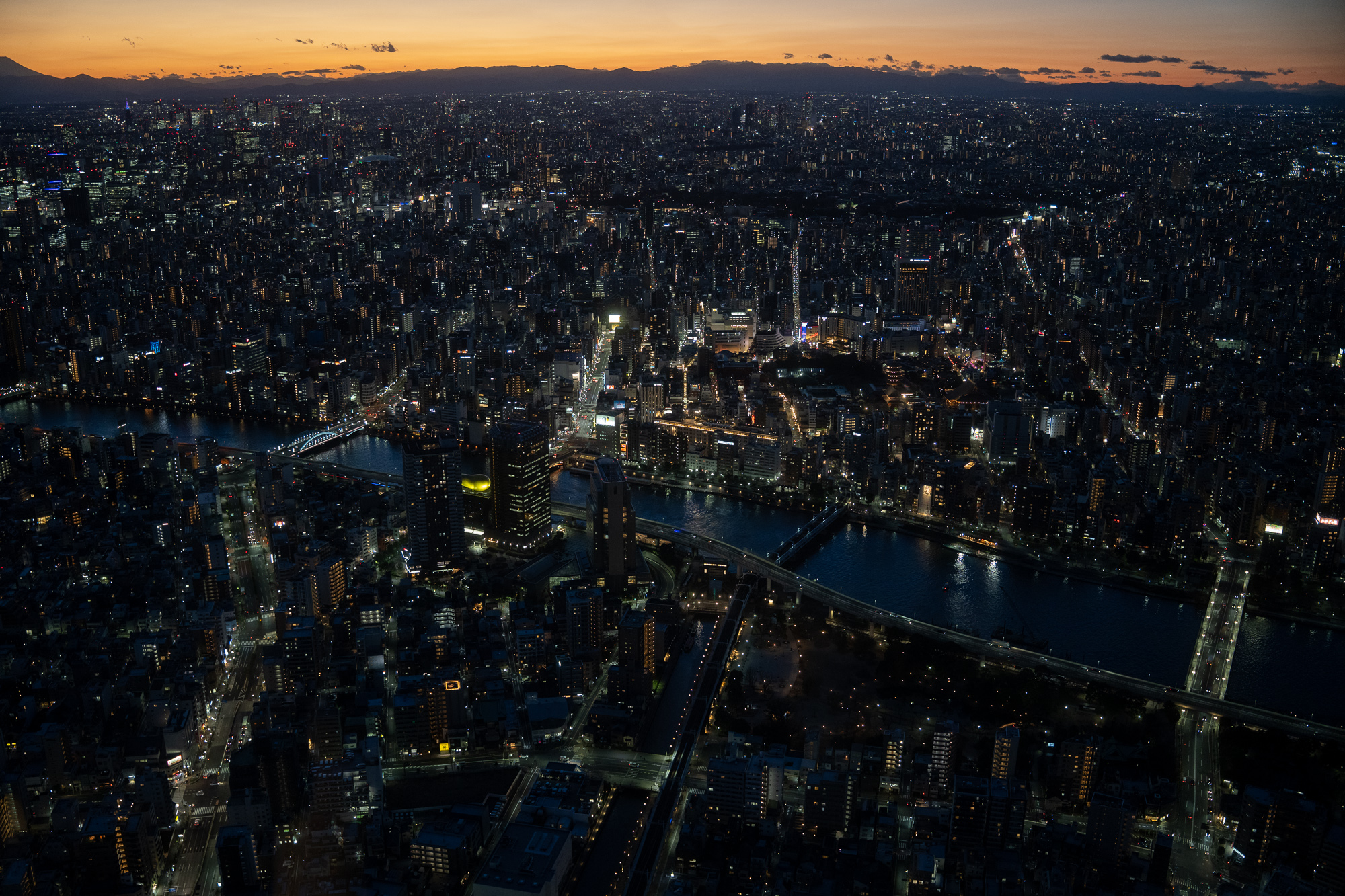
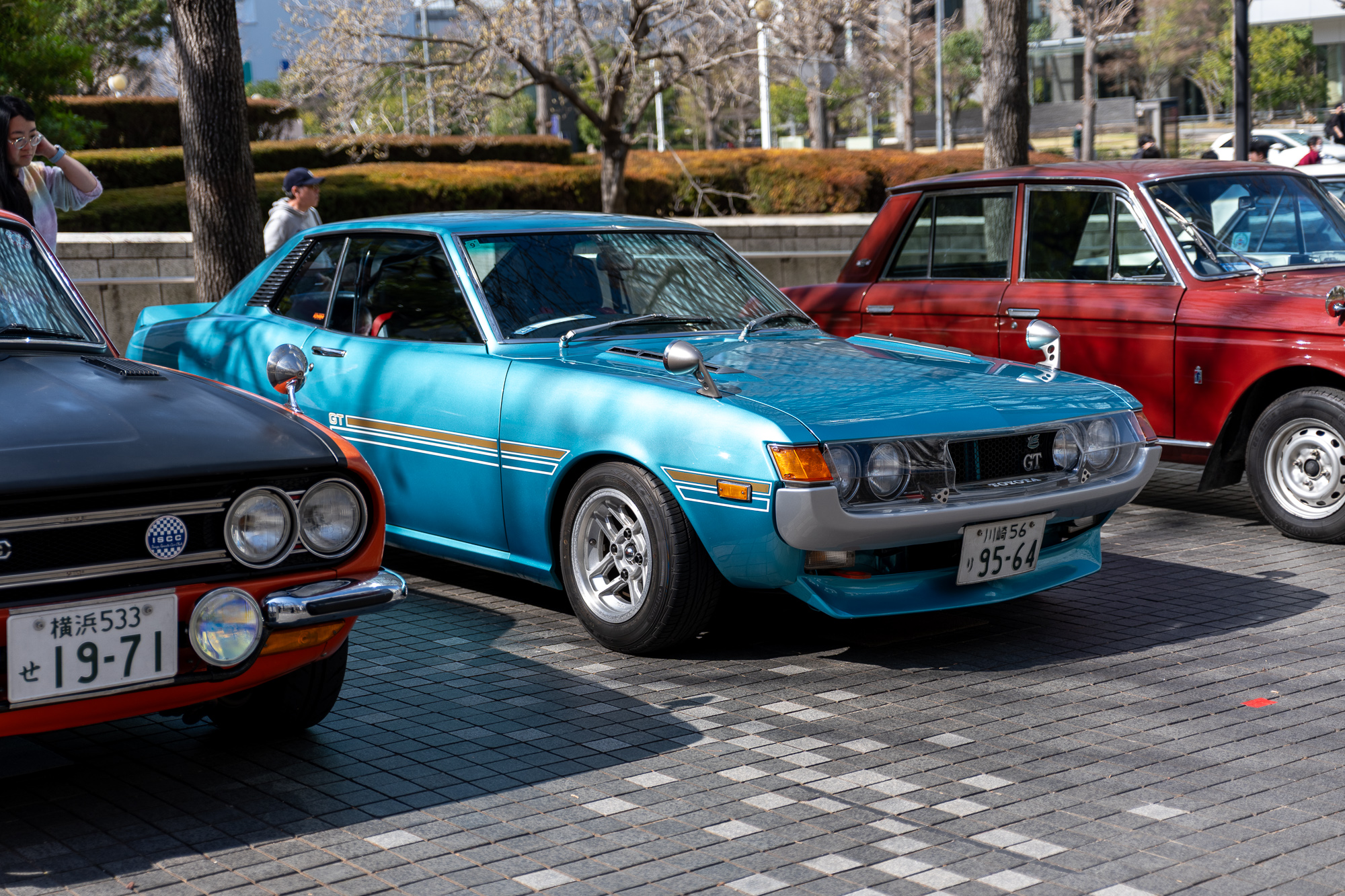
Sharpness and resolution
At 24 mm and wide open (f/2.8), center sharpness is very satisfying. Details are well rendered, with good contrast.
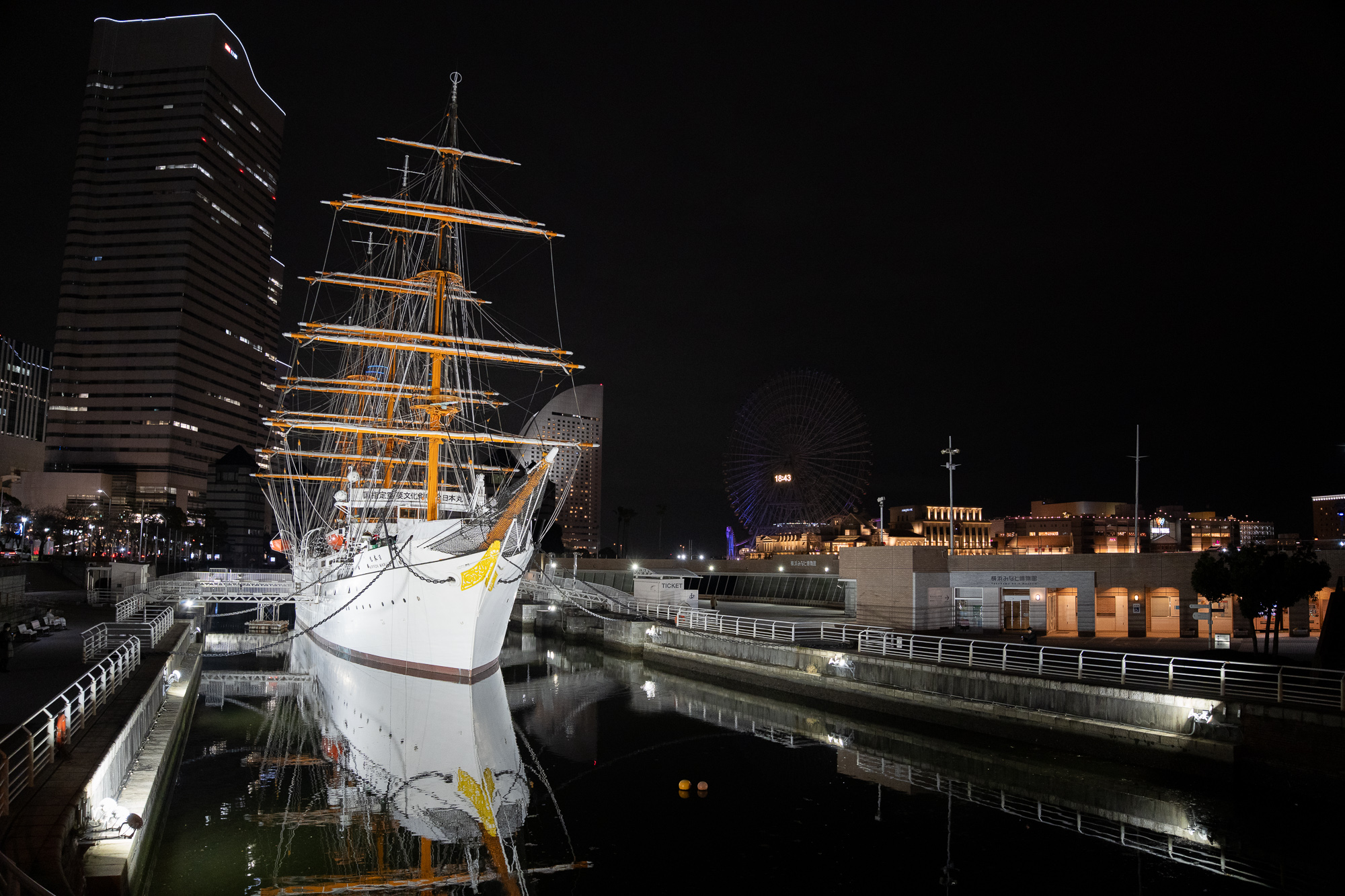
Stopping down to f/4 or f/5.6 brings the lens to its best performance level, with sharpness extending nicely toward the edges of the frame.
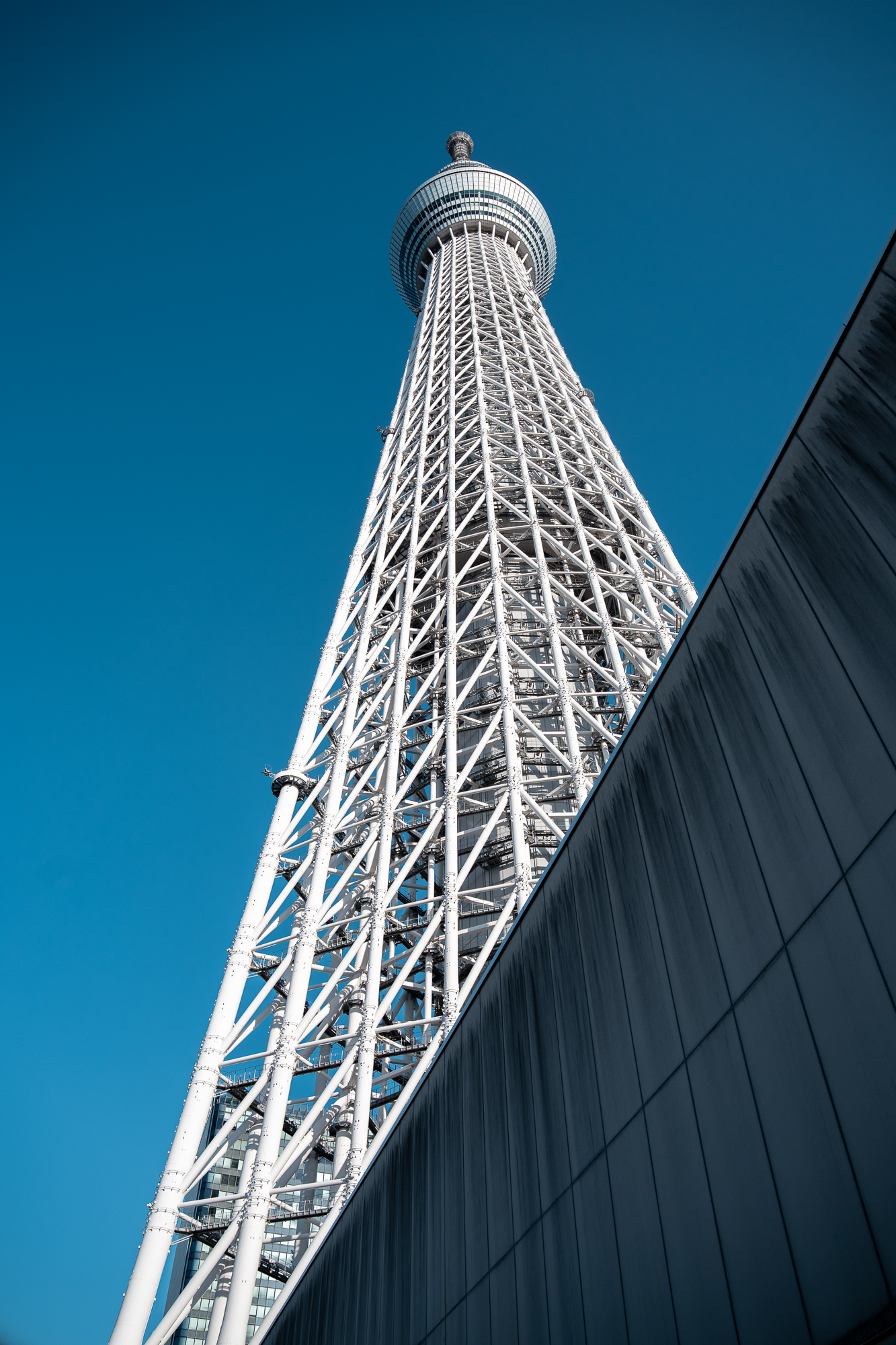
As you zoom toward 60 mm, there is a slight drop in sharpness at wide open, particularly toward the edges of the frame.

This slight softness at the edges at the long end is corrected by stopping down one or two stops. At f/5.6 or f/8 and at 60 mm, sharpness becomes perfectly acceptable, even on the very high-resolution sensor of the Sony A1.

For a zoom in this price range and form factor, the optical performance of the Samyang AF 24-60 mm f/2.8 FE is very commendable, while showing some predictable limitations at the long end. The magenta color cast typical of Samyang lenses does not intrude too much on images.

Distortion
The lens exhibits very strong barrel distortion at 24 mm, which is only corrected in JPEG files. There is no dedicated correction profile available in Lightroom: distortion must be corrected manually. Add to that the vignetting at the widest angle (see below). In short: the lens requires adjustments, and possibly some cropping, on every shot taken at 24 mm.
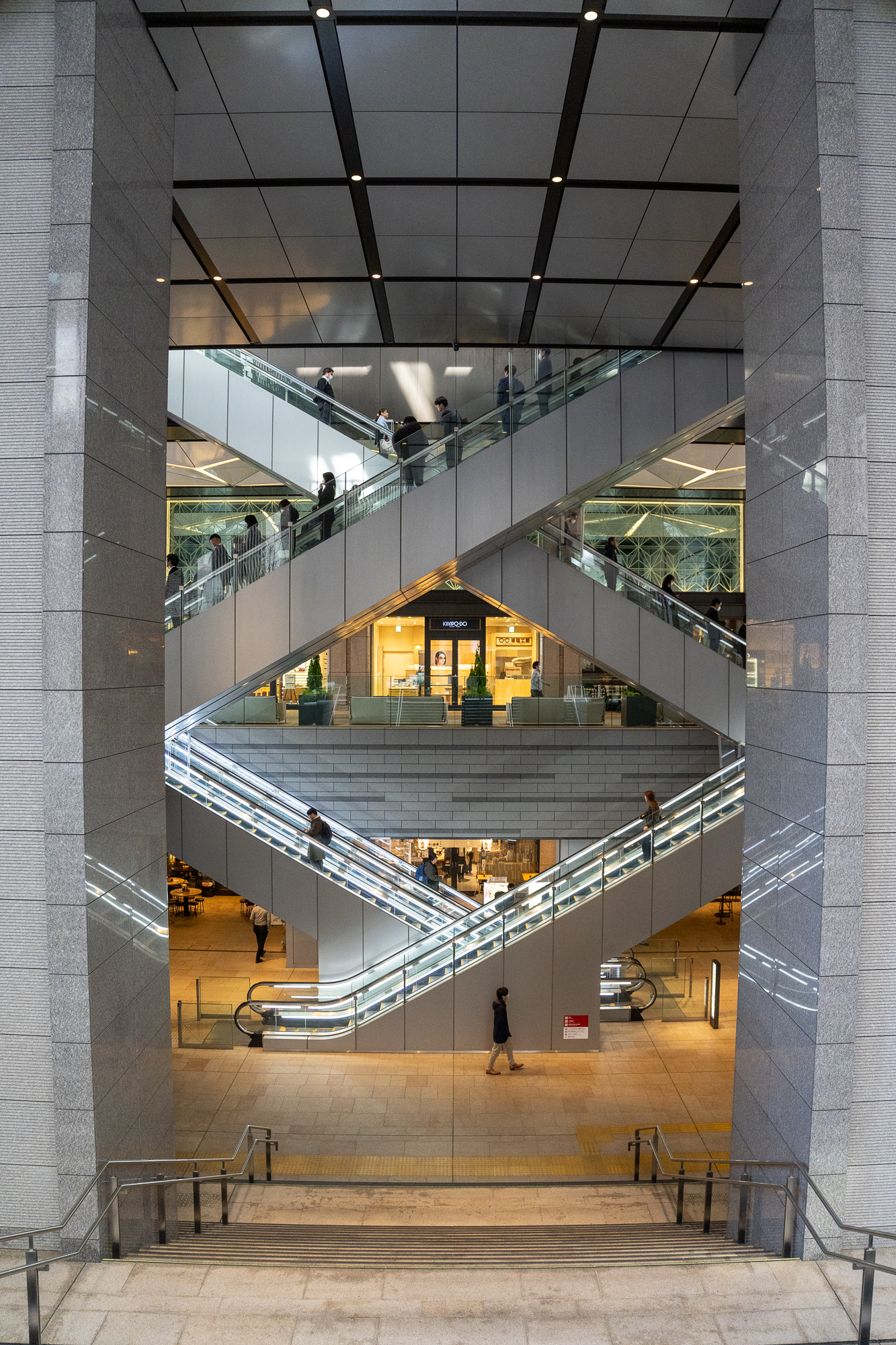
At mid-range focal lengths, distortion becomes virtually nonexistent. At 60 mm, the deformation is almost imperceptible.
Chromatic aberration
The combination of ED and HR elements does its job well. Chromatic aberrations are absent or minimal on most subjects. They become more noticeable toward the edges, but remain easily correctable in post-processing. It is worth noting that the only built-in lens profile specifically addresses chromatic aberration correction.

This control of chromatic aberrations deserves praise, as Samyang lenses have been known to produce significant color fringing…
Vignetting
Vignetting control is a much more problematic area. Indeed, without a correction profile, at the 24 mm wide end, corner darkening is very pronounced. Combined with the distortion mentioned above, you can actually see the edge of the lens in the frame! A phenomenon known as “mechanical vignetting”, which suggests the lens’s image circle does not fully cover the sensor…
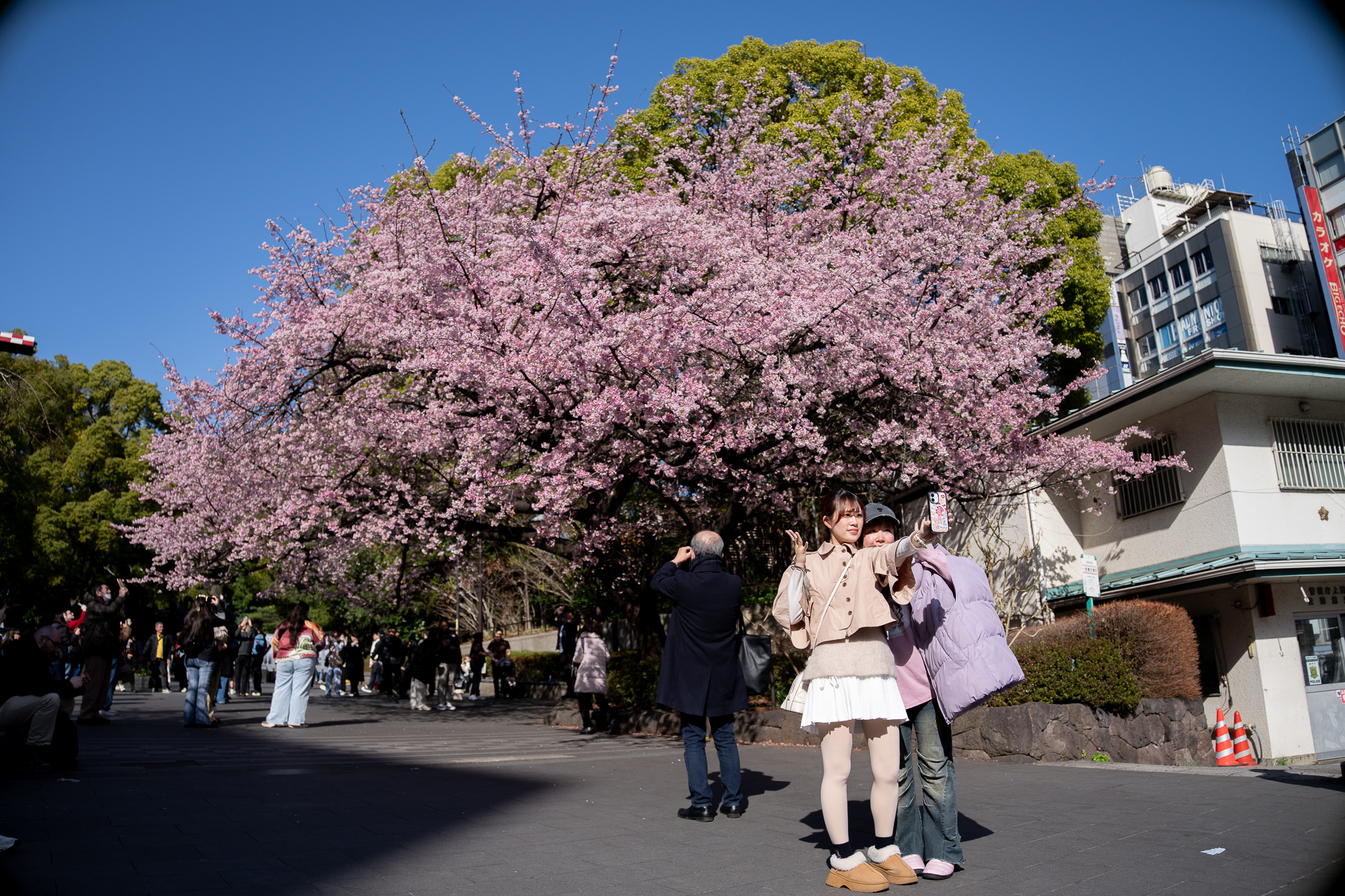
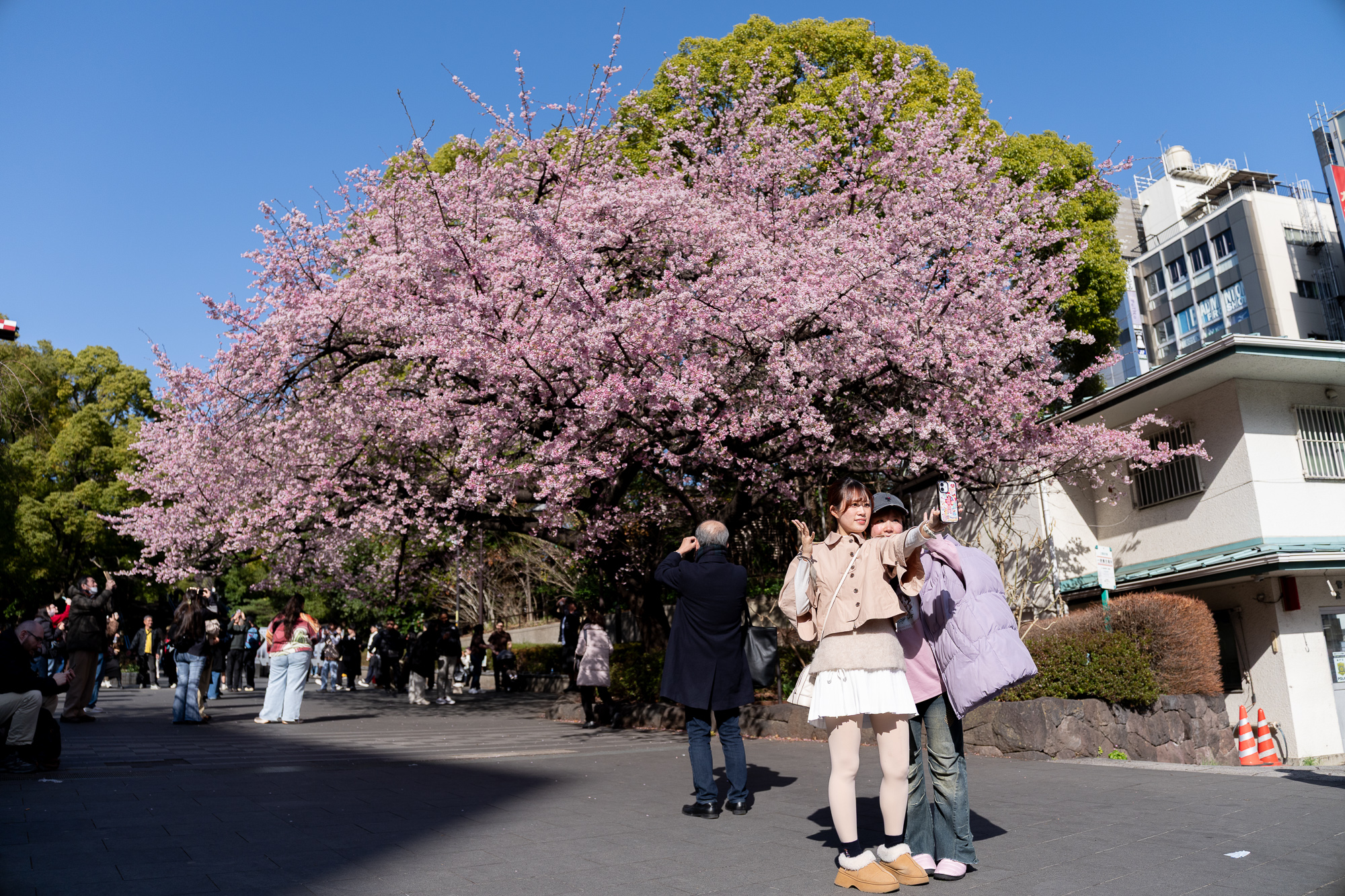
This striking phenomenon persists from wide open all the way to f/16 and requires manual correction (for RAW files) to mitigate the issue…


Fortunately, this very (very) pronounced vignetting is not present across the entire focal range. At mid-range (around 40 mm), corner darkening is visible at f/2.8 but not as severe as at 24 mm. It diminishes noticeably by f/4 and virtually disappears at f/5.6. The same behavior is observed at 60 mm.
Bokeh
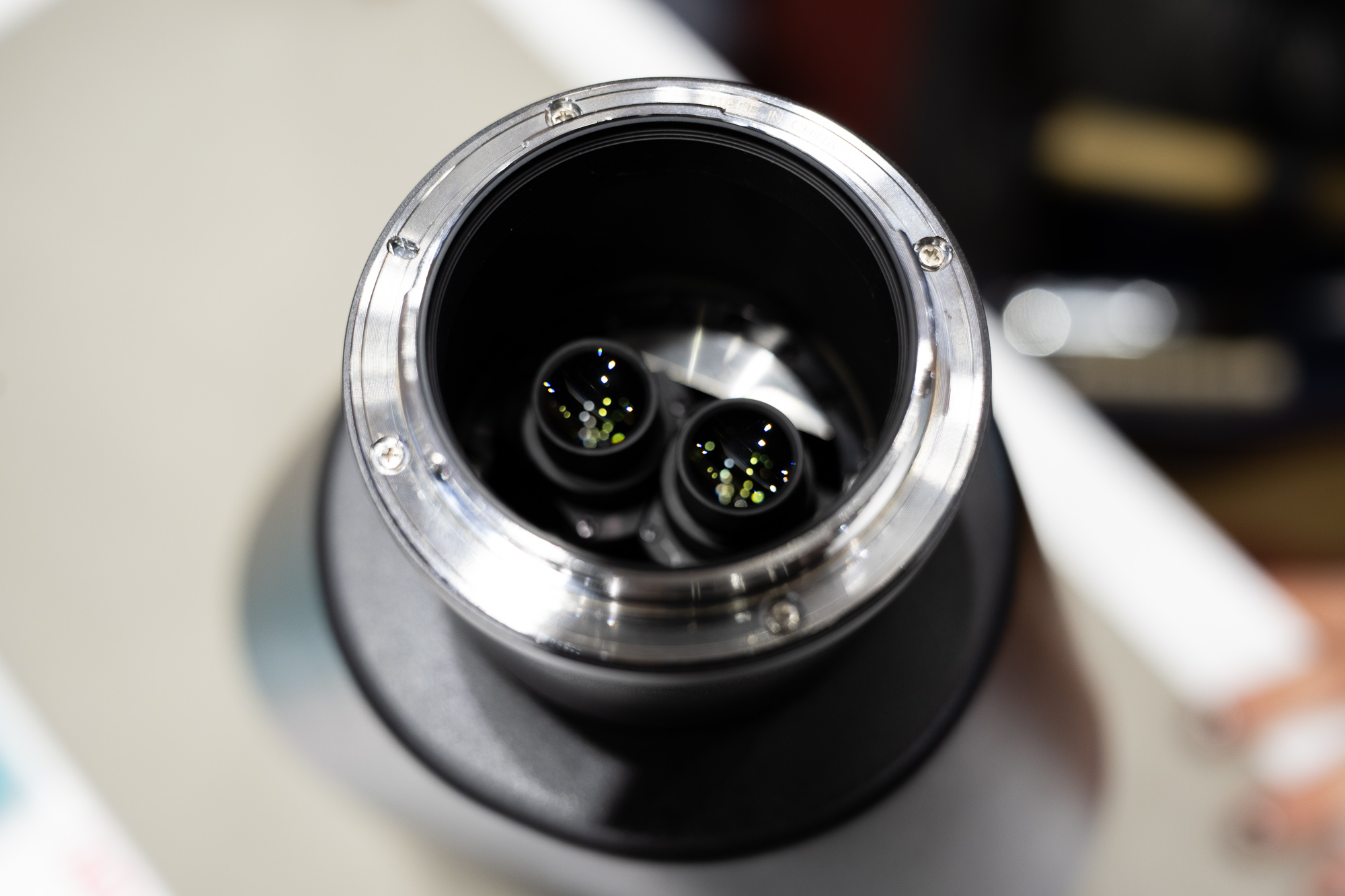
For a standard zoom, the background blur rendering is pleasant. The 9 aperture blades produce smooth bokeh balls, with no noticeable onion ring effect.

The transition between subject and background is gradual. The results are especially convincing at 60 mm wide open, where the subject-to-background separation is strongest. At shorter and mid-range focal lengths, the results are less impressive.
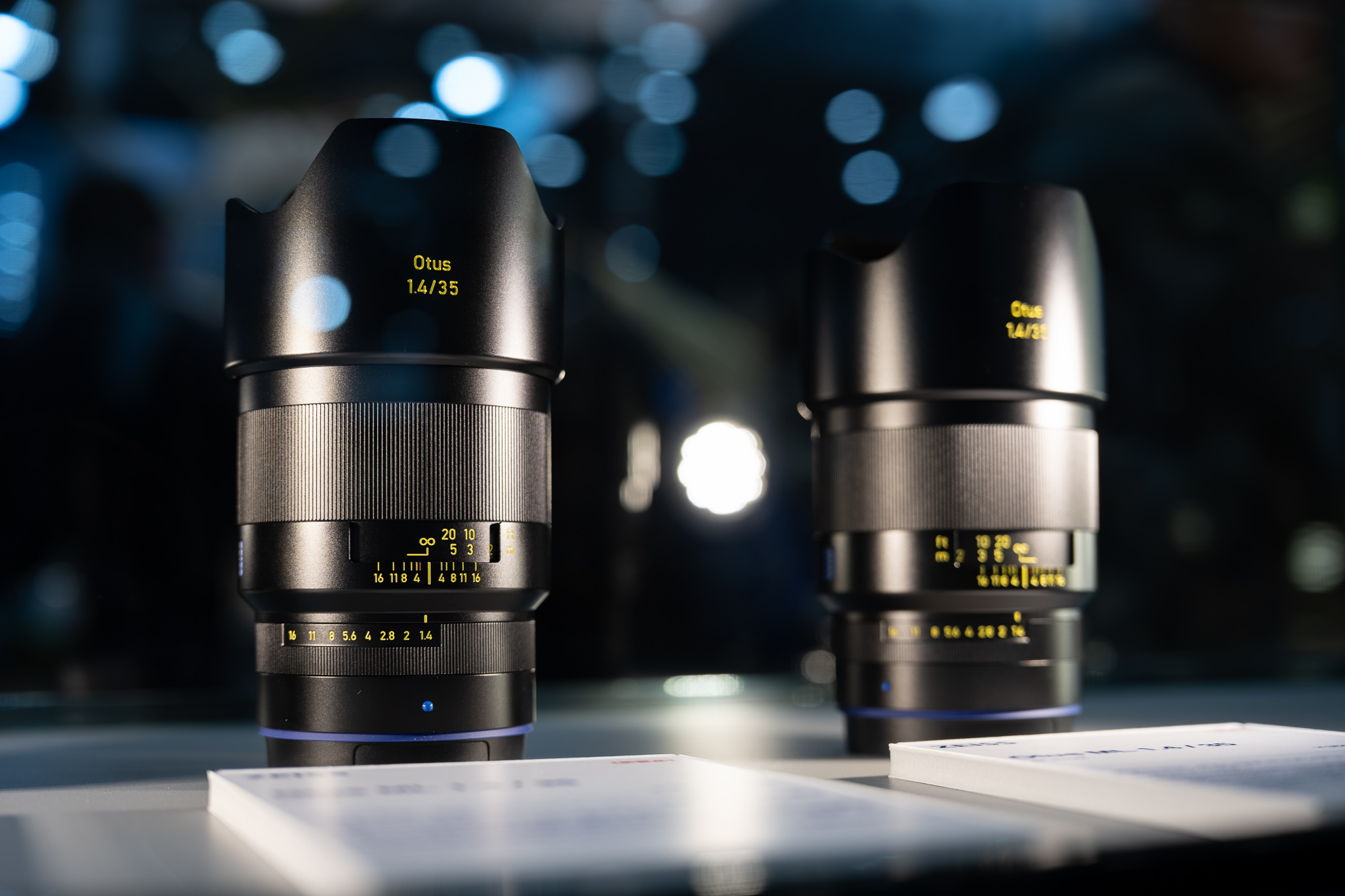
The very short minimum focusing distance of 18 cm at 24 mm (and 32 cm at 60 mm) also allows for creative “near-macro” results, with interesting bokeh effects on close-up compositions.


Autofocus
The linear STM motor delivers an autofocus that is fairly fast, accurate and silent. On the Sony A7 V, subject tracking is very effective in continuous AF with moderately moving subjects.

For portrait, travel and street photography, performance is perfectly satisfying.
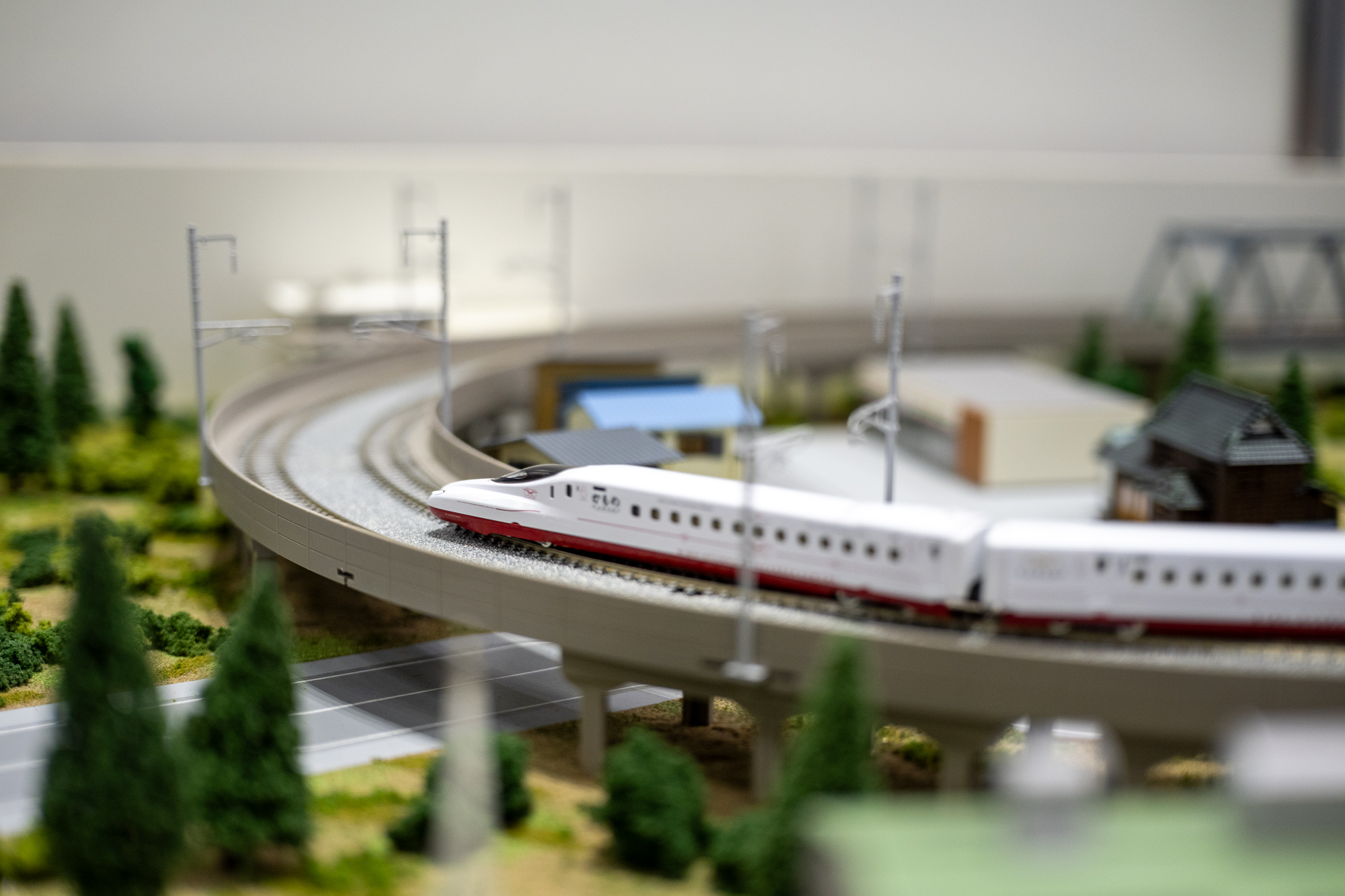
However, with very fast-moving subjects (sports, animals in action), the lens shows its limits. It is not really designed for that purpose, and it would be unfair to compare it with more ambitious and better-equipped zooms.
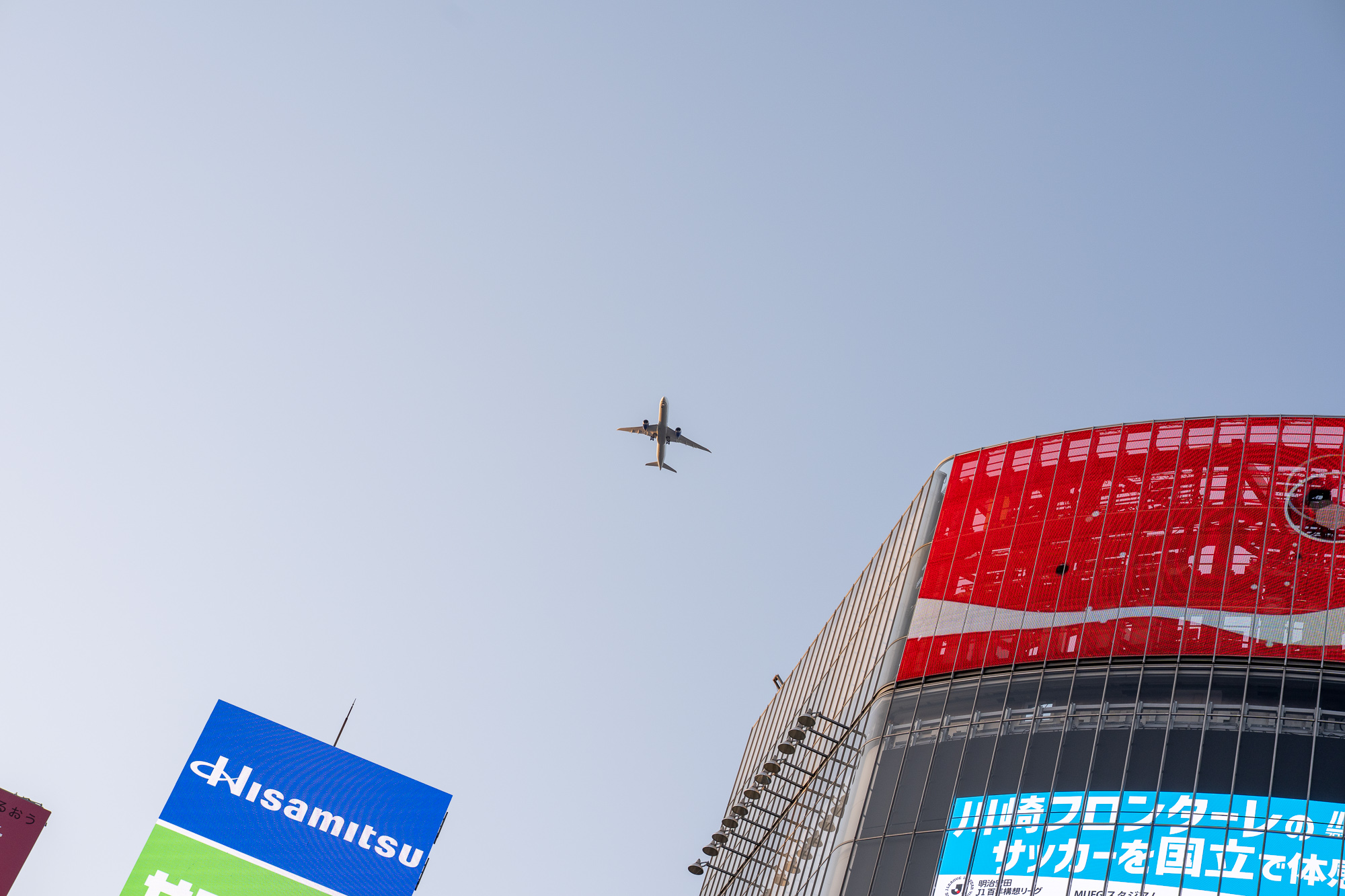
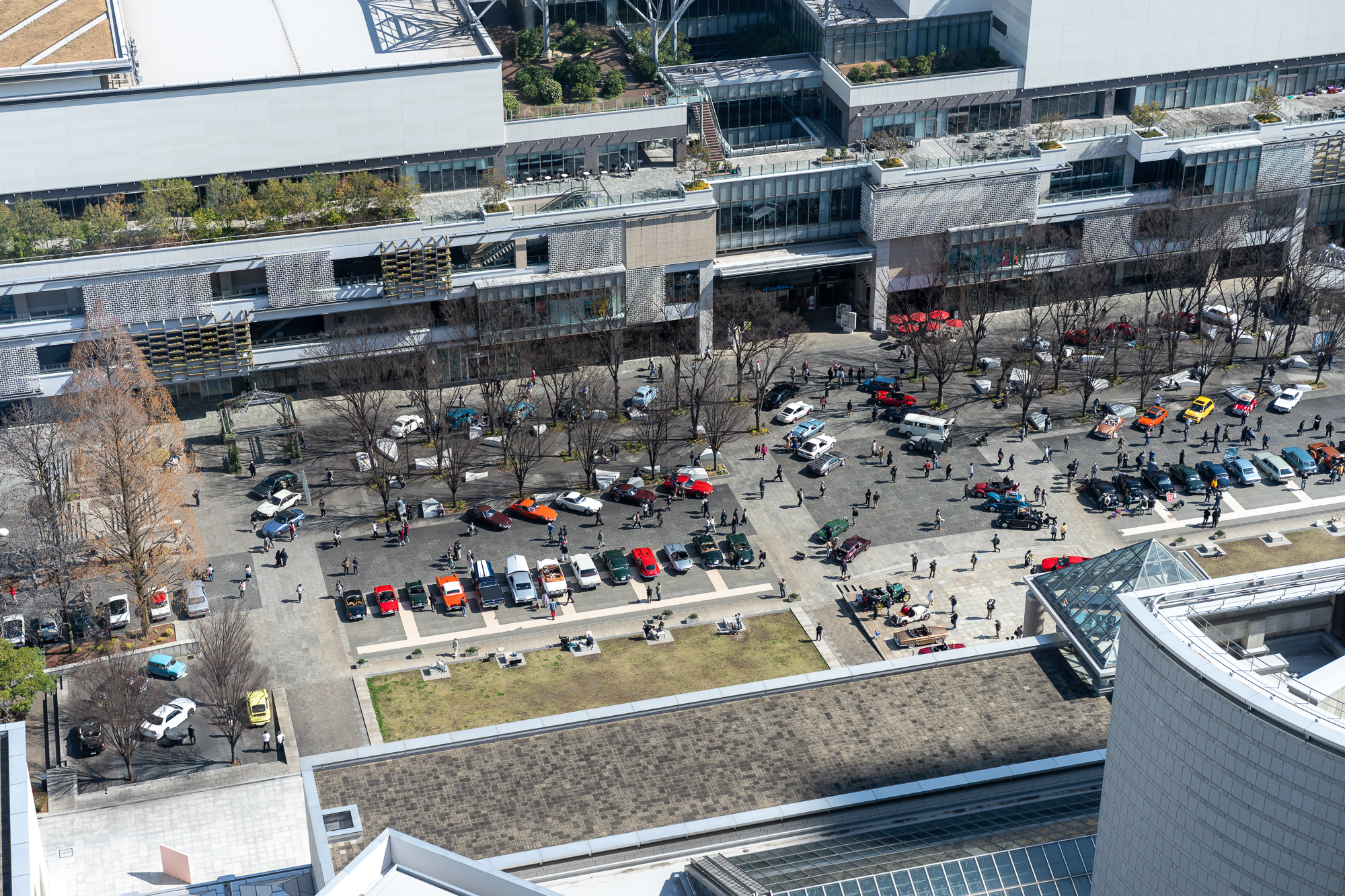
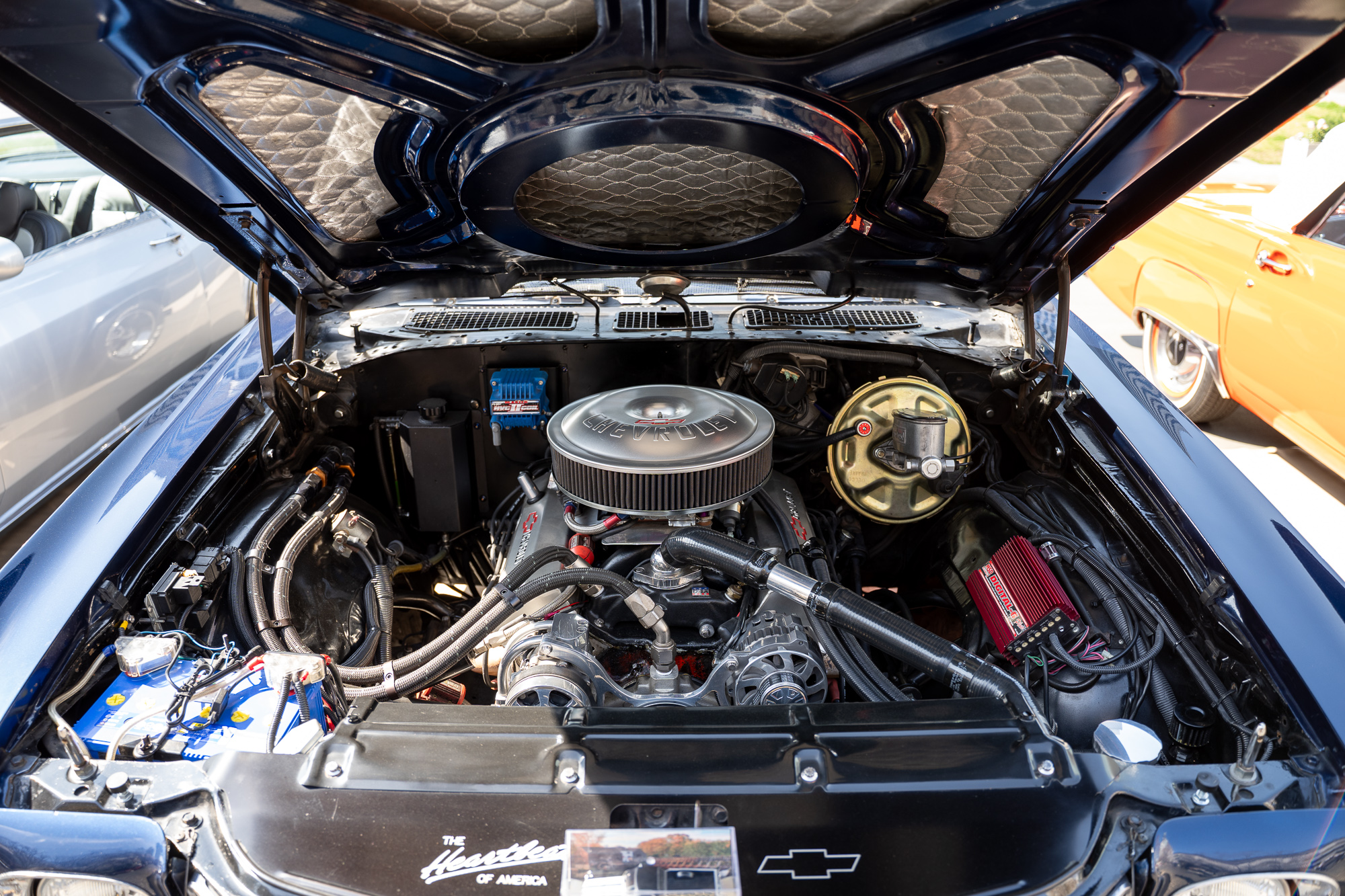
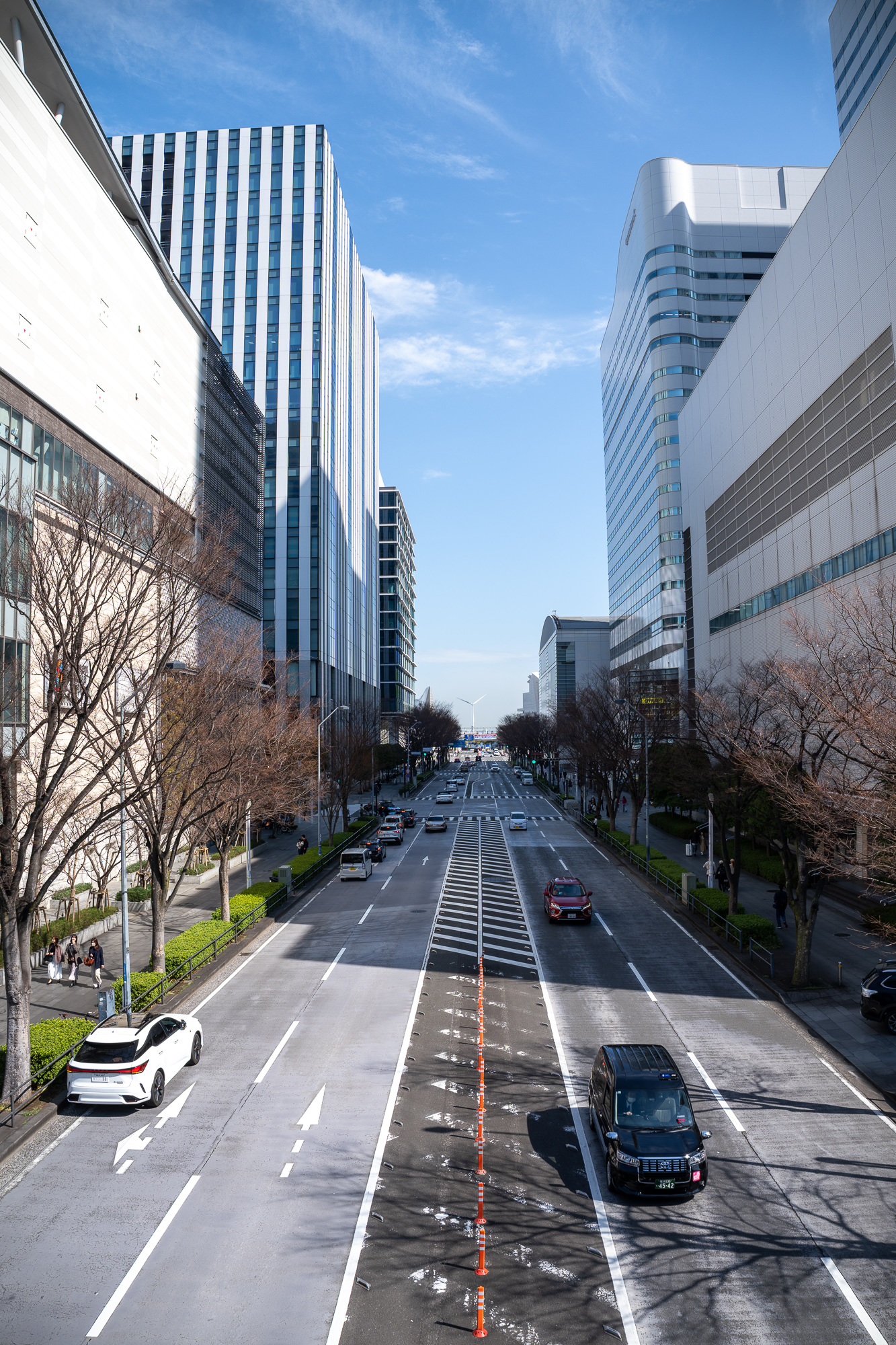
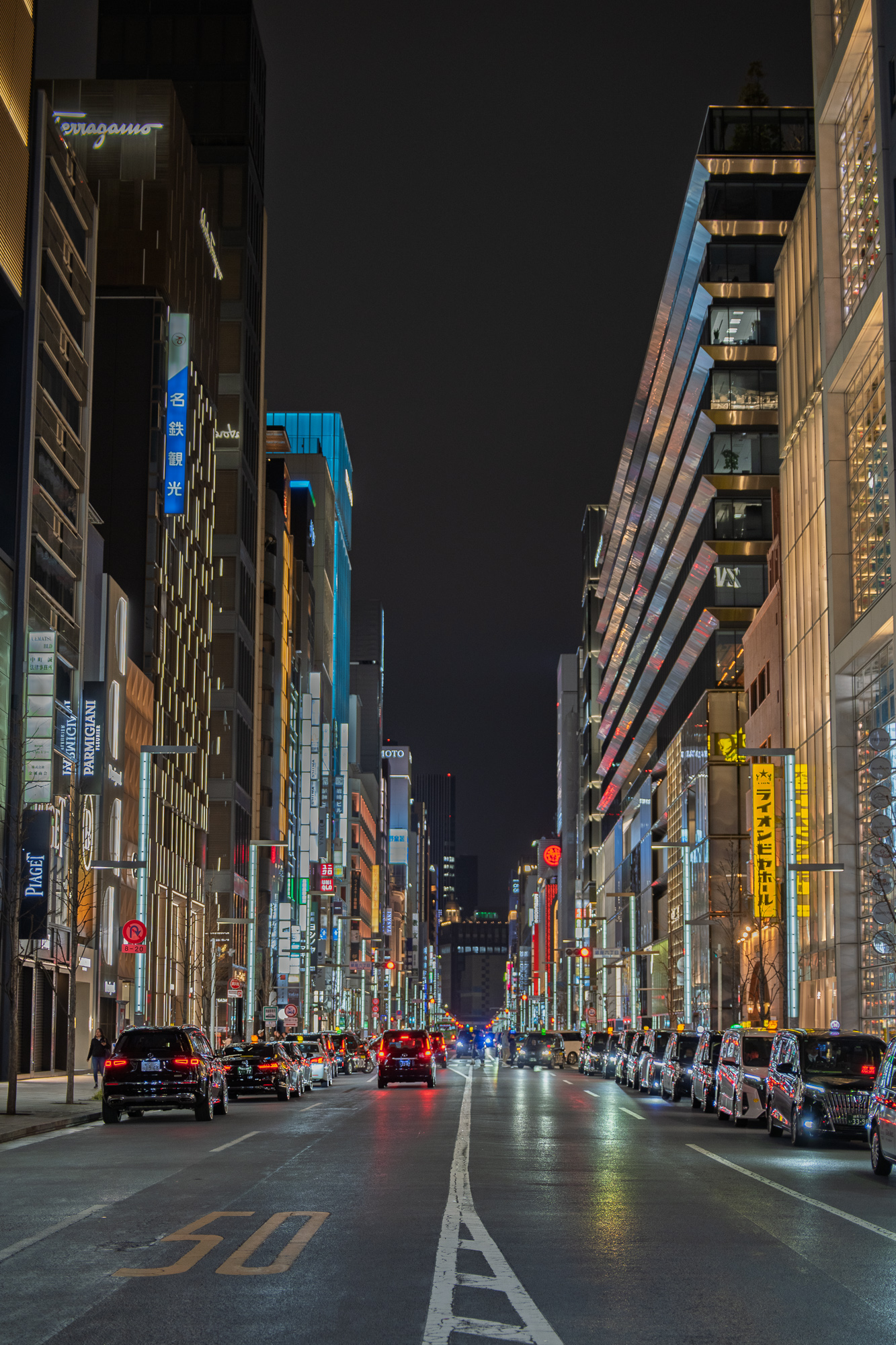
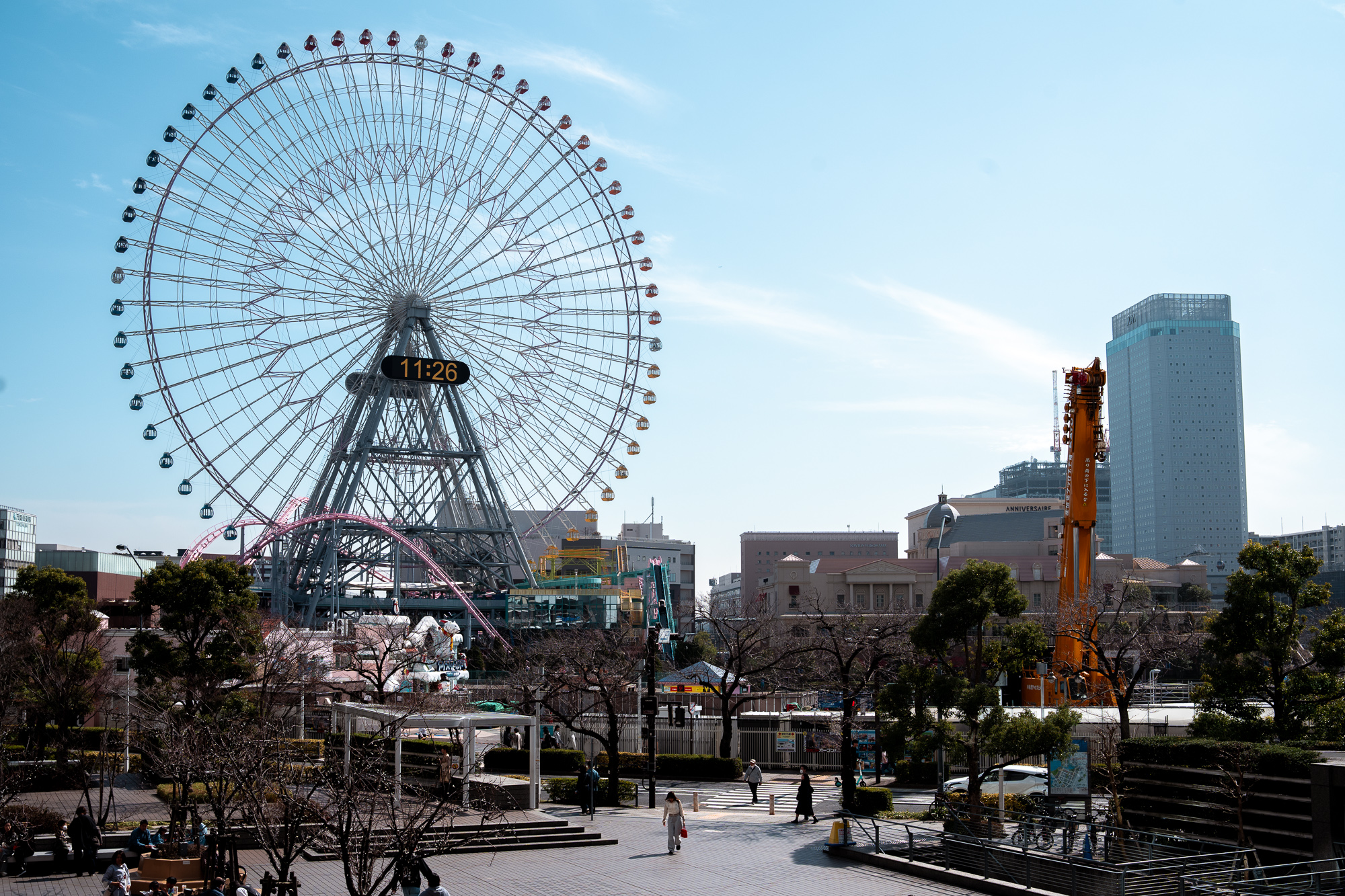
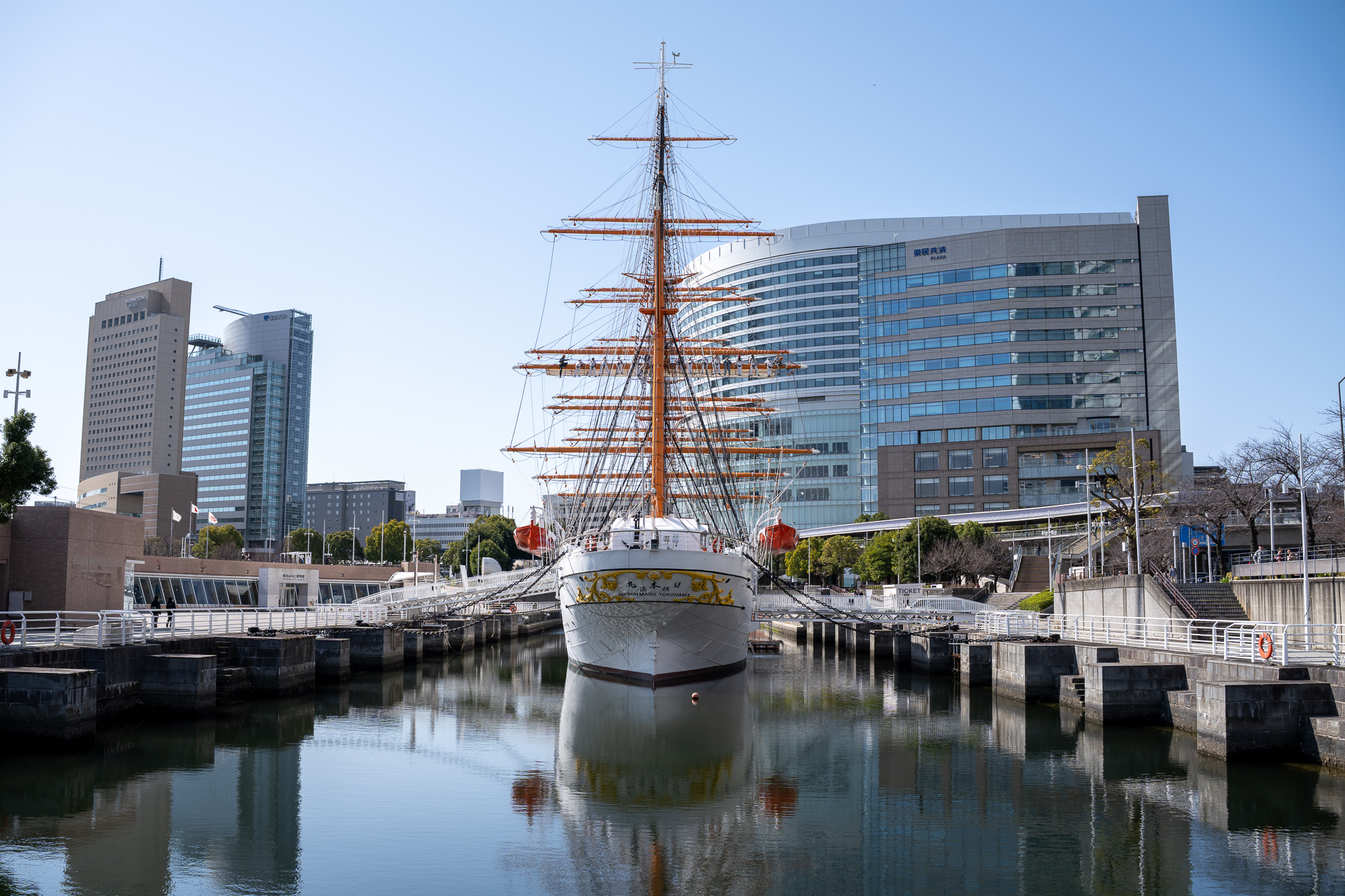
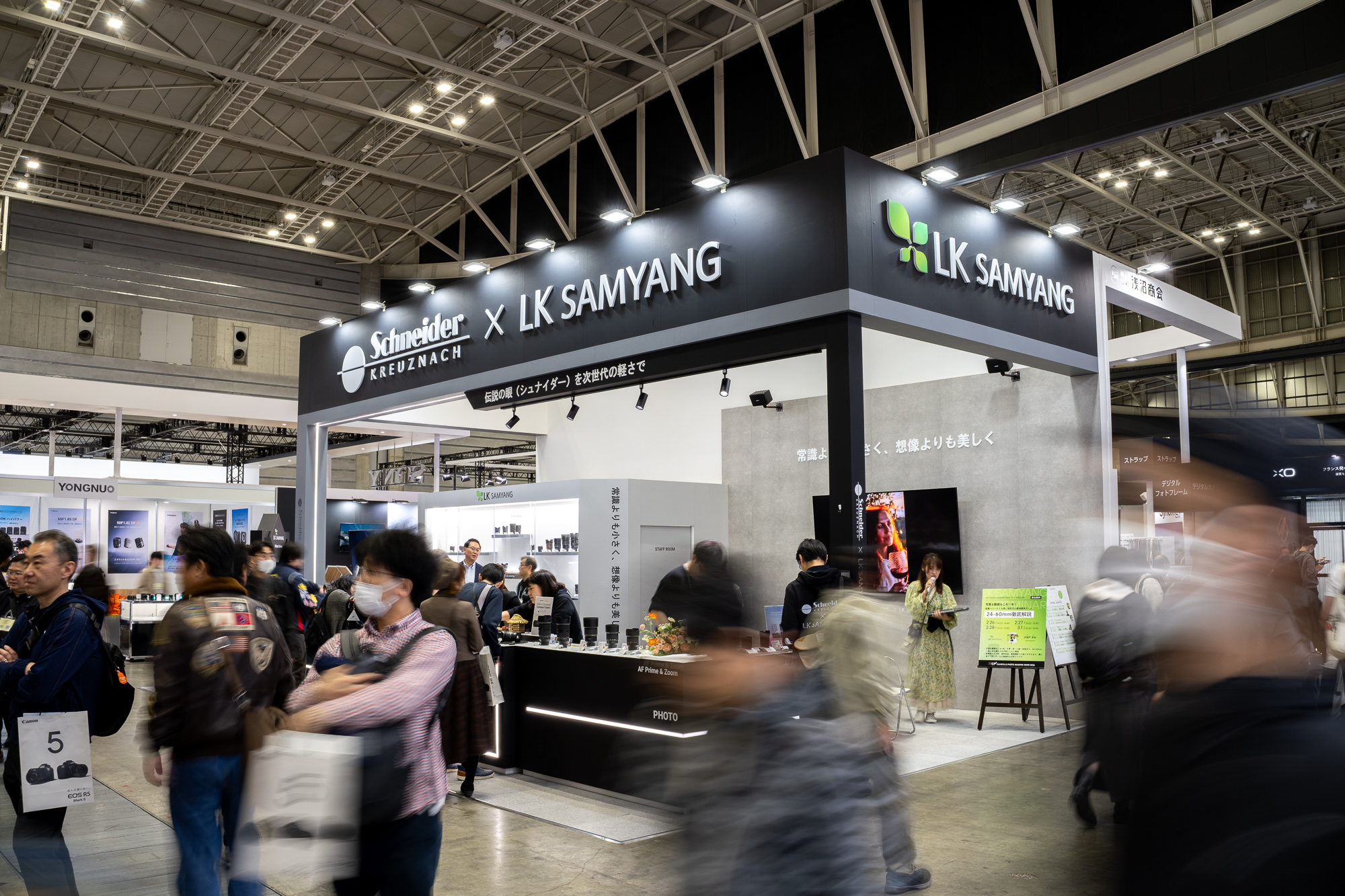
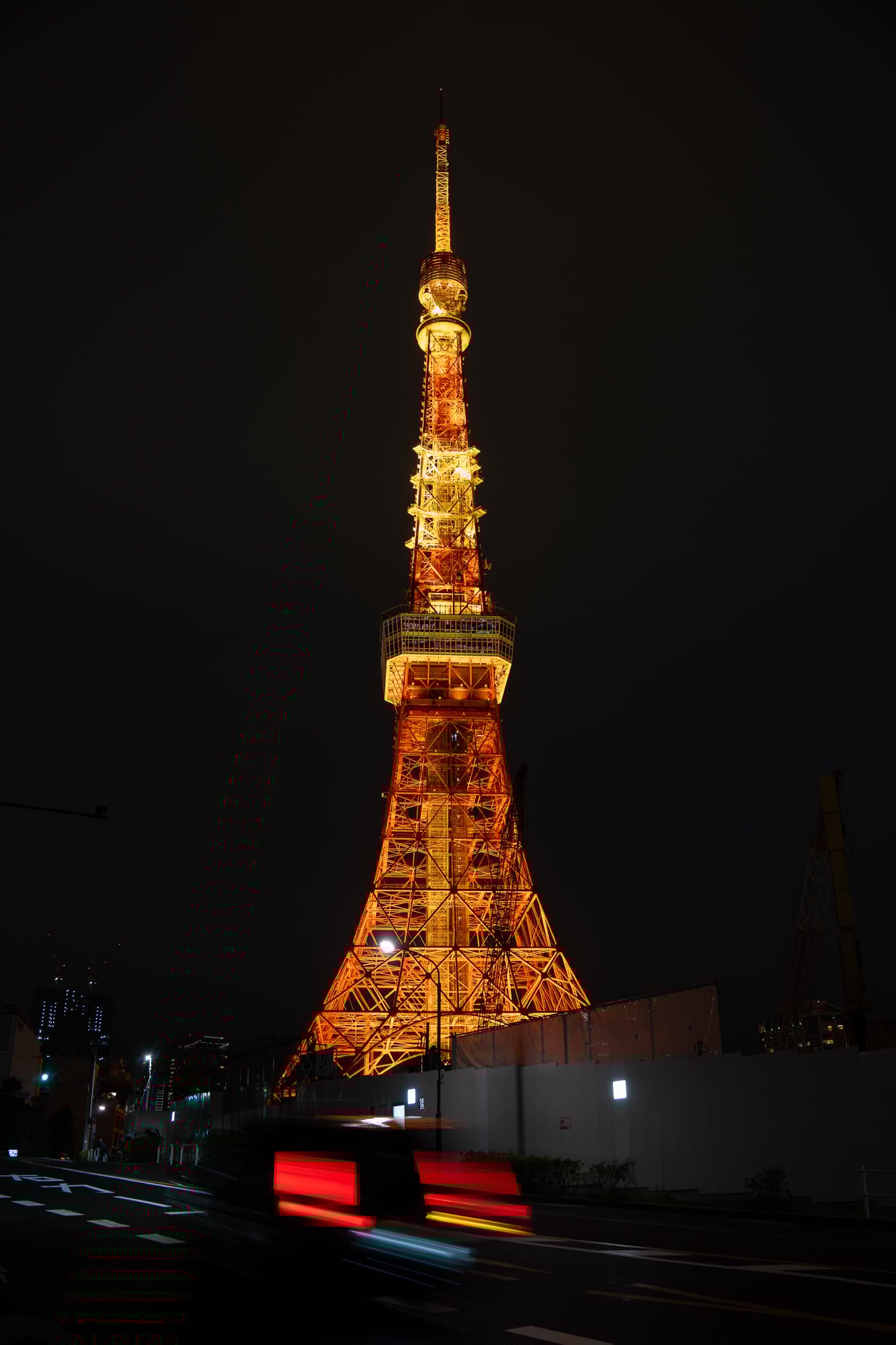
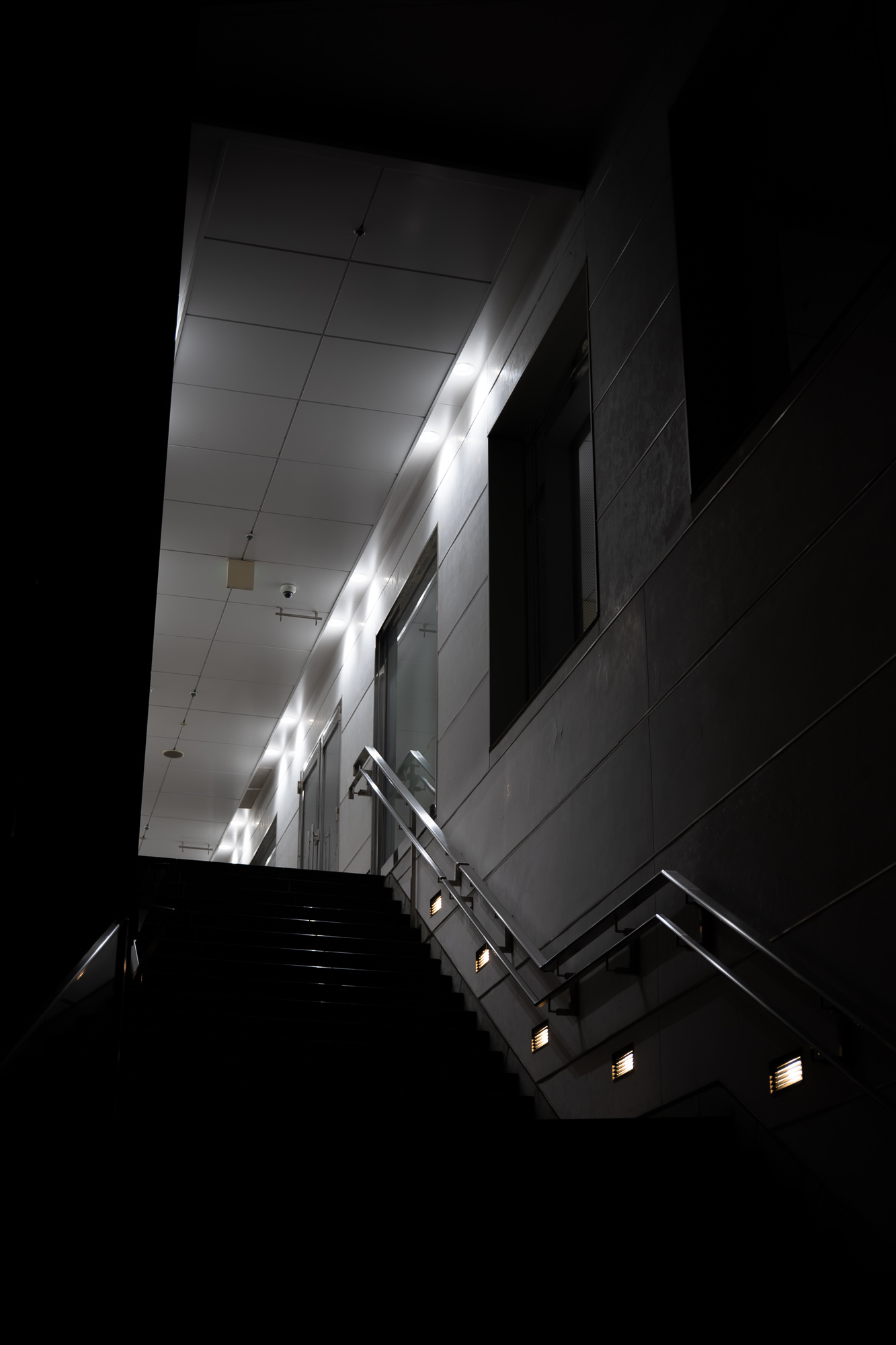
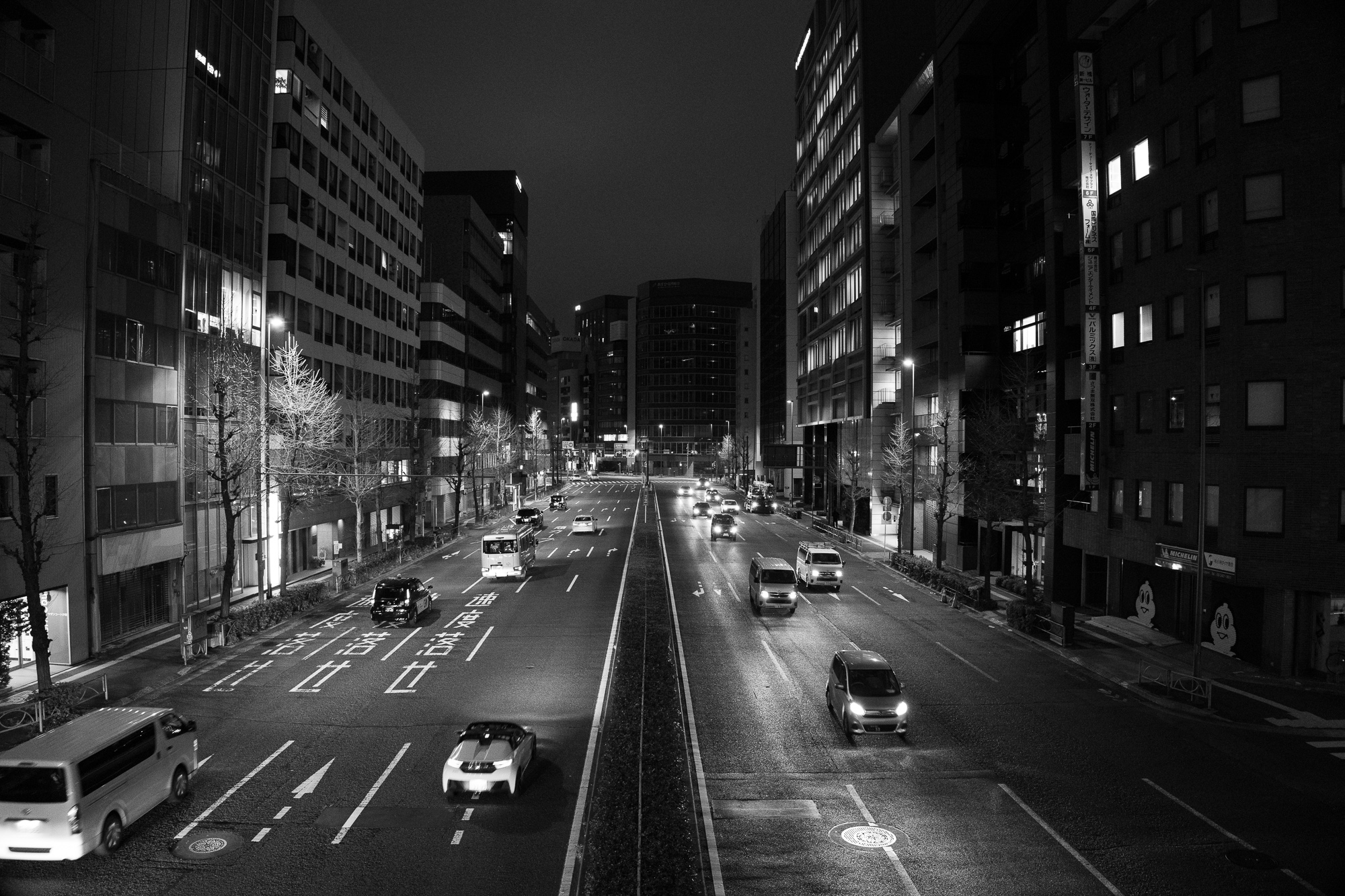
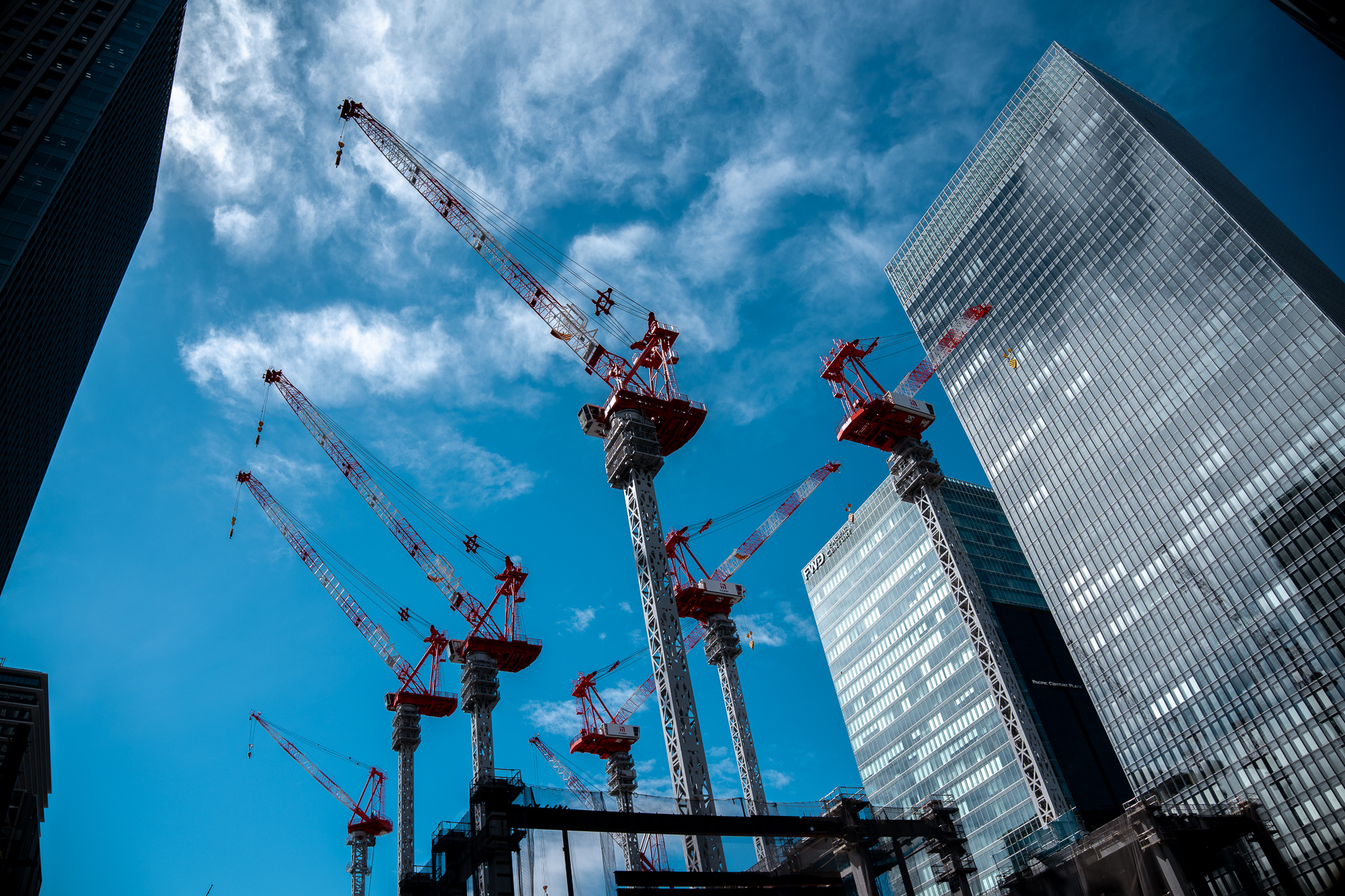
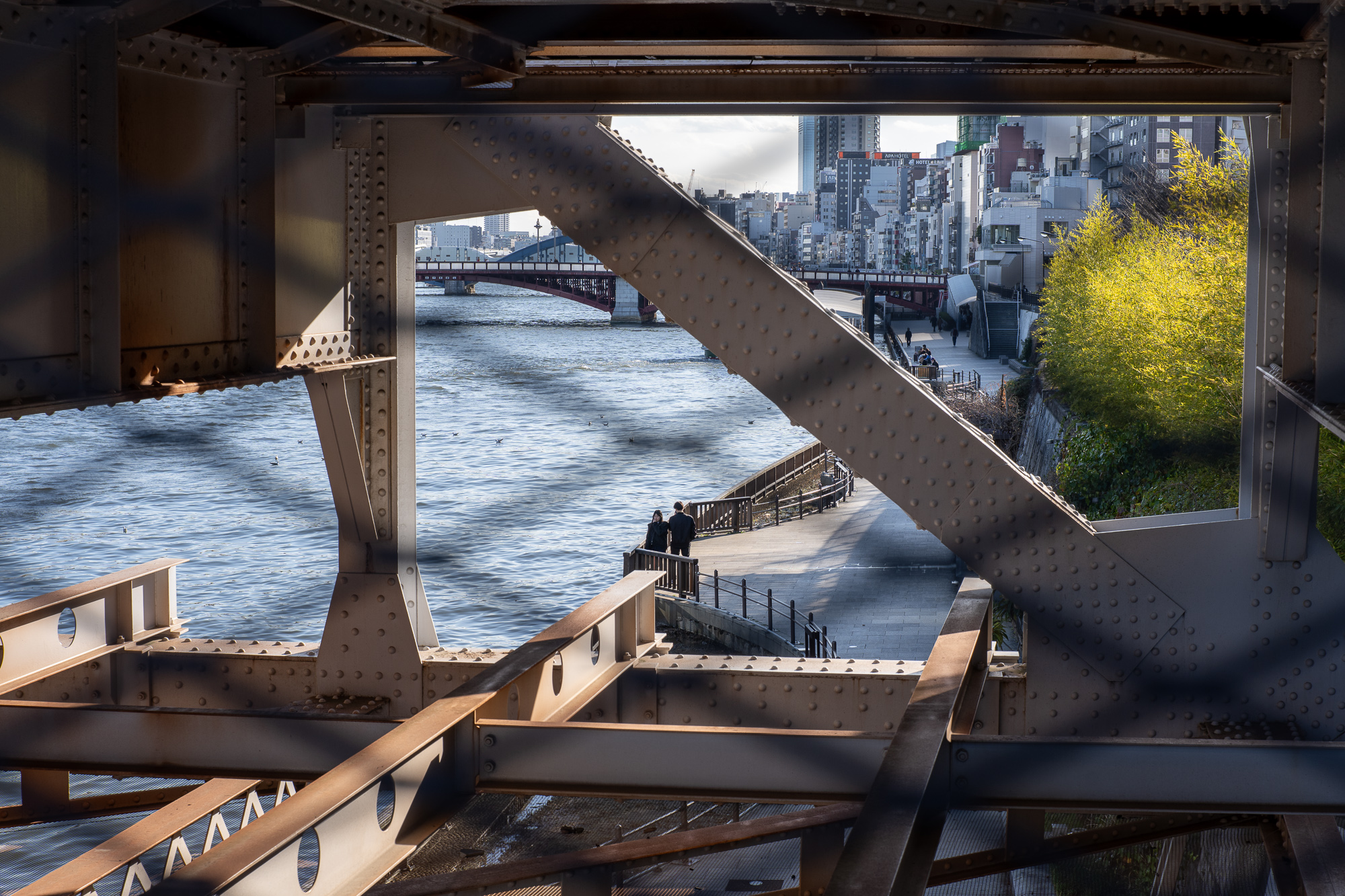
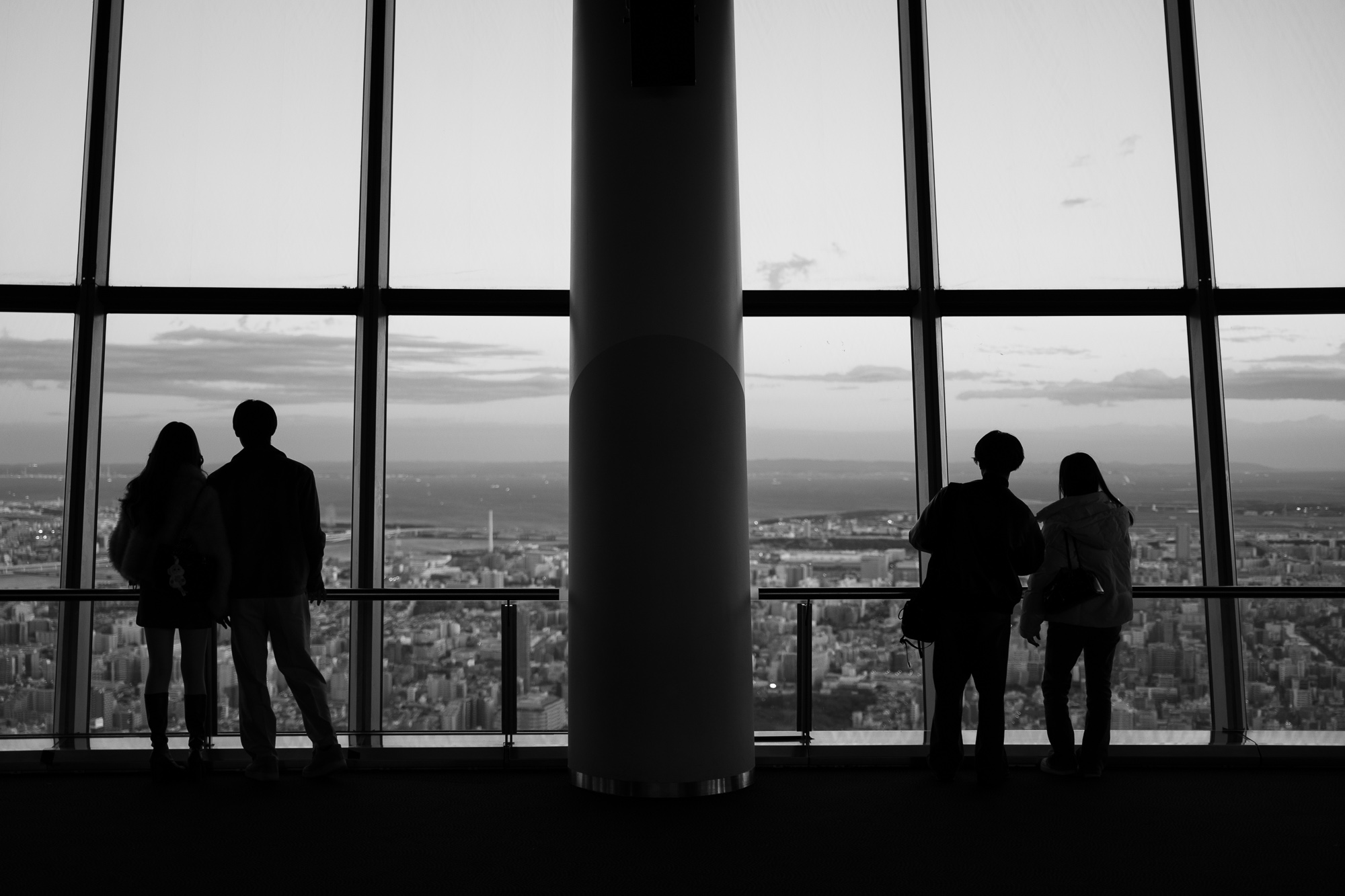
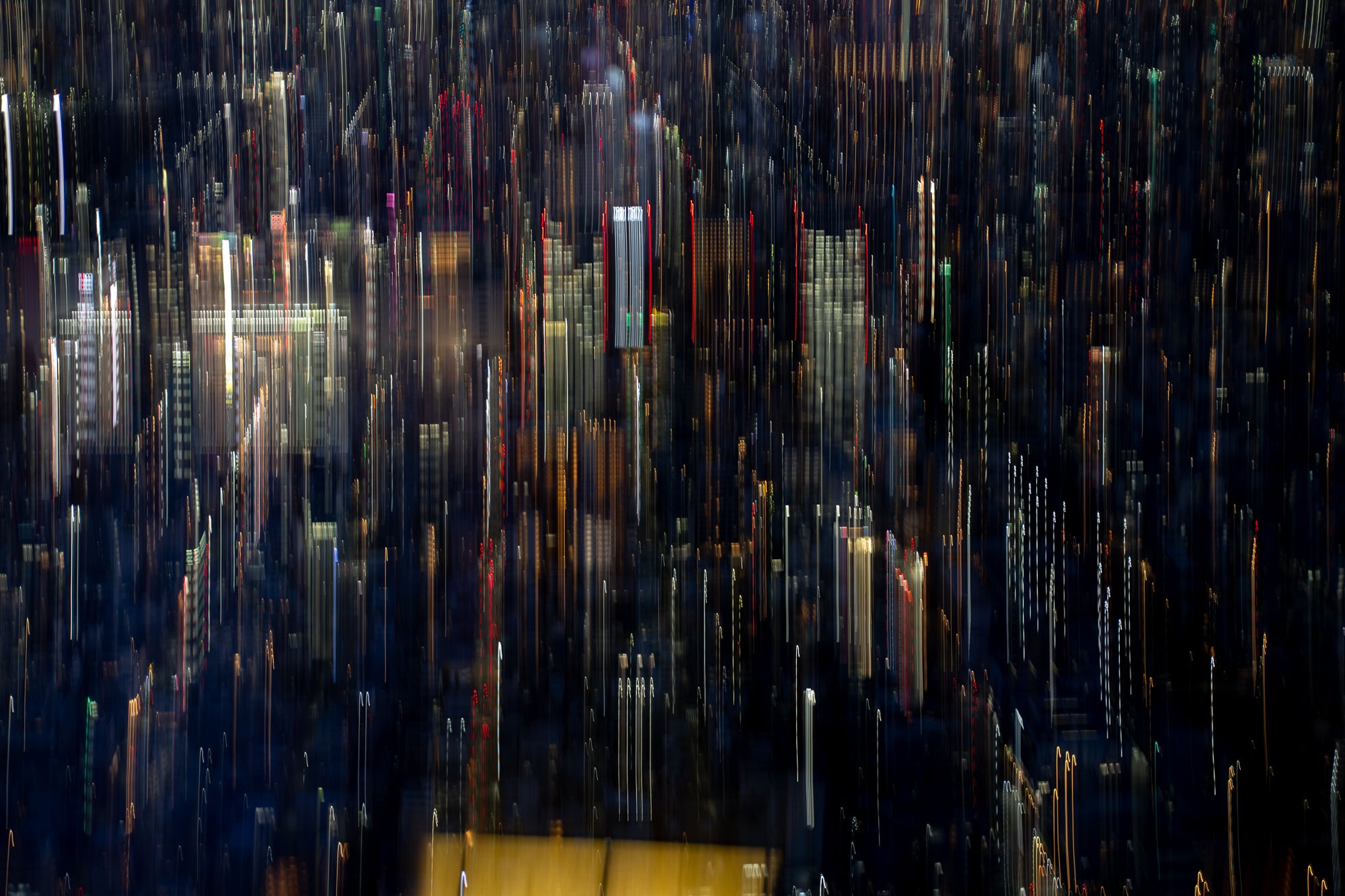
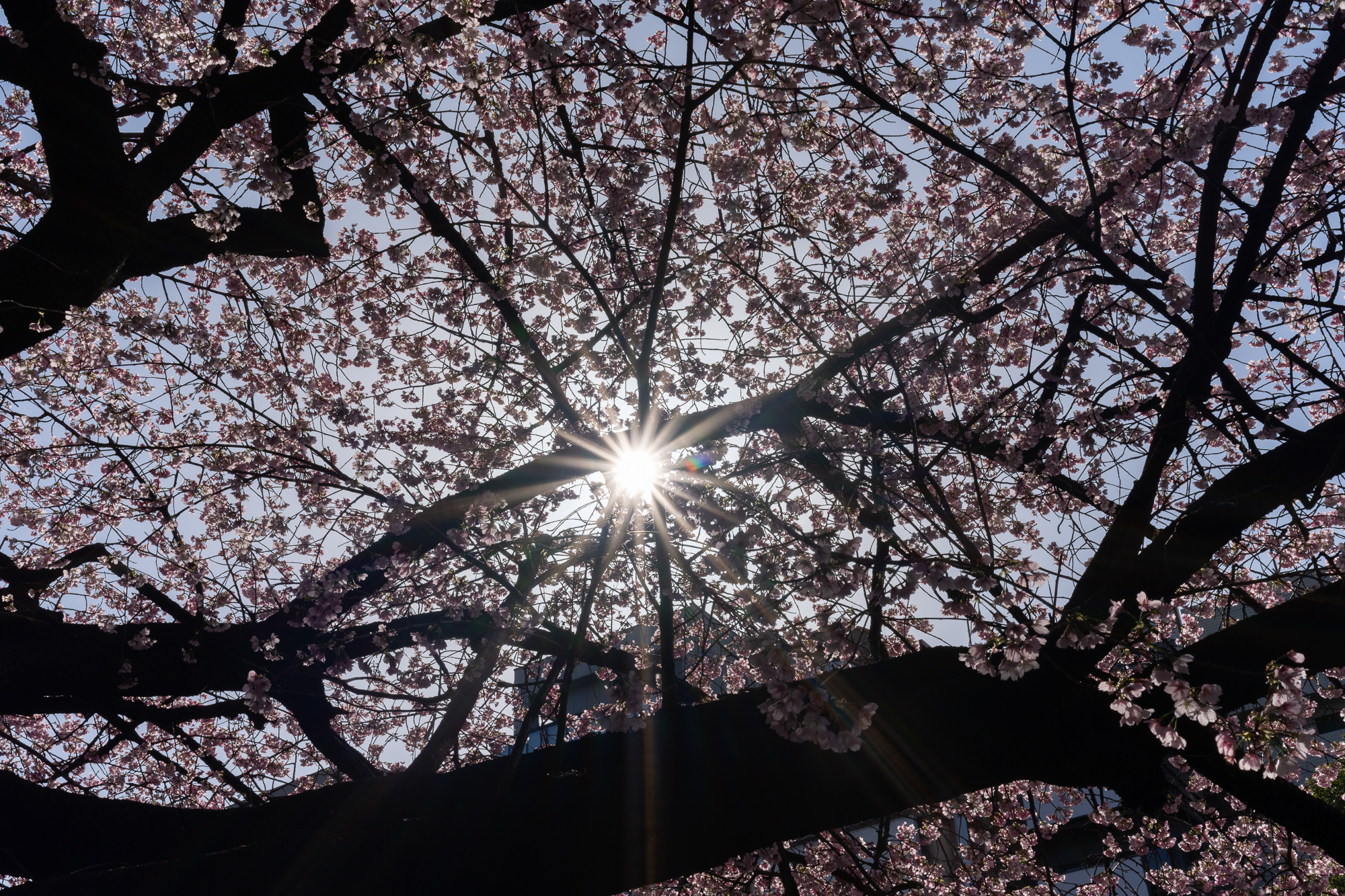
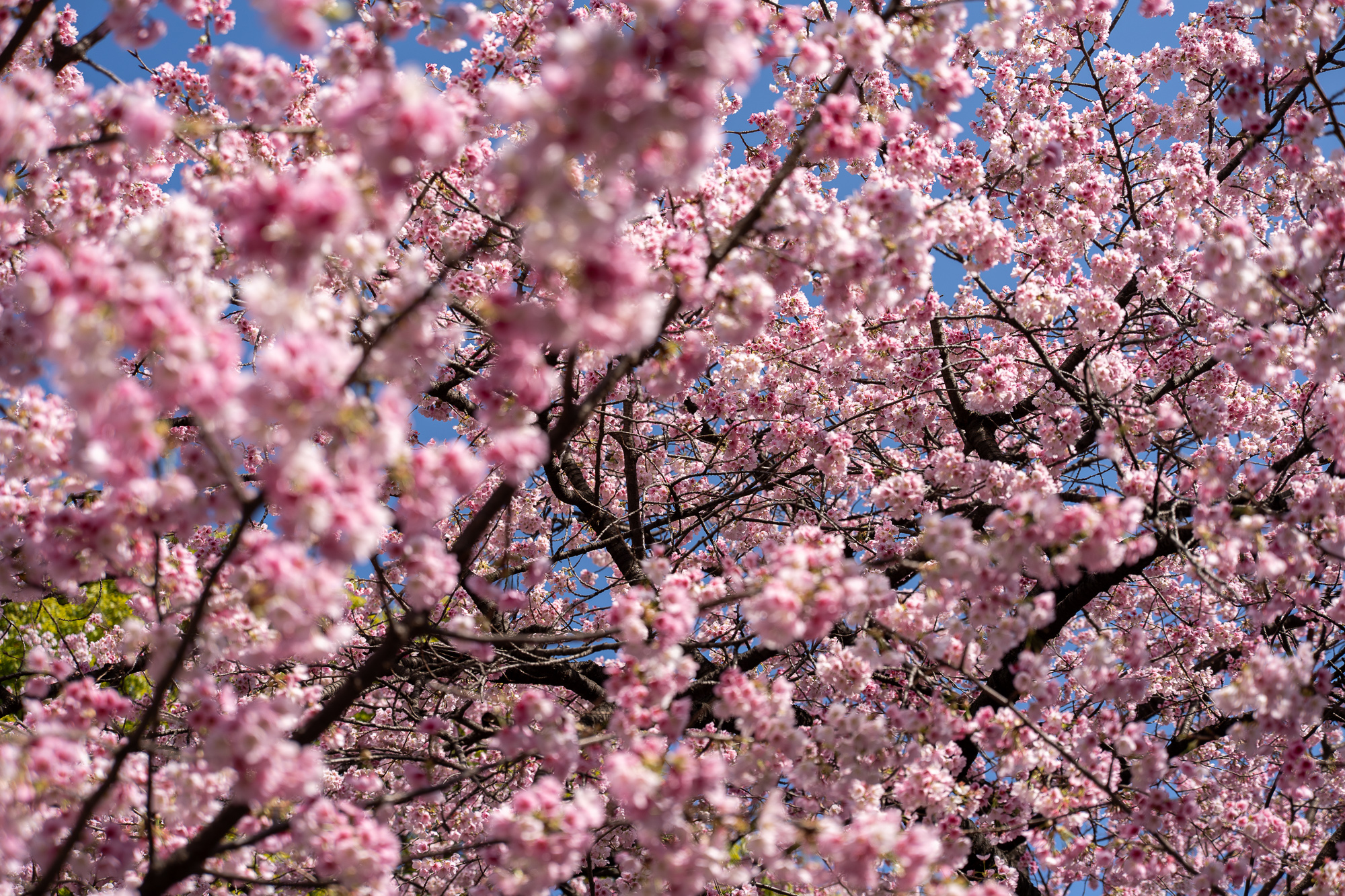
Below is a selection of images captured with the Samyang AF 24-60 mm f/2.8 FE:





Against the competition
With the Sony E mount being one of the most open on the market, competition is fierce in this segment. A few alternatives lenses are worth considering.
- Sony FE 24-50 mm f/2.8 G: compact and very light (440 g), it offers seamless native integration with Sony bodies and ultra-responsive autofocus. Its optical quality is excellent, but its truncated focal range is the least versatile of this selection. Priced at $1,298, it is on the expensive side.
- Tamron 28-75 mm f/2.8 Di III VXD G2: the most balanced option. This zoom offers an extended focal range and a particularly accurate VXD autofocus. Its versatility and weather-sealed construction make it a robust tool for field photographers. Available at $799 (excluding promotions), it offers excellent value for money.
- Sigma 24-70 mm f/2.8 DG DN II Art: the lens of choice for uncompromising optical performance. This version II is lighter and more compact, but still heavier than the Samyang (735 g). Priced at $1,319, it costs nearly twice as much as the Samyang, but the image quality and ergonomics justify the gap.
- Sigma 28-70 mm f/2.8 DG DN Contemporary: this zoom prioritizes compactness and lightness (470 g) for travel, at the expense of the wide end, which only starts at 28 mm. Priced at $889, it positions itself as a more than relevant direct competitor.
- Sony FE 24-70 mm f/2.8 GM II: the top of Sony’s range, combining stellar sharpness with record-low weight for a zoom of this type. Its price tag is reserved for those who will accept no compromise on autofocus responsiveness and optical precision. Listed at $2,448, it is more than three times the price of the Samyang, a gap that is hard to justify outside of professional use.
Samyang AF 24-60 mm f/2.8 FE, the smart traveler’s zoom?
The Samyang AF 24-60 mm f/2.8 FE does not aim to compete with benchmark standard zooms. Its philosophy is different: deliver a constant f/2.8 aperture, an optical formula co-developed with Schneider-Kreuznach, in a form factor and at a price point that make the investment accessible to a much wider audience.
The gamble largely pays off. The lightness is real and felt in everyday use. Optical performance is good to very good at 24 mm, slightly weaker at the long end, but never disappointing. Autofocus is reliable for common use cases. The very short minimum focusing distance brings welcome creative versatility.
Trade-offs do exist. The focal range truncated at 60 mm will, depending on your shooting habits, require you to take an extra step to frame certain shots. Likewise, the very (very) pronounced distortion and vignetting at 24 mm will force you to rely on JPEGs or involve tedious manual corrections on RAW files.
But at $899 for a full-frame f/2.8 zoom weighing under 500 g, the value proposition is hard to argue with. For photographers who prioritize mobility without wanting to sacrifice a fast aperture, the Samyang AF 24-60 mm f/2.8 FE is a very compelling option.
The Samyang AF 24-60 mm f/2.8 FE is available at a price of $899.
You can find this zoom at B&H Photo and at specialized retailers.