

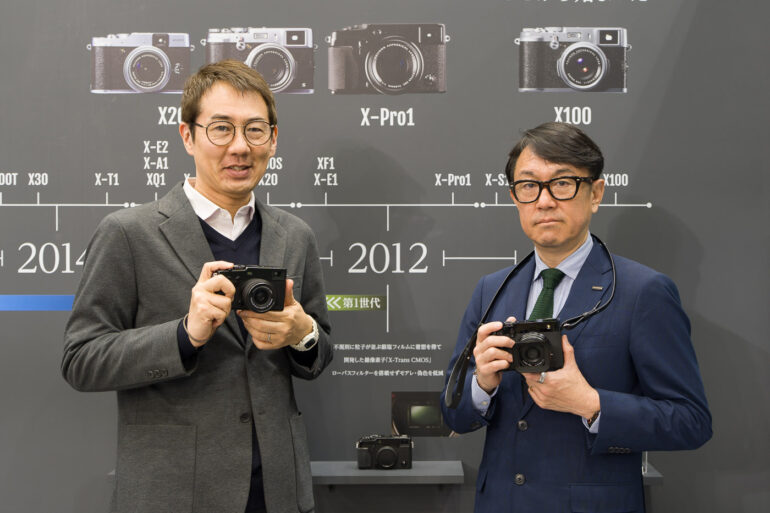

At CP+ 2026, we sat down with Jun Watanabe (Product Planning Group Manager, X Series), Makoto Oishi (Product Planning Manager, GFX Series) and Shugo Kiryu (Senior Marketing Manager) to discuss Fujifilm’s strategic vision.
From the GFX 100RF and the versatile X-T30 III to the ambitious GFX Eterna cinema camera, 2025 has been a landmark year for the imaging division, with revenue and profit both hitting record highs. The future of the X-Pro line, the potential of the 1-inch sensor, new pancake lenses, AI in cameras, and a surprising hint about film simulations moving beyond JPEG: here is our exclusive interview.

Fujifilm delivered excellent results in the first 9 months of 2025, with the Imaging division posting revenue growth of nearly 14% and operating profit up almost 18%. What do you attribute these strong performances to?
Shugo Kiryu: We have successfully increased both sales and profits, particularly within our digital camera and Instax lines. We managed to capture a broad audience –not just traditional photography enthusiasts, but also a significant number of young users starting photography with Instax and new digital cameras. That’s how we’ve been able to increase our financial performance. We are very pleased with these results.
Looking ahead, we imagine the 6th generation of sensor and processor is taking shape at Fujifilm. What will be the priorities for this new generation: readout speed, autofocus, resolution?
Jun Watanabe: The priorities remain the same as our current system. But we see many areas for improvement– such as image quality, autofocus response, and video performance. Each is a crucial element that we intend to steadily enhance.
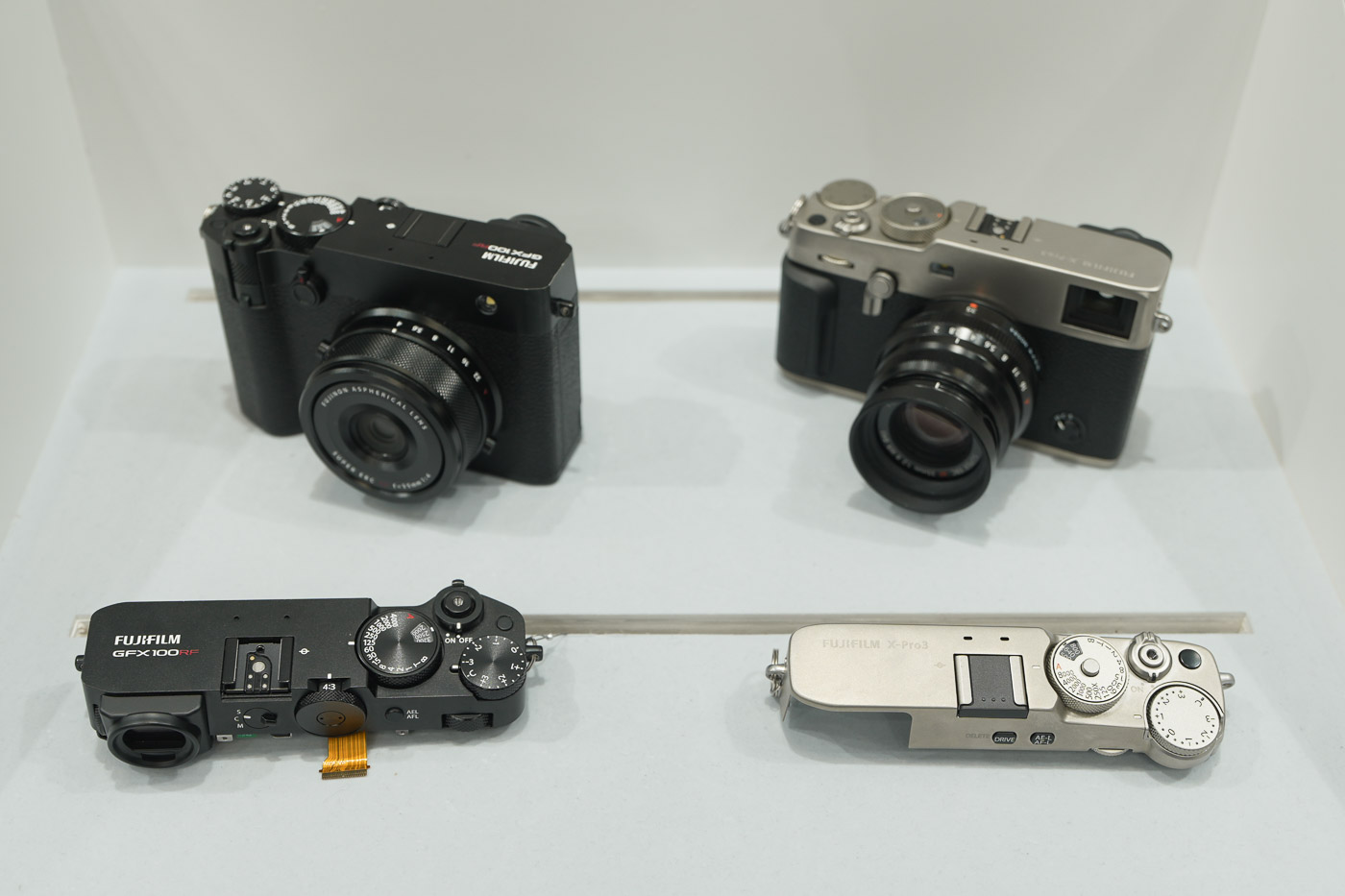
Last year at CP+, you confirmed that the X-Pro line had not been discontinued. Seven years after the X-Pro3, the community is growing increasingly impatient, especially since the X-E5 has taken over part of its positioning. How would you differentiate a future X-Pro from the X-E5? Does the hybrid OVF/EVF viewfinder remain at the heart of the project?
Jun Watanabe: Yes, as I mentioned last year, we have not discontinued the X-Pro series. And I believe it is a series for which our fans have high expectations. I cannot specify a concrete timeframe, but we intend to deliver a product that meets those expectations.
Regarding the X-H2S, is a successor on the horizon? With this first stacked-sensor APS-C camera, have you managed to win over sports and wildlife photographers, even when compared to the full-frame segment?
Jun Watanabe: We believe that through the X-H2S, we have successfully acquired users who photograph moving subjects. With our current lineup of telephoto lenses, we see potential for even more photographers to adopt this system.
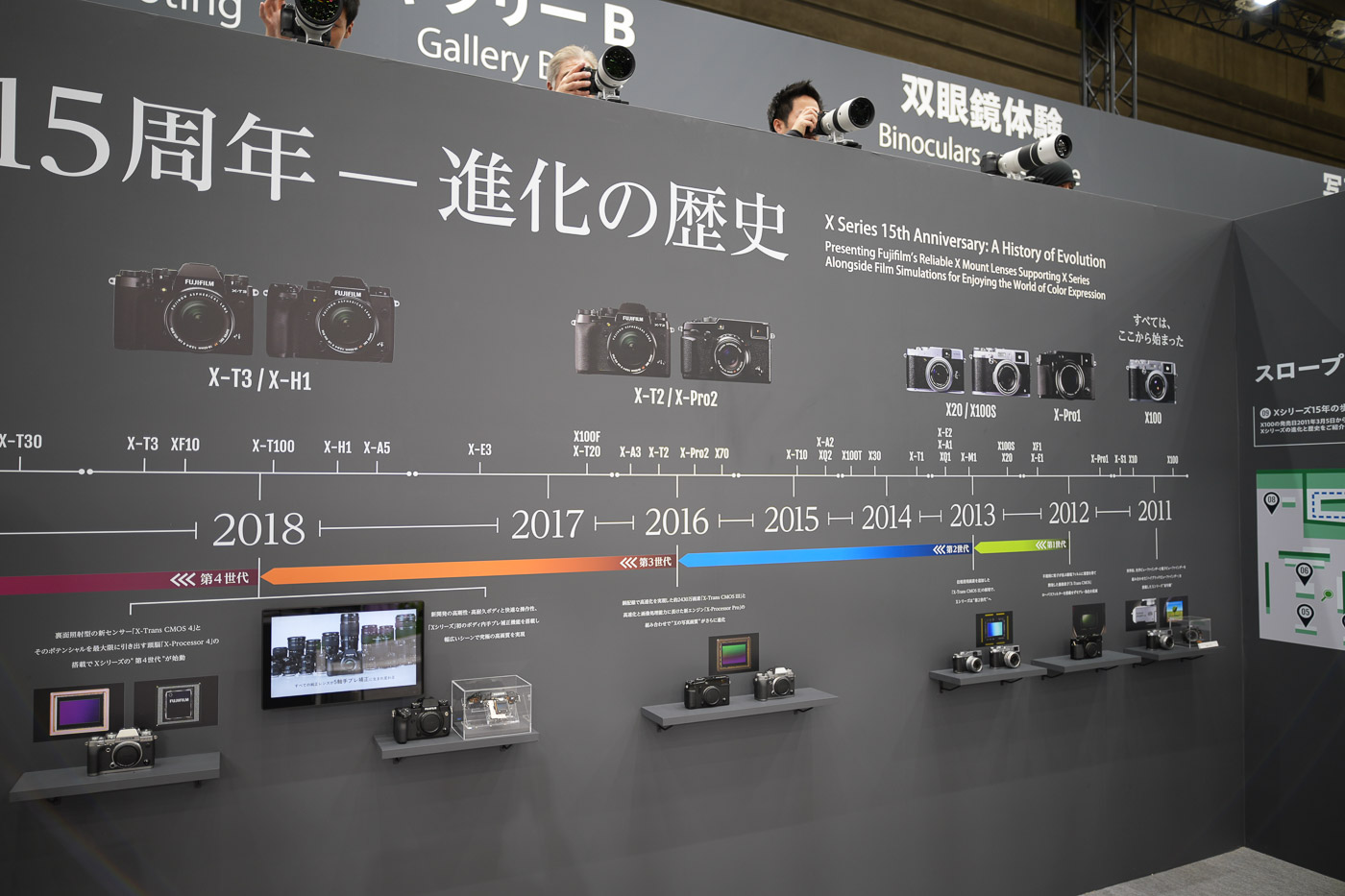
We assumed the entry-level segment was covered by the X-M5, but you then released the X-T30 III at the end of 2025. How do these two bodies differ in terms of market positioning and sales? Also, are you considering an even more affordable model, following the spirit of the X-T100 or X-T200?
Jun Watanabe: Both models are selling well, and the X-T30 III is seeing higher sales as it was released more recently. X-M5 sales remain steady as they cater to different audiences: the X-M5 is more video-oriented (B-roll), while the X-T30 III is primarily for still photography. Currently, we have no plans to expand into a more affordable price range just to meet a price point, but we are always considering what makes sense for our users.

The X Half appears to have been more successful in Asia than in Europe, as suggested by the white edition being exclusive to that market. How do you explain this gap? Do you understand that the price (799 €) may have deterred European buyers for a 1-inch sensor camera?
Shugo Kiryu: The X-Half series has been very popular in Asia, including Japan, China, and Southeast Asia. While sales in Europe are not bad and are progressing well, the Asian market represents a larger volume for this model. We introduced the white color exclusively in Asia not because of market size, but because we felt the color specifically suited that market.
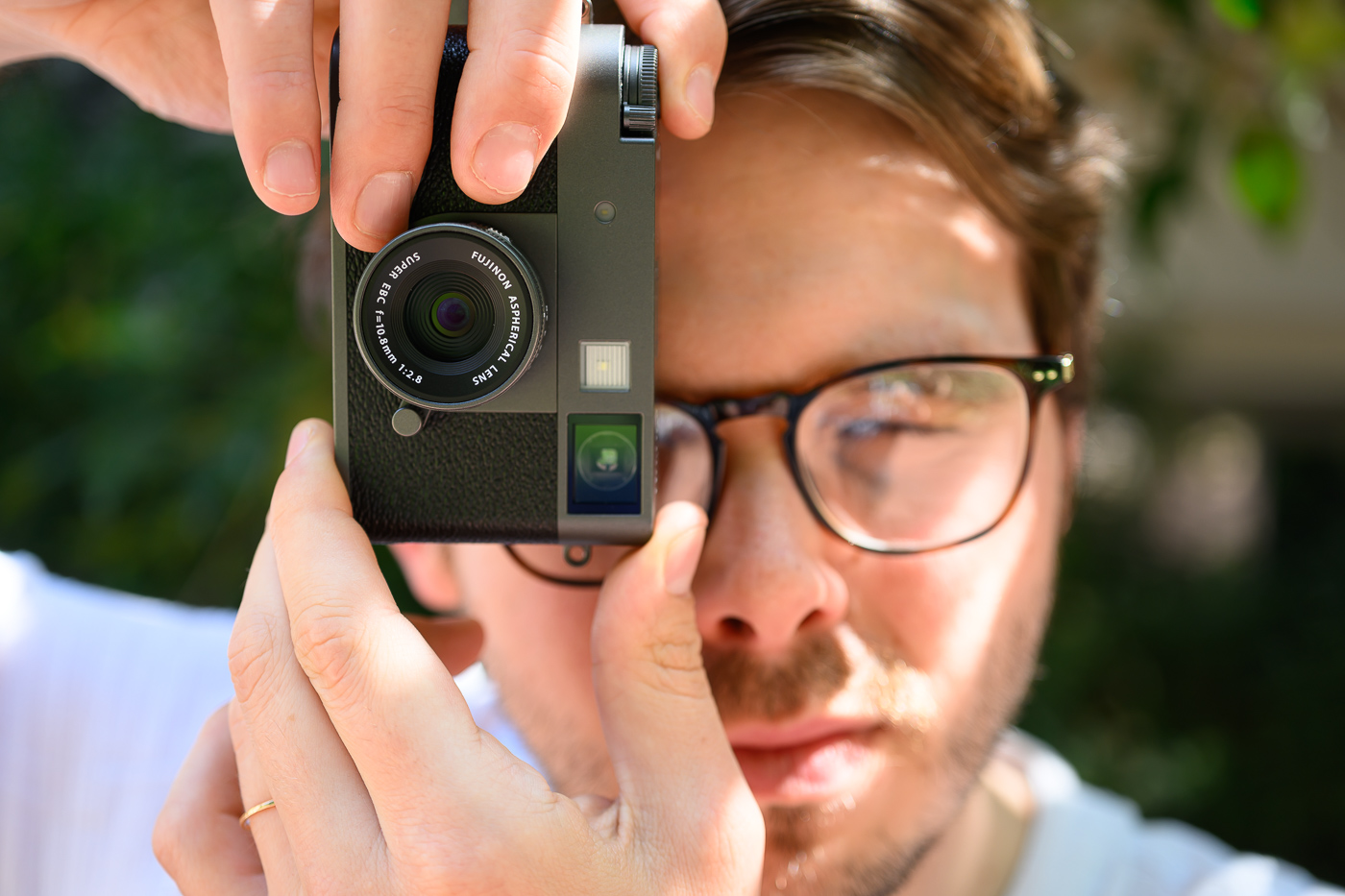
Regarding the price, feedback from users who understand the X-Half concept shows they are happy with both the price point and the camera’s quality. It is important for us to deliver this concept so users can understand the uniqueness of the X-Half series.
Editor’s note: since this interview was conducted on February 26, the Fujifilm X-Half has been reduced to €649 in France.
With the X Half, Fujifilm now offers three sensor sizes (excluding Instax): 1-inch, APS-C and large format. Can we expect more cameras built around the 1-inch sensor, or will the X Half remain a one-of-a-kind product?
Jun Watanabe: We intend to explore the potential of 1-inch sensors, as they allow for camera downsizing while maintaining a high level of image quality. We believe there is significant potential for future products using this sensor size.
I agree, but it might be difficult to find a position between APS-C and smartphones, as some smartphones now feature one-inch sensors as well…
Jun Watanabe: Yes, I think so too.
Shugo Kiryu: But I think the important point is that we find the uniqueness of the product, like film simulation. The shooting experience and connectivity with Instax is really important, so we can make a print easily.
Jun Watanabe: And also, the optical differentiation from a smartphone is significant. The form factor and the overall design are also completely different.
Last year you launched the GFX 100RF, your first medium-format compact camera. Has it been a commercial success? What do you say to those who would have preferred a faster lens or a stabilized sensor?
Makoto Oishi: The GFX 100RF has received great market feedback because it is compact and lightweight, making it a camera for daily use, even for a GFX. We are aware that many users requested faster lenses or IBIS. However, from a technical standpoint at the time, that was our best configuration to achieve the smallest and lightest GFX.
I agree, but still, some users always want the absolute best specifications. However, you have to work with what is currently possible and then continue to improve
Makoto Oishi: Since we released the GFX 100RF, many users have begun requesting even more features. This is the first product in the RF line, so we are taking that into account.
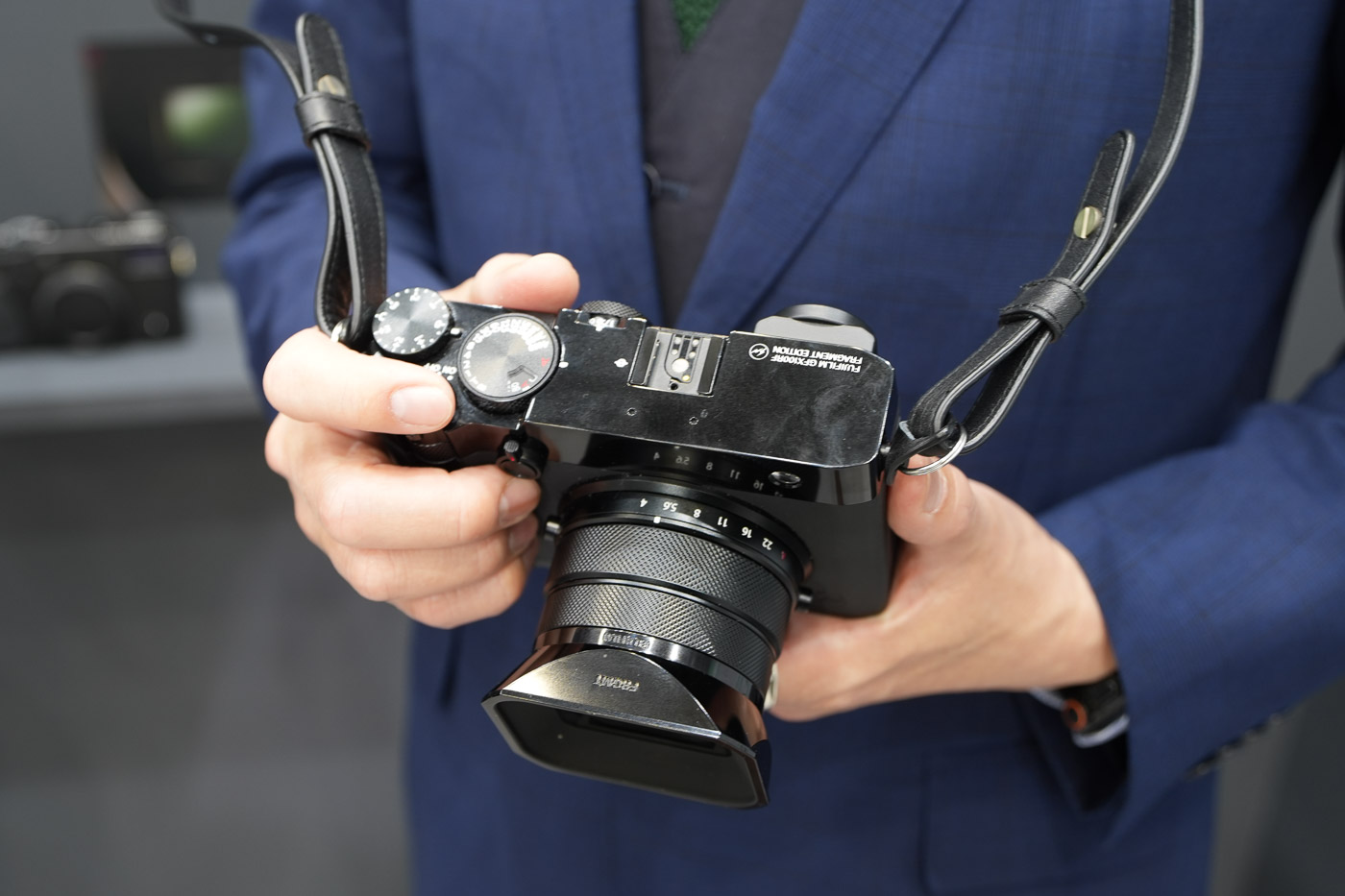
Shugo Kiryu: The GFX 100RF has been a significant commercial success. It attracted not only existing Fujifilm users but also many new customers to the GFX system. Because they don’t need to invest separately in lenses, they can enter the GFX world directly. This has contributed greatly to the success of this model.
Makoto Oishi: In fact, users who have purchased the GFX 100RF find that it works so well for them that they no longer worry about the f-number or the lack of IBIS.
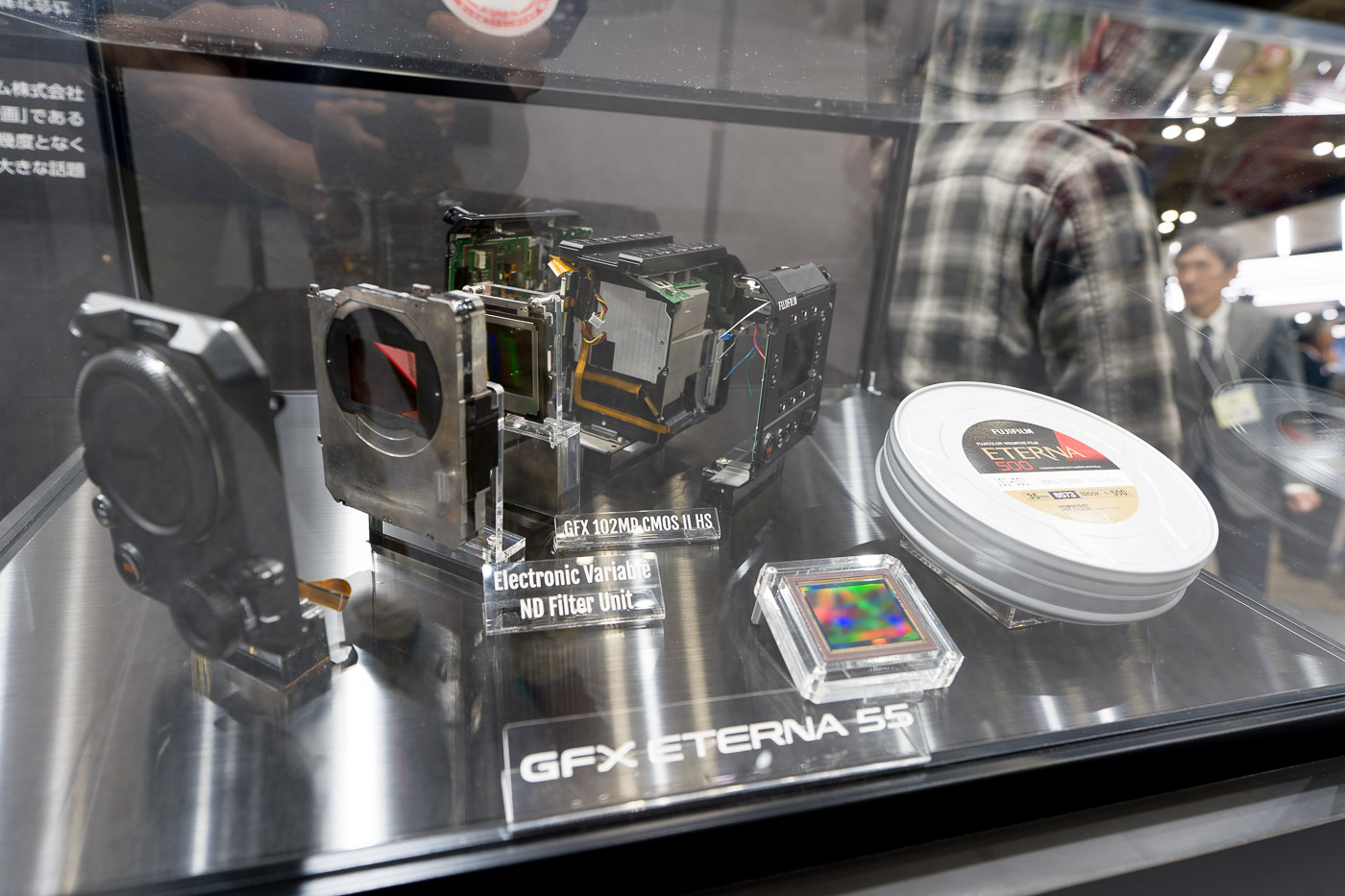
The GFX Eterna 55 was unveiled in 2025 as the first medium-format cinema camera. What feedback have you received from cinema professionals? Are you also considering an APS-C cinema camera, which would be more accessible?
Makoto Oishi: First, market feedback has been excellent, particularly regarding the image quality and the power of the large format 4:3 Open-Gate sensor. Our F-Log2 C profile, which incorporates our color science from the film era, also made a strong first impression. Of course, we have also received many requests regarding specific technical requirements and potential firmware upgrades.
What is the most requested feature?
Makoto Oishi: Remote control is the most requested feature. But we have already announced new firmware that minimizes latency via SDI and HDMI. We have received many other requests, some of which I have already noted for future firmware upgrades, and we are currently scheduling their development.
In terms of hardware, developing a cinema camera is different from a stills camera, as professionals may use it for much longer periods. Is the GFX Eterna 55 future-proof in terms of processing? We know that as you add more features via firmware, the main limitation is often the camera’s processing power.
Makoto Oishi: Naturally, the current sensor and processor have limitations in supporting every possible request. While the image quality and readout speed are fixed hardware traits, we can address many operational specifications through firmware updates. The current camera, including the control panels on both sides and the internal battery, has been well-received. I believe the camera is already being accepted in the filmmaking industry as a standard for operation, including the menu system and GUI. However, we do continue to receive requests for adjustments to certain details.
Do you already have movies that have been produced with the GFX Eterna?
Makoto Oishi: Yes, we already have several projects underway. For instance, the camera is already being used in Japan this season for a major television drama called Aibou: Tokyo Detective Duo. This is a very prestigious, long-running series with over 24 years of history, one of the longest-running dramas in Japanese television.
A key advantage of the APS-C system is its compactness, yet Fujifilm currently only offers two true pancake lenses: the 27mm f/2.8 and the recently released 23mm f/2.8. With the success of the X-E5, has the demand for ultra-compact optics surged? Can we expect more pancake lenses in the future?
Jun Watanabe: In addition to the continued strong sales of 27mm, the new 23mm is also performing well. The combination of the pancake lens and the camera body looks stylish. So we believe it has potential for a future lineup of pancake lenses.
In terms of optics, what specific focal lengths could you imagine being suitable for future pancake lenses?
Jun Watanabe: I believe that to maintain a compact size, a wider focal length is more suitable. Therefore, I think there is potential for us to develop a new lens in the wider-angle range.
Following the XF 16-55 mm f/2.8 Mark II in 2024, which lenses are next in line for a refresh? Are the XF 50-140 mm f/2.8, the XF 10-24 mm f/4 or the XF 90 mm f/2, all dating back to 2014-2016, on the roadmap? What criteria determine the update order?
Jun Watanabe: We cannot disclose specific future plans at this time. We aim to release one completely new lens alongside one redesigned lens. Finding that balance in our lineup is very important to us.


When you decide to update an existing lens with a second generation, what is the most important factor?
Jun Watanabe: Size and performance.
Shugo Kiryu: It depends on the specific lens, but for the 16-55mm II, we prioritized size. Our goal was to reduce the overall footprint while maintaining the same high image quality. Generally, for any ‘Version 2’ lens, the impact must be felt across the board: better image quality, improved performance, and a smaller size. Since the X Series philosophy is rooted in portability, reducing size and weight is always a key objective for us.
At the Industrial Romanticism exhibition in Tokyo, Fujifilm showcased a “lensless camera” prototype. Beyond the concept, what is Fujifilm’s vision for integrating AI into its cameras? Could we see on-device AI in future X or GFX bodies?
Makoto Oishi: AI is certainly important to us—it’s the topic on everyone’s mind right now. However, we must be careful with AI because photography is photography; we need to distinguish between what is a “real” capture and what is generative.
AI technology requires faster processing and the ability to handle massive data volumes. Our current X Series cameras already utilize AI processors for tasks like subject detection, and we see endless possibilities for the future as the technology evolves. On the other hand, we are committed to standards like C2PA and the CAI (Content Authenticity Initiative) to ensure image authenticity. Beyond the hardware itself, we are also integrating AI into our applications, software, and overall workflows.
Is there a demand from end users for more intelligence within the camera? For example, a feature that helps select the best shot from a high-speed burst?
Makoto Oishi: Actually, we haven’t received specific requests for that exact feature yet. However, we are photographers ourselves, and we constantly communicate with customers, so we do hear a growing interest in AI. And not just for subject detection, but also about computational processing and other advanced areas.
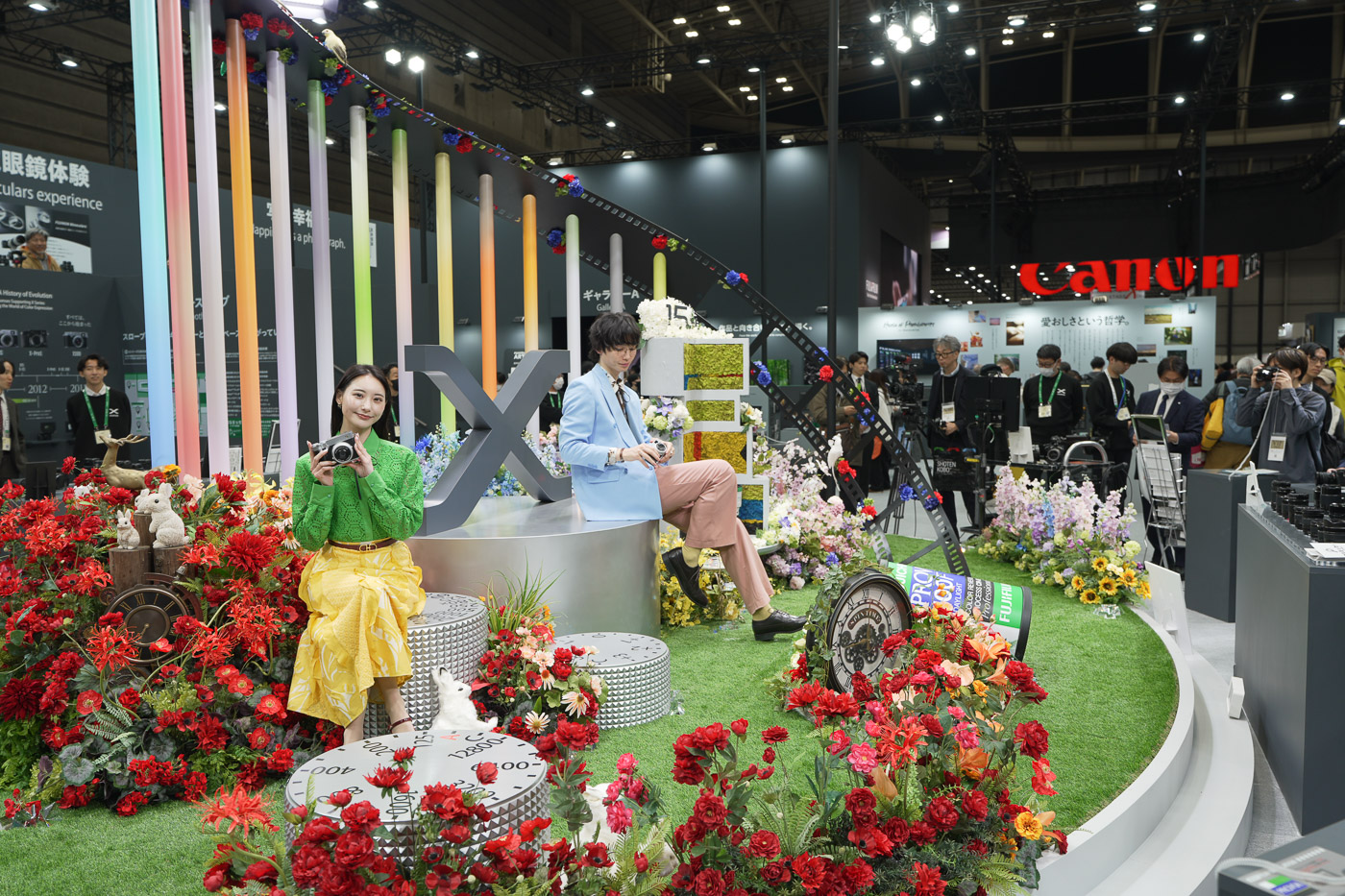
When people talk about Fujifilm, the conversation always leads to film simulations. Is the legacy of your analog film stocks still the main driver for your color R&D? Or are you now exploring more computational and AI-driven approaches to create new recipes that aren’t necessarily based on existing physical film?
Makoto Oishi: Film simulation is indeed a key feature of our cameras today. Looking at it from a historical perspective, it’s already been over 20 years; the first digital film simulation debuted around 2005 with the Fujifilm S100FS. I was actually an engineer on that original team, working on the first film simulation project.
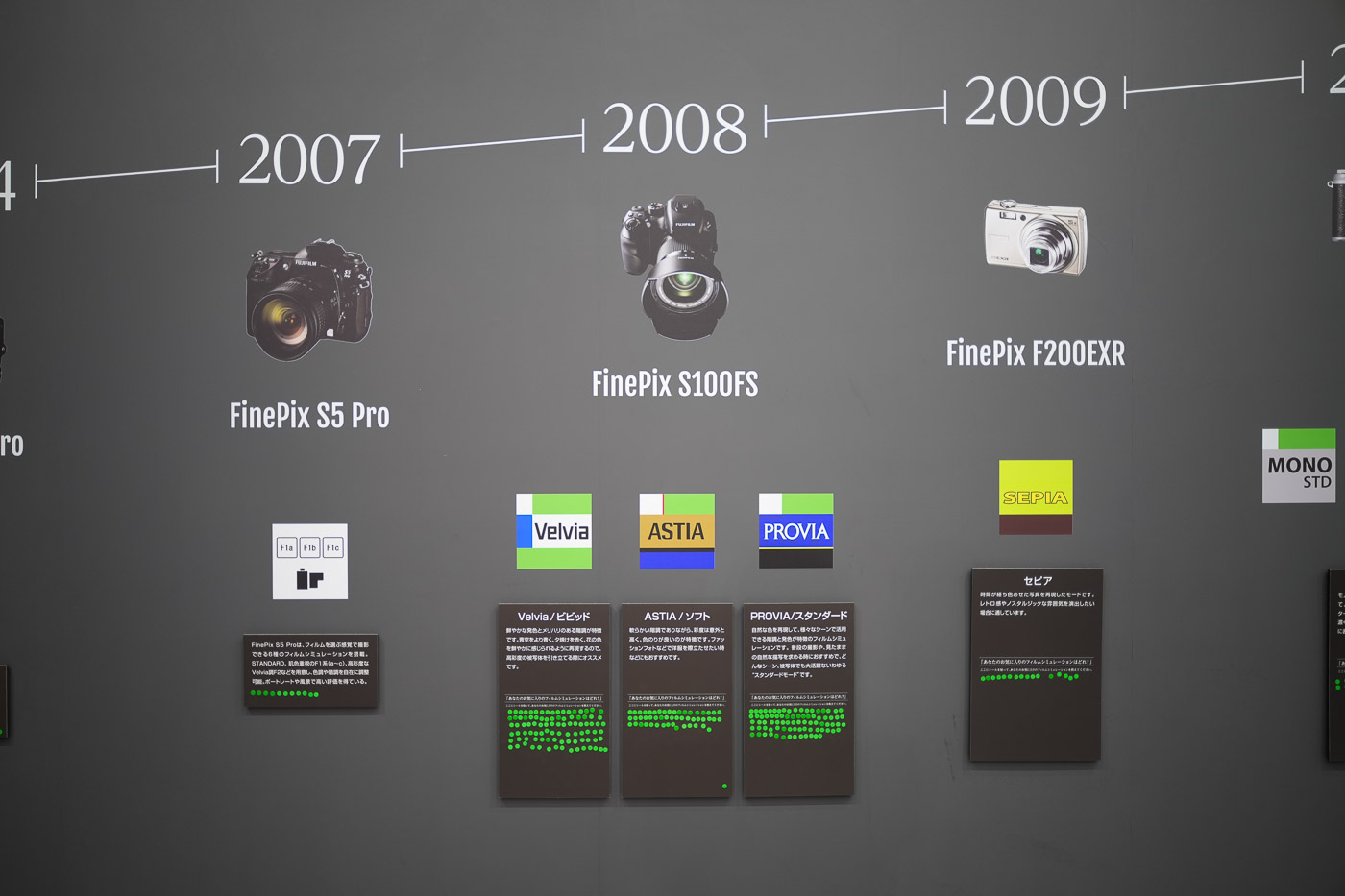
At that time, we drew heavily from our deep history and technological expertise in film manufacturing. We still rely on that analog color philosophy today. As you mentioned, I don’t know if we will use AI or something like that. But even then, film simulation is changing year by year with new technologies.

In my opinion, just as our physical films were often developed in response to photographers saying, ‘I want this specific look,’ our digital simulations will continue to be shaped by customer requests for specific colors and styles.
Are you restricted to the unique looks of existing film stocks, or are you open to moving beyond?
Makoto Oishi: We have two directions. One is expanding our collection of film simulations and recipes. The other is using future technologies to update and refine our existing simulations as camera hardware and sensors evolve. So, we see both as distinct possibilities for the future.
So, you are suggesting that perhaps a simulation like Classic Chrome could be updated with new technology to bring it even closer to the original creative vision or ‘ideal’ of that look?
Makoto Oishi: Yes, it’s still a possibility.
I think some people will say, “No, don’t change anything.”
Makoto Oishi : Yes maybe. But the film simulation is only applied to JPEG right now. However, in the future, I think that might change.
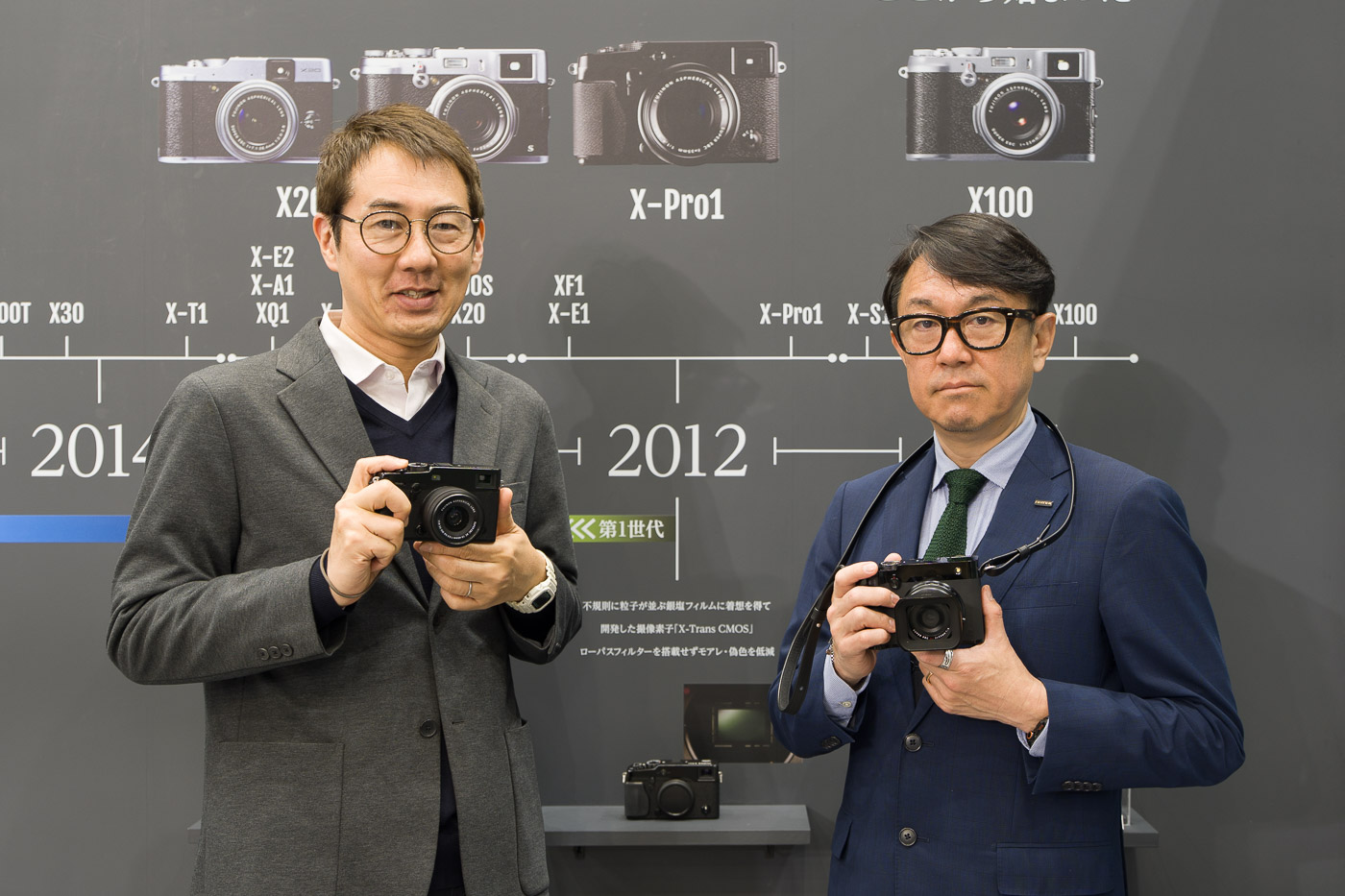
Thank you to Mr. Watanabe, Mr. Oishi and Mr. Kiryu for answering our questions. We would also like to thank the team at Fujifilm Corp and Fujifilm France for making this interview possible.