



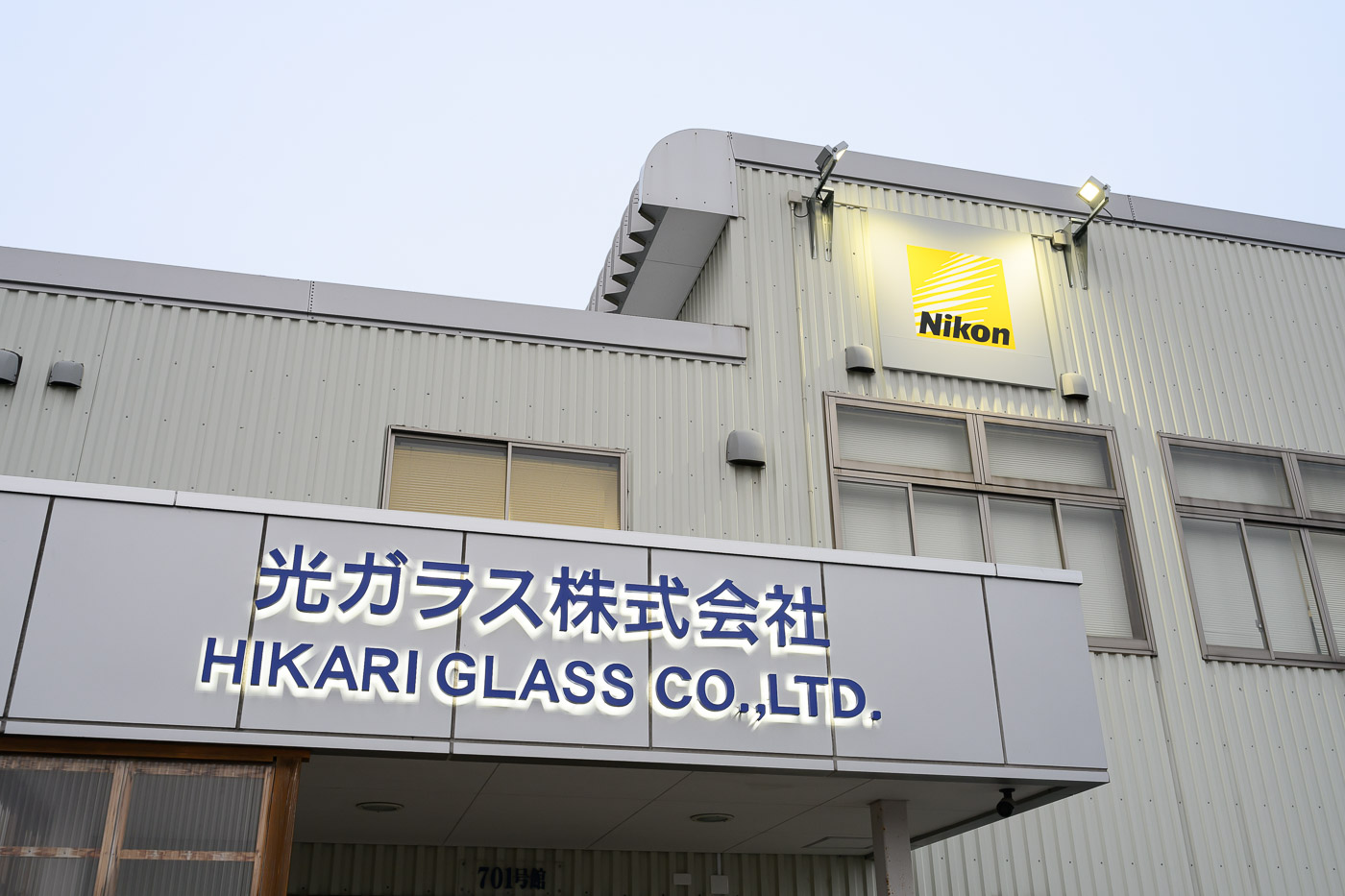
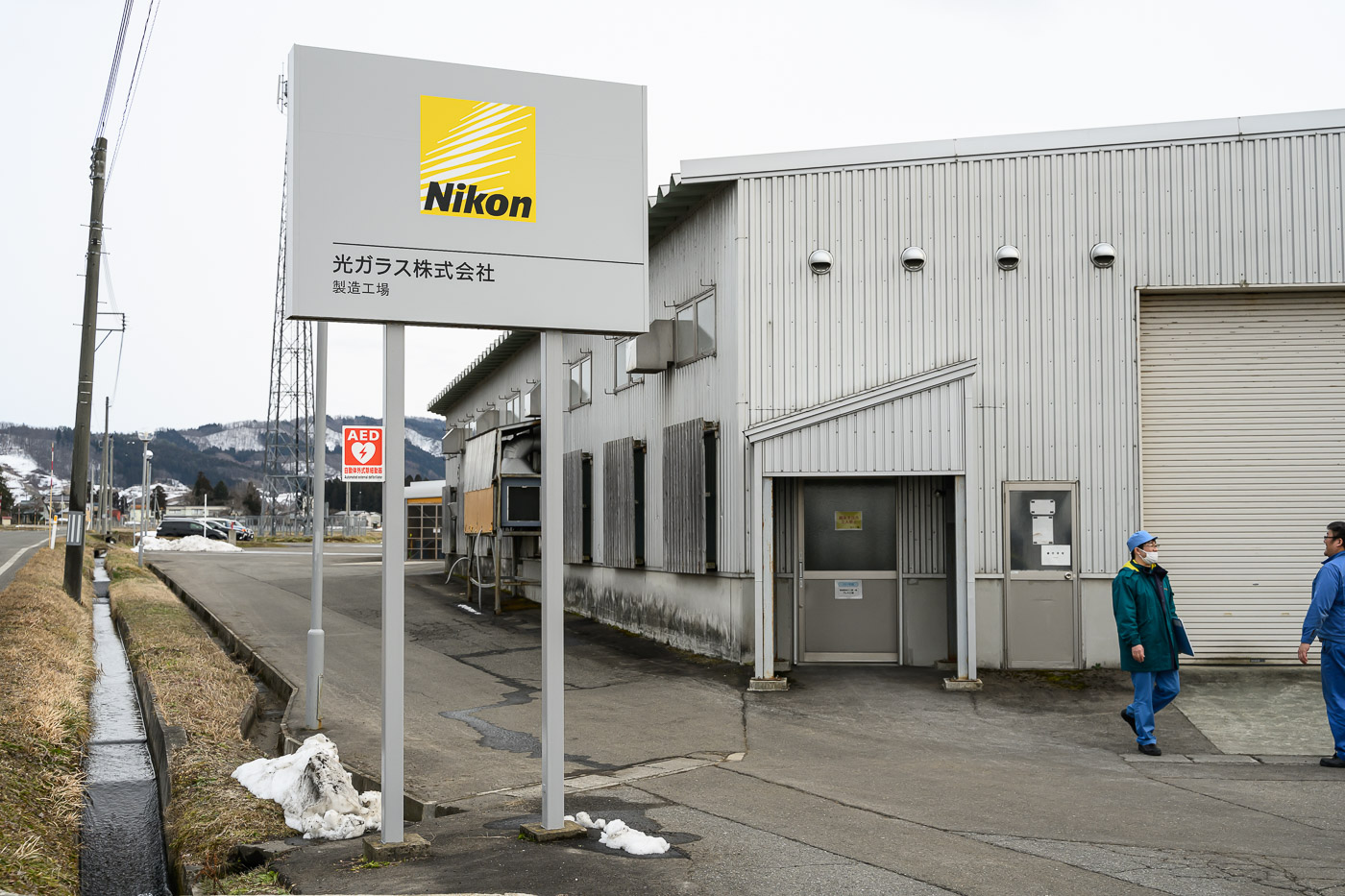
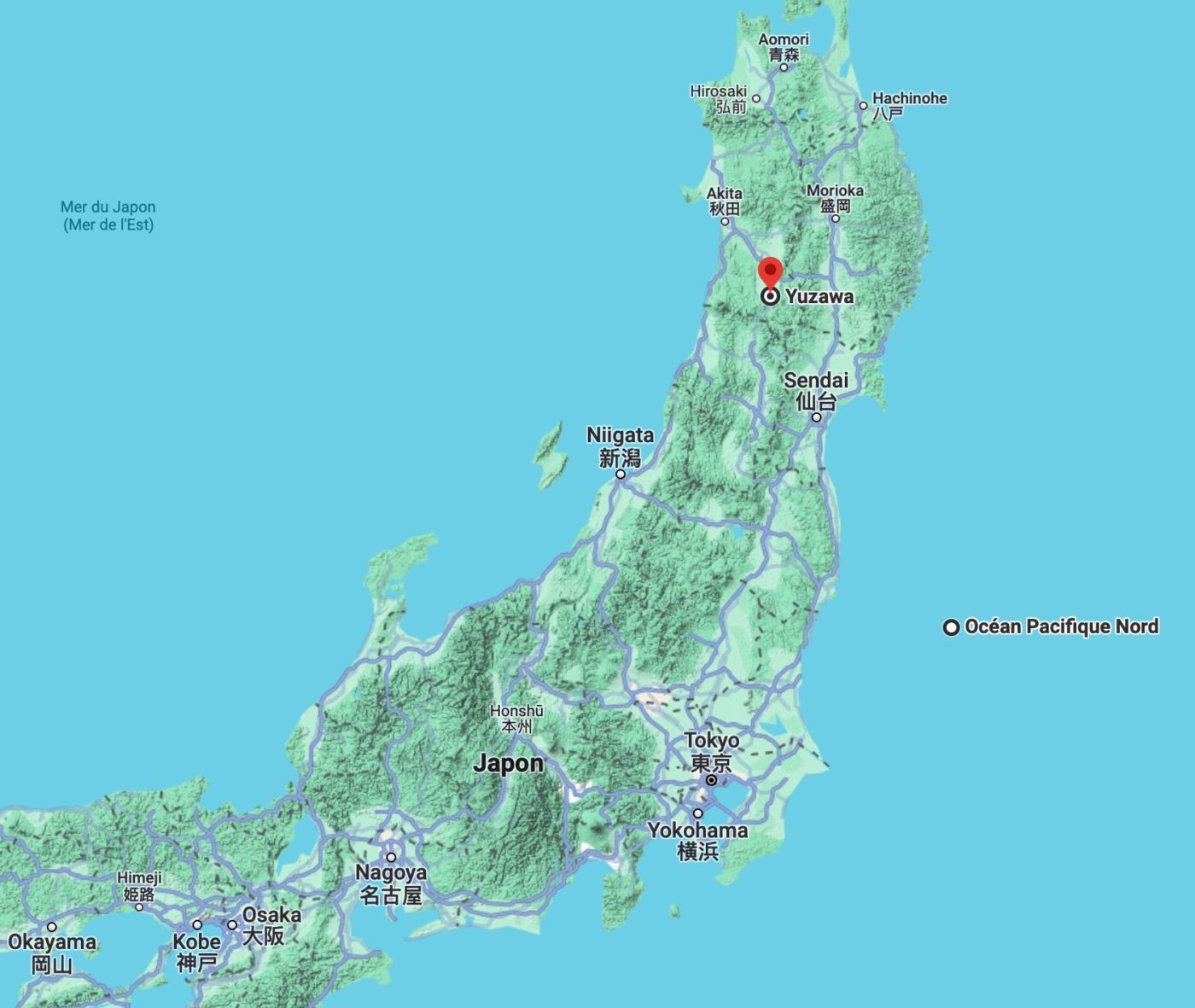
During our visit to Japan to cover CP+ 2024, we had the opportunity to discover a Nikon factory essential to lens production: Nikon Hikari Glass. Located in Yuzawa, in the Akita prefecture (about 500 km north of Tokyo), this is where optical glass comes to life through the melting process.
This process, both fascinating and demanding, is the first step in creating the glass used not only in Nikkor lenses, but also in various high-precision instruments. The glass produced here is then shaped into discs before being shipped to assembly plants, where it will be polished to achieve the required final optical properties. Follow us for this captivating tour.
Sommaire
- Nikon and optical glass: a bit of history
- What is optical glass?
- Hikari Glass, Nikon’s optical pillar
- Mixing and melting: the first steps
- Continuous melting: glass in bar form
- Cutting and calibrating the glass pieces
- Pressing, the final transformation step for glass blocks
- Wrapping up our visit to Nikon Hikari Glass
Nikon and optical glass: a bit of history
Nikon, founded in 1917 under the name Nippon Kogaku K.K., is a Japanese company renowned for its innovations in the field of optical equipment. From the very beginning, Nikon focused on developing and producing high-quality optical products, meeting the growing market demands of the time.
Just one year after its founding, Nikon began manufacturing optical glass. This initiative aimed to reduce Japan’s dependence on imports and to promote domestic production.
Manufacturing optical glass is a complex process requiring perfect mastery of melting and glass treatment techniques. Initially, Nikon faced numerous technical challenges, particularly regarding the precise control of melting temperatures and the purity of raw materials.
Despite these initial difficulties, Nikon managed to overcome the technical obstacles and established its own optical glass manufacturing technology in 1932. At the time, the main process used was “crucible melting.” This method involved mixing raw materials such as silica (SiO2), sodium carbonate (Na2CO3), lanthanum (La), and limestone calcium carbonate (CaCO3) in an aluminium oxide-lined crucible. The mixture was then heated to temperatures between 800 and 1,400°C, and the resulting glass was extracted by breaking the crucible, before being shaped and polished.
The development of this process enabled Nikon to mass-produce high-quality optical glass, marking a turning point in the Japanese optical industry and contributing to the country’s technological development.
However, the crucible melting method had certain limitations, including relatively low yields and variable glass quality. These constraints pushed Nikon to seek more efficient and reliable methods to improve both the quality and quantity of glass produced.
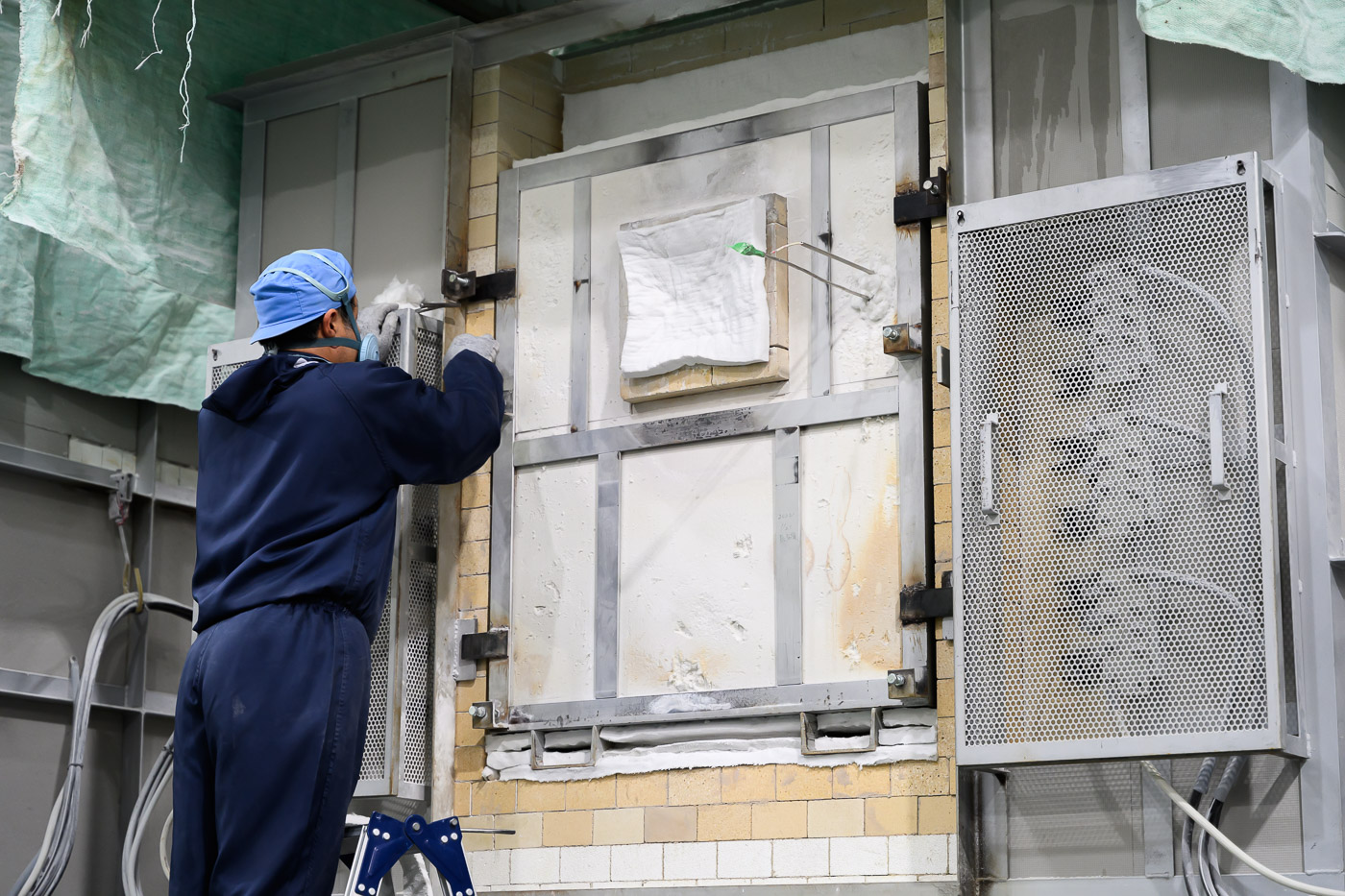
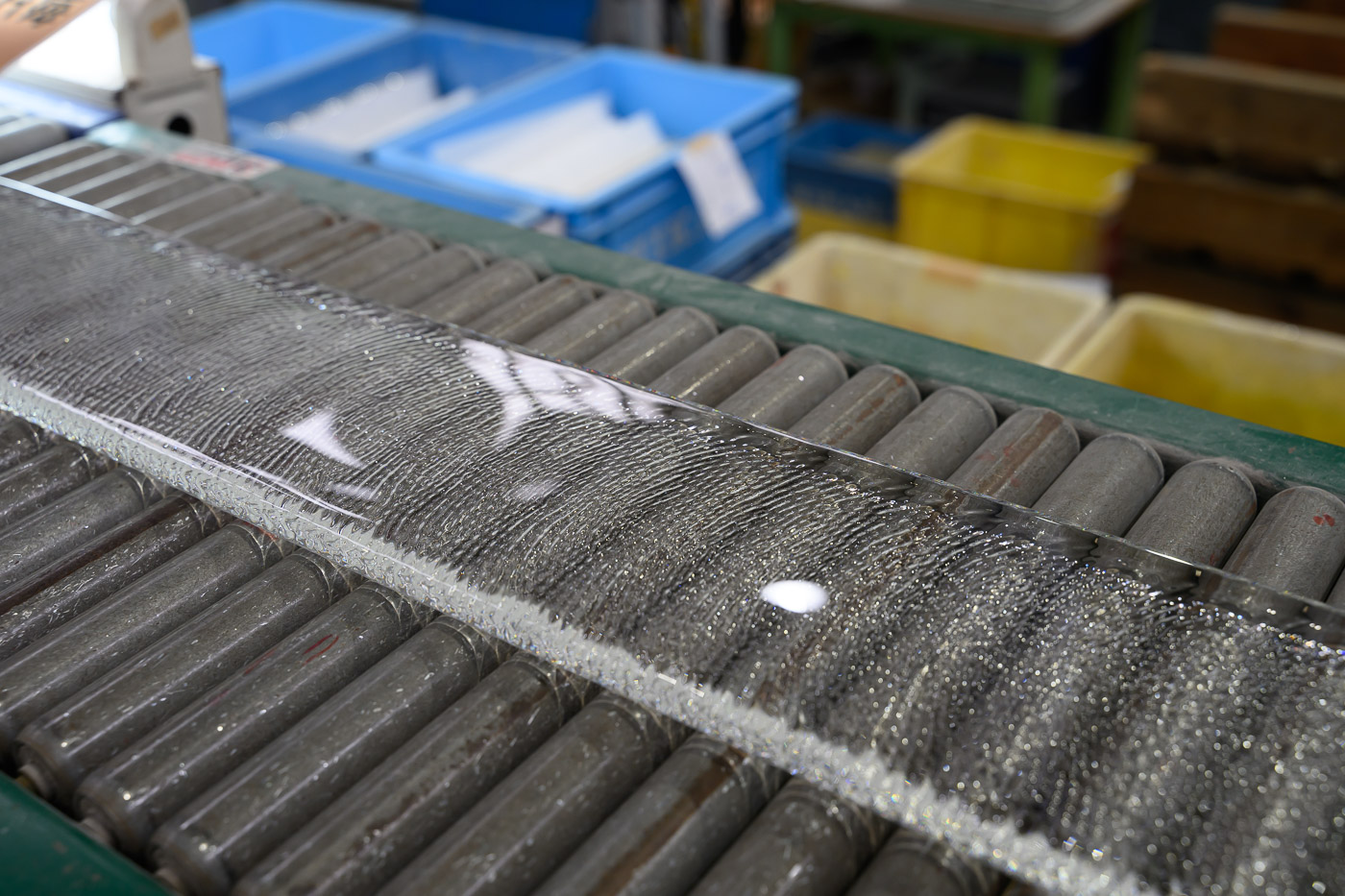
To overcome these challenges, Nikon adopted a new manufacturing method called “continuous melting” in 1983. This modern process, still used at the Hikari Glass factory, is more automated and enables more uniform, higher-quality production. Continuous melting also makes it possible to produce optical glass in slab form, simplifying the subsequent shaping and polishing steps.
What is optical glass?
In photography, the advantage of optical glass over standard glass lies primarily in its specific properties and enhanced performance.
This type of glass is obtained by melting very pure raw materials, resulting in highly transparent glass with very high light transmission across visible wavelengths, as shown in this display:
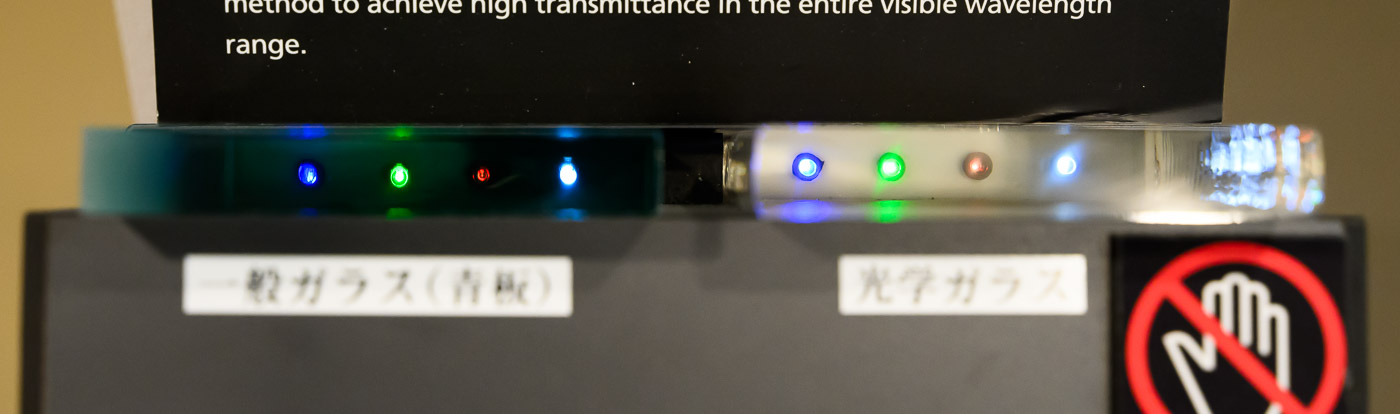
Optical glass is also designed to minimize chromatic aberrations and distortions, delivering better image quality with increased sharpness and more accurate colour rendition.
Hikari Glass, Nikon’s optical pillar
The optical glass manufacturing company, now a 100% subsidiary of Nikon Corporation, was established in 1962 under the name Hikari Glass in Yotsukaidō, near Narita Airport, in the Chiba prefecture of Japan. In 1975, the company began operations in Yuzawa, where the current factory is located. In 2004, it became a Nikon subsidiary, further strengthening its ties with the optics giant.

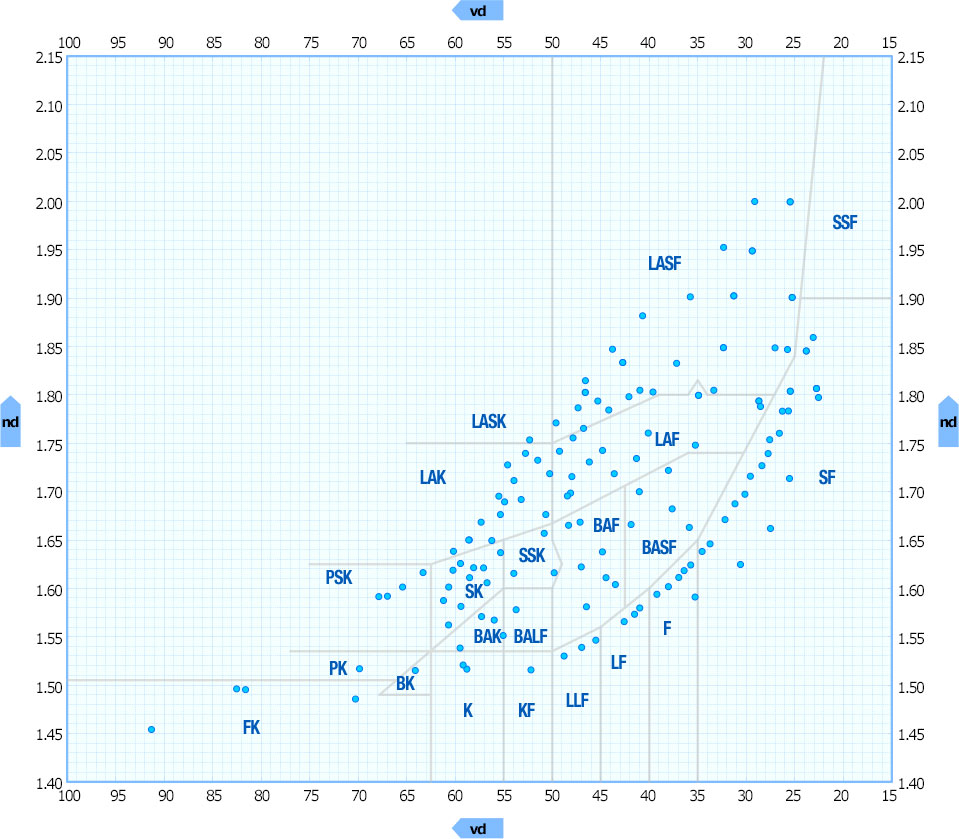
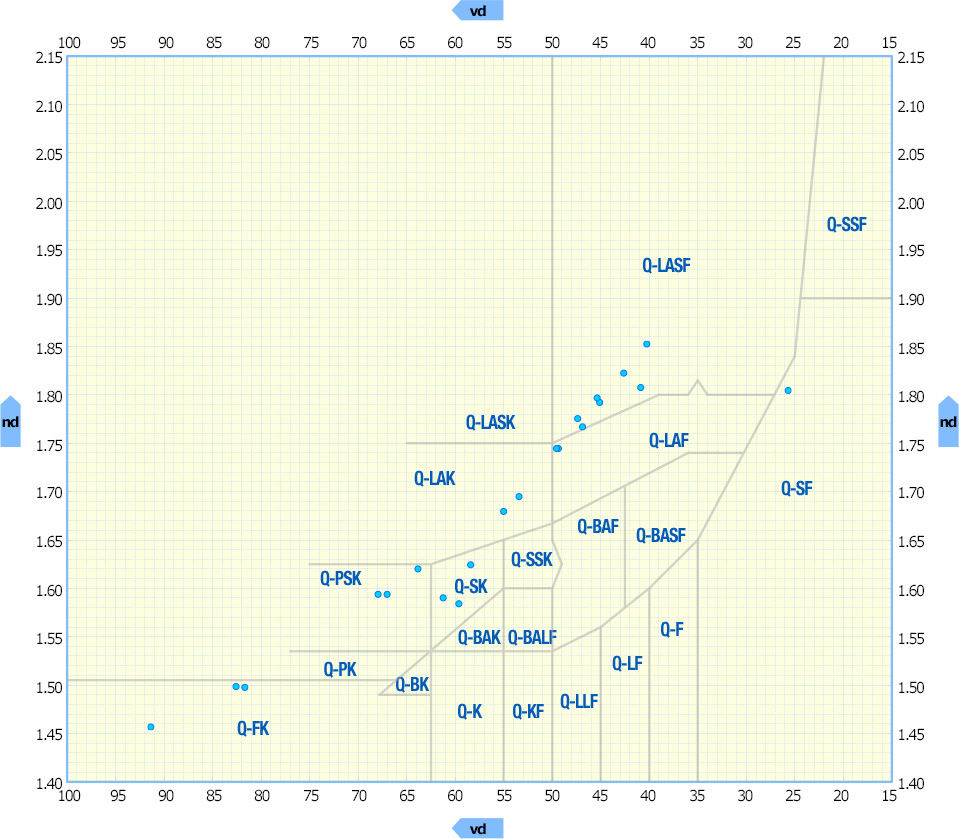
The factory currently produces 161 different types of optical glass (140 types of spherical lens elements and 21 types of aspherical lens elements), with varying refractive indices.
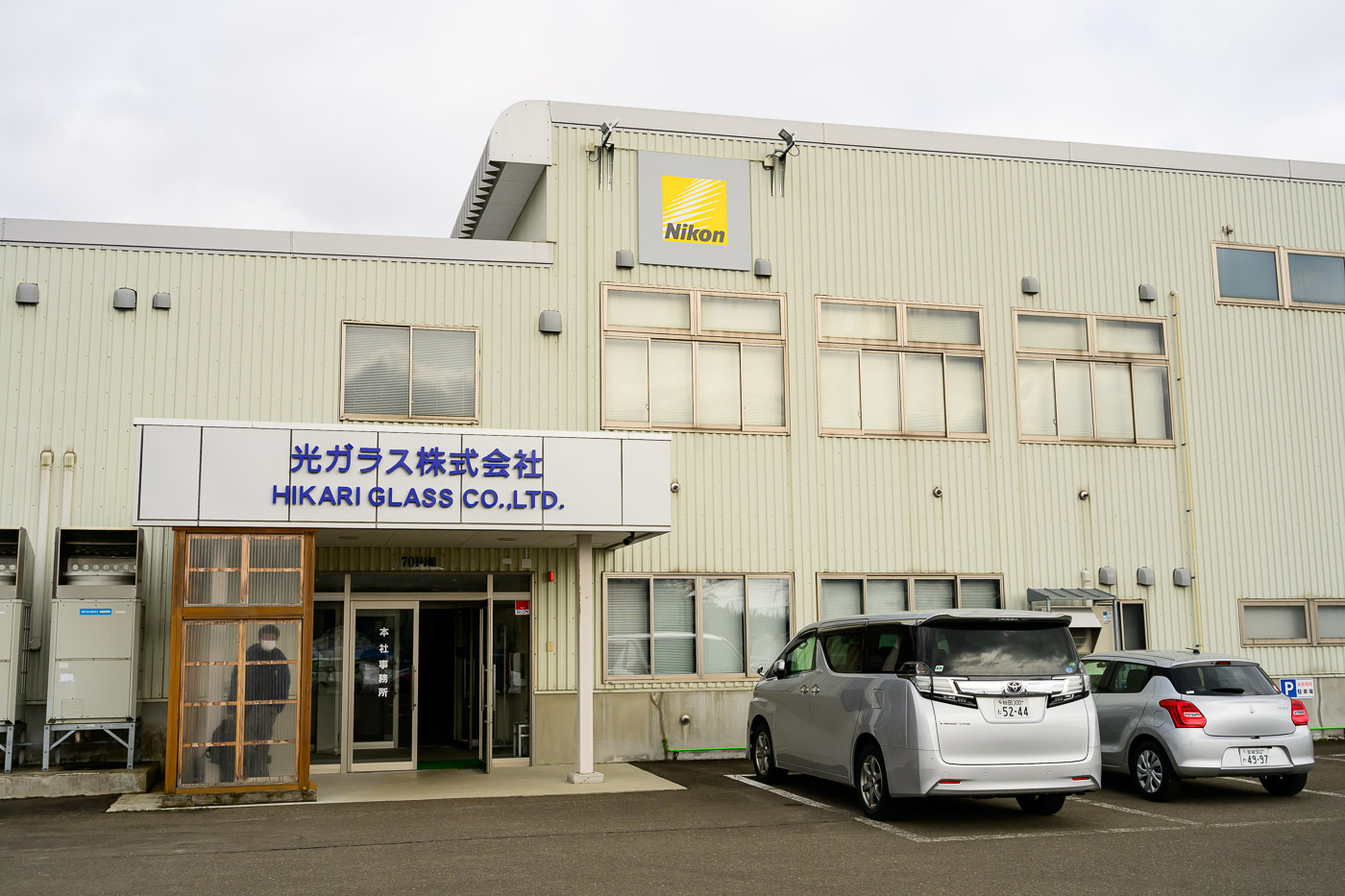
The headquarters of Hikari Glass is located in Minato-ku, Tokyo, and the company also operates an optical glass processing plant in Changzhou, China. The company employs 350 people, including 180 in Japan, split between Akita and Tokyo.
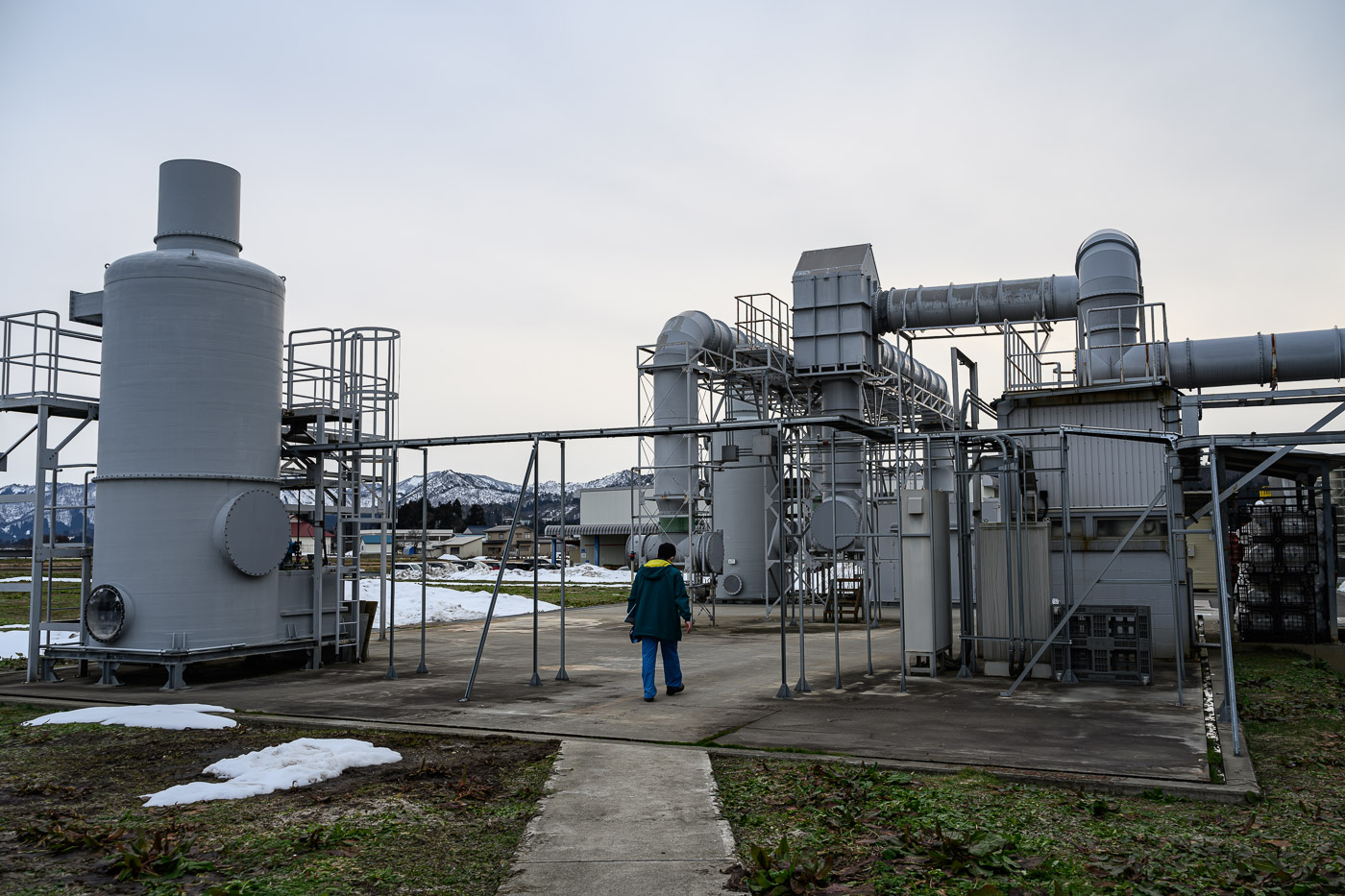
The factory’s total production capacity is 40 tonnes of optical glass per month. Ten tonnes are processed in Japan, while 30 tonnes are shipped to the Changzhou plant in China. At Hikari, 200,000 lens elements are shaped per month, before being shipped primarily to Nikon Corporation factories that manufacture lenses and various optical instruments, such as the Tochigi plant, where high-end Nikkor Z lenses are produced.
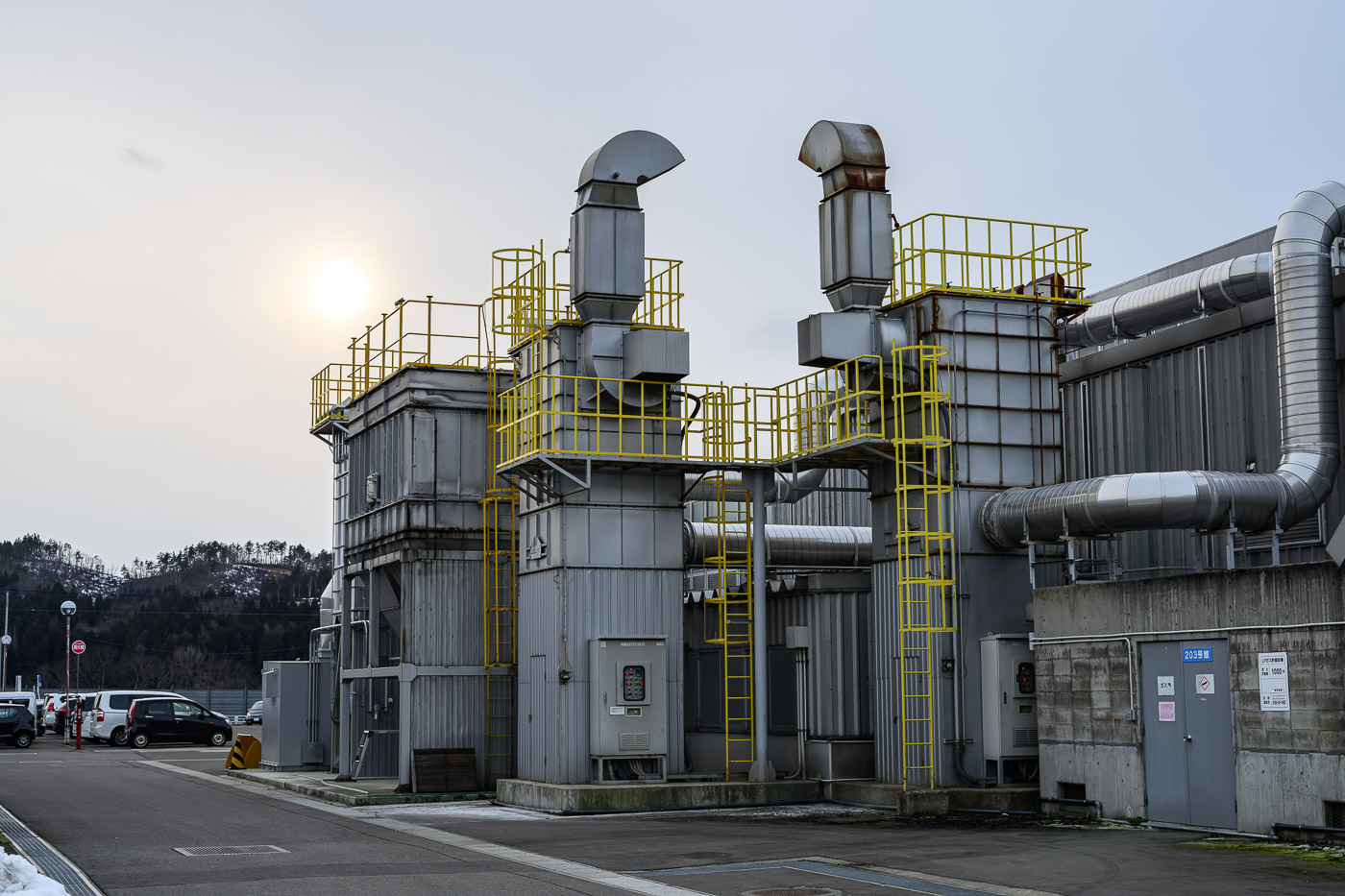
Its main clients include Nikon Group companies, as well as AGC Micro Glass, Fujifilm Optics, Konica Minolta, and Ricoh Industrial Solutions. Very few companies today are still capable of manufacturing high-quality optical glass. In fact, the majority of the production tools are designed, built, and repaired by Hikari Glass itself.
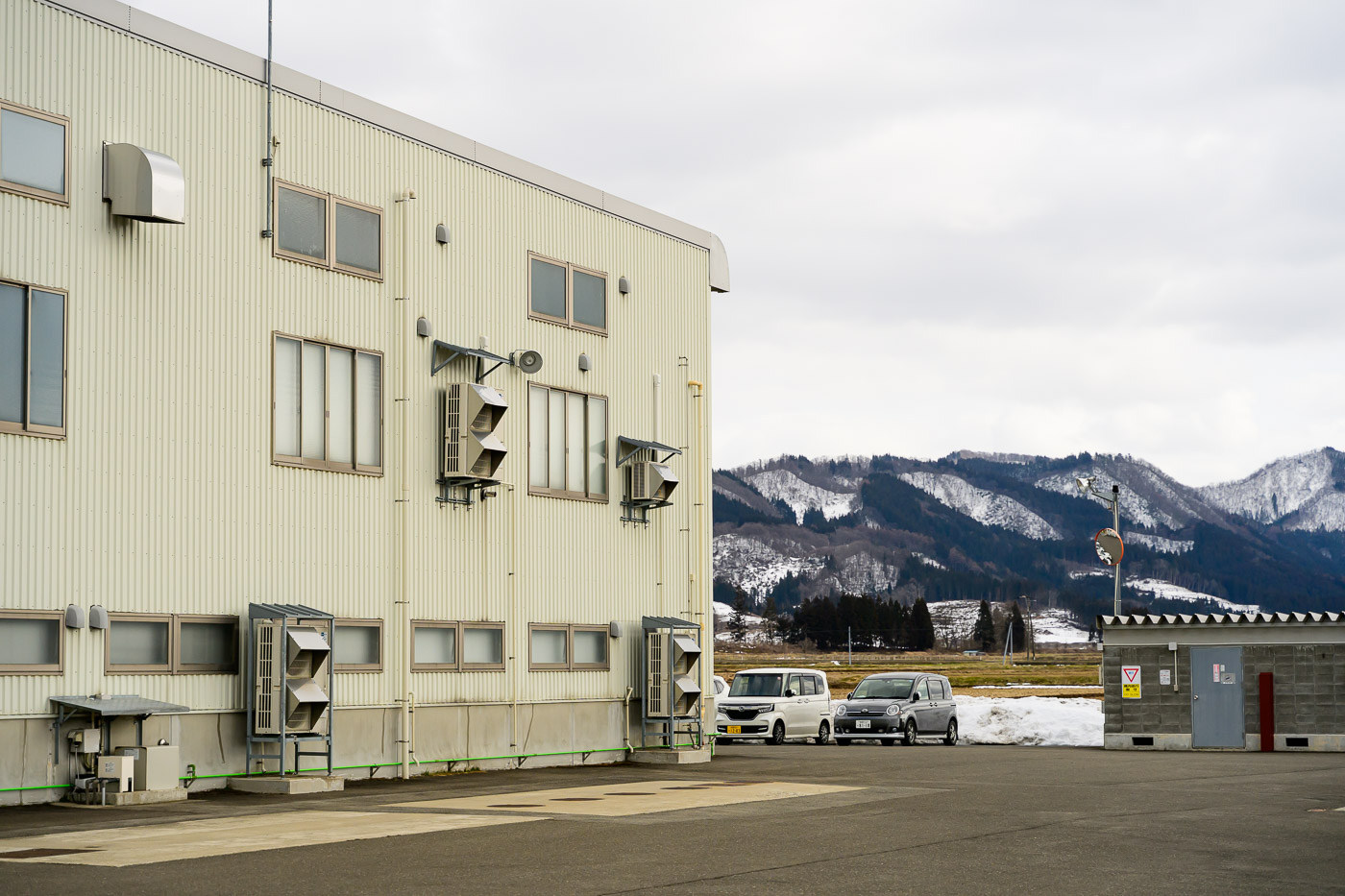
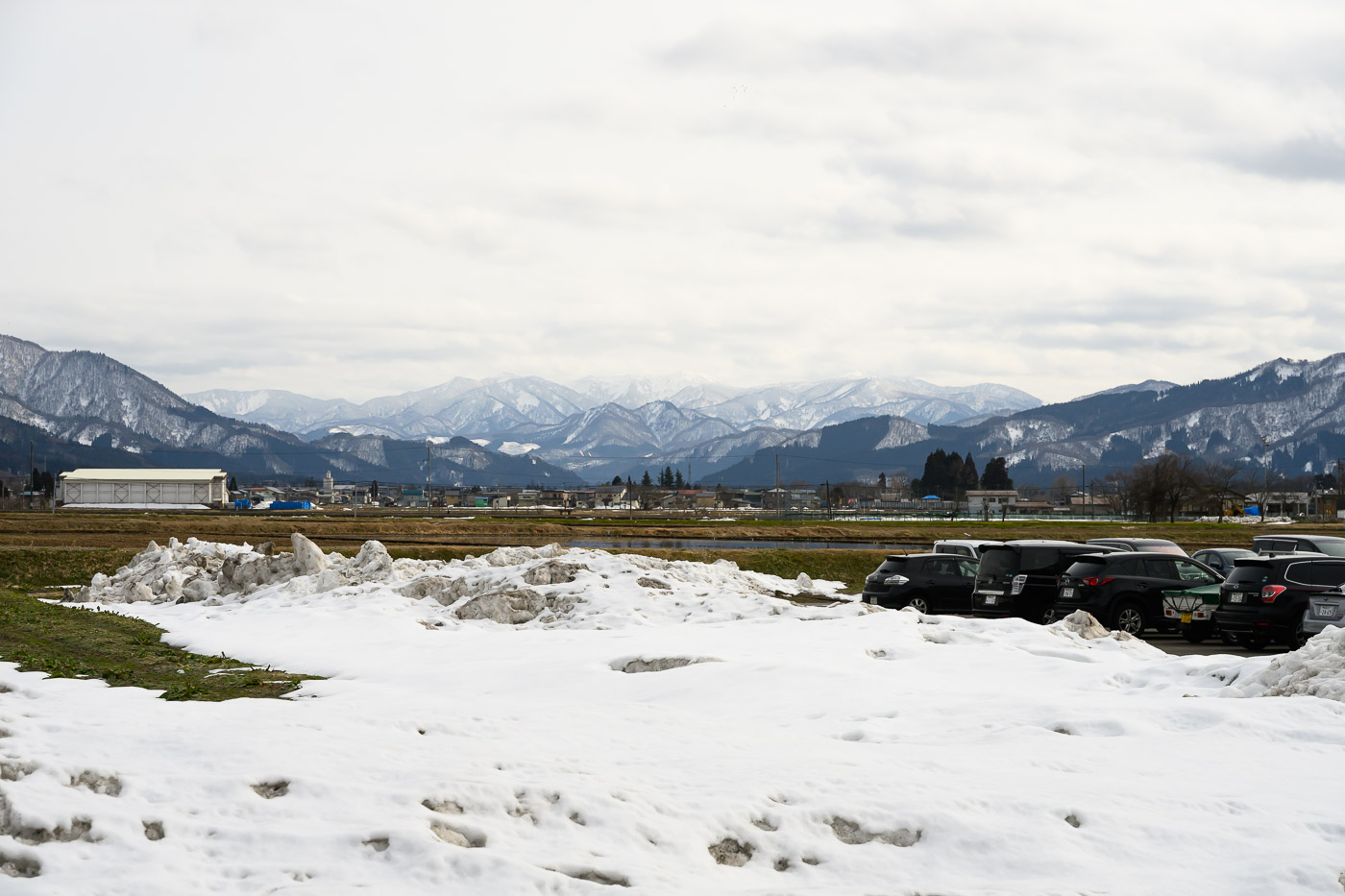
The factory is located in the Akita region, surrounded by rice paddies. The location was chosen following discussions between an employee and the company president, who wanted to contribute to local employment. A site was available in Yuzawa, and establishing the factory there would provide jobs for men during the winter, when agricultural activity slows down. The local residents are also described as very dedicated and calm, a key characteristic for glass manufacturing. Other companies such as TDK and Epson are also based in the region.
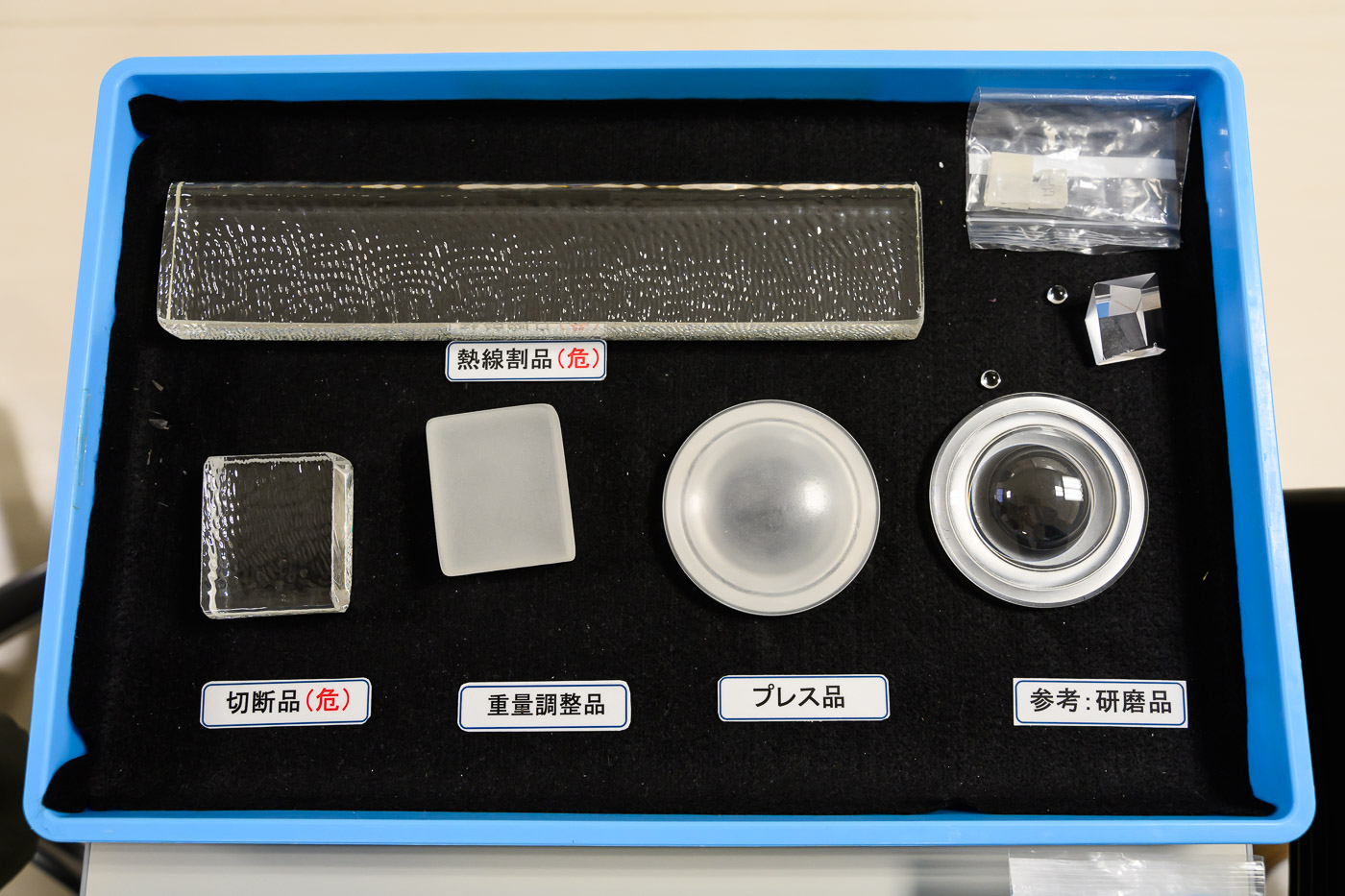
Before obtaining a glass lens element that roughly resembles the final lens that will be polished, coated, and fitted into a lens, the glass goes through numerous stages and transformations, which we had the chance to follow during our tour of the Hikari Glass factory.
Mixing and melting: the first steps
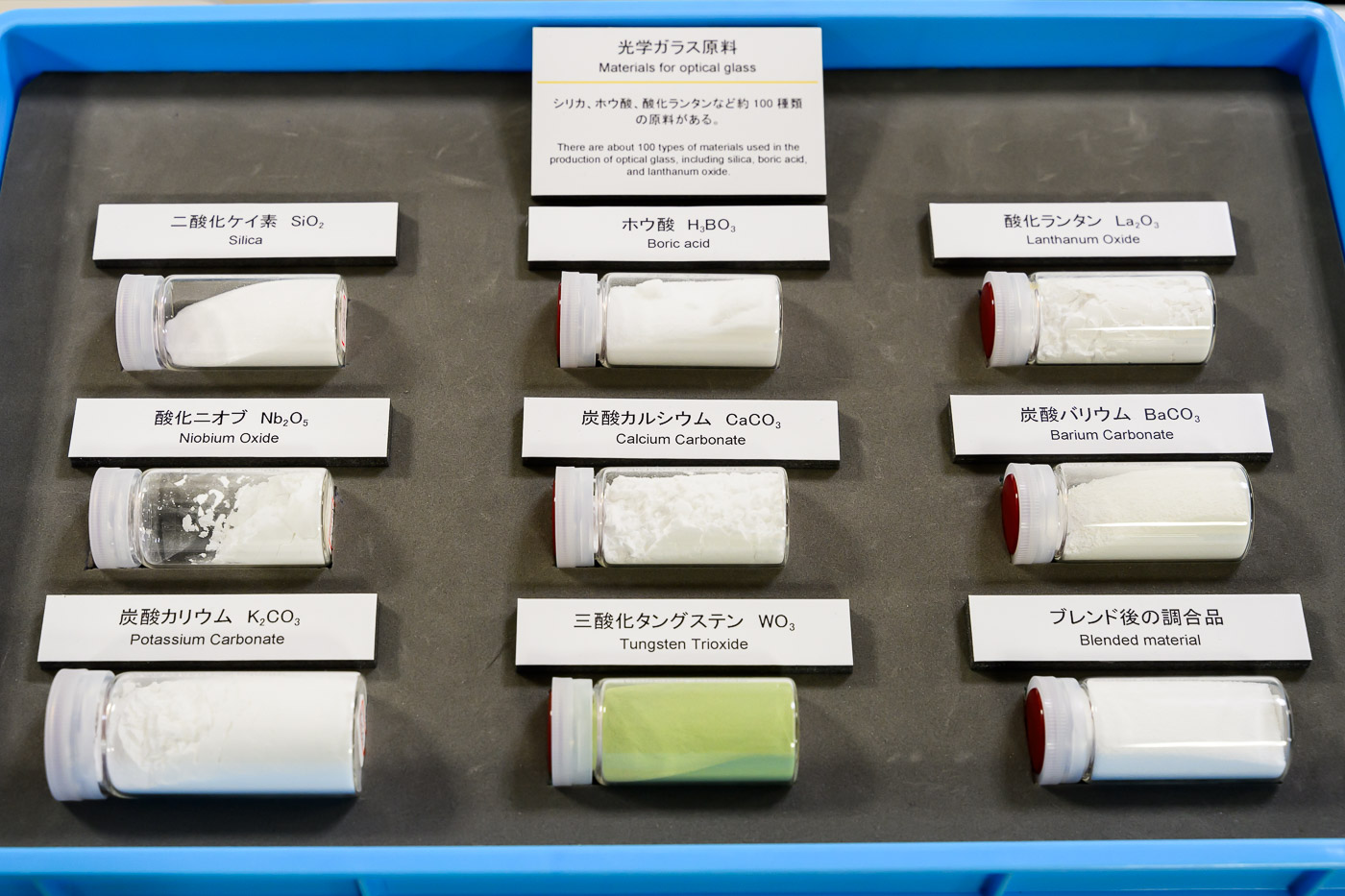
It all starts with… powder. At the Hikari factory, Nikon keeps 100 different raw materials in stock, imported from all around the world.
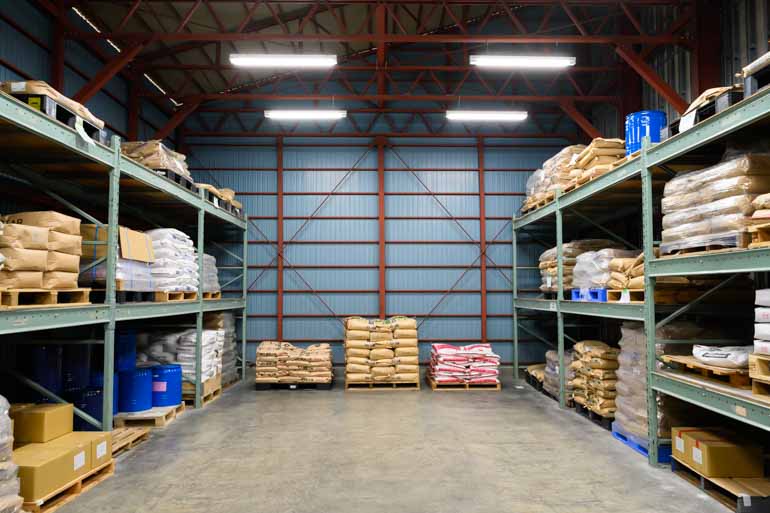
Depending on the type of glass, between 10 and 14 ingredients of very high purity are selected in order to obtain the most transparent glass possible.
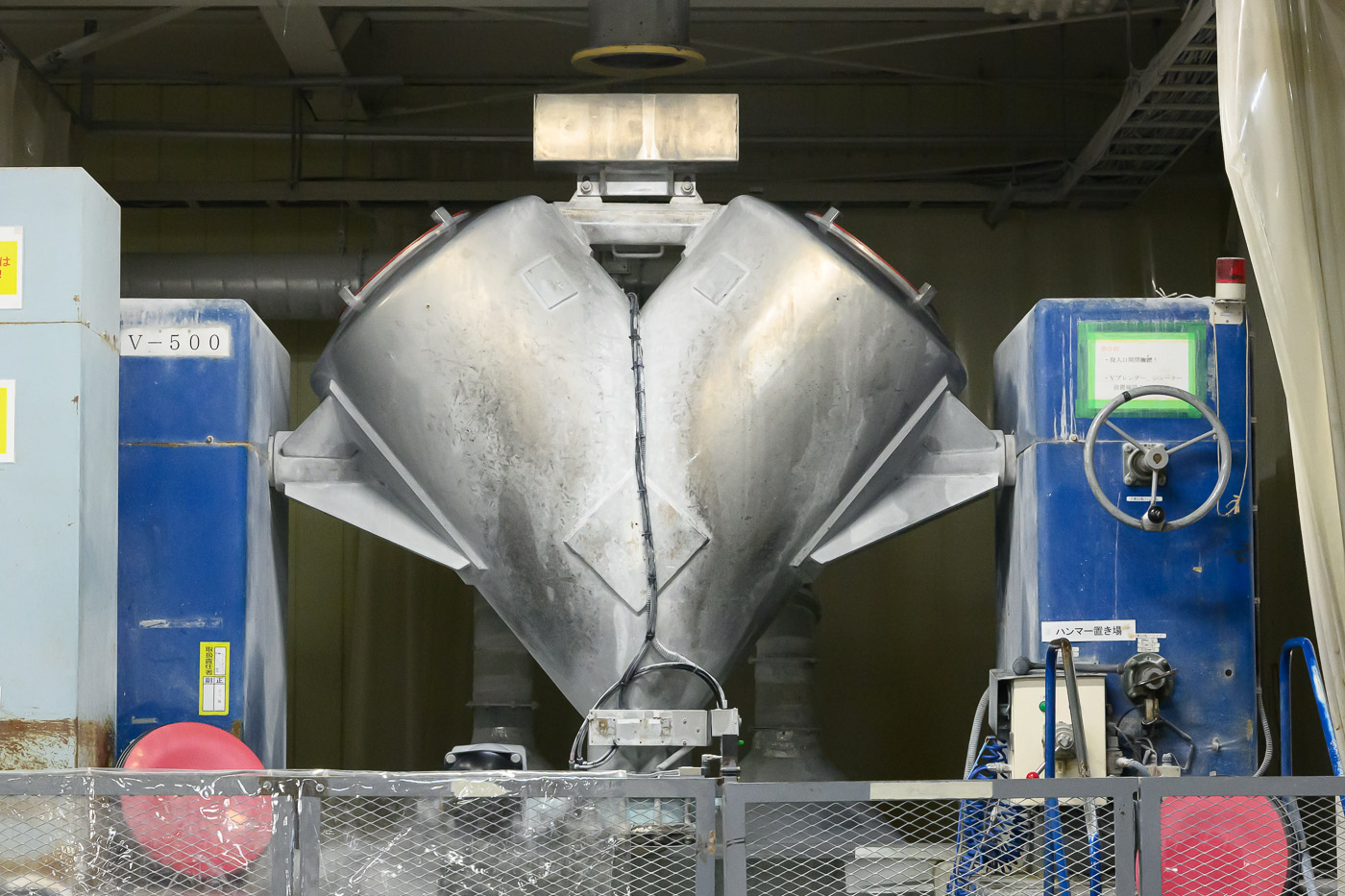
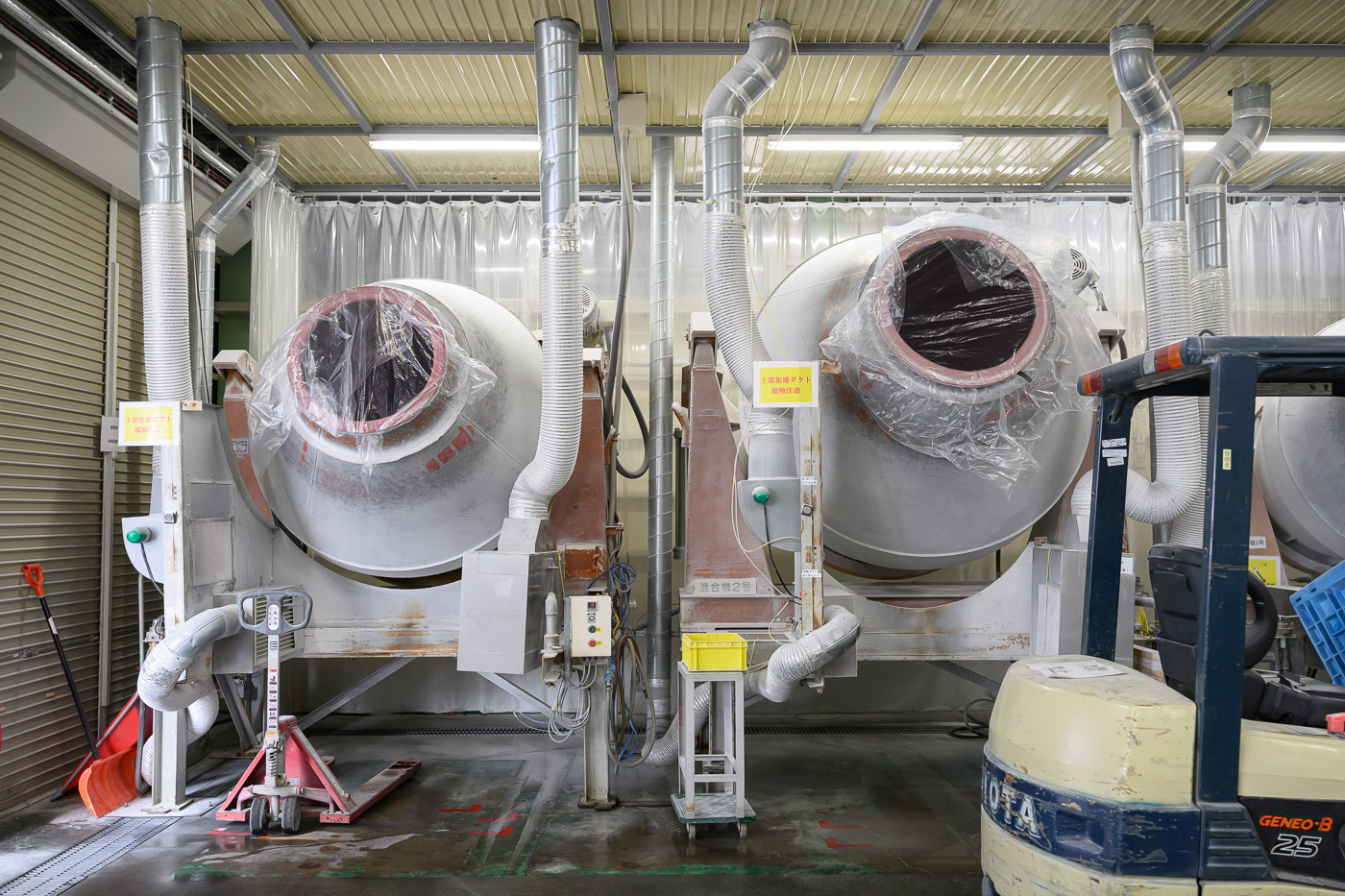
These elements are mixed in a large drum mixer, which can handle between 500 and 800 kg of material. After this initial mixing, the result is a white powder.
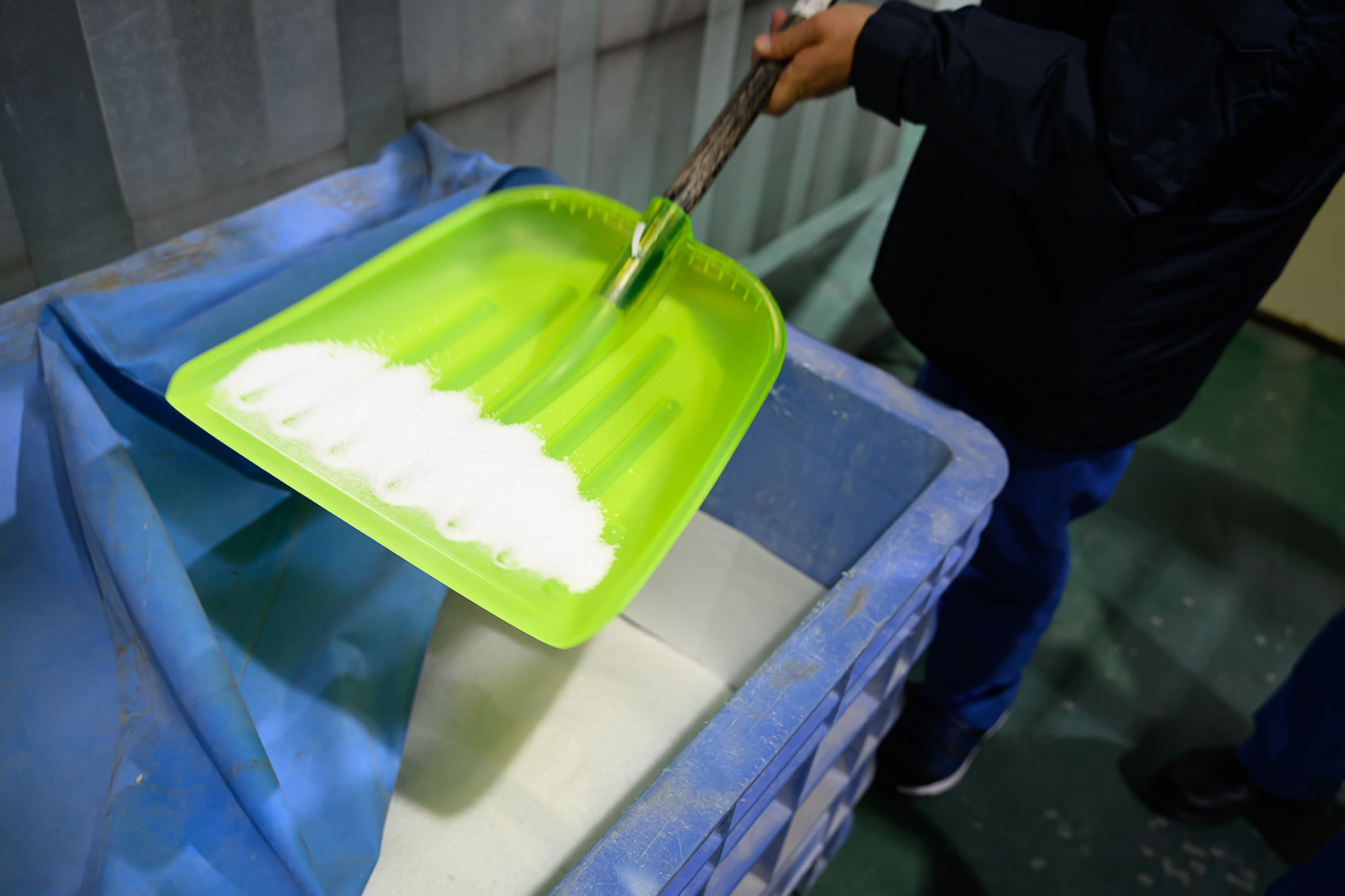
This powder then goes through a pre-melting stage: at regular intervals, a mechanical arm pours small amounts of powder into a crucible placed inside a furnace to melt the mixture.
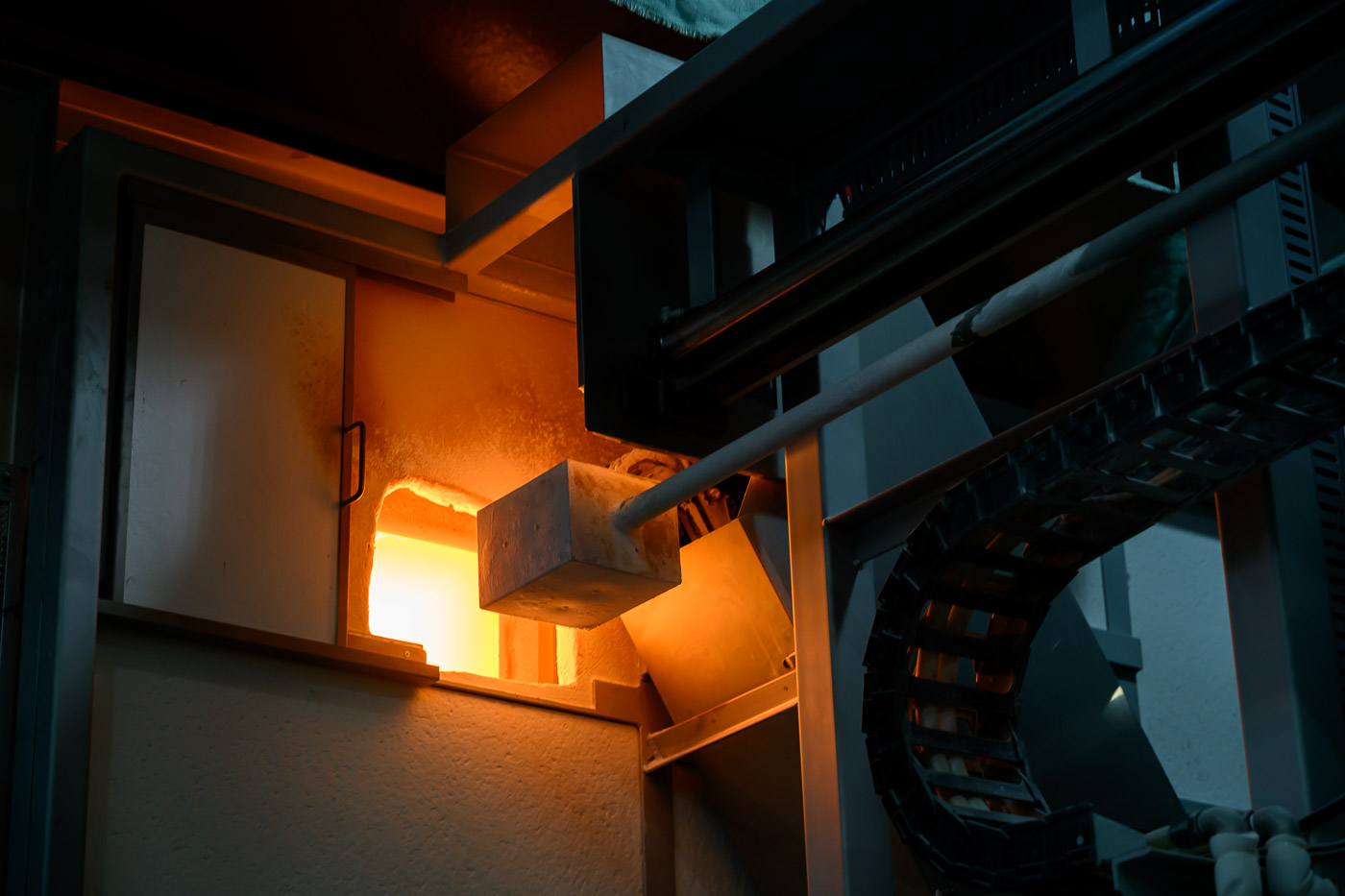
Once the entire batch is fully melted, which takes several hours, a water reservoir is placed beneath the crucible. An opening is then made at the base using a blowtorch, allowing the molten glass to flow out.
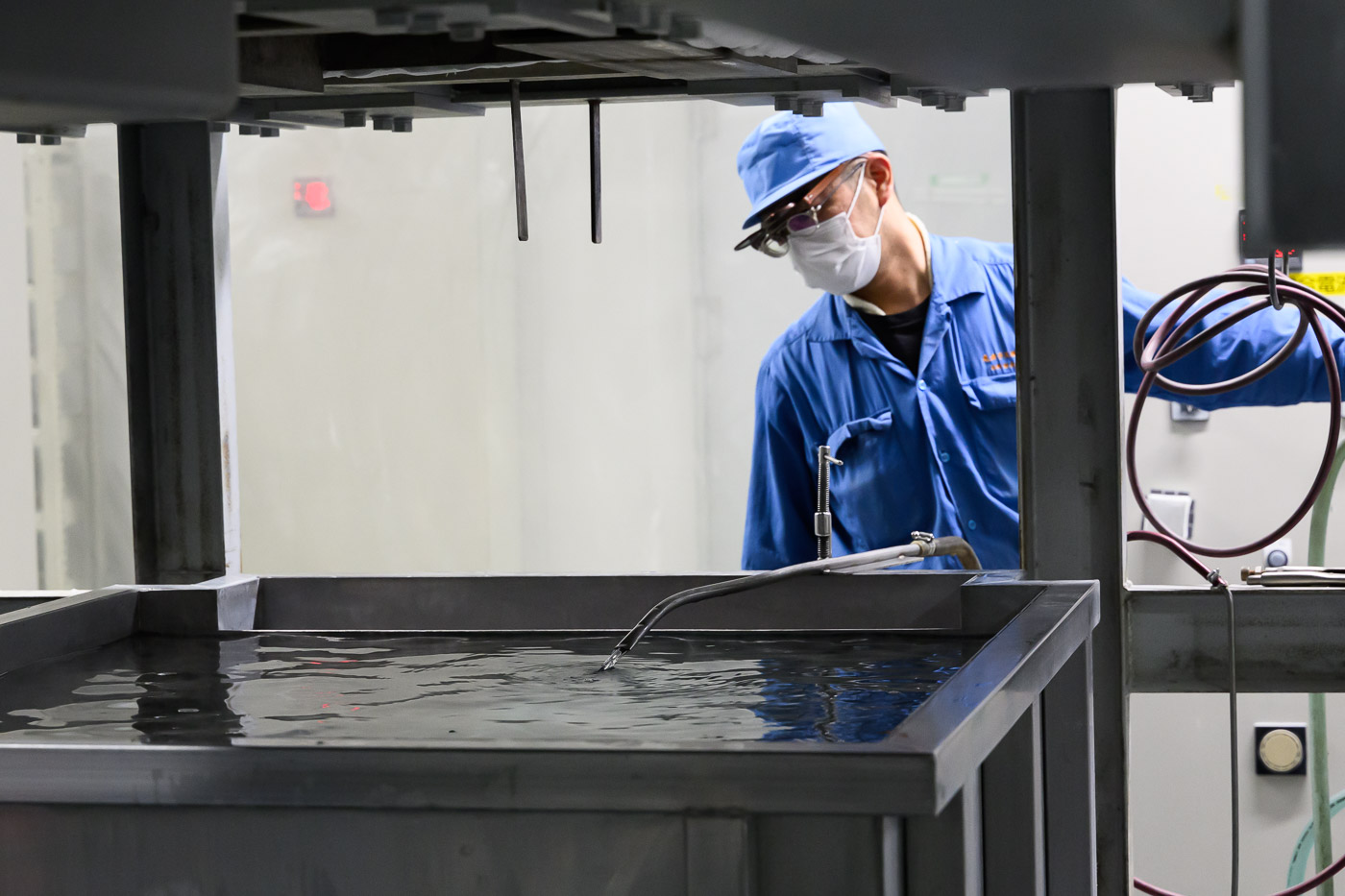
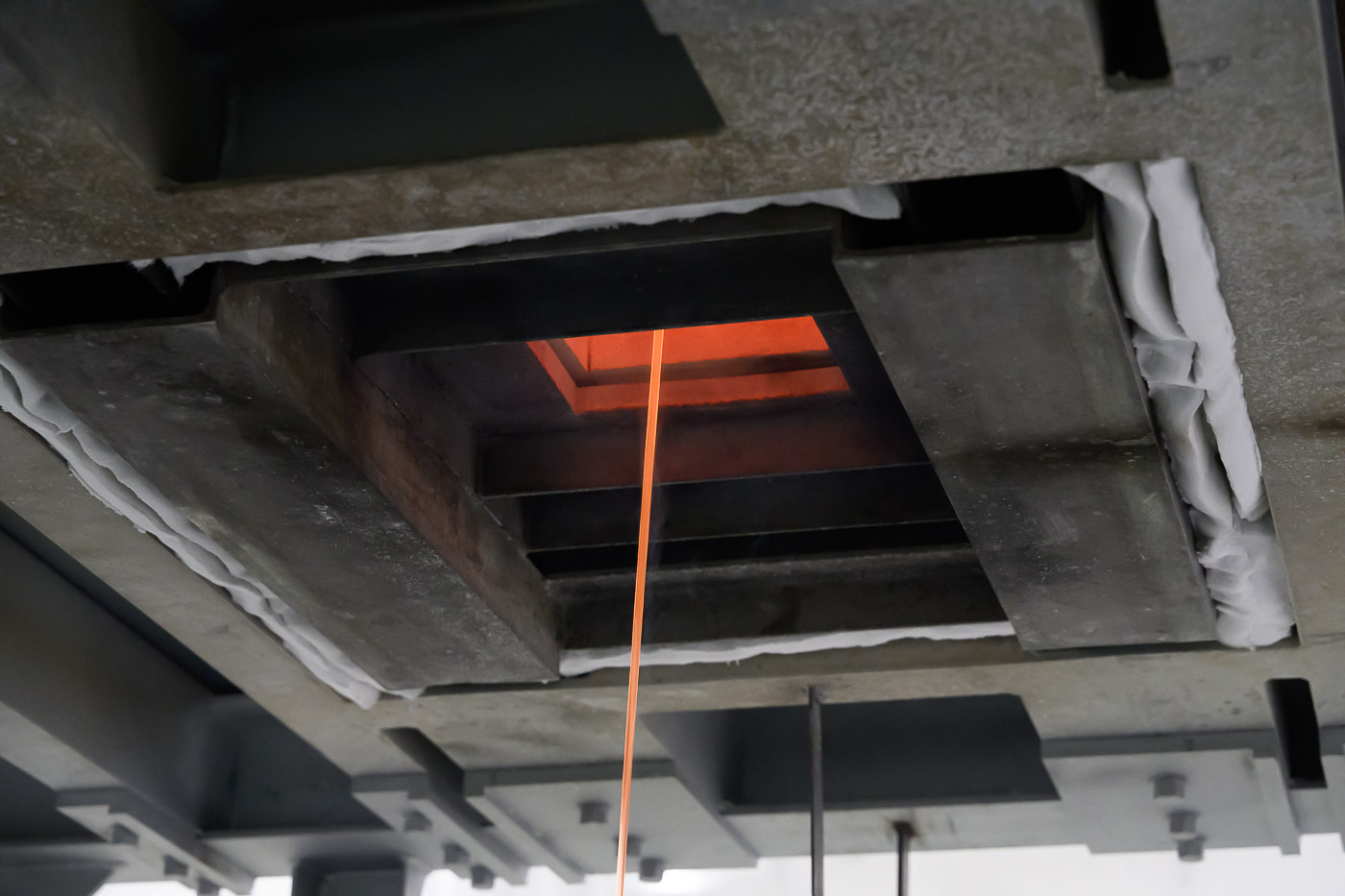
During this stage, the molten glass, glowing orange, flows like molten metal. The colour varies depending on the temperature of the glass. This temperature is determined by the type of glass being produced: the higher the melting temperature, the more incandescent the mixture, with a very bright orange glow.
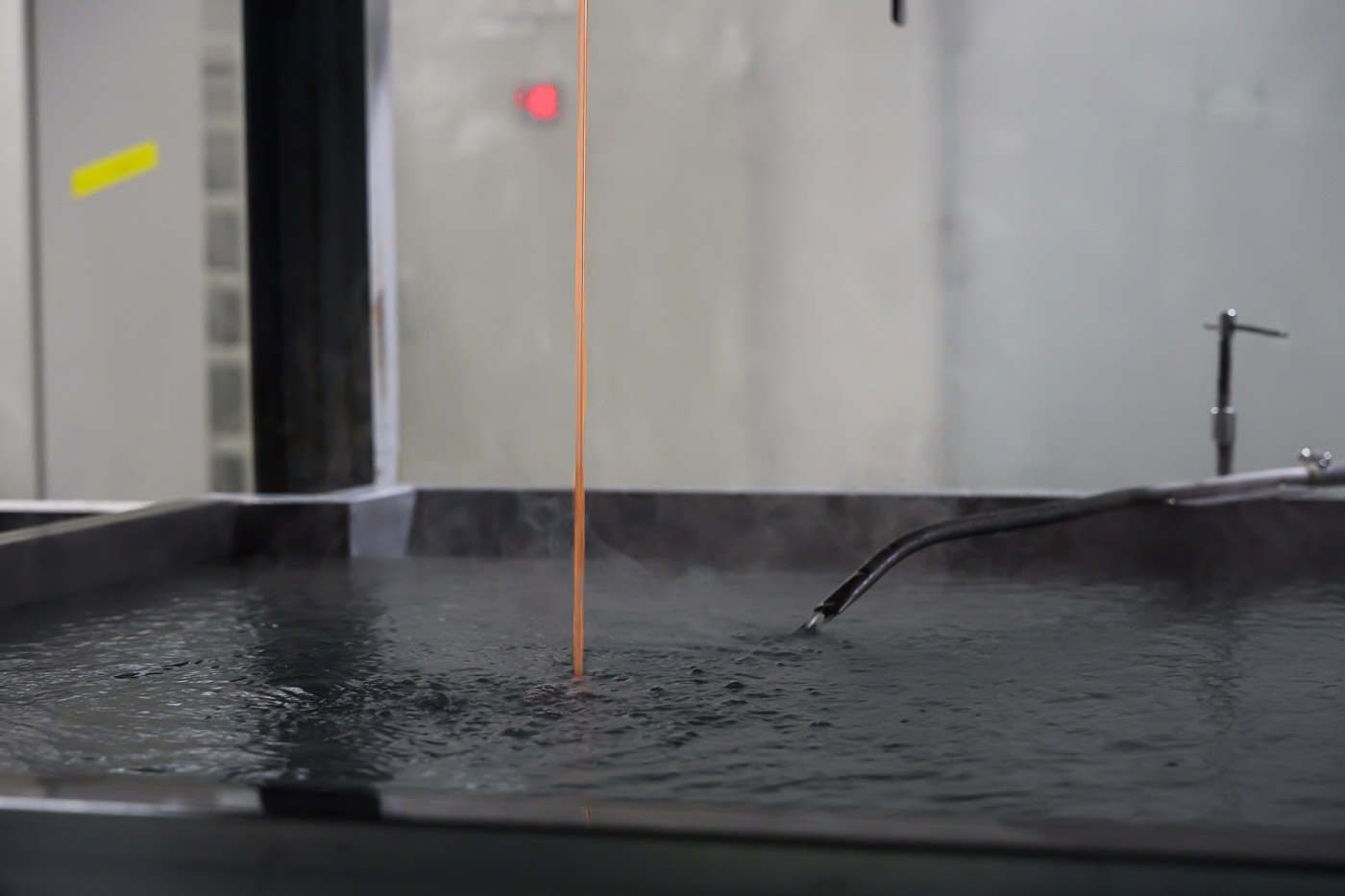
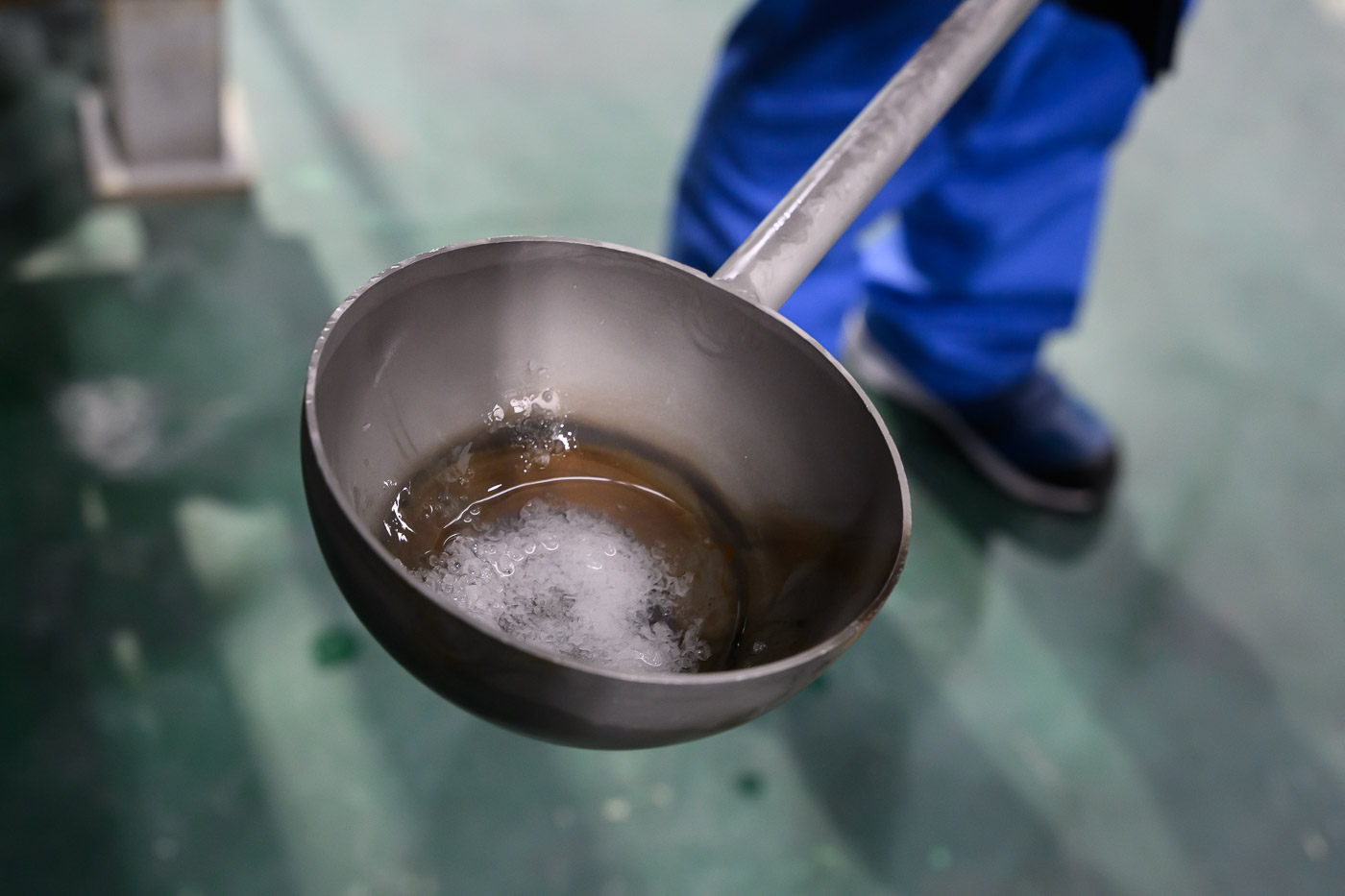
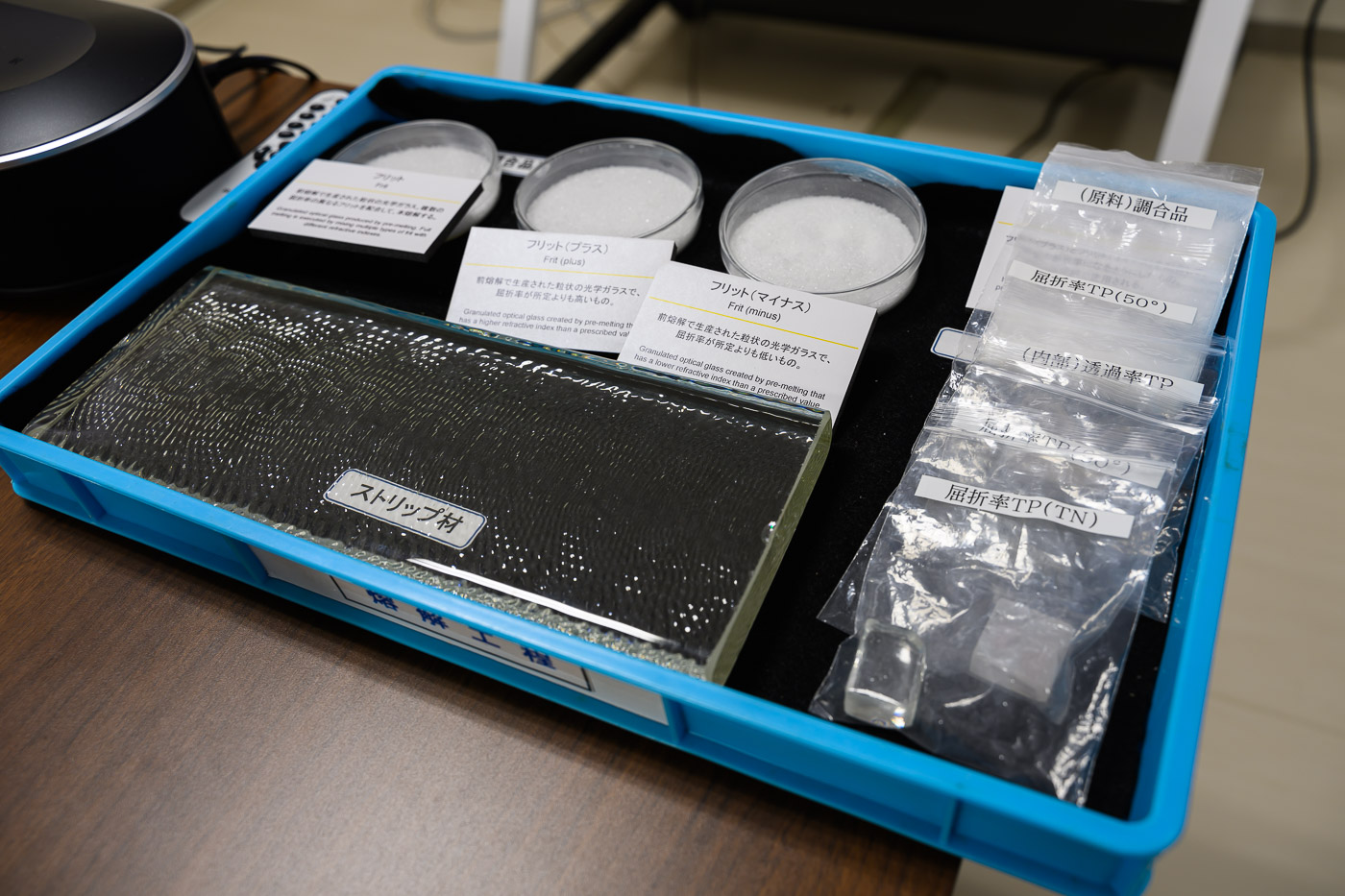
A jet of cold water directed at the point where the molten glass meets the water causes the glass to solidify and form small crystals called “frit”, which resemble highly abrasive crushed glass.
Continuous melting: glass in bar form
The melting process is not over yet, as the glass will undergo a second melting stage known as “continuous melting”. Each batch of frit is inspected to measure its refractive index. Different batches are then blended to achieve the desired level.
The mixture then goes through a continuous melting process consisting of several stages: heating to melt the glass particles, removing air bubbles, and stirring the mixture to homogenize it.
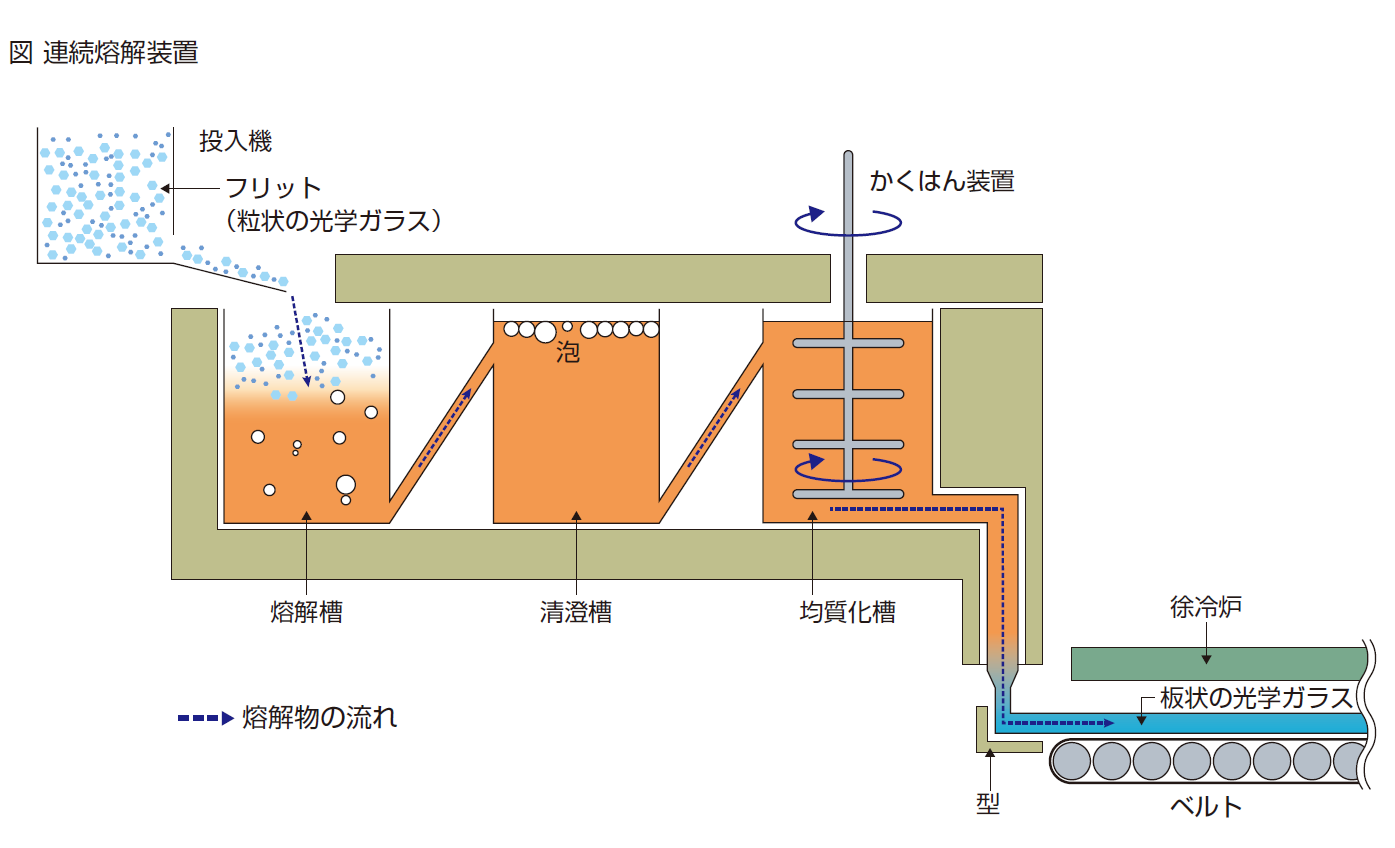
Once the proper melting temperature is reached, the final step involves pushing the molten glass through a mould and onto a very slow conveyor belt where the glass is cooled down to room temperature.
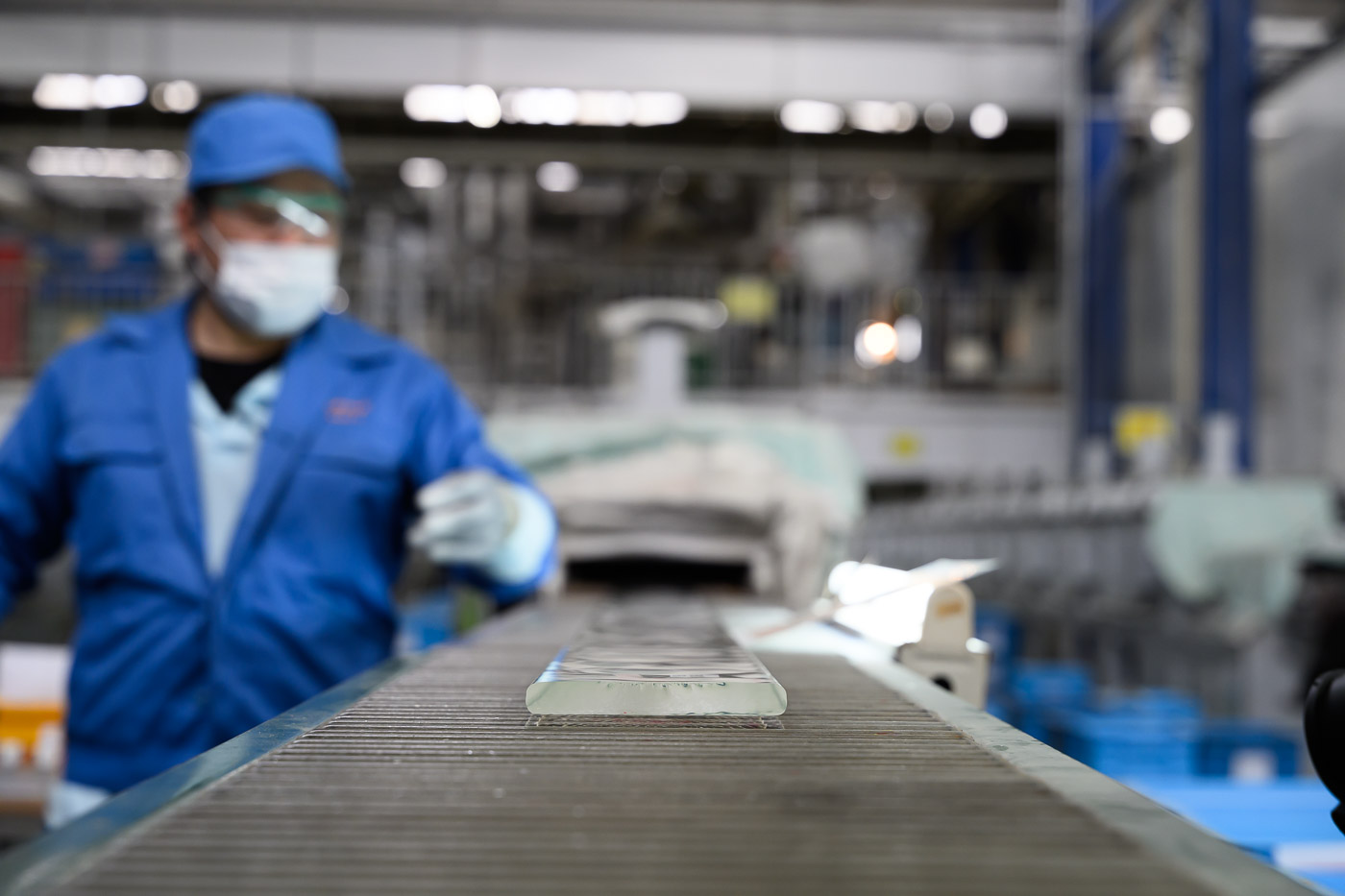
At this point, the glass takes the form of a long bar roughly 15 x 3 cm in cross-section.
Cutting and calibrating the glass pieces
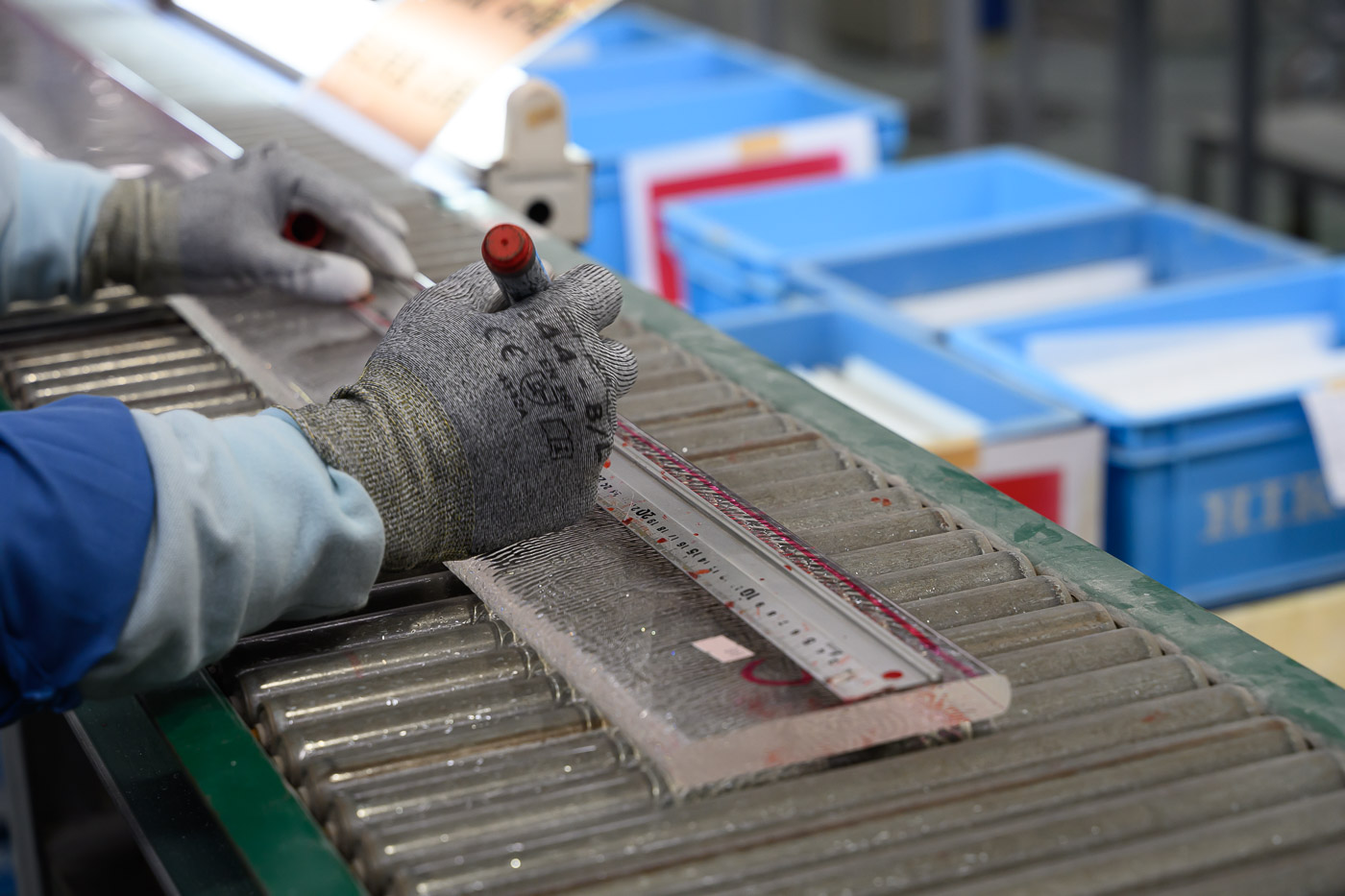
These glass bars then undergo several cutting stages to become small cubes. The first step is performed on the conveyor by a worker, who cuts the bars into pieces roughly 50 cm long and, most importantly, labels the glass for the next stages.
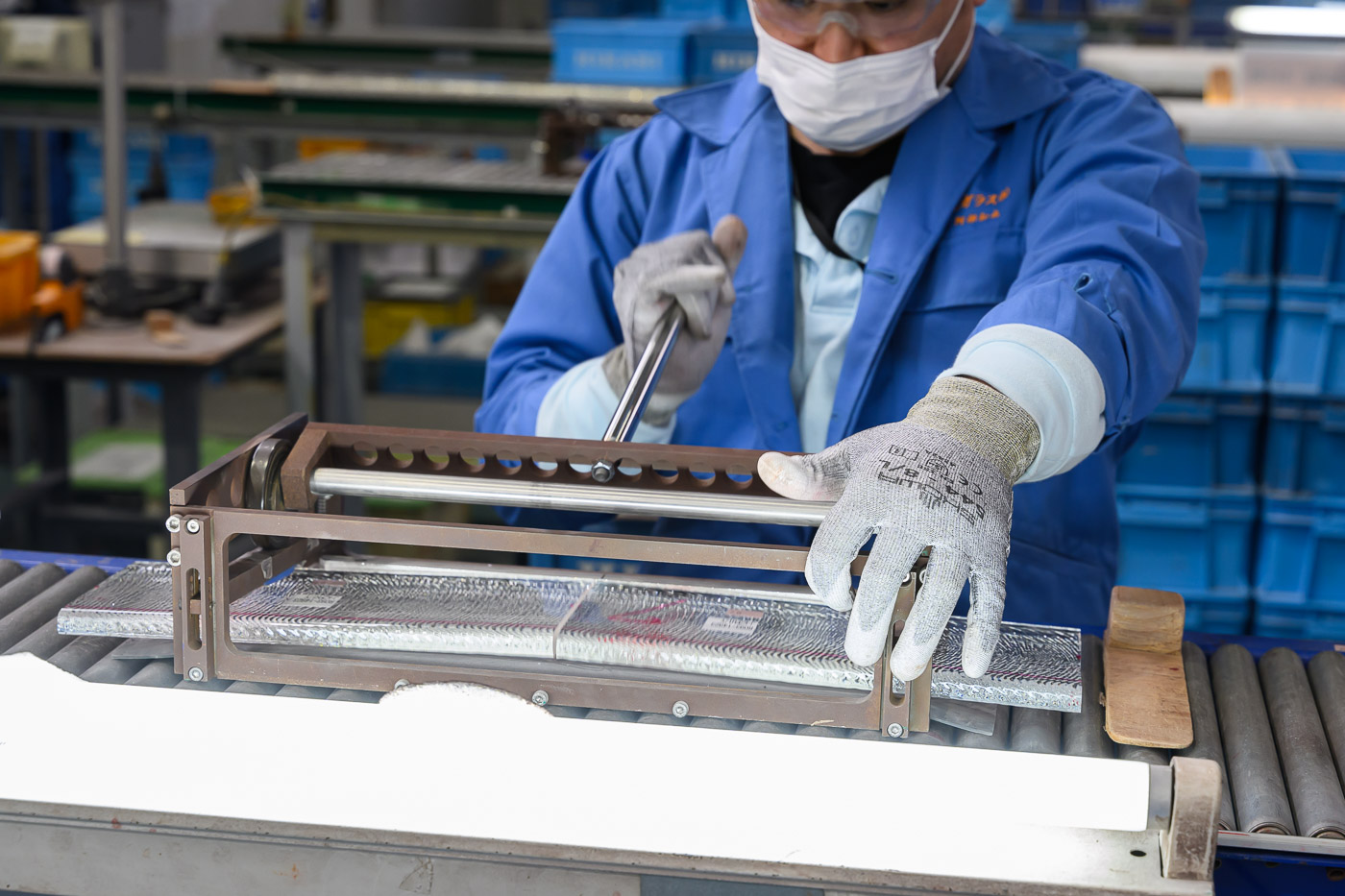
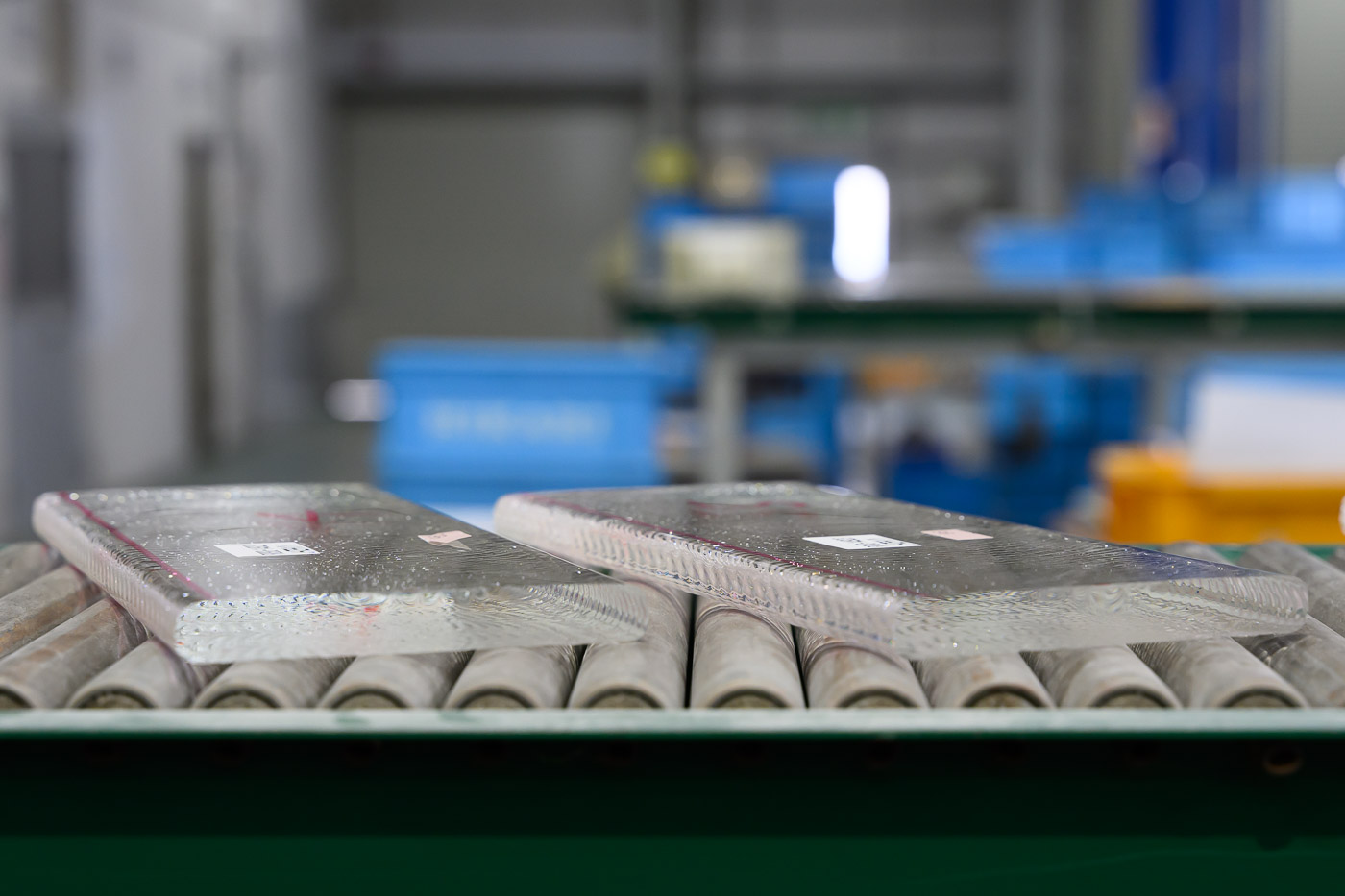
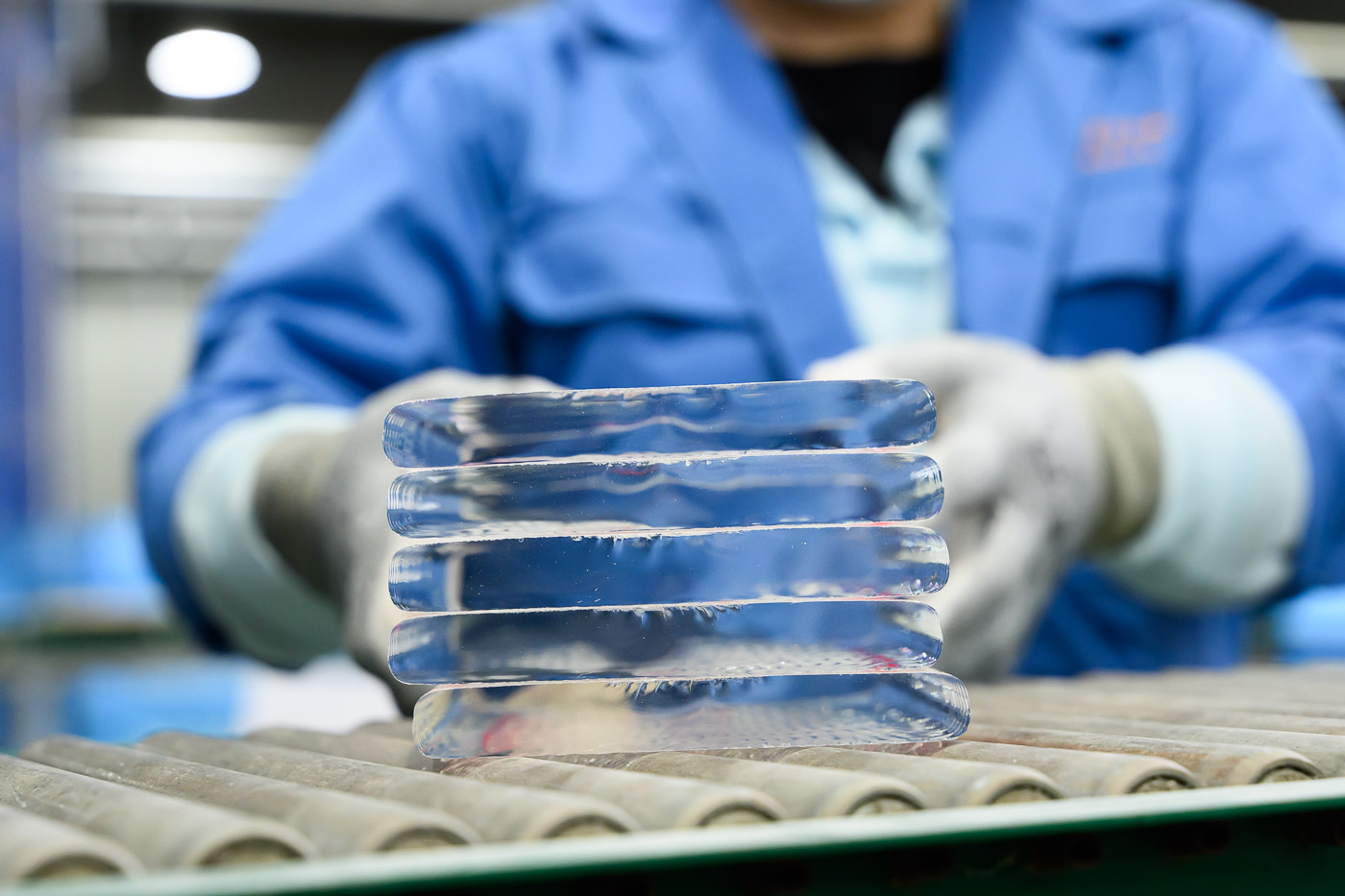
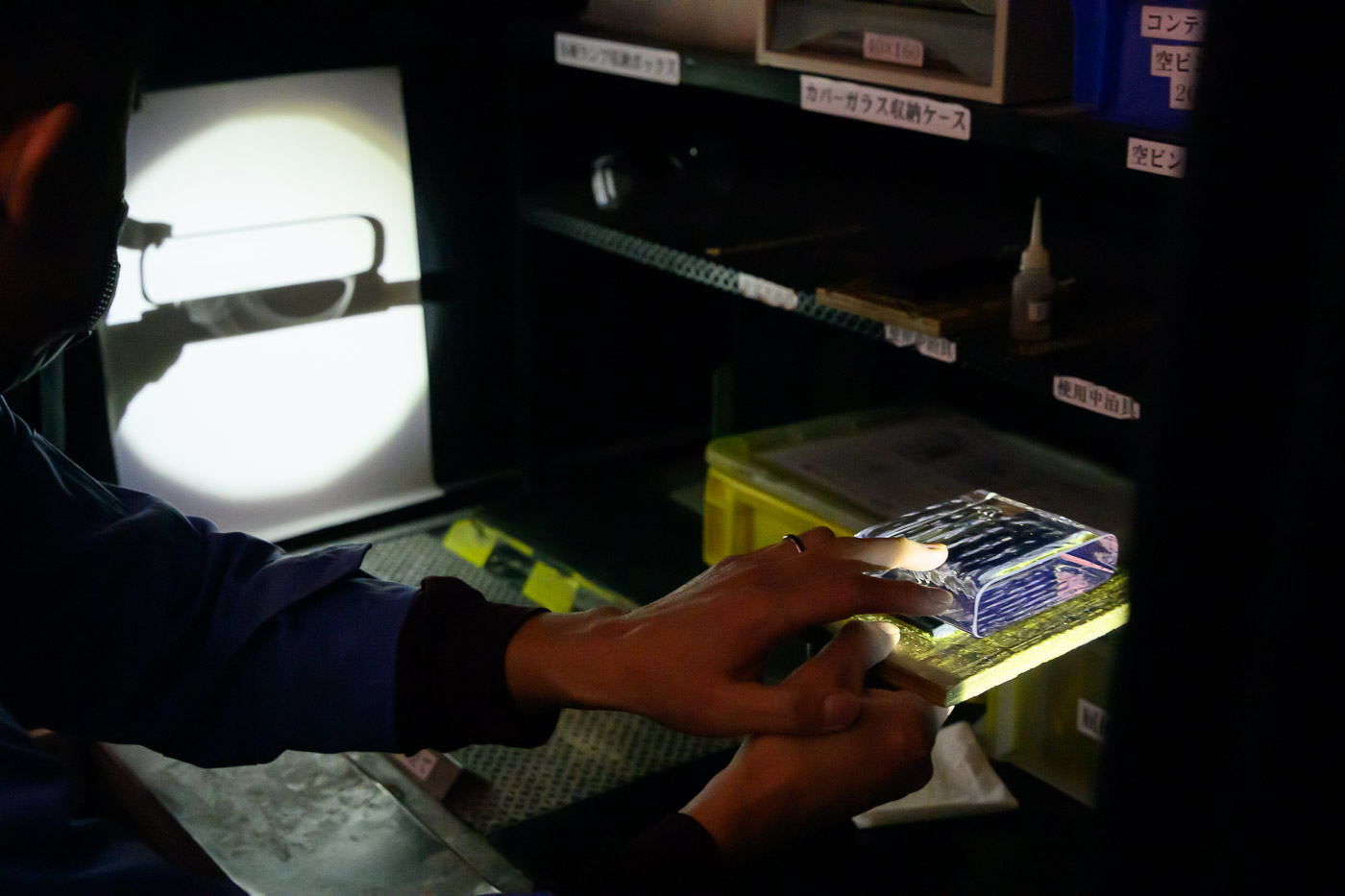
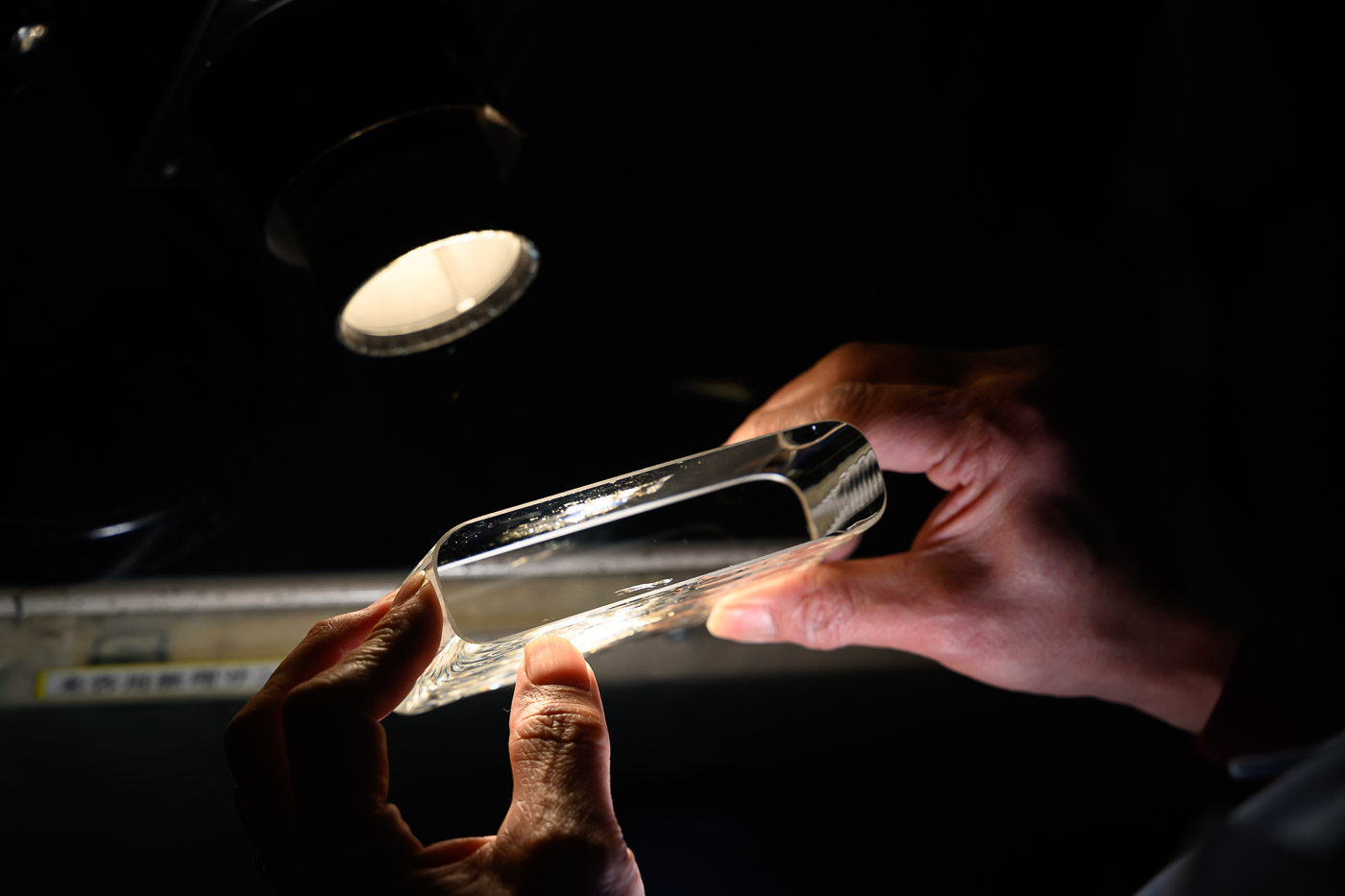
Selected glass samples are then inspected by a worker using a lamp that projects a shadow onto a white background. This makes it possible to verify the perfect transparency of the glass and to detect the slightest defect (striae or bubbles) within the glass block. Additional checks also ensure that the refractive index and transmission values are correct.
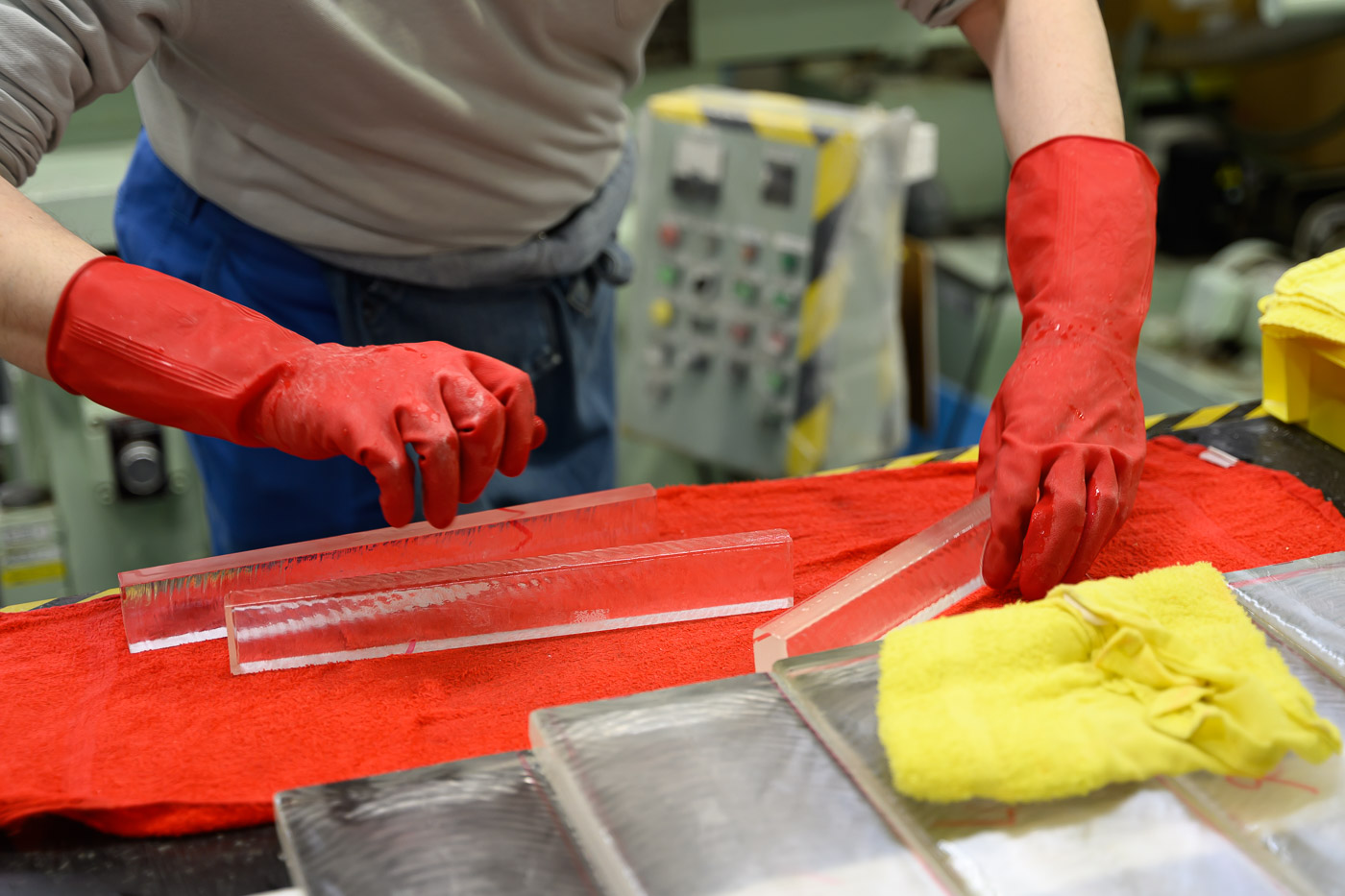
These glass blocks are then transported to a workshop where they are cut lengthwise into thinner strips, either using a metal wire heated to 180°C to split the glass in two, or in a machine fitted with blades.
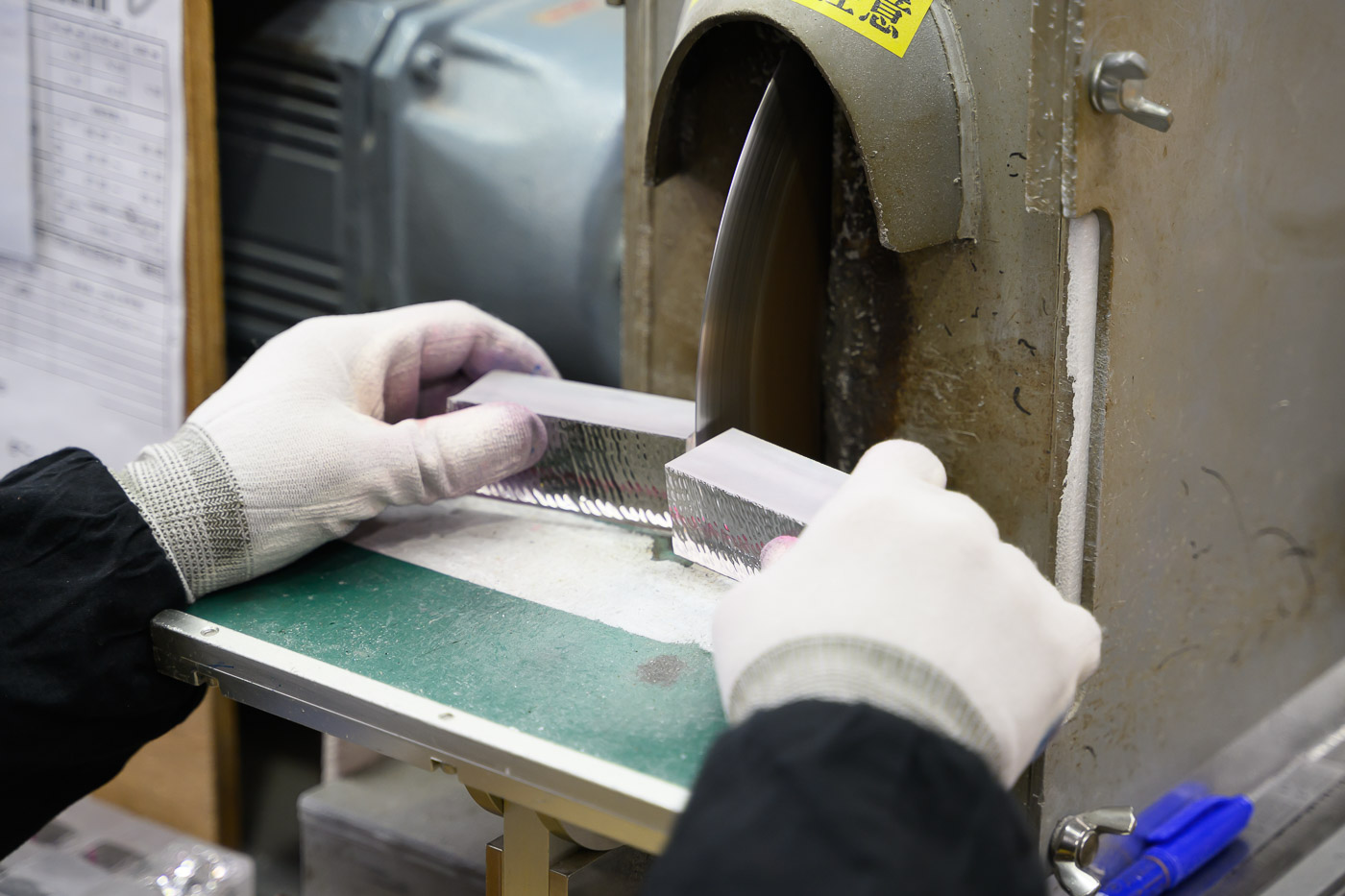
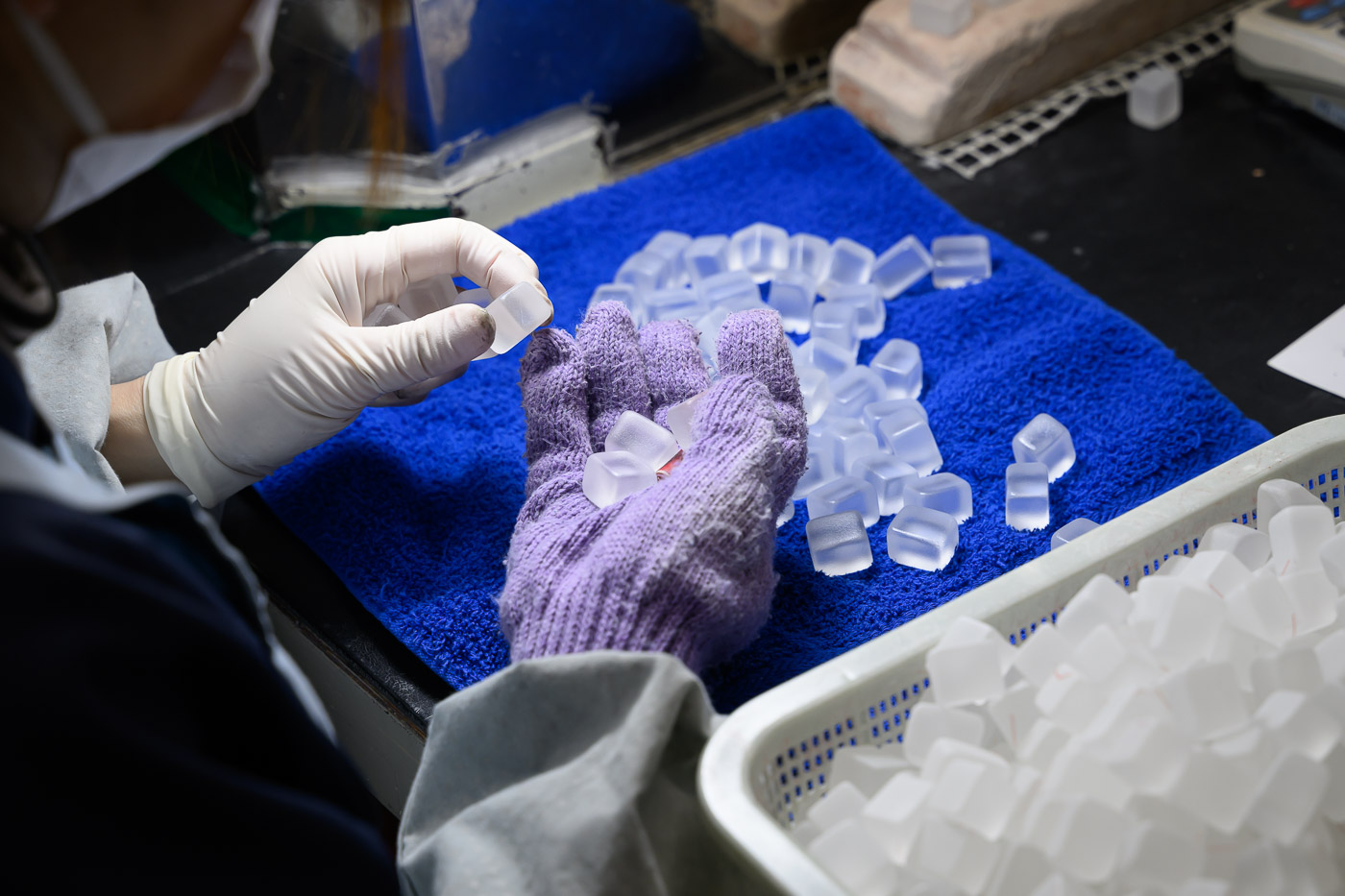
The glass is then cut by hand into small cubes and precisely weighed to verify the weight of each block.
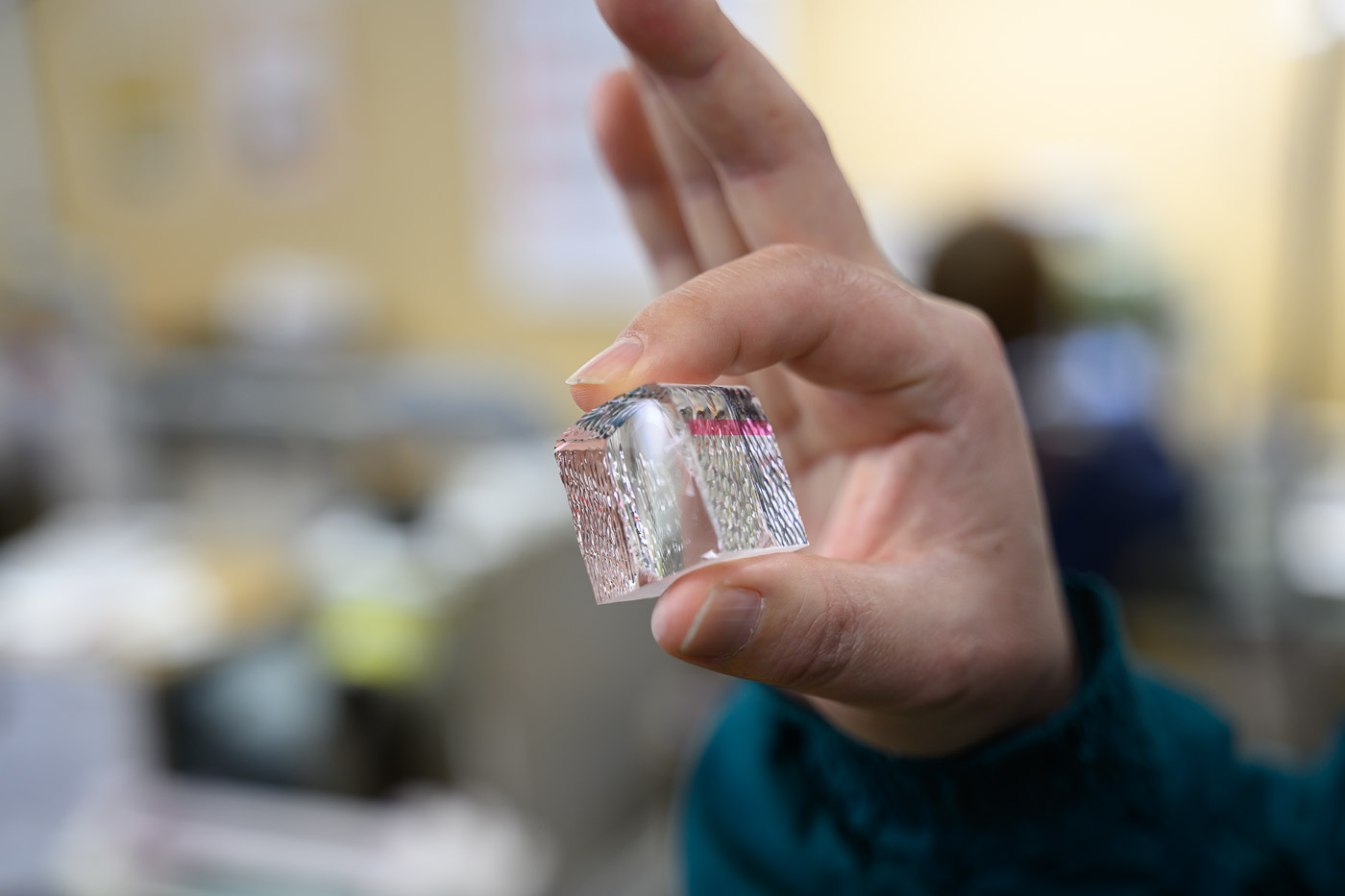
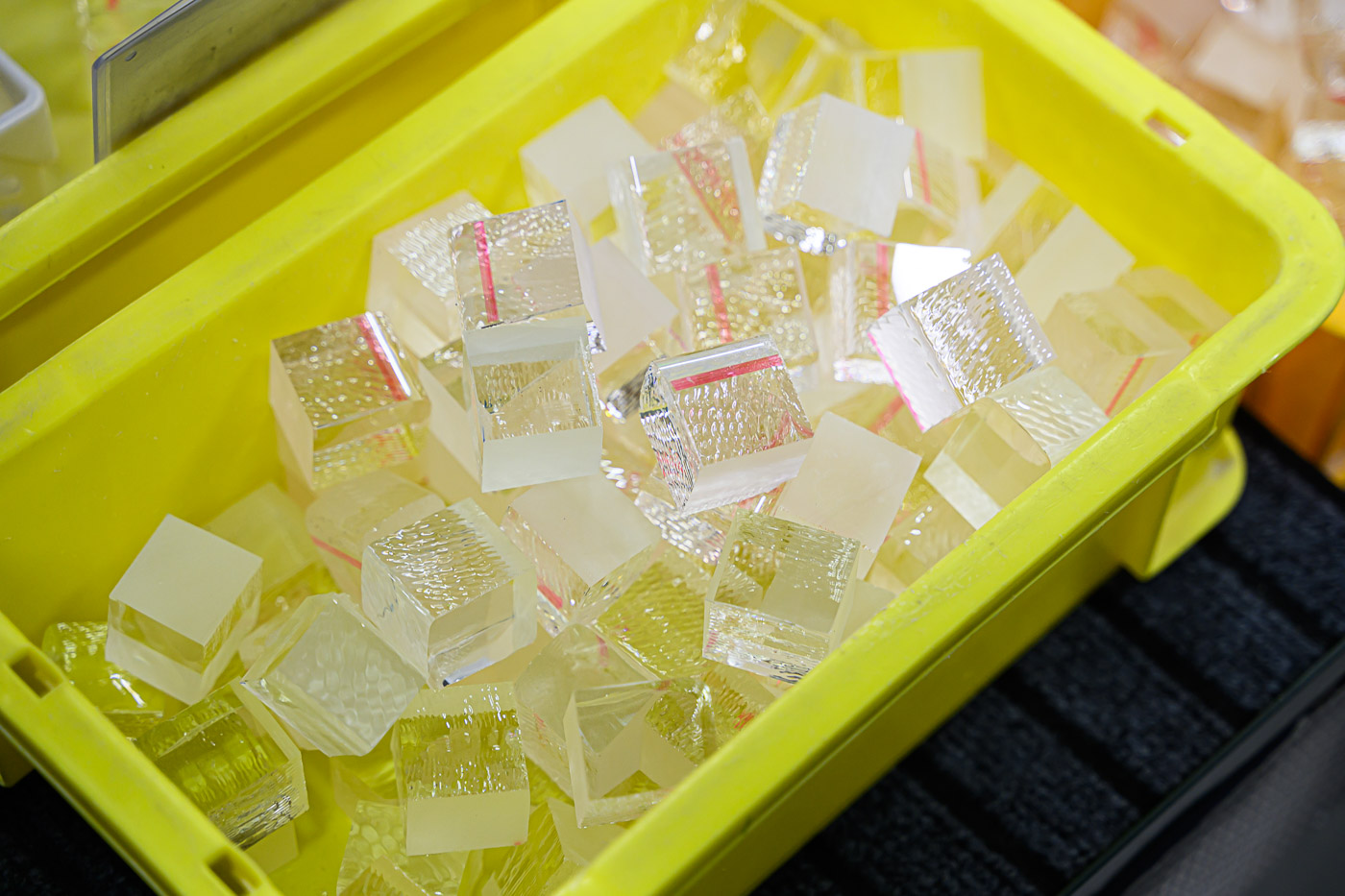
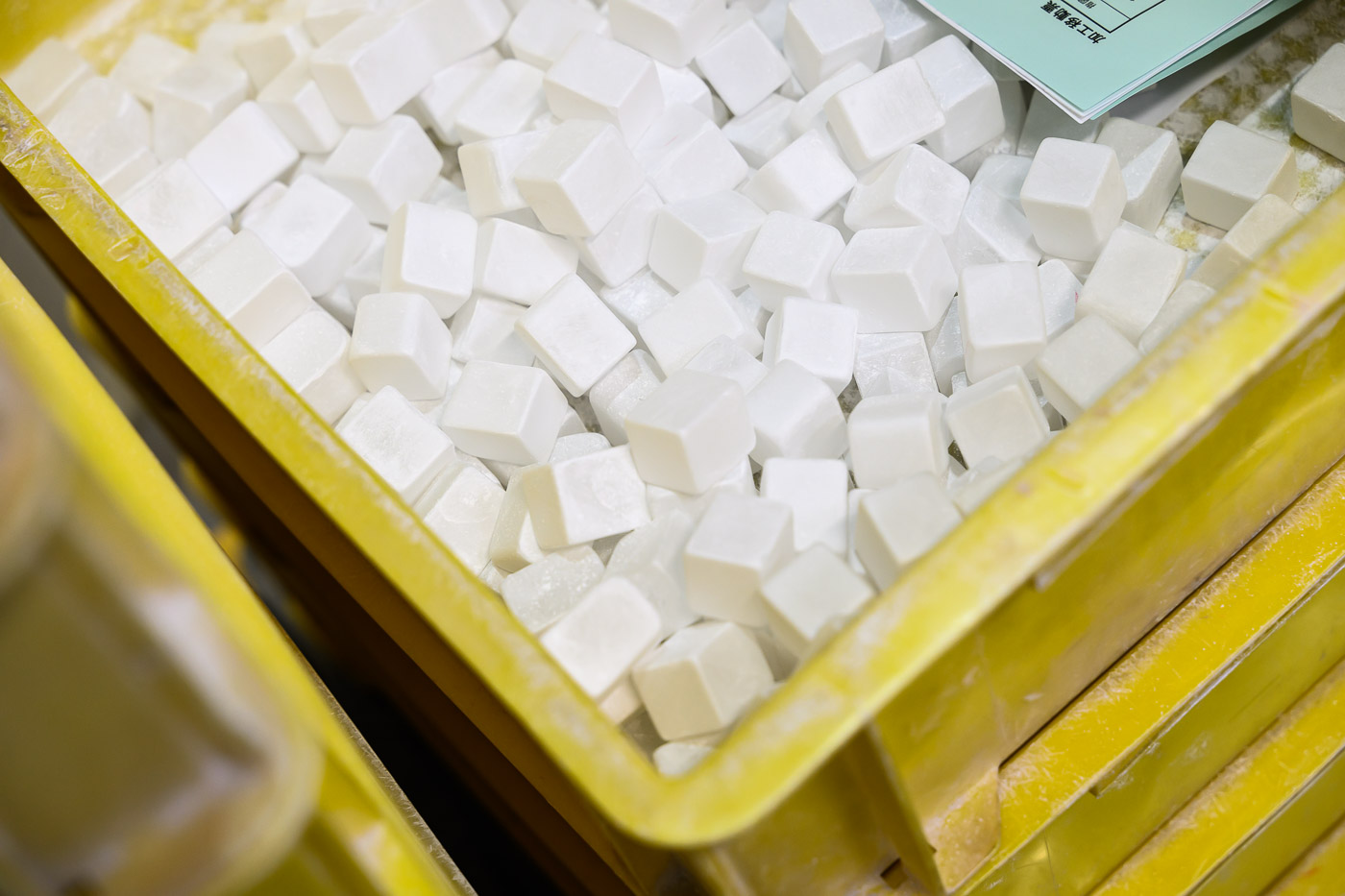
The cubes are then mixed with pebbles or balls placed in containers, along with water and sand. Through controlled rotation and the abrasion process, the glass is polished to fine-tune the weight of each piece.
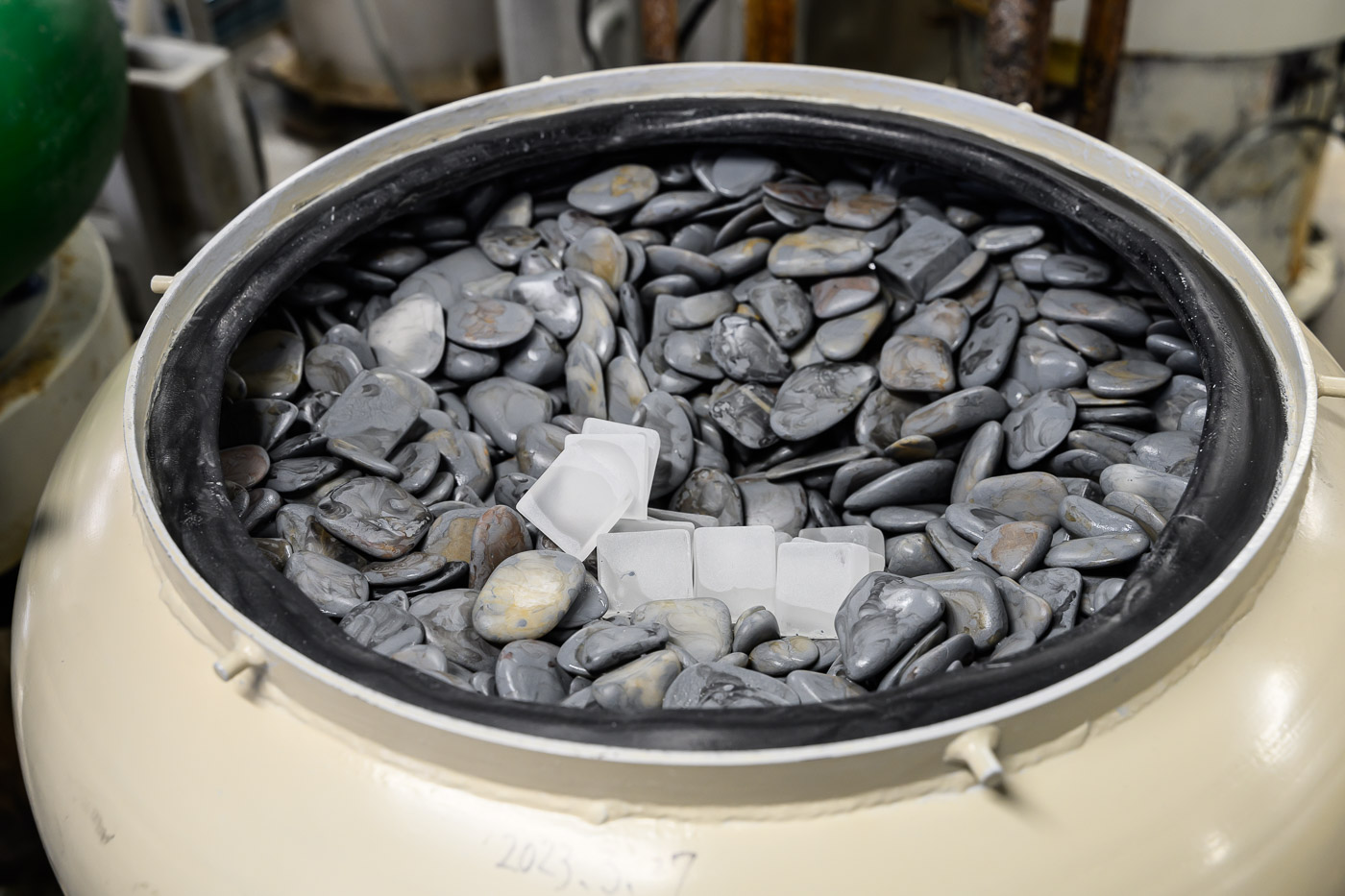
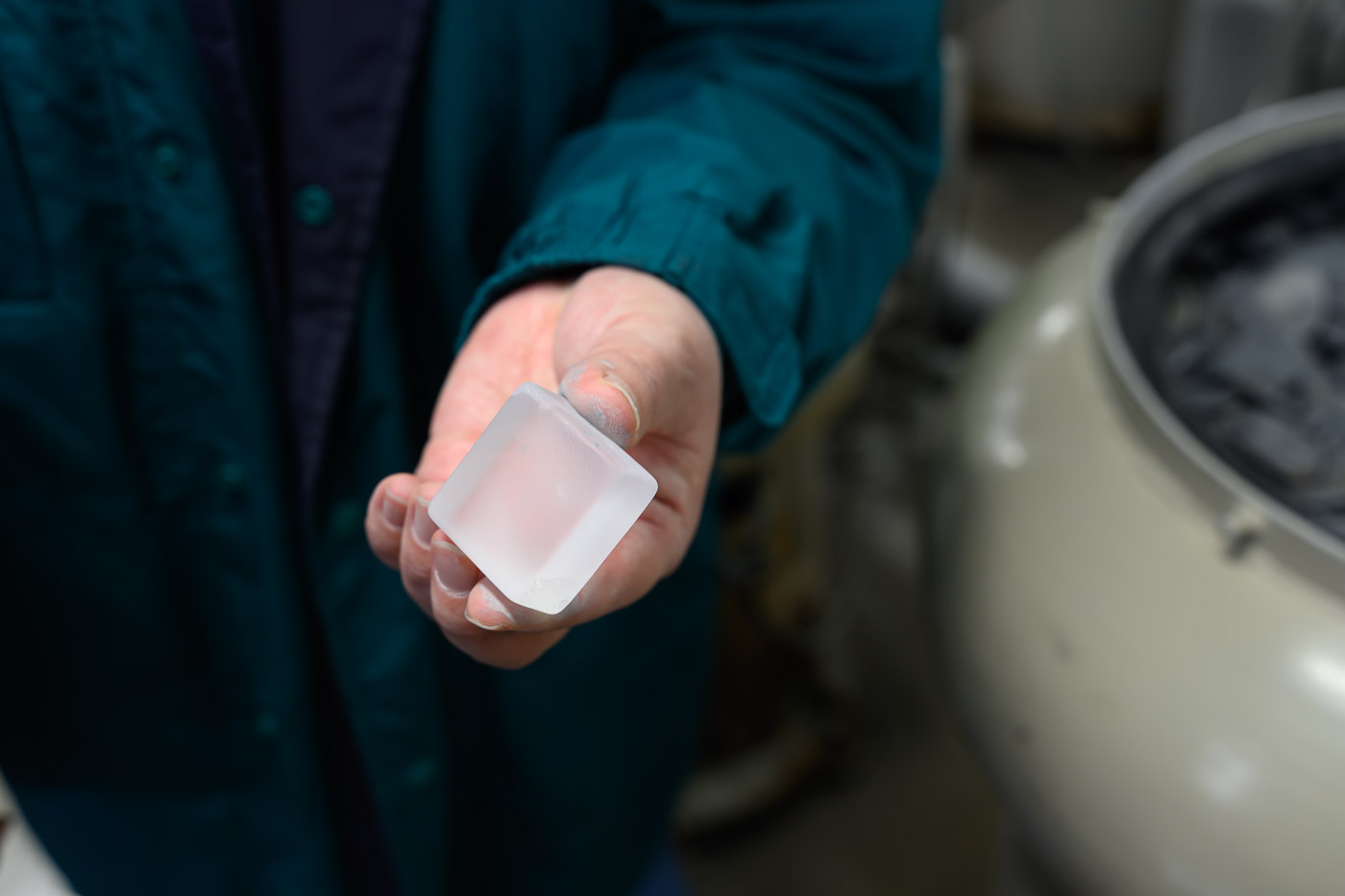
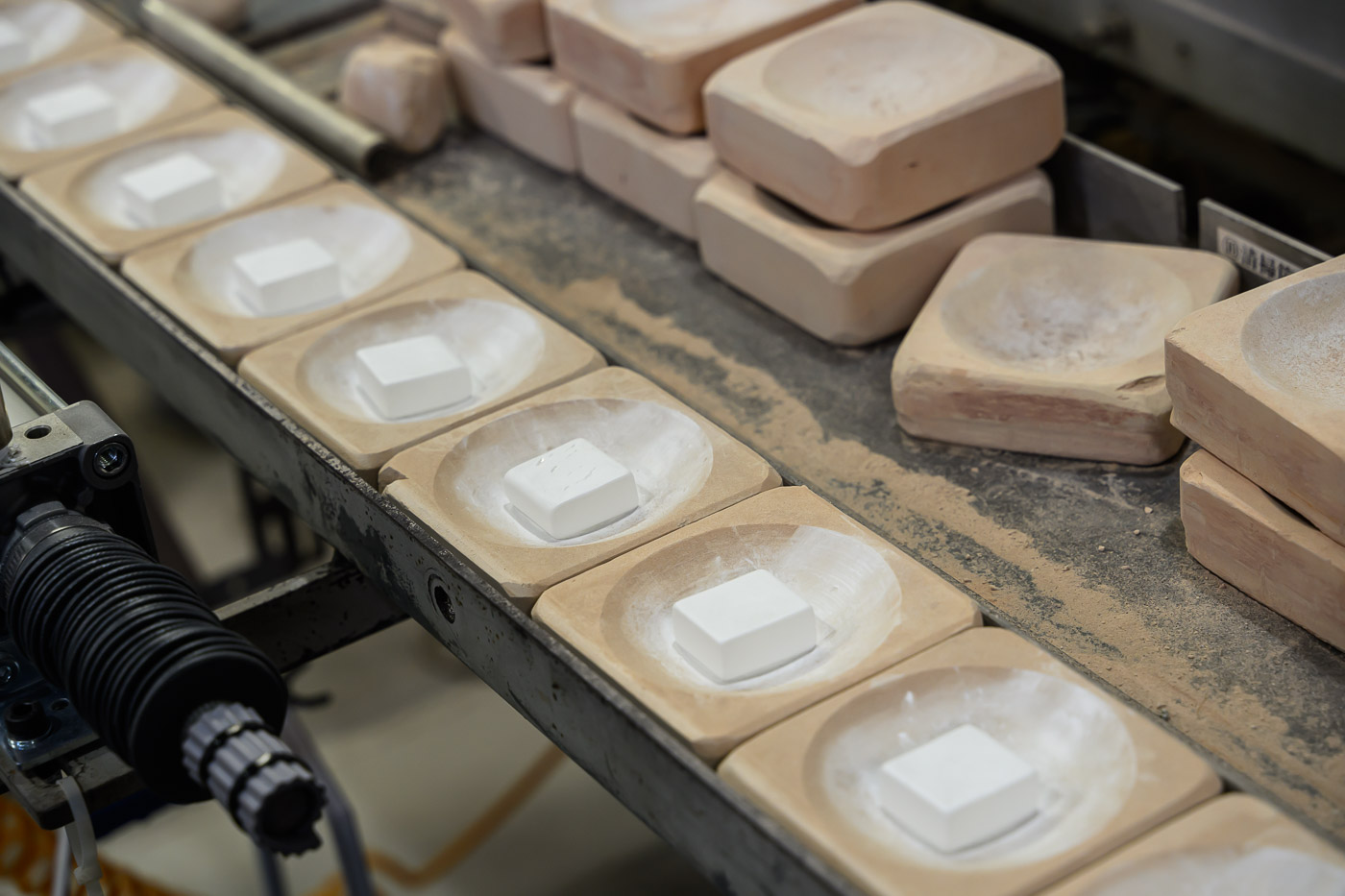
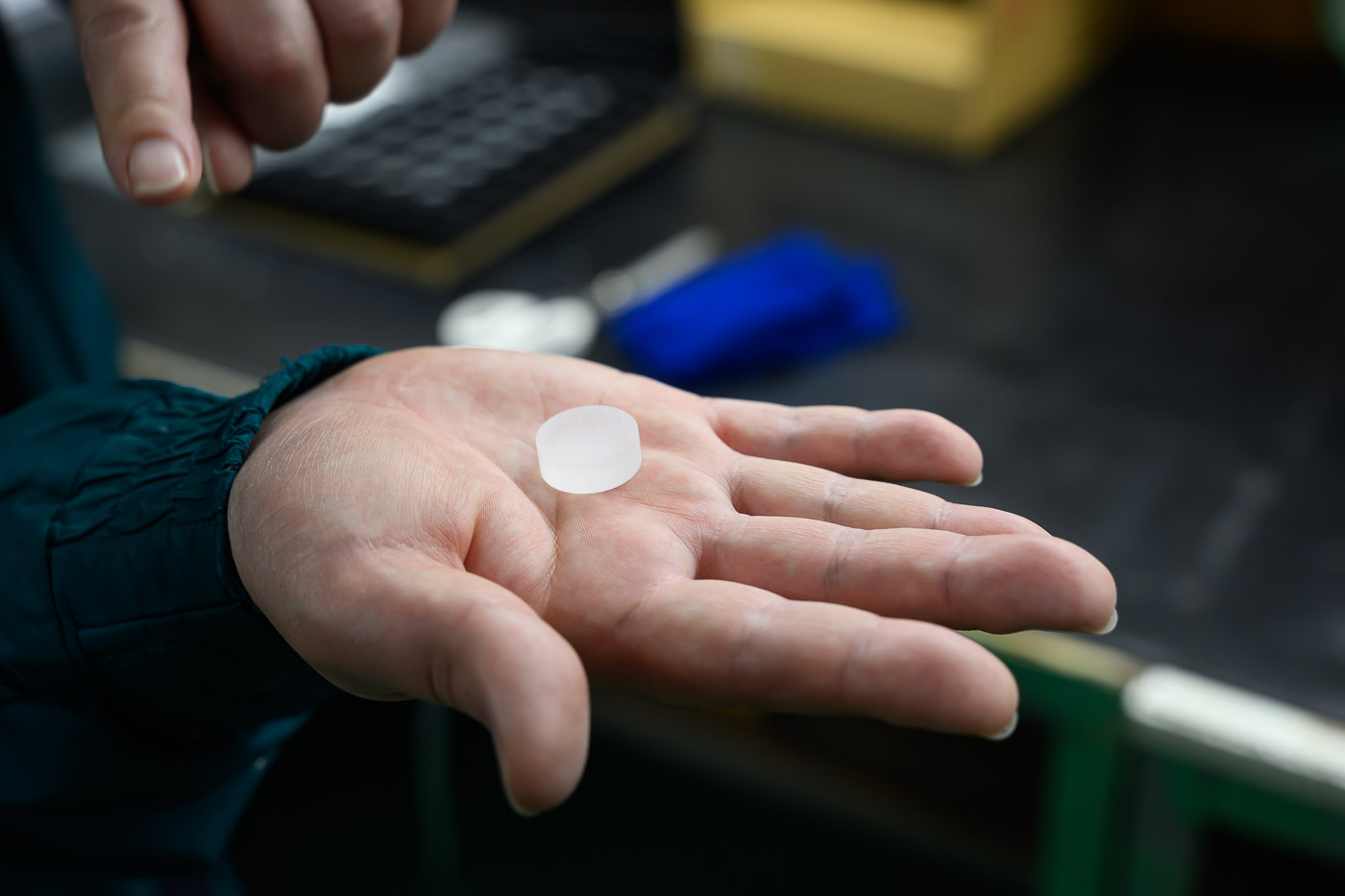
After this step, the glass cubes, whose size varies depending on the target lens element, have rounded edges. They are coated with a powder, like a kind of flour, which prevents the glass from sticking to the mould. At this point, the glass is ready for its final transformation.
Pressing, the final transformation step for glass blocks
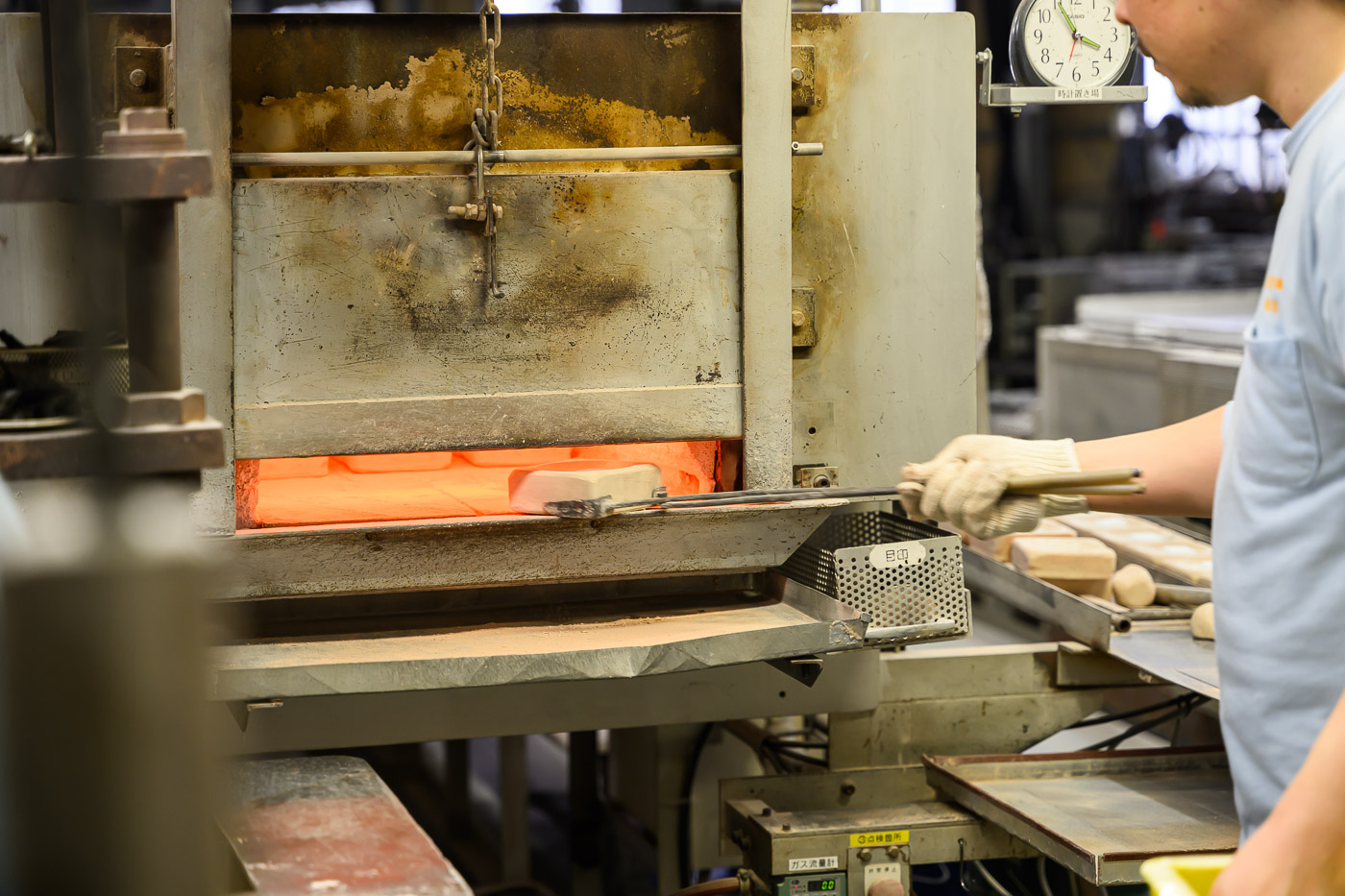
The glass block pressing stage is what gives the lens element its final shape. To do this, the small glass cubes are placed in crucibles on a conveyor, then reheated in a furnace to make them more malleable.
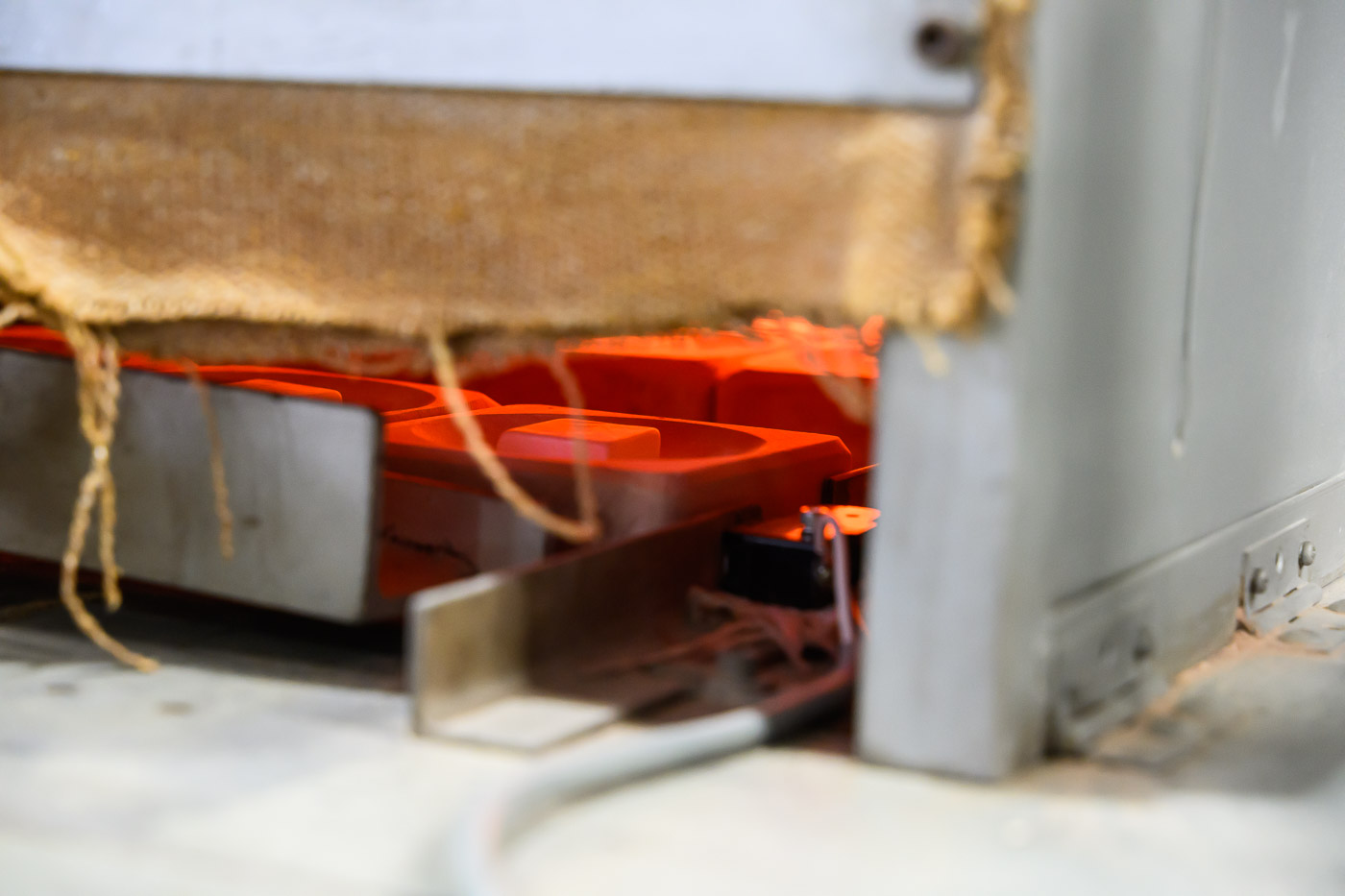
The cubes are then placed into small moulds and pressed to obtain the desired lens element shape.
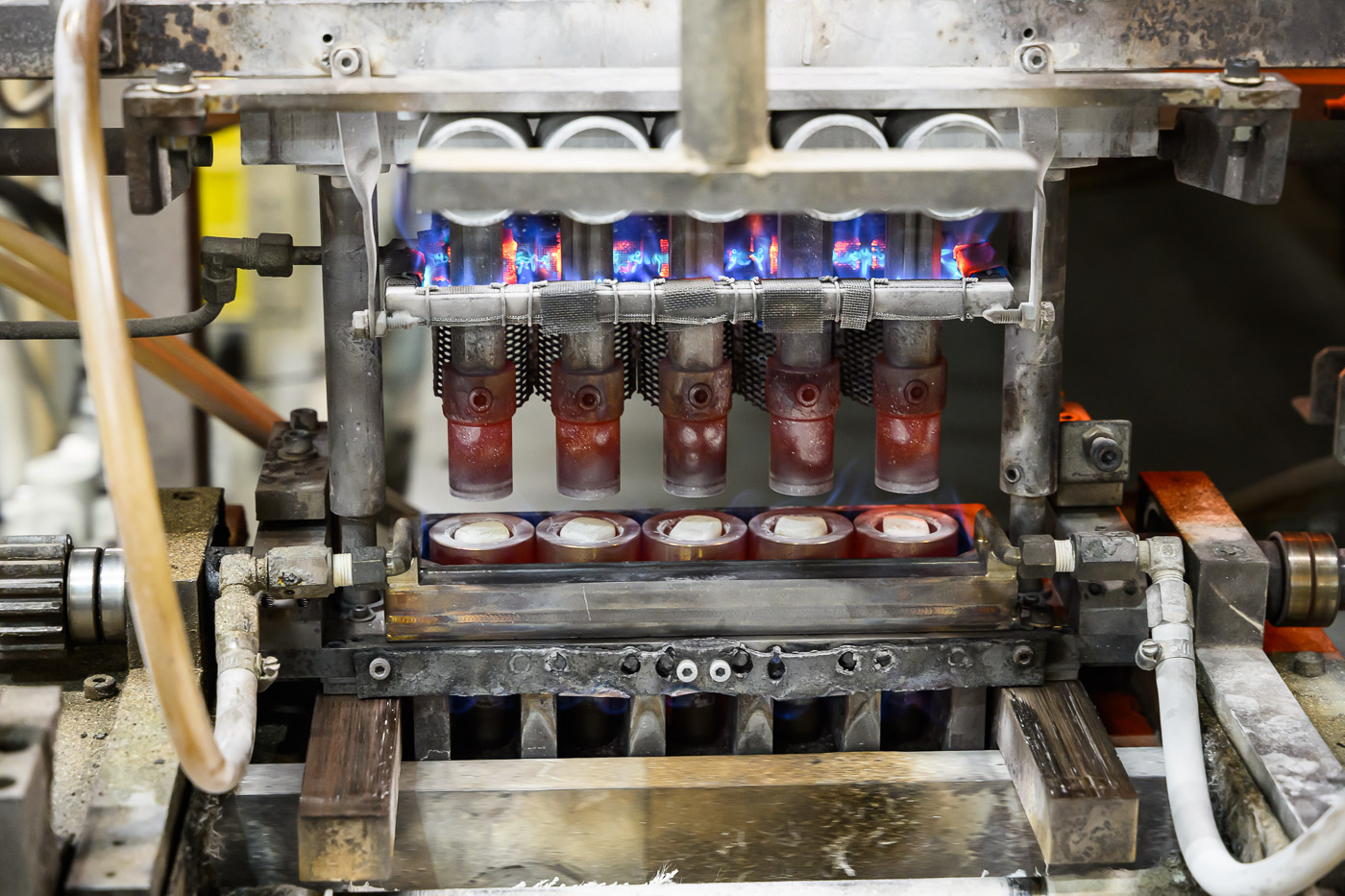
While the process is automated for small lens elements, for the largest glass blocks, this step is entirely manual. Once the glass cubes are removed from the furnace, one worker transfers them into a mould. A second worker then places the mould under a pneumatic press heated to high temperature and activates the press to shape the lens element.
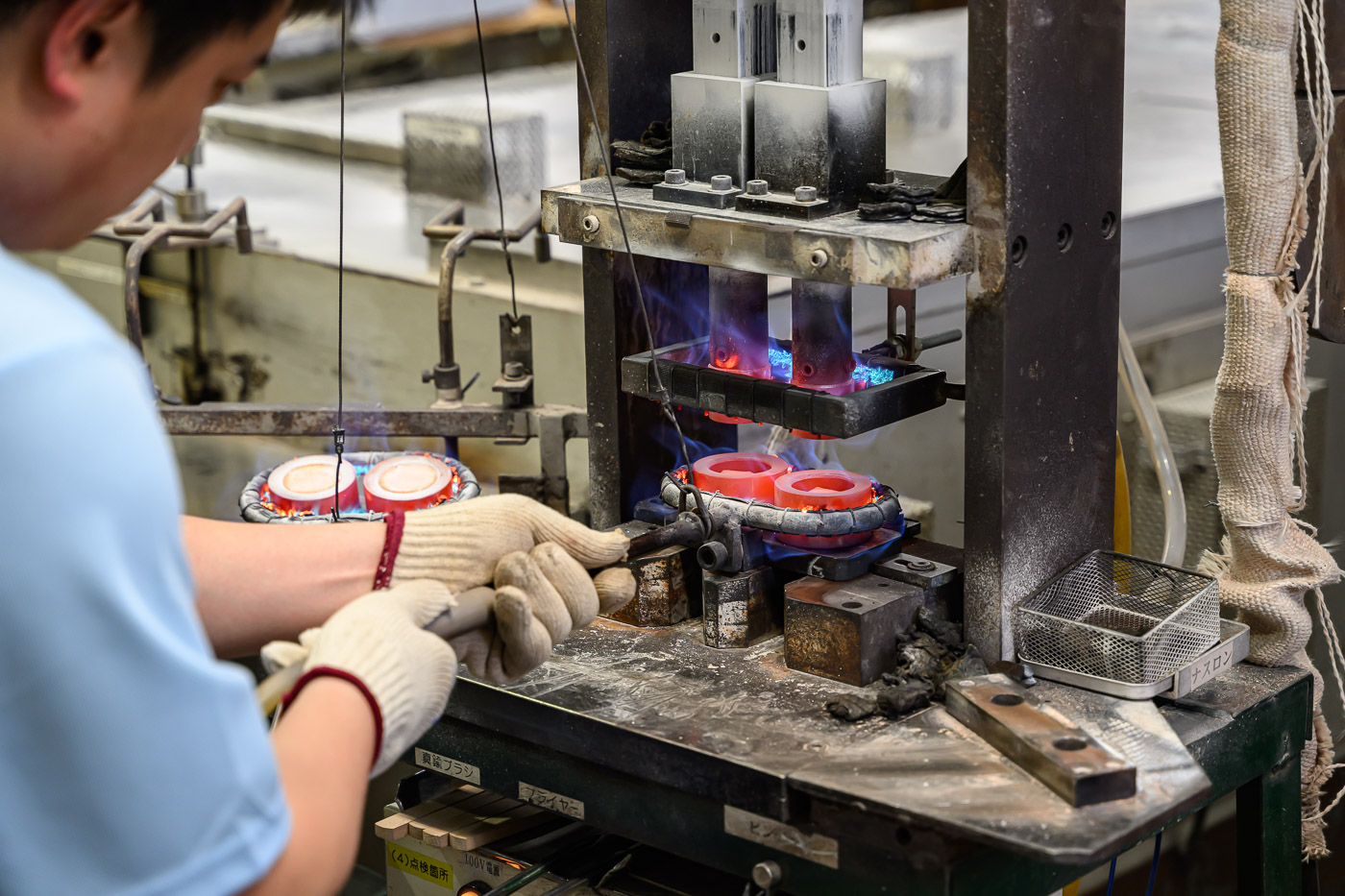
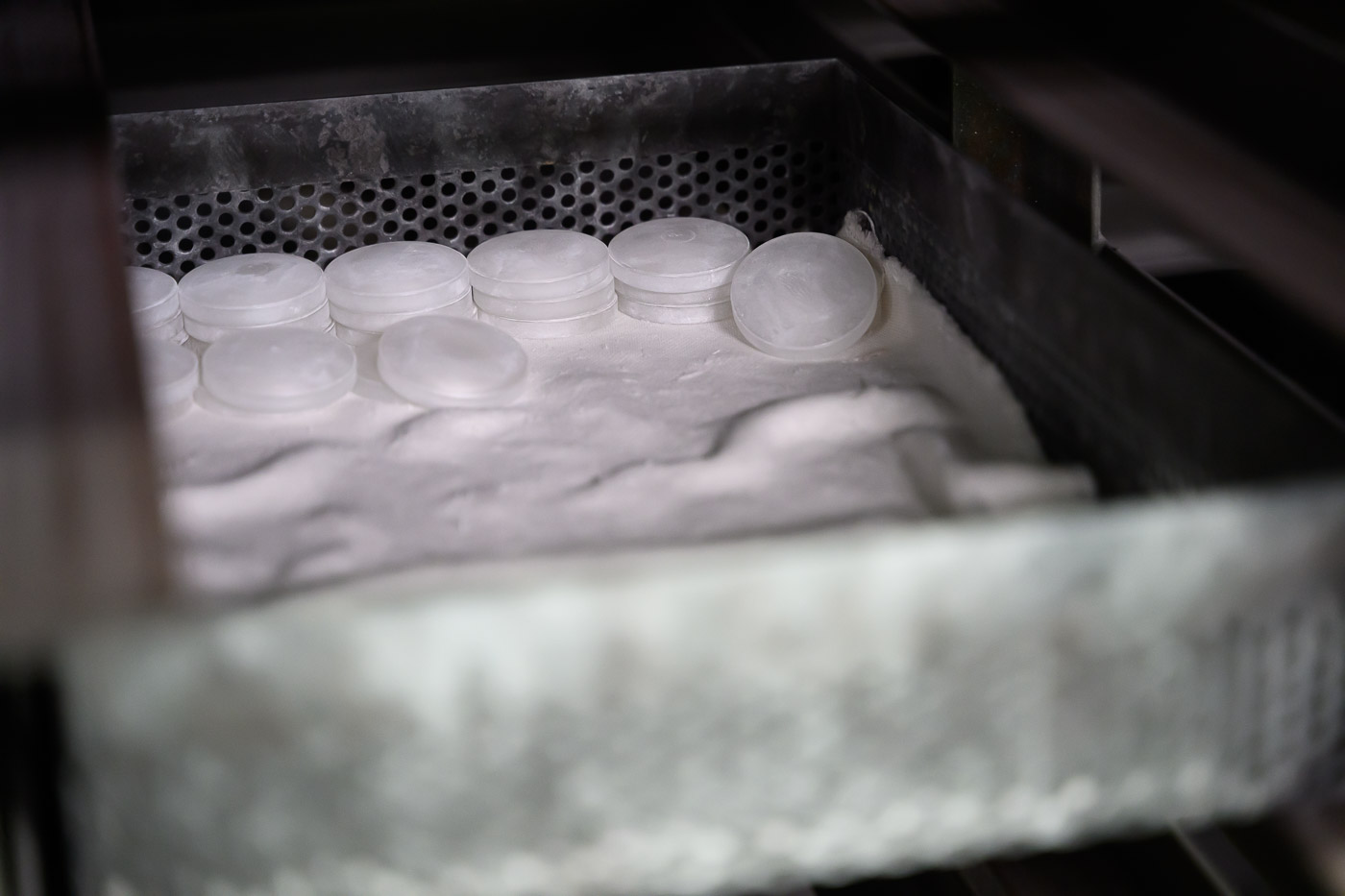
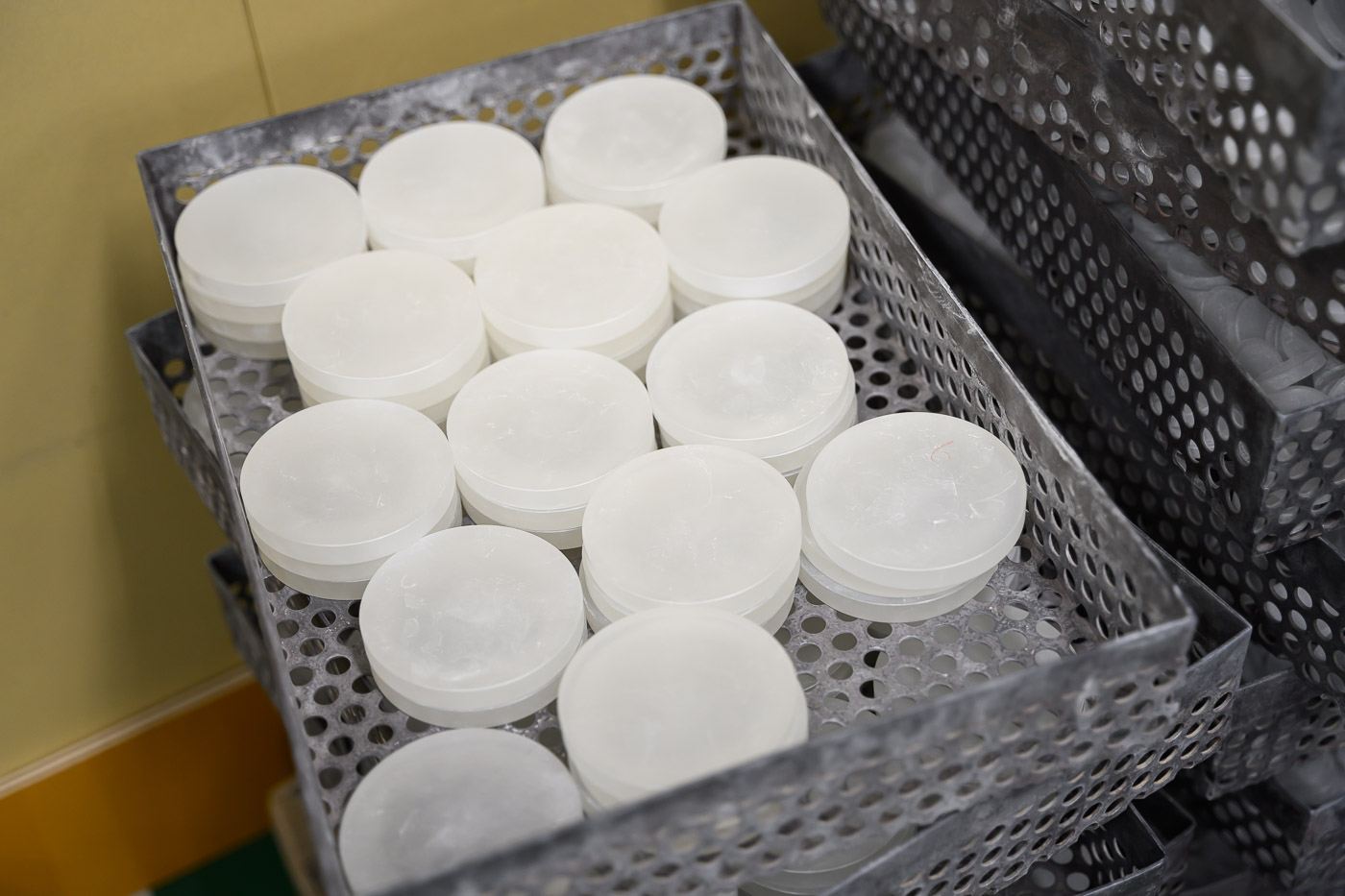
Finally, a third worker retrieves the glass pieces, which now resemble a disc, and places them on another conveyor heading towards a furnace that will gradually lower the glass temperature.
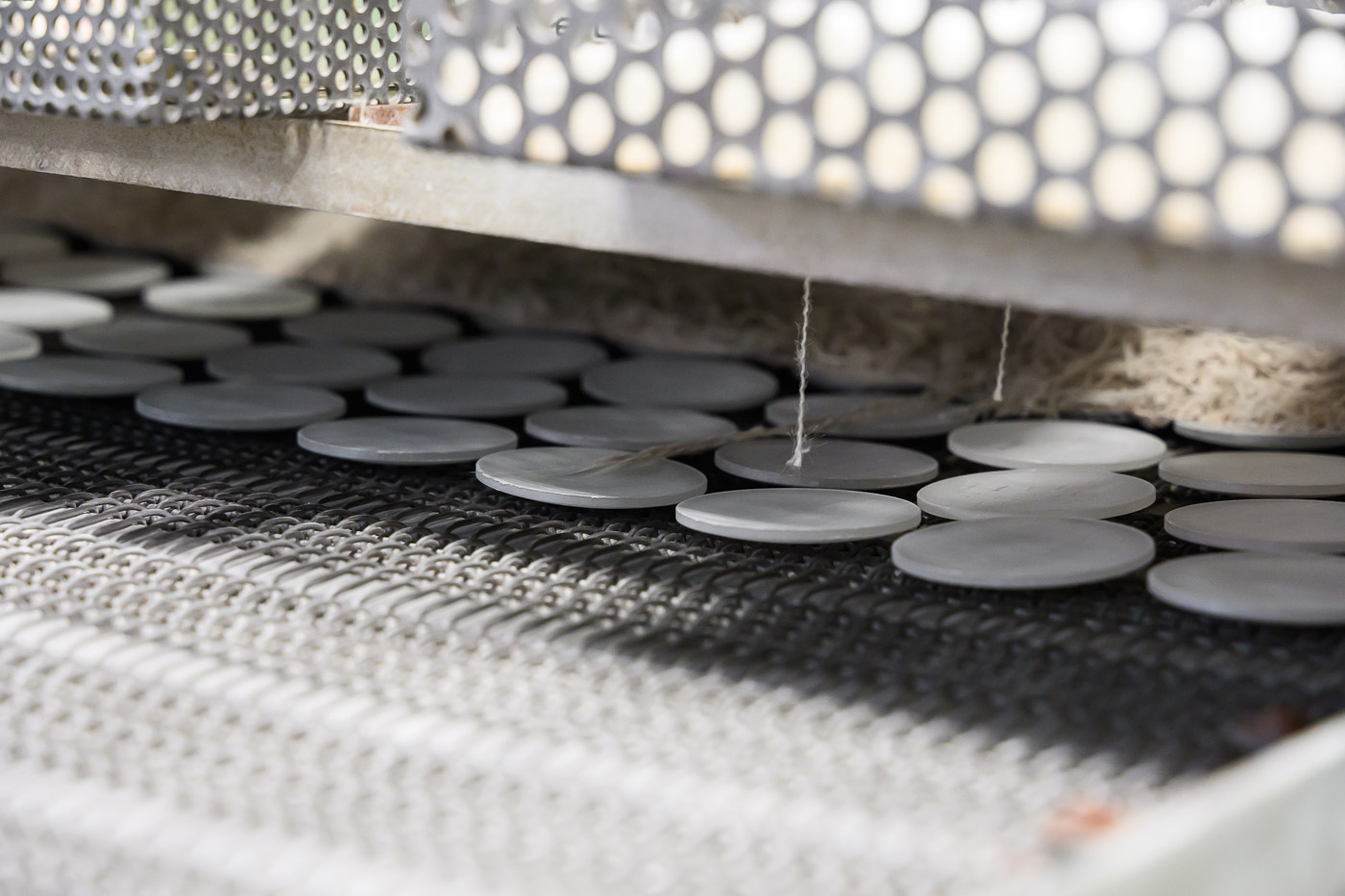
After that, the final step is annealing, which involves placing the glass, once again, in a large furnace to reheat and then cool it in a controlled manner, to prevent the lens elements from cracking as they cool. Annealing also allows the refractive index to be fine-tuned. The cooling process is then carried out very slowly over about a week, which also helps to relieve internal stresses in the glass and ensure consistent lens element performance.
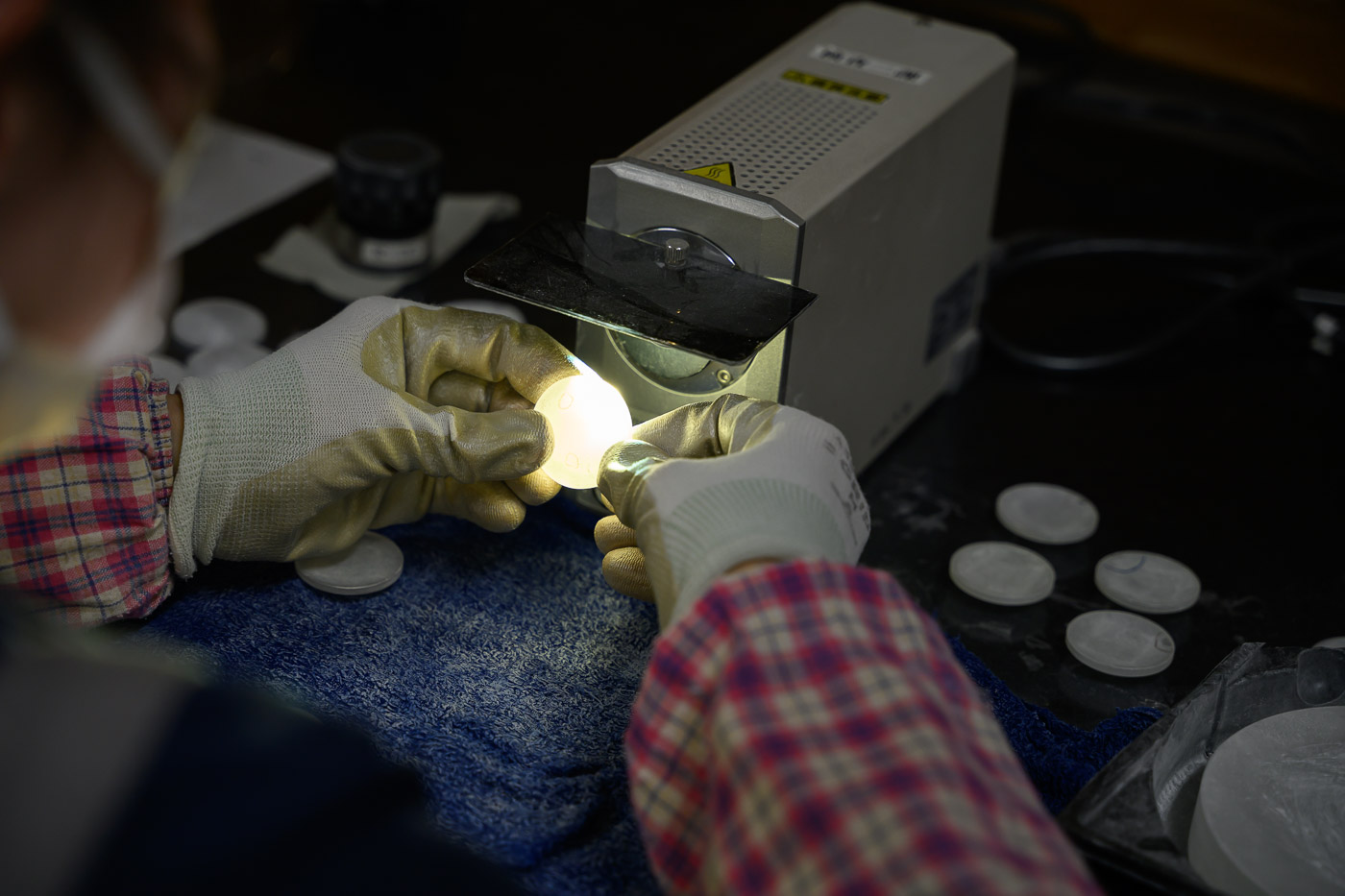
Once the glass has cooled, it undergoes yet another inspection, before being packaged and shipped to Hikari Glass’s various clients, as well as to Nikon’s lens manufacturing plants, such as the Tochigi plant in Japan.
It is at this stage that the lens elements will be polished and coated before being assembled inside the Nikkor lenses that Nikon users know and love.
Wrapping up our visit to Nikon Hikari Glass
Our visit to the Nikon Hikari Glass factory in Yuzawa gave us a firsthand look at the incredible work involved in manufacturing high-quality optical glass, from mixing raw materials and melting, through to forming lens elements by high-temperature moulding. This visit also highlighted Nikon’s historical and technological significance in the optical industry.
The Nikon Hikari Glass factory possesses unique expertise, combining traditional techniques with modern methods, to produce optical glass of the highest quality, used in Nikkor lenses as well as in a variety of precision optical instruments.
This visit reminds us of the importance of craftsmanship and technical precision in the manufacturing of lenses that allow us to capture the beauty of the world with the highest quality.
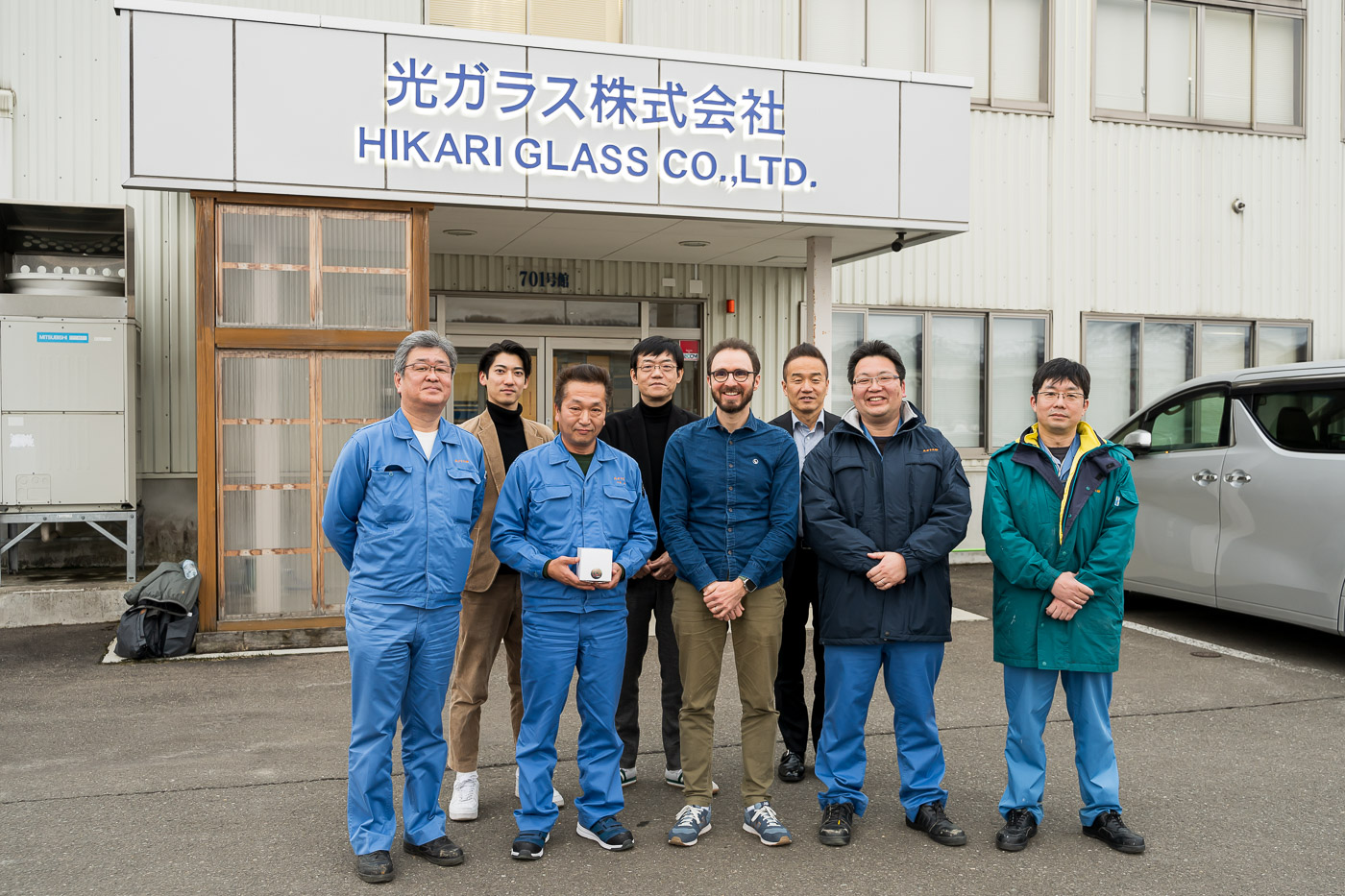
We would like to thank the teams at Nikon France, Nikon Japan, and the staff at the Hikari Glass factory in Yuzawa for allowing us to discover this lens element manufacturing process.