



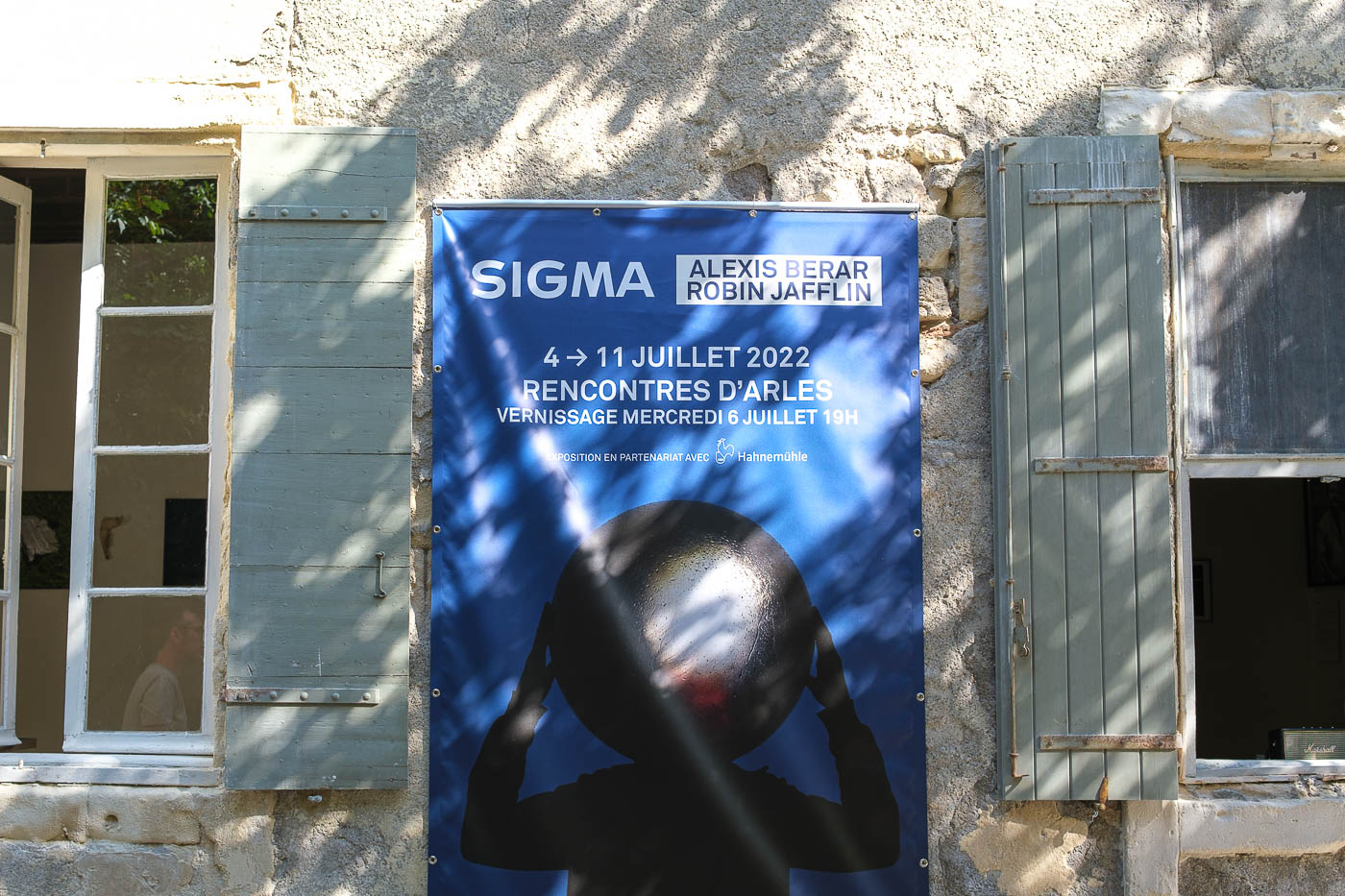
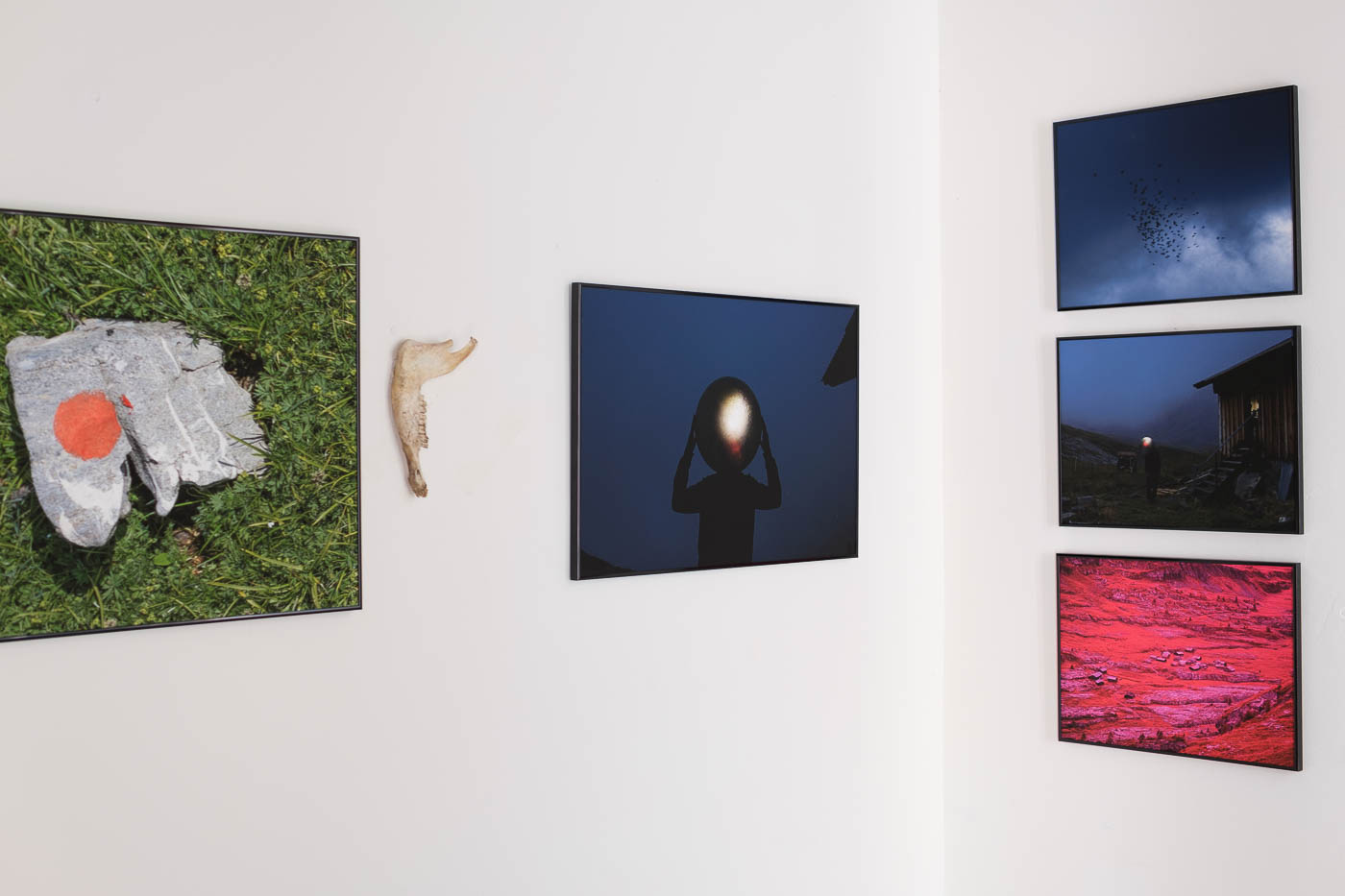
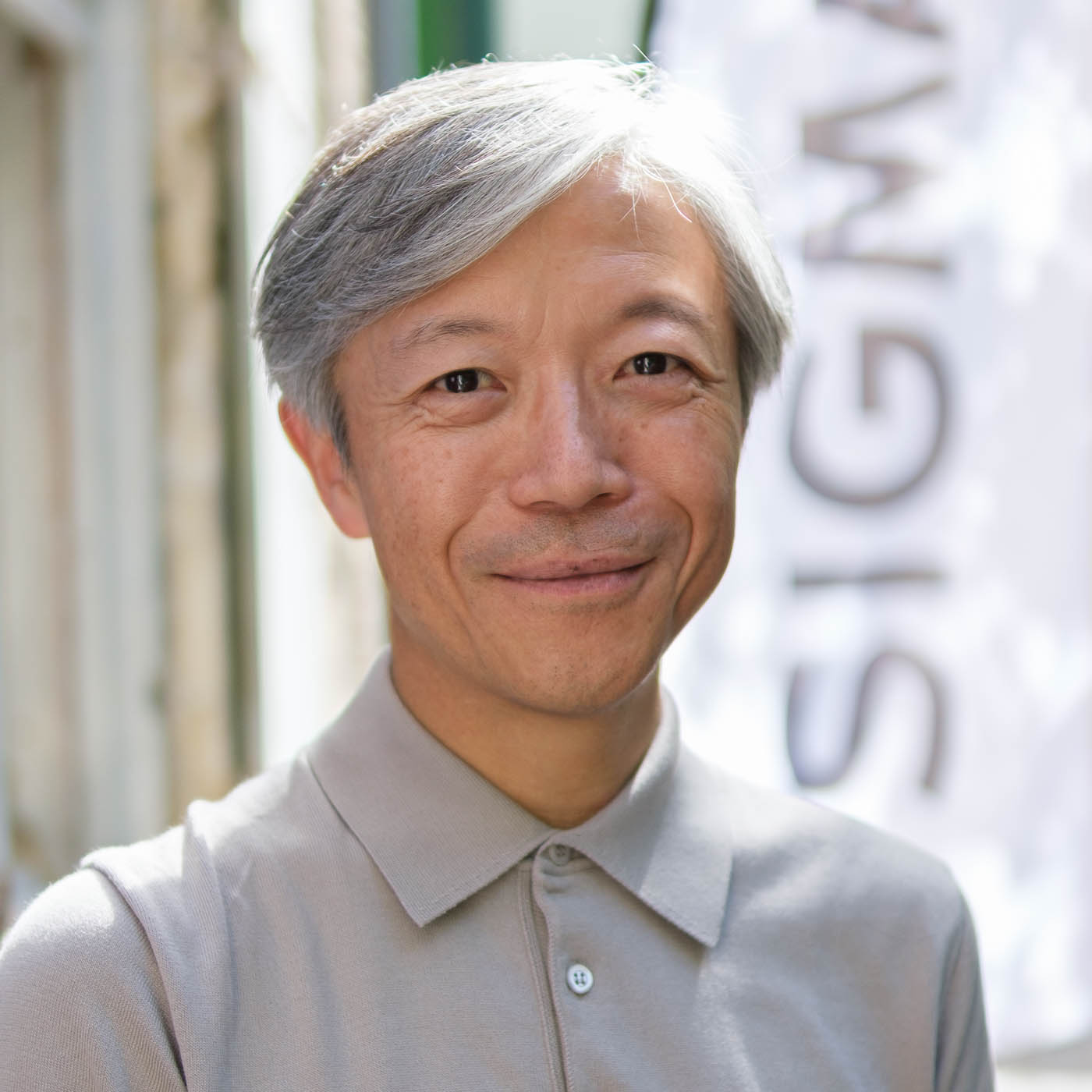
During the opening week of the Rencontres de la Photographie d’Arles, lens and camera manufacturer Sigma was present with a double photography exhibition by artists Alexis Berar and Robin Jafflin. In a quiet alleyway, the exhibition space also gave us the opportunity to meet again with Kazuto Yamaki, CEO of Sigma Corp, who was on a European tour of retailers.
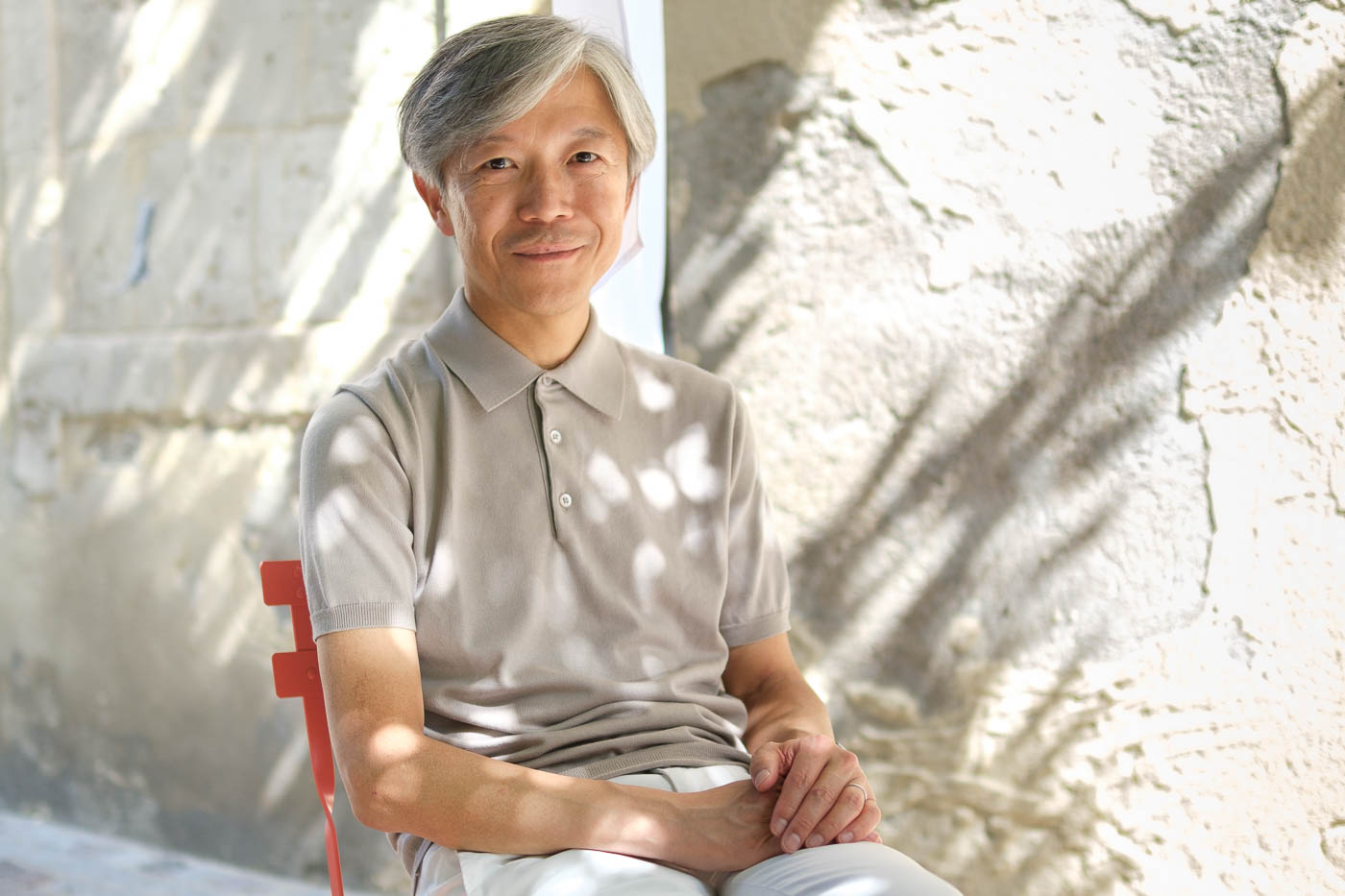
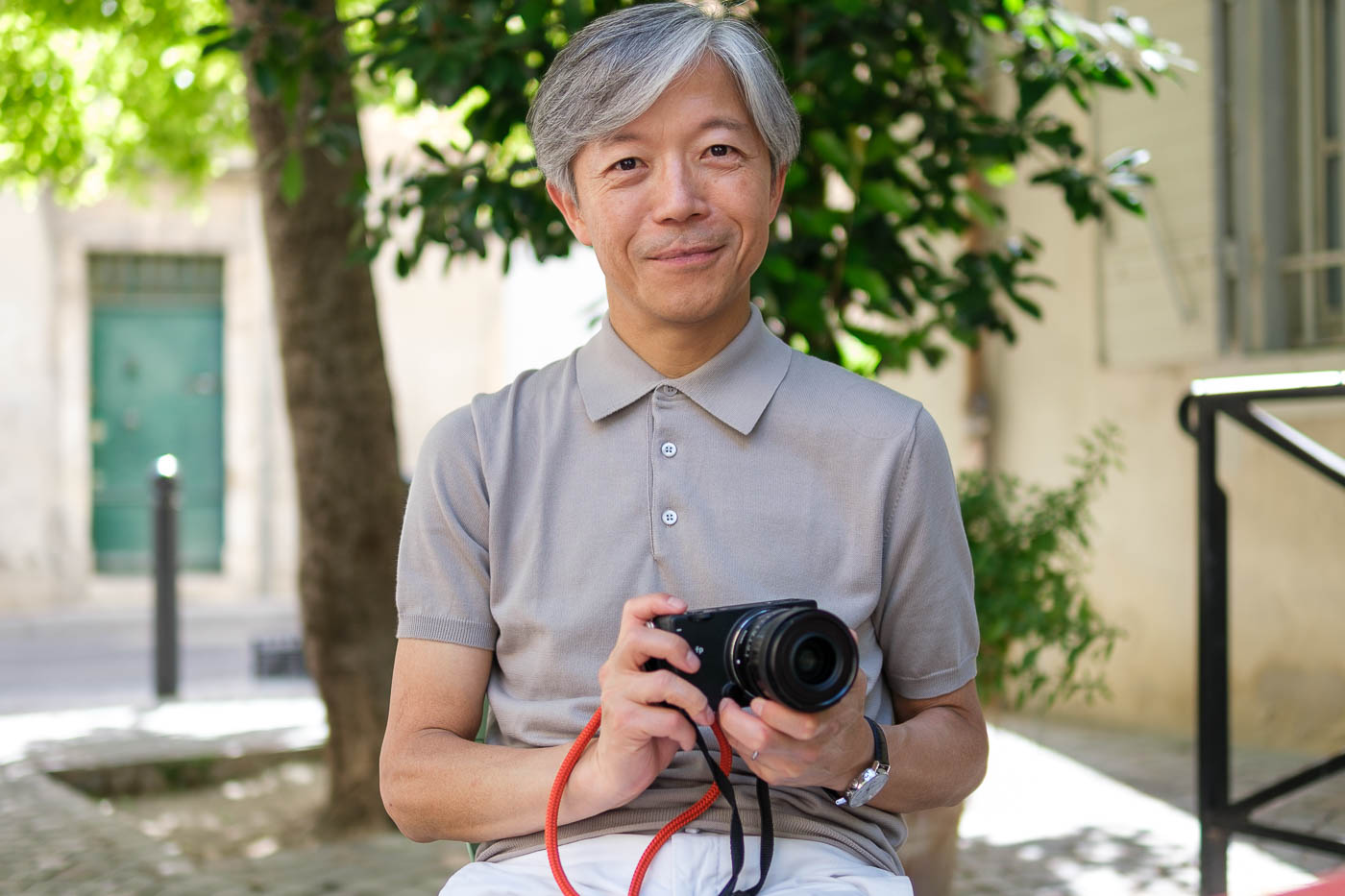
In the shade of a tree and in a (still) relaxed atmosphere, we asked him a few questions about the place of photography in his life, the importance of rigorous optical design, the demand for SLR lenses, Sigma’s recruitment strategy, and developments in the next Foveon sensor against the backdrop of a semiconductor shortage.
Let’s get to the interview.
Hello, Yamaki-san. We are here in Arles, the mecca of photography in France. Can you tell us what place photography has in your life?
Kazuto Yamaki: Sigma is a family business. When I was a little kid, my father always told me that I would take over his company. So from a very young age, I understood that photography would be my future career. To be honest, I wasn’t very interested in photography at the time. Maybe because it was my father’s business. I tried to stay away from photography: I was more interested in sports, music, and things like that.

But after graduating [with a degree in business administration, editor’s note], I joined Sigma and learned a lot. As soon as I started working for Sigma, I realized that photography could be interesting. First of all, it’s a lot of fun to take pictures, and you can also create a certain connection with the culture of a country. Photography doesn’t have as long a history as drawing, painting, or music, but with nearly 200 years of history, it’s part of our modern culture.
Photography isn’t just a business for me, it’s an activity with a strong cultural aspect. That’s what motivates me to continue our work.
Then I got married and realized that it was interesting to take photos of the family, beyond the art of photography.
What kind of photos do you like?
Kazuto Yamaki: Personally, I love street photography: photographing people with an urban background or landscape. But most of all, I love seeing people. I shared some images on Twitter a year ago because everyone had to stay at home. I couldn’t go to the office because of the Covid pandemic. I wanted to create a connection and encourage people to take more photos. I’m not very good at photography, but I wanted to encourage people to stay connected through photography. That’s why I shared some of my bad pictures on the internet (laughs).
One of the themes I explored when taking photos at that time was light. During the Covid period, the world was really gray, and I wanted people to look at the light or the bright side of the world.
Do you think that the design of lenses and cameras influences the way people take photos?
Kazuto Yamaki: Yes, I think so. Different types of cameras inspire photographers. But they also influence us. It’s a two-way relationship. Photographers influence us and determine the type of camera or lens we make. And also, if we have brand new equipment and lenses with a new concept, it inspires photographers.
For example, we had a camera with a Foveon sensor that produced very sharp, high-fidelity images. This sensor really inspires some photographers around the world. I think it’s a two-way stimulation.
Sigma is currently developing numerous lenses in the Contemporary range for mirrorless cameras, such as new fixed focal lengths and zooms like the 16-28 mm f/2.8. Is the Art series still relevant for photographers?
Kazuto Yamaki: Of course. Our goal is to expand the product lineup in each segment: Art, Sports, and Contemporary. It may seem like we are focusing more on the Contemporary lineup, but we will be releasing more lenses in the Art and Sports lineups.
[Since this interview, Sigma has unveiled two new fixed focal lengths in the Art series. Editor’s note]
The reason we currently have more Contemporary lenses is that there is greater demand for compact hybrid systems. In the era of digital SLRs, customer demand was more focused. After mirrorless systems came onto the market, I think consumer demand has diversified. For example, Fujifilm camera users really like compact systems. Sony users do too.
On the other hand, when it comes to the Nikon Z 9 or the Canon EOS R system, their systems are a bit bulkier, so their users are more flexible in terms of equipment size.
In the future, we will need more products to meet the diverse demands of customers.
Do you still have demand for SLR lenses?
Kazuto Yamaki: Yes, there is still demand for lenses for digital SLR cameras. Demand for SLR bodies may be declining sharply, but it still exists. I understand that people are still using digital SLR cameras and are looking for new lenses.
In fact, in terms of image quality, there isn’t much difference between DSLRs and mirrorless cameras. There may be a difference when it comes to video. But when it comes to photography, there isn’t that much difference. To me, it makes perfect sense that many photographers still use SLR cameras.
What are Sigma’s current priorities as a company?
Kazuto Yamaki: First and foremost, as CEO, my primary mission is to satisfy all the needs of photographers. We need to invest more in our technology to provide higher quality products. That is my top priority. The second priority is to make our employees and business partners happy. This is very important in order to continue our business and continuously improve our capabilities.
We never lay anyone off, that’s my wish, even when business is tough. The company has had good times and bad times. But despite this situation, I like to keep employees in the company if they want to stay, build a good team, and do a good job together, while sharing the profits of the business.
In fact, our factory is located in a very remote area in the Japanese countryside. The population there has been declining rapidly for the past 20 years. Without our factory, the town could disappear in the future. It is very important for this region to have a functioning factory and to keep people in work. This is one of my important missions.
I have a question about Sigma lenses for Fuji X mounts. You have already designed them for Sony E and Micro4/3 APS-C mounts. What needs to be done to adapt existing lenses to a new mount?
Kazuto Yamaki: Of course, we have to modify the mechanical part to adapt it to the Fuji mount. But that’s not the hardest part. The most important part is the software, which we have to develop from scratch. It’s a time-consuming process. Now that we have this system, we’ll be able to move faster to release a new product.
Last month, we expanded and moved to a new office in Tokyo, in the city of Kawasaki. We had to move because we didn’t have enough space for the software engineers we need to hire. Software is more complex than before, so we need more people.
It’s funny you should mention that. I think that today, lens manufacturers need to focus more and more on software in order to build lighter lenses while maintaining good image quality.
Kazuto Yamaki: That’s not true. Optical design is always more important. To design a good lens, we have to take many factors into account. There are many types of aberrations. Software cannot correct all aberrations. It works very well for correcting distortion and vignetting, but that’s all. It cannot correct aspheric aberration, coma, astigmatism, lateral and longitudinal chromatic aberrations, or other aberrations.
The good news is that software correction of distortion and vignetting is very effective in maintaining the compact size of the lens. For other aberrations, we have to correct them optically. We continue to invest heavily in optical technology, particularly in aspherical elements. The advantage of using software correction is that by leaving some distortion or vignetting in the optical design, we can focus on correcting other aberrations.

If we were to perfectly correct distortion and vignetting, we would have to compromise on chromatic aberration, astigmatism, or coma.
Thanks to software correction, we can achieve even better performance than that of lenses for digital SLR cameras. And that’s what we do.
This reminds me in particular of the 16-28 mm f/2.8 DG DN that we recently tested. You prioritized sharpness in the center of the image over field curvature correction when focusing on a very close subject.
Kazuto Yamaki: Exactly. Our advantage over large companies is that most of our engineers are passionate about photography. They come to work at Sigma because they know that we only work in photography and imaging. They really love photography and take photos themselves.

They know that field curvature becomes a problem at long distances and at infinity because they need a straight horizon. For close-up focusing, they don’t need performance from the center to the periphery. Only those who take photos of newspapers (or other things) at close range for testing purposes notice this. It doesn’t make sense for the photographer. In particular, field curvature creates a nice bokeh in the background or foreground. So we optimized this lens for “real” photographers.
You mentioned Fujifilm and developments for the new mount. Do you have any news to share about other mounts where Sigma is still absent?
Kazuto Yamaki: Unfortunately, no. We hear requests from our customers for development on Canon RF and Nikon Z systems, but we are not ready yet. As I said, our mission is to satisfy our customers’ needs as best we can. Personally, I really want to make these lenses.
Regarding your new engineers, what is Sigma’s recruitment strategy?
Kazuto Yamaki: We hire gradually each year. In Japan, students graduate from school in March, and most of them start working around April. Each year, we hire between 5 and 15 engineers who have just graduated. Nearly 100% of our recruits start from scratch. We don’t hire people from large companies. We train everyone from the beginning. Our employees are so motivated and talented that I think this is the best approach.
Compared to our old offices, we were becoming increasingly cramped, which is why we decided to move to new offices. Today, we have around 200 employees at the Tokyo office, including engineers. The new office has a capacity of nearly 400 people, allowing us to expand further.

But we don’t grow our teams too quickly, because I don’t want to lose engineers due to a poor economic climate. I like to recruit gradually so that I can be confident about the future. If we hire too many people at once, we may have to lay them off 12 months later. I don’t like that. We are a family business, and my job is to make sure that all employees are doing well.
My last question concerns the new Foveon sensor. In March, you said that you were in stage 2 of prototyping. Can you tell us more about this development?
Kazuto Yamaki: We haven’t finalized the prototype for the second stage yet. Sigma manufactures all of its products in-house, but we are not a semiconductor company. Therefore, we have to rely on a fab (semiconductor factory). Currently, they are very busy manufacturing existing semiconductors.
So it takes time to build a new prototype. We think it will be available sometime this year. Then we will evaluate it. If it works, we will finalize our latest prototype and then start working on the device’s casing. As you can see, this still requires time.
What impact is the semiconductor shortage having on this Foveon sensor project?
Kazuto Yamaki: To be honest, that’s a very good question. No other journalist has asked me that question. Even if we complete development and manage to manufacture a good sensor, negotiating with a factory for industrialization is another challenge. Due to our volume, we may not be able to convince a factory to manufacture the sensor for us. That’s another challenge. I’m keeping my fingers crossed that we’ll be able to reach an agreement with a partner.
Since we launched the Sigma SD9, I have taken most of my family photos with a Foveon sensor camera. It was quite difficult and time-consuming because I had to develop all the photos from RAW to JPEG. Most of my important personal photos were taken with a Foveon sensor camera, and I know that the quality is special when there is sufficient light. So I personally want to develop the next generation of Foveon sensors. It’s a challenge, but I enjoy taking on challenges.
Thank you, Yamaki-san, for answering our questions. We would also like to thank the Sigma France team for making this timely interview possible during our trip to Arles.