
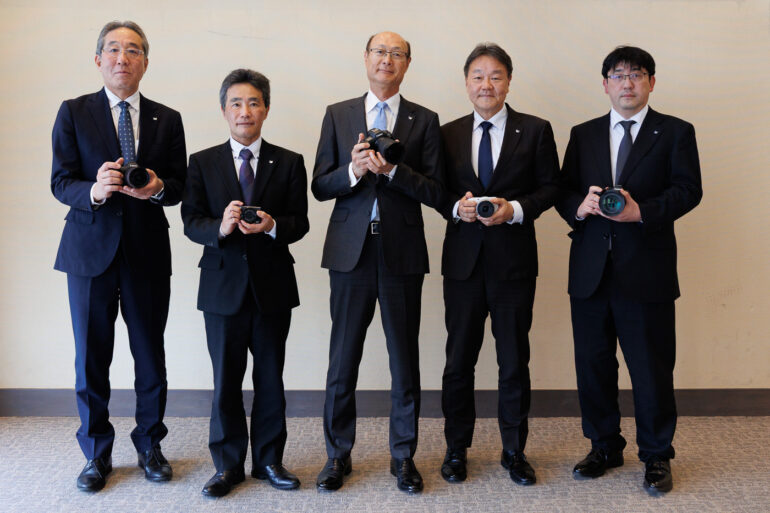

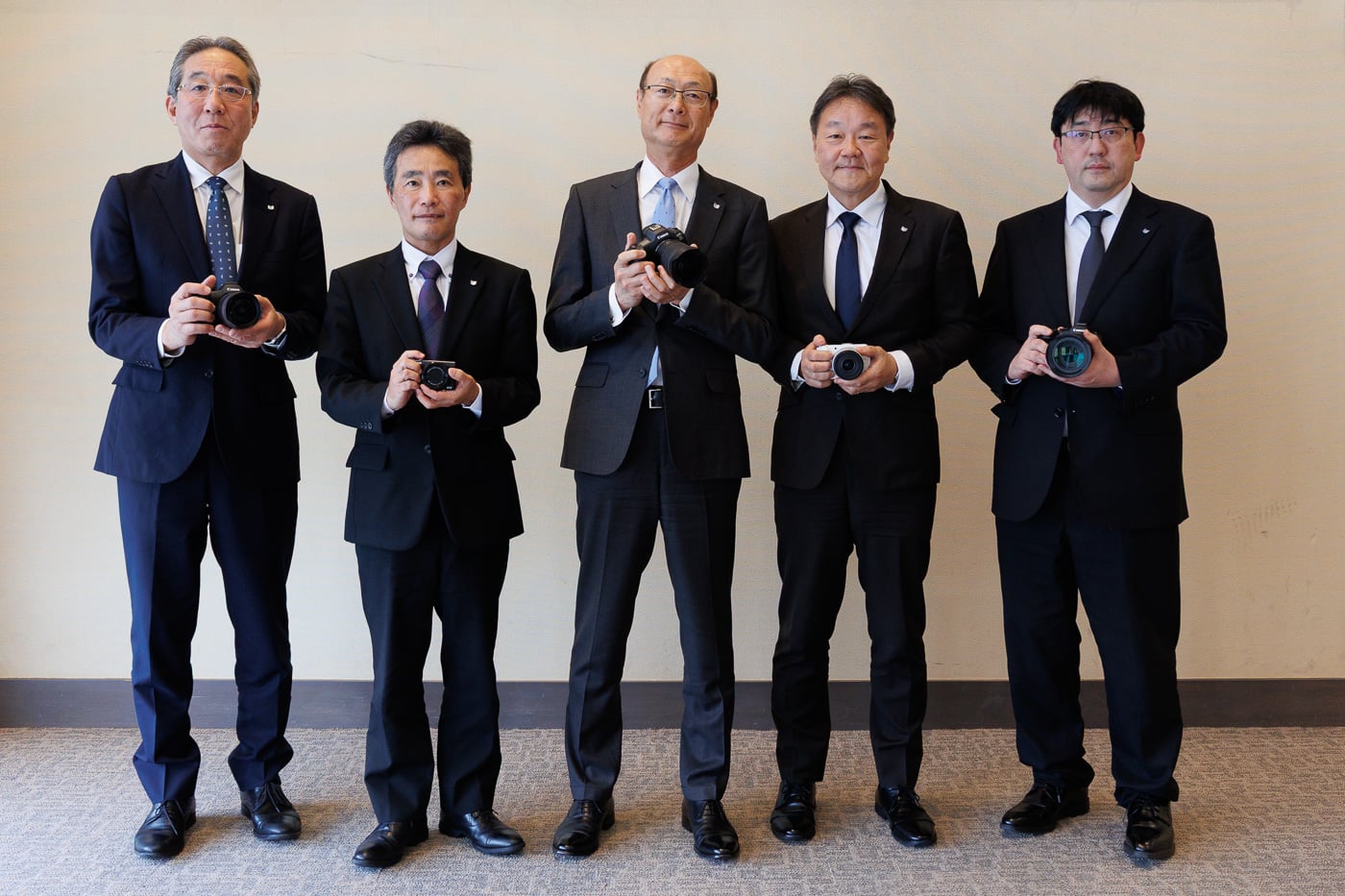
Every year, the CP+ show in Yokohama is an opportunity to meet the decision-makers of the Japanese photo industry. For this 2026 edition, Canon opened the doors to a roundtable bringing together five of its executives: Go Tokura, Executive Vice President and head of the Imaging division, Manabu Kato, head of the IBO (Imaging Business Operations) division in charge of products, Kazumasa Yoshikawa, director of the IBO division in charge of development, Tetsushi Hibi, director of the IBO division dedicated to optics, and Yoichi Sato, Senior General Manager in charge of the Products Development Center.
On the agenda: the technical choices behind the EOS R6 Mark III, the optical innovations behind the latest RF lenses (RF 14mm f/1.4 L VCM, RF 7-14mm Fisheye, RF 45mm f/1.2 STM), the thorny question of opening the RF mount to third-party manufacturers, Canon’s AI roadmap and its vision for the future of photography. With one guiding thread running throughout the conversation: AI must serve to reproduce reality, never to generate it.
The EOS R6 Mark III has generated discussion with two unusual technical choices: an FSI (front-side illuminated) sensor rather than BSI like the R5 Mark II and R1, and the lack of Digic Accelerator chip. Why these choices? Is it simply to differentiate it from higher-end models, or are there specific technical advantages?
Kazumasa Yoshikawa: We believe we have struck the best balance between performance and cost, which is the reason why we selected these technical choices for the EOS R6 Mark III.
Of course there are differences with the EOS R1 and EOS R5 Mark II, but this camera features Dual Pixel CMOS AF, delivering comfortable operation. We have also struck a balance between high image quality and high-speed performance. As part of the R6 series, I think we have made the right choice for a good overall balance.
On the Canon RF 14mm f/1.4 L VCM, how did you manage to combine a 14mm focal length with an f/1.4 aperture, while maintaining L-series optical quality, and especially with such a lightweight and compact format? What optical innovations did this require?
Tetsushi Hibi: Because we introduced the RF mount with its large diameter and short back focus, we gained greater flexibility in optical design, including for the peripheral areas of the image.
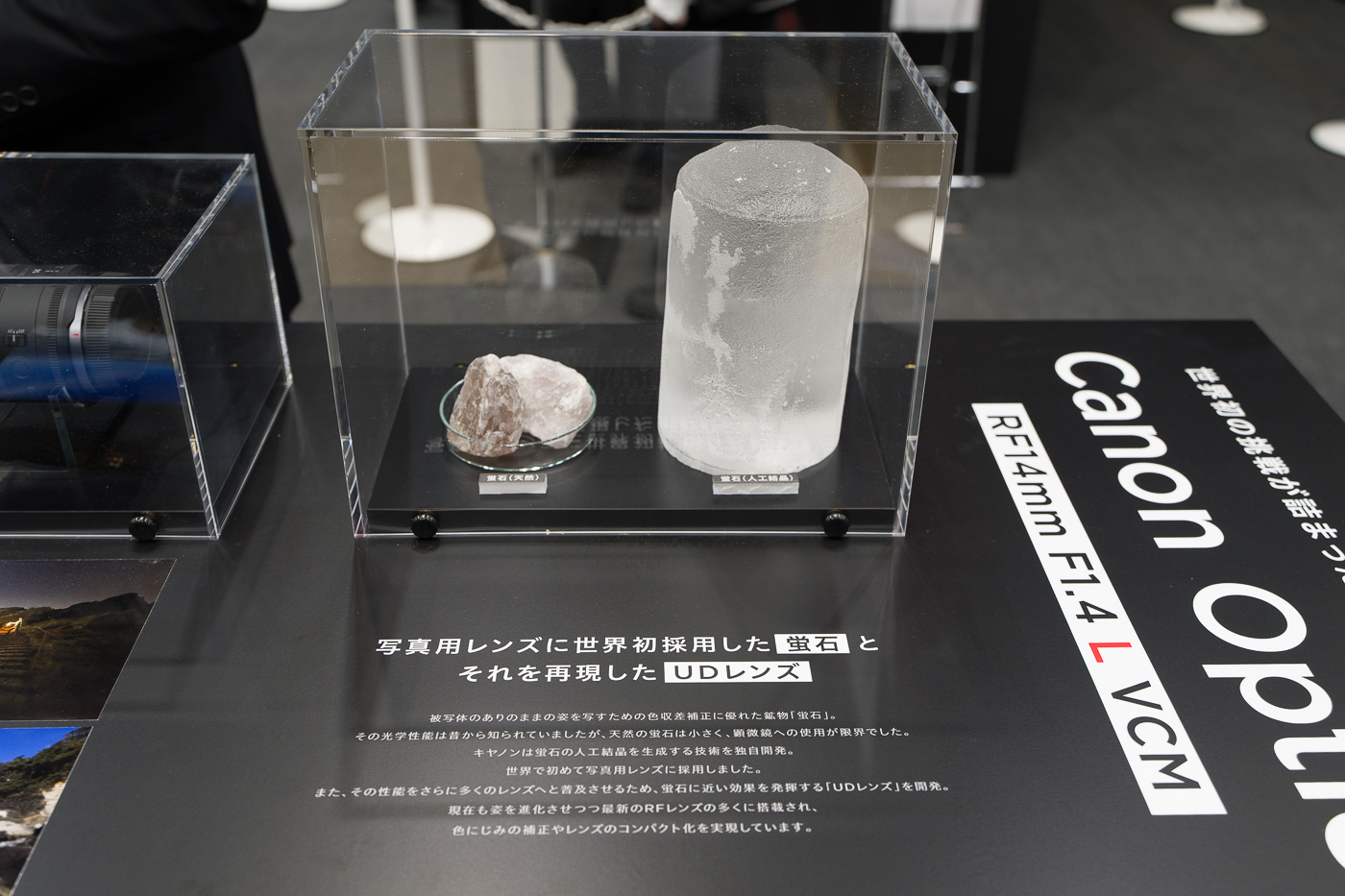
We also incorporated our proprietary BR (Blue Spectrum Refractive Optics), three aspherical elements, fluorite, and high-quality coatings (SWC/ASC). This level of performance was also made possible by advanced manufacturing technology that enables mass production of such a high-quality lens.
The RF 7-14mm f/2.8-3.5 L FISHEYE STM marks the return of fisheye lenses to Canon after several years’ absence. What is the #1 use case you’re targeting: VR 180, events, sports, creative work, architecture?
Tetsushi Hibi: We didn’t really target specific use cases, whether stills or video. We wanted to offer this lens to creators who wish to express their unique creativity or try something different.
Having said that, this lens achieves a world-first 190-degree field of view, making it very suitable for VR. And if users combine two units, they can even cover a full 360°.
Regarding the Canon RF 45mm f/1.2 STM, how did you achieve such a wide aperture with such a compact format? Do you intend to produce other affordable but ultra-fast lenses in this vein?
Tetsushi Hibi: First, to achieve this large aperture in a compact format, we had to reduce the number of lens elements, which in turn allowed us to reduce the overall lens diameter. That was our approach from a design perspective.
By effectively using plastic-molded aspherical elements and adopting a gear-type STM, we achieved a compact, lightweight design that is available at an affordable price. We will continue to explore more varieties of accessible lenses, and we hope you can look forward to more to come.
The RF mount celebrated its 7th anniversary in 2025. What are the next steps? Will you begin renewing some of your oldest lenses?
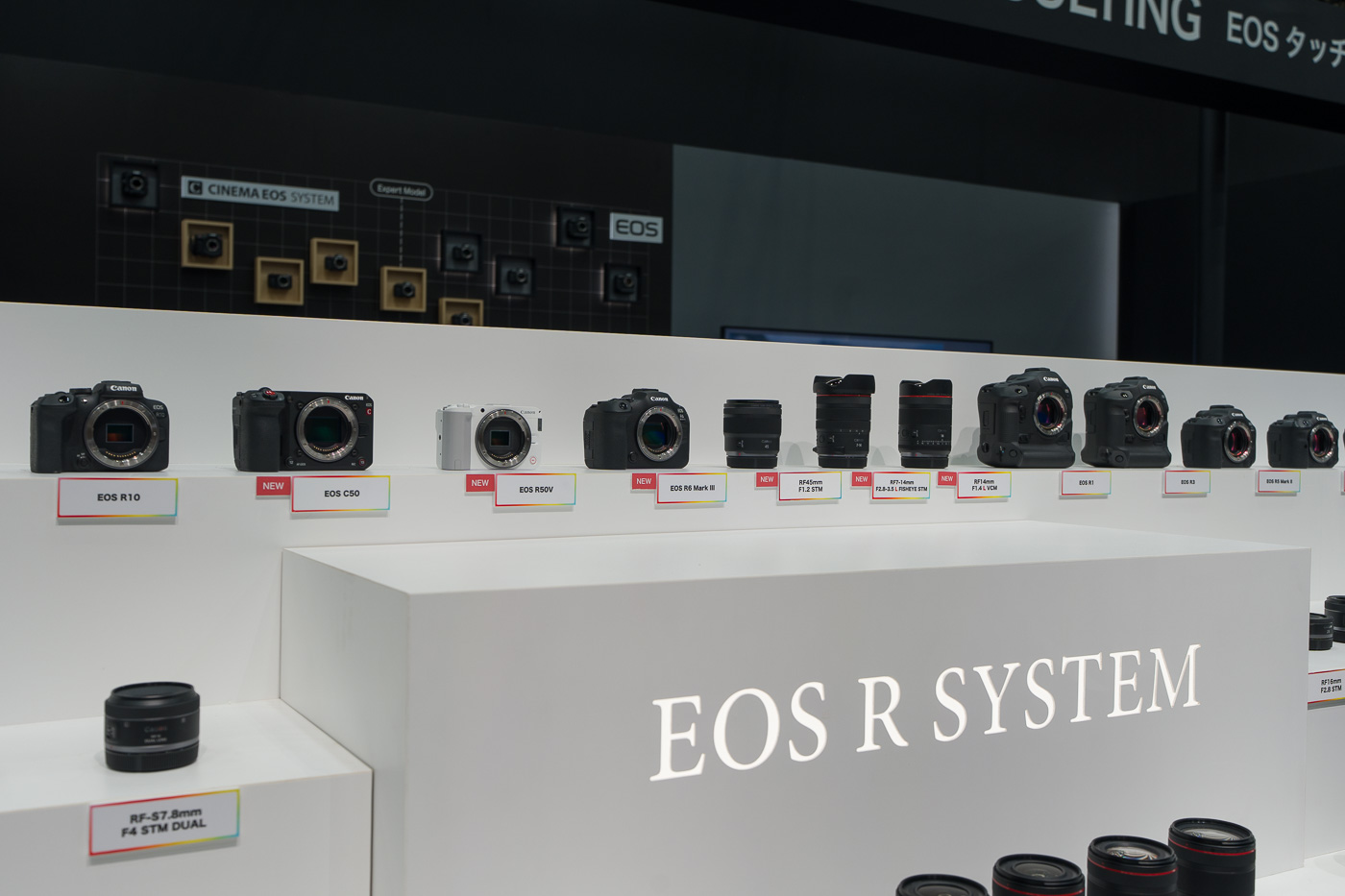
Go Tokura: Yes, and 2026 is the eighth anniversary of the RF mount. We have reached a pace of six to eight new lenses per year, and last year we reached over 60 RF lenses in total.
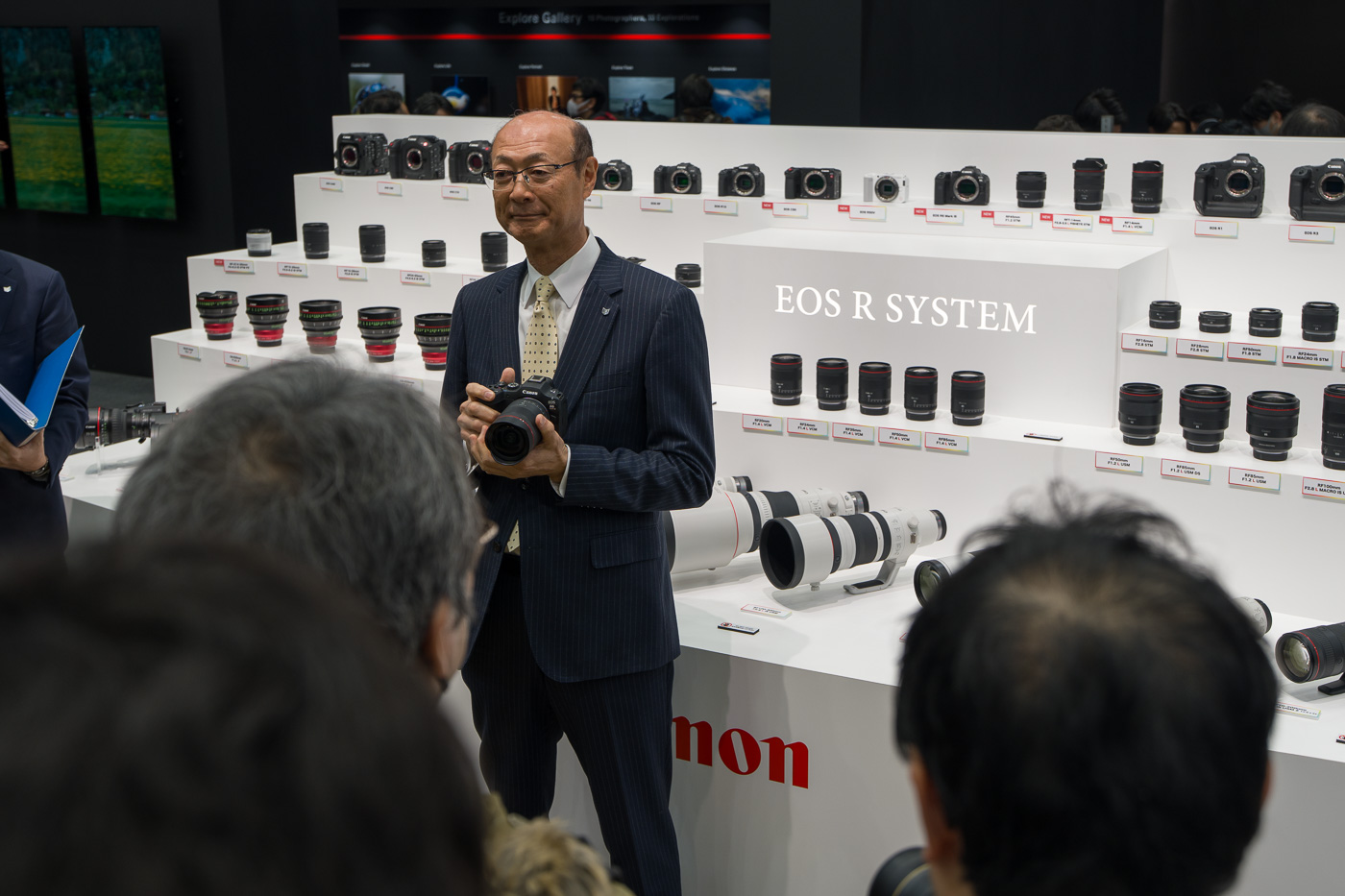
We would like to maintain this pace and continue growing the lineup. As Hibi-san mentioned, the RF system provides more freedom and flexibility in lens design than the EF system. So theoretically, we should be able to offer a wider variety of lenses compared to EF. We may not release exactly eight lenses to celebrate the eighth anniversary, though. (smiles)
APS-C lens development for the RF mount relies heavily on third-party manufacturers like Sigma and Tamron. How is this collaboration working? What are the next steps? Will we see other brands join the RF APS-C ecosystem, like Viltrox or other emerging players?
Go Tokura: This relates to the openness of the mount, right? This is part of a very important business strategy for us, and we will continue to look into it.
Collaboration with new third-party manufacturers will increase going forward, but there may be some restrictions due to our business strategy. And as you may know, we are not involved at all in the individual lens development of third-party manufacturers, so we have no idea what kind of lenses may appear in the future.
While third-party manufacturers are now accepted for RF-S lenses (and even then, not all of them), Canon still maintains exclusive control over full-frame lenses. Why is that?
Go Tokura: We don’t really differentiate between full-frame and APS-C in that regard, and we don’t publicly discuss this matter. I think this observation comes from an external perspective, based on the fact that third-party manufacturers are currently only involved in APS-C.
Does Canon intend to definitively close the door to other manufacturers, particularly for entry-level and high-end segments? Is it to recoup R&D costs for the RF mount development?
Go Tokura: This is really difficult for me to comment on, because we cannot discuss anything related to the contents of our contracts with external parties. Our stance remains the same. Again, our lineup has grown to almost 70 lenses, and it has been seven years since the launch of the RF mount. We have heard various voices and feedback, and all of those factors will be reflected in our future strategy.
Looking at the RF 45mm f/1.2 STM, a lens Canon developed in-house rather than leaving that segment to third parties: are you trying to replace third-party manufacturers on the RF mount because you have the technology and manufacturing capacity to cover all photographers’ needs in-house?
Go Tokura: Once a third-party manufacturer is active in a given segment, we don’t position ourselves to comment on or control their product decisions. Having said that, what we ourselves plan, develop, and manufacture will continue to be done in-house.
In your AI roadmap, which areas are the highest priority for you: recognition and tracking, noise reduction, upscaling, automatic photo culling, or shooting assistance? Where are you investing the most R&D currently?
Kazumasa Yoshikawa: We believe AI technologies will continue to be very important for the future shooting experience. Our policy is to utilize AI for reproducing reality as it is, not for generating image content. Specifically, we want to apply AI further in four areas: noise reduction, color correction, aberration and distortion correction, and upscaling.
The purpose of using AI, for us, is threefold. First, to reproduce what is seen with greater detail. Second, to improve subject recognition so it better reflects the photographer’s intent. Third, to help capture exactly what the photographer wants to capture.
Once a photographer has captured their images, there is a lot that can be done in post-processing. Canon launched a Photo Culling plugin for Lightroom in 2020, and more recently introduced AI upscaling and AI noise reduction on the R5 Mark II and R1. Last year, you told me that you had started working on technologies outside the camera and then worked to bring them inside the camera body. Do you envision integrating automatic culling directly inside camera bodies?
Kazumasa Yoshikawa: In general, a time will come when what is currently done outside of the camera will be embedded inside the camera body. There will be use cases where auto-culling is built into the camera and selected photos are sent directly to, for example, a press agency headquarters. That kind of feature will come, I think.

The same technology can also be applied to consumer cameras, with selected photos ready to be shared on social media. We believe it will be valuable to extend such features to a wider variety of Canon products.
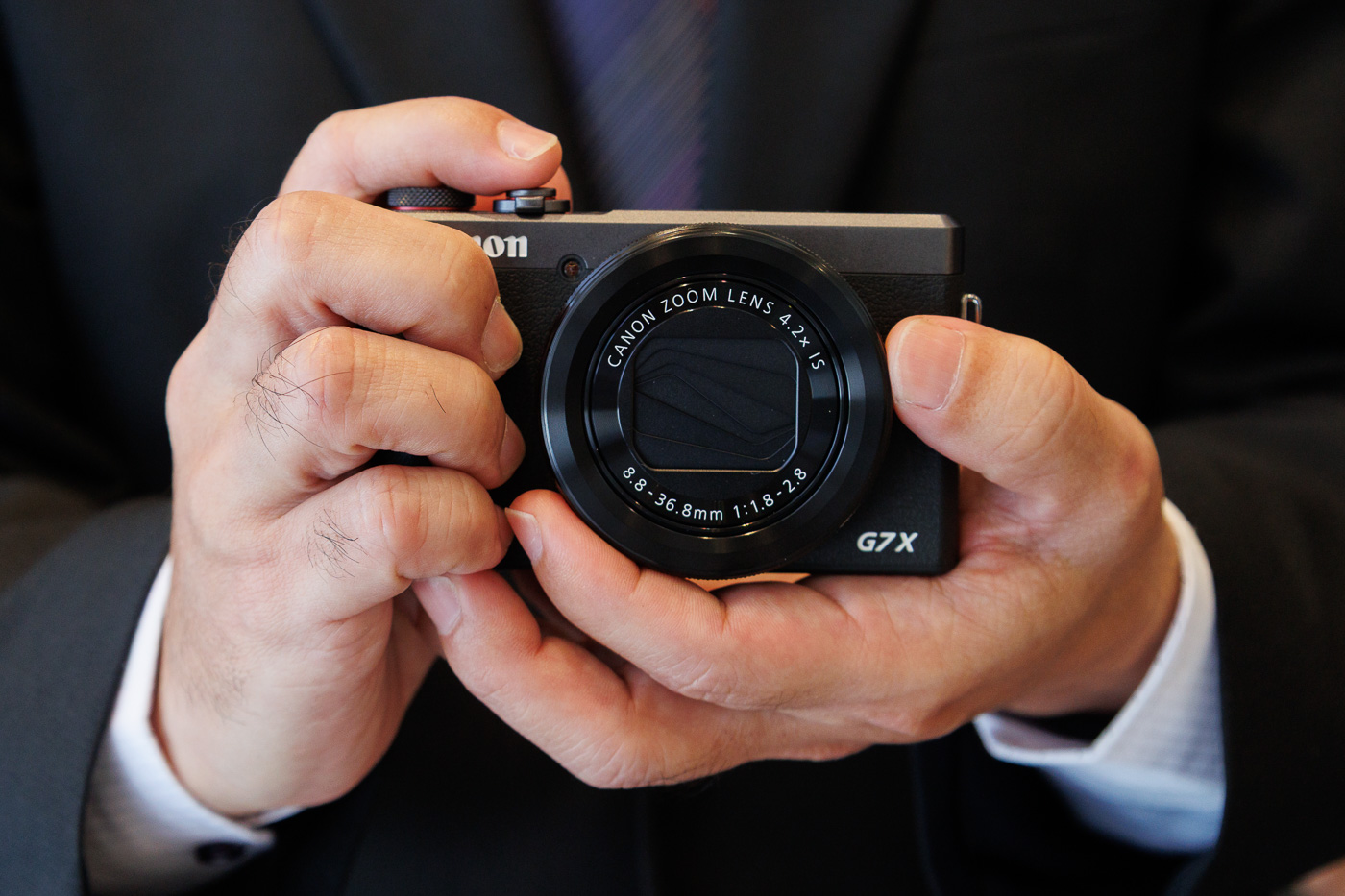
You unveiled a limited edition of the G7 X Mark III for the 30th anniversary of the PowerShot line. Is this simply a “collector” item or a market test to revive an expert compact range, given that the camera dates from 2019?
Manabu Kato: We wanted to celebrate the 30th anniversary of the PowerShot line, and this was not launched as a market test.
2026 marks the 50th anniversary of the Canon AE-1. How will the brand celebrate this icon? Will we see a special product blending modern technology with retro styling, or other initiatives to mark the occasion?
Manabu Kato: I knew you were going to ask me that. You asked me the same question last year! Yes, this is a happy moment for us. As of now, we are not planning to celebrate this milestone in a particular way.
Honoring tradition is very important, but it’s not just about that. We also have to adapt to the changes of the times and continue to evolve. This evolution is important for us, because our evolution will contribute to the evolution of the entire camera industry. But I’m very thankful that you appreciate the AE-1.
If you had to choose one Canon technology that will truly change photography in the next 24 months (not just improve it), which would it be and why?
Go Tokura: We believe the next major change will be the shift from 2D to 3D. An image is an outcome, right? What is required to produce that outcome is high resolution and high image quality.
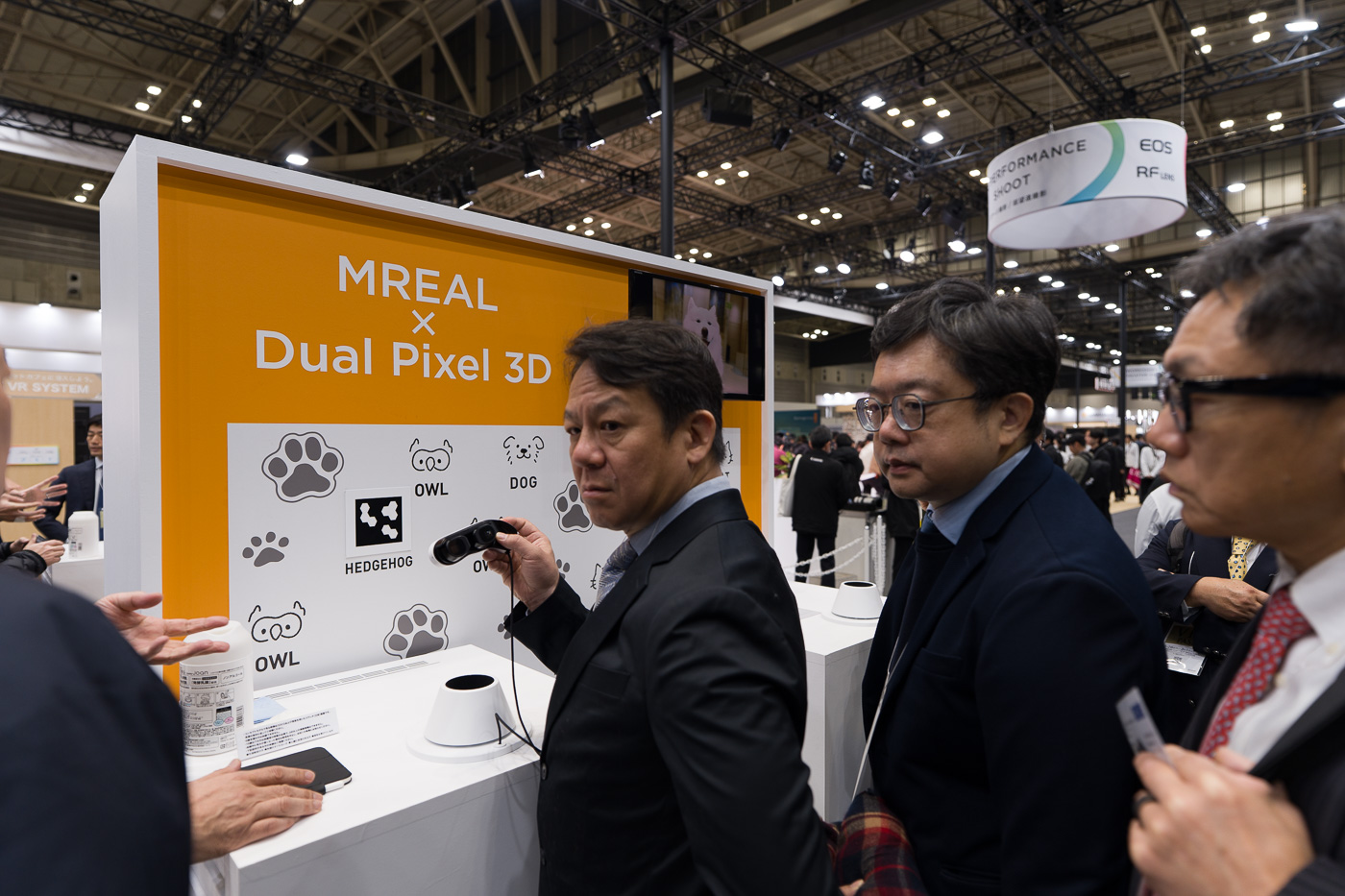
This is all about reproducing reality, and the devices we create are the tools necessary to process and deliver that. Of course, 3D conveys a greater sense of reality than 2D. But what is true reality? Sound, temperature, wind, smell… If you consider all of these elements, in the future there may be a device that can record all of them. But to achieve that, so many functions would need to be embedded.
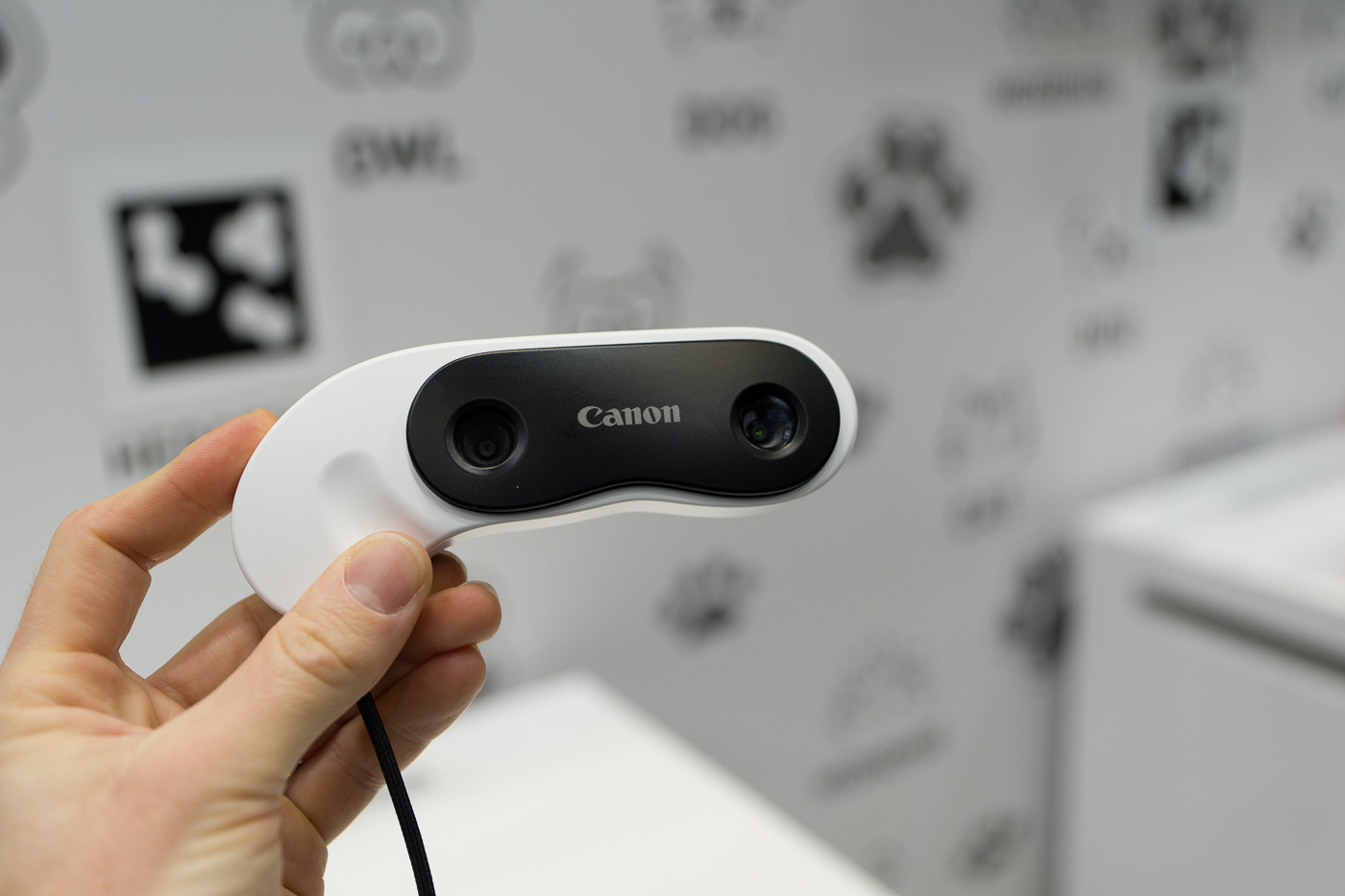
There is so much we still have to do, and 24 months will not be enough. But with AI and deep learning, there will be a leap in technological development. How much of that we can incorporate in the coming 24 months, we don’t know, but there will be progress.
For camera operation and user interfaces, there may be a place for AI. For example, giving verbal commands to the camera and having it respond accordingly. But not for generating images.
One last question about the analog compact camera project on your booth. How did you come up with this idea?
Go Tokura: Do you remember the staff member who was presenting it? He is actually a designer in our development department. It was his idea. He said: ‘We should do this. Everyone, what do you think? Let’s do this!’
Thank you to Canon for this interview. We would also like to thank Marion from Canon France for organizing this meeting.