


On April 3, 2026, NASA released a new image of Earth, Hello, World, captured the day before by Commander Reid Wiseman from the Artemis II Orion capsule. 54 years separate this shot from the famous Blue Marble photograph taken during the Apollo 17 mission in 1972.
On social media, the comparison went viral, sparking a debate as passionate as it was misinformed: why does Earth look duller in 2026 than in 1972? Climate change, pollution? The answer is purely photographic.
Sommaire
Blue Marble, the image that changed the way we see the world
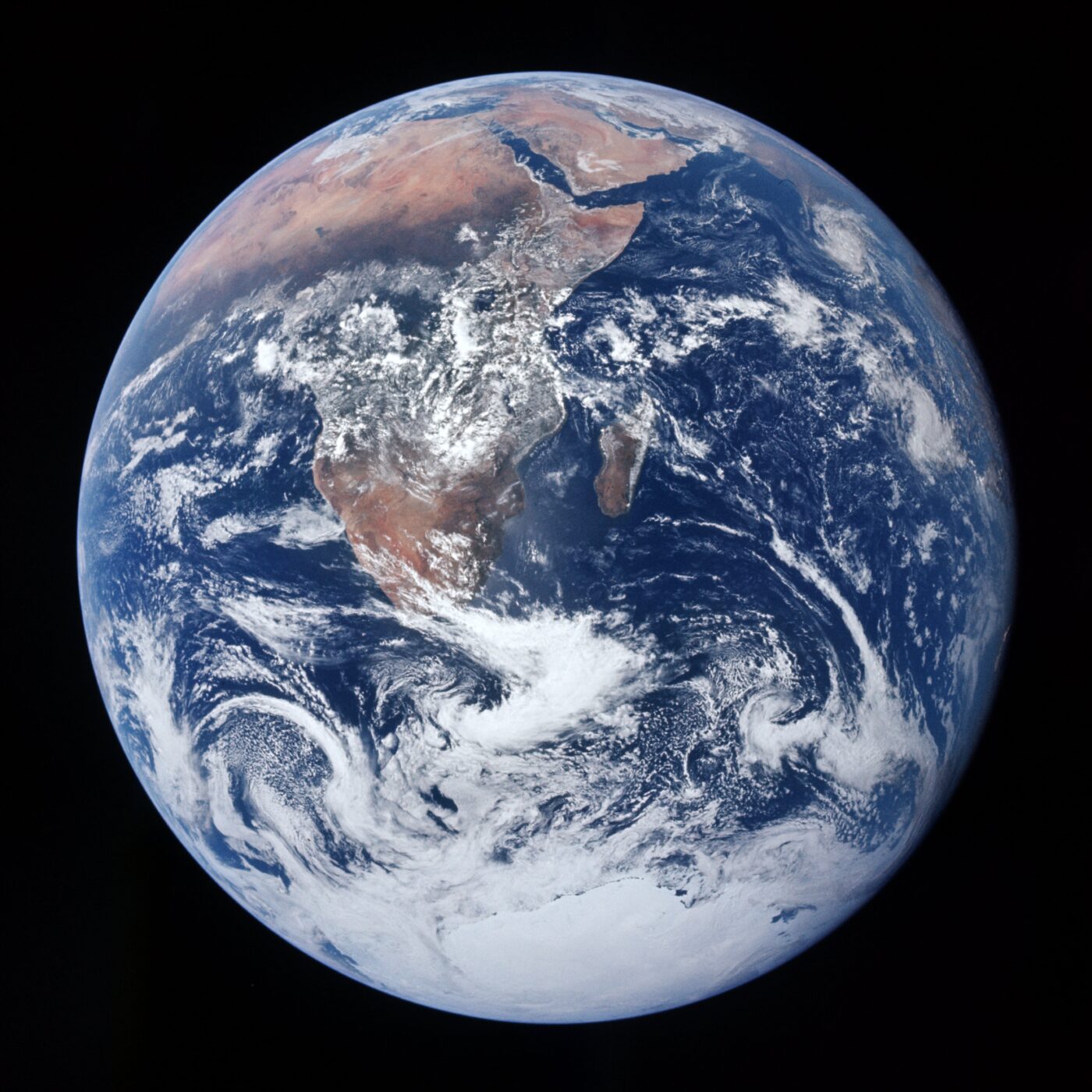
The Blue Marble photograph was taken on December 7, 1972, approximately 29,000 km from Earth, with a Hasselblad 500EL film camera and a Zeiss 80mm lens, on Kodak Ektachrome 70mm film. NASA credits the shot to the entire crew, but it was astronaut Harrison Schmitt who actually took the image. It is the first photograph of the fully sunlit globe ever taken by a human being.
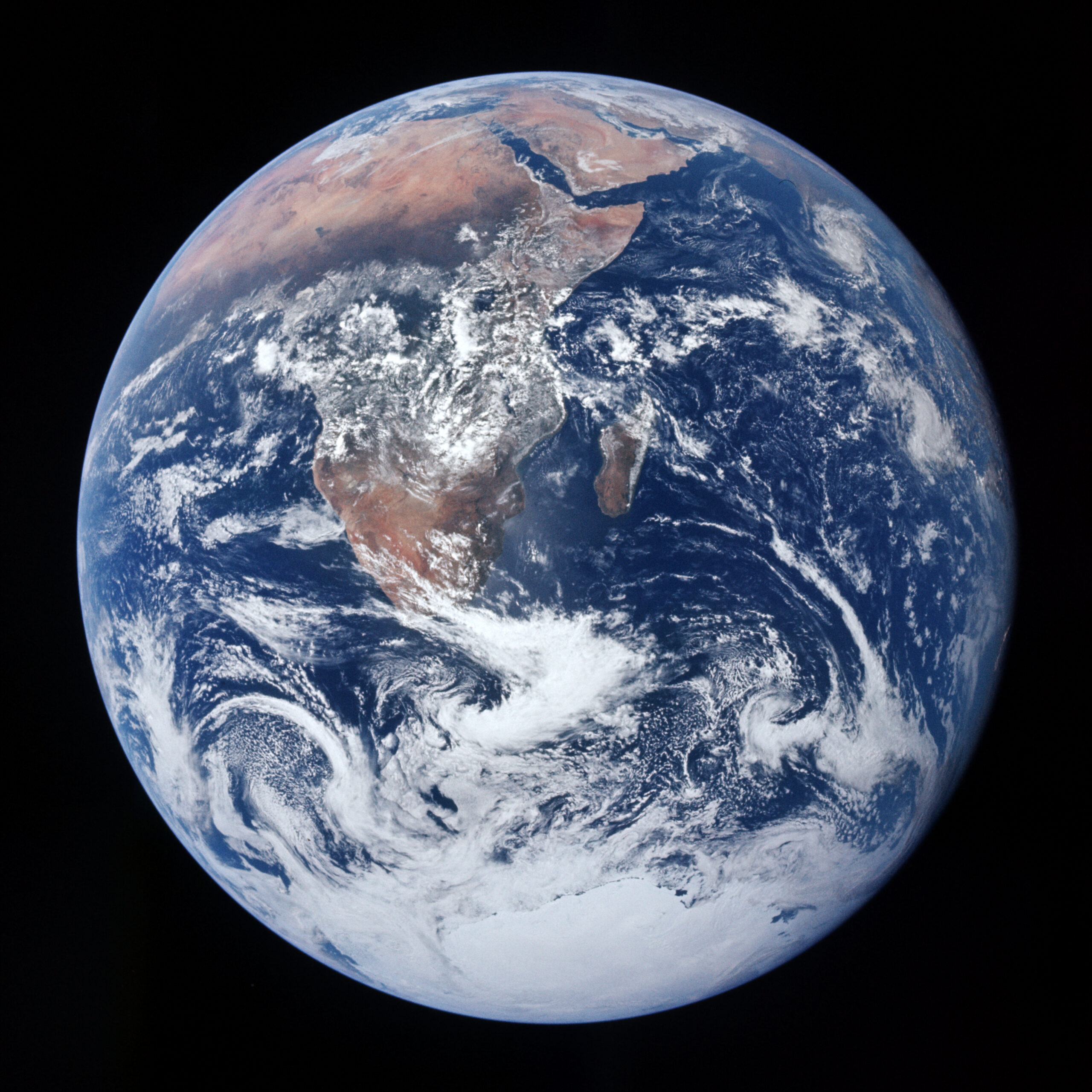
Its impact went far beyond space photography. Published at the height of the environmental movement (the first Earth Day had taken place in 1970), Blue Marble became the icon of Earth’s fragility. Adopted by Friends of the Earth, featured on the cover of James Lovelock’s Gaia, and in the opening of Al Gore’s documentary An Inconvenient Truth, it is one of the most widely reproduced images in history.
Commander Eugene Cernan, the last person to walk on the Moon, described it as a “self-portrait of humanity.” Astronaut William Anders, who captured Earthrise in 1968, summed up the paradox: “We came all this way to explore the Moon, and the most important thing is that we discovered the Earth.”
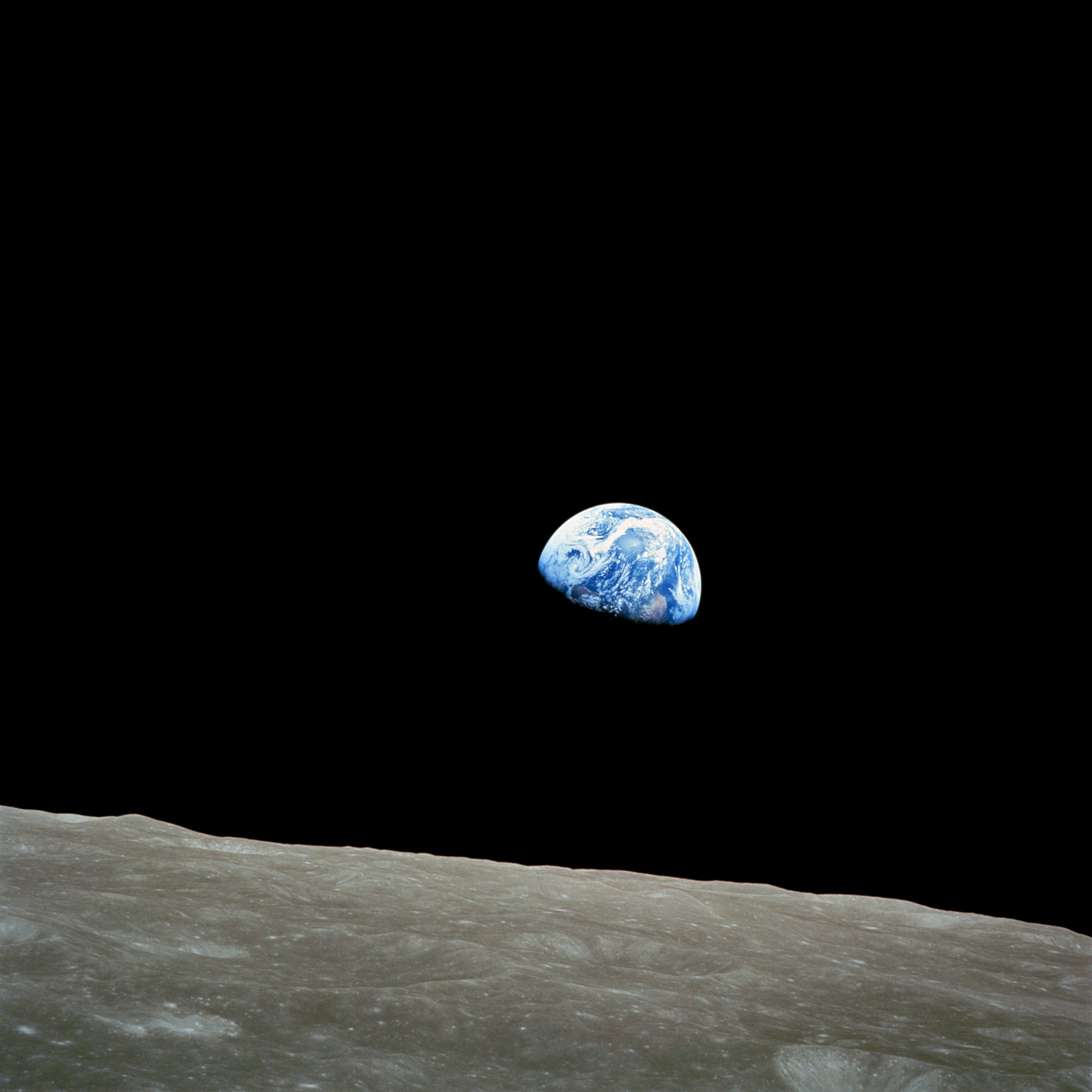
It took 54 years for another human crew to travel far enough from Earth to capture a new photograph of the blue planet.
“There are no words“
Captioning one of the photographs of Earth taken from the Orion capsule, astronaut Reid Wiseman wrote just a few words: “There are no words.”
Christina Koch, the first woman to travel to the Moon, offered a striking account: “I knew what we were going to see. But nothing prepares you for the shock of seeing your planet both lit by broad daylight and bathed in moonlight on the night side.” Astronaut Victor Glover addressed the people of Earth directly: “Believe us, you are magnificent. You are beautiful. From up here, you are just one thing. We are one people.”
A delightful detail reported during a communication with Houston: Orion’s windows were already smudged by the second day of the flight, because the crew spent too much time with their faces pressed against the glass.
Two photographs of Earth, as similar as they are incomparable
But behind the crew’s awe, a very different debate took hold on social media. When the first images of the blue planet were published, many users compared them to Blue Marble and quickly reached the same conclusion: the 2026 Earth looks duller, paler, and less contrasty than its 1972 counterpart. Some saw it as visual proof of climate change, others as a simple image quality issue.
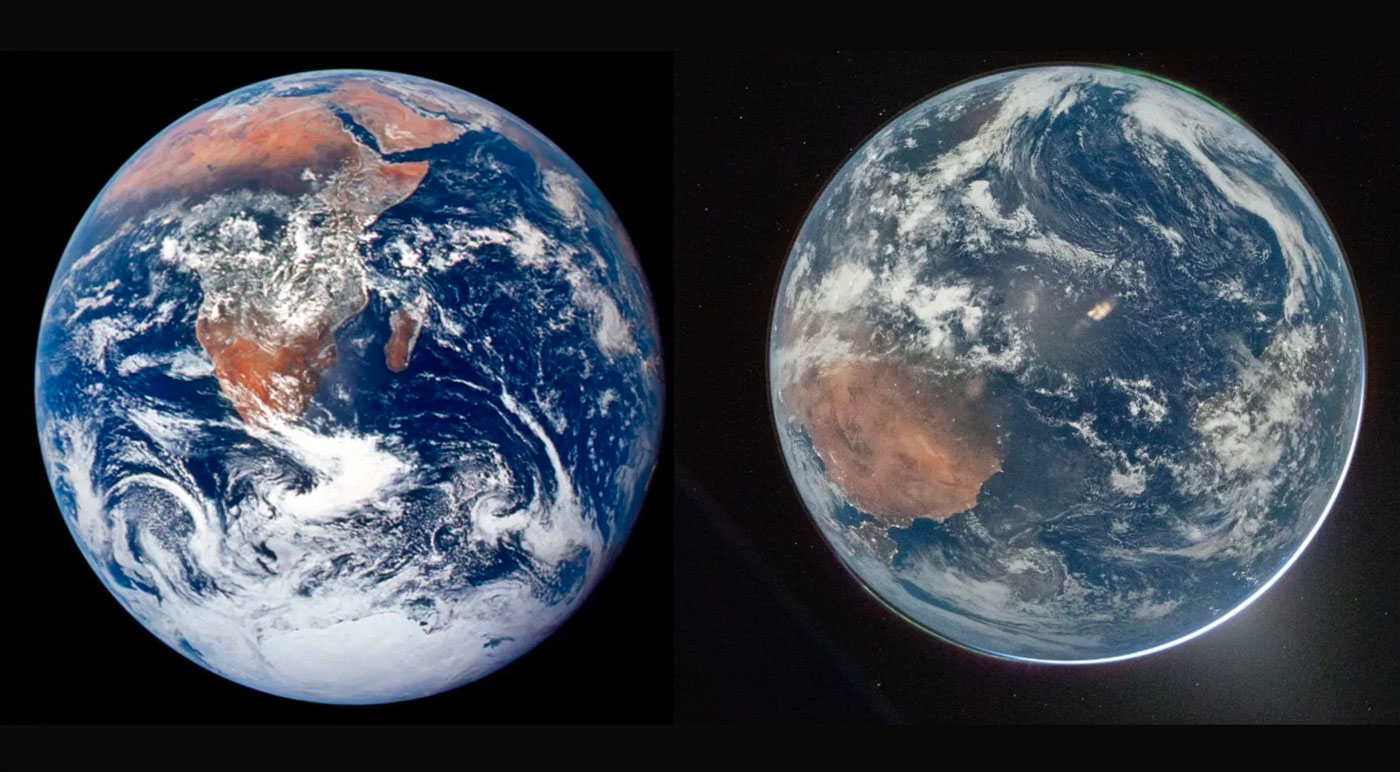
The confusion stems from a natural reflex: we see two blue globes, we assume similar conditions, but that is not really the case here.
Blue Marble shows Earth’s daytime face, in full sunlight, captured at 1/250s at f/11. Hello, World shows the nighttime hemisphere, lit by moonlight. The glow in the lower right of the image confirms it: the Sun is behind Earth. Comparing the two photographs is like comparing a portrait shot in broad daylight at noon with one captured at dusk, and then being surprised by the result.
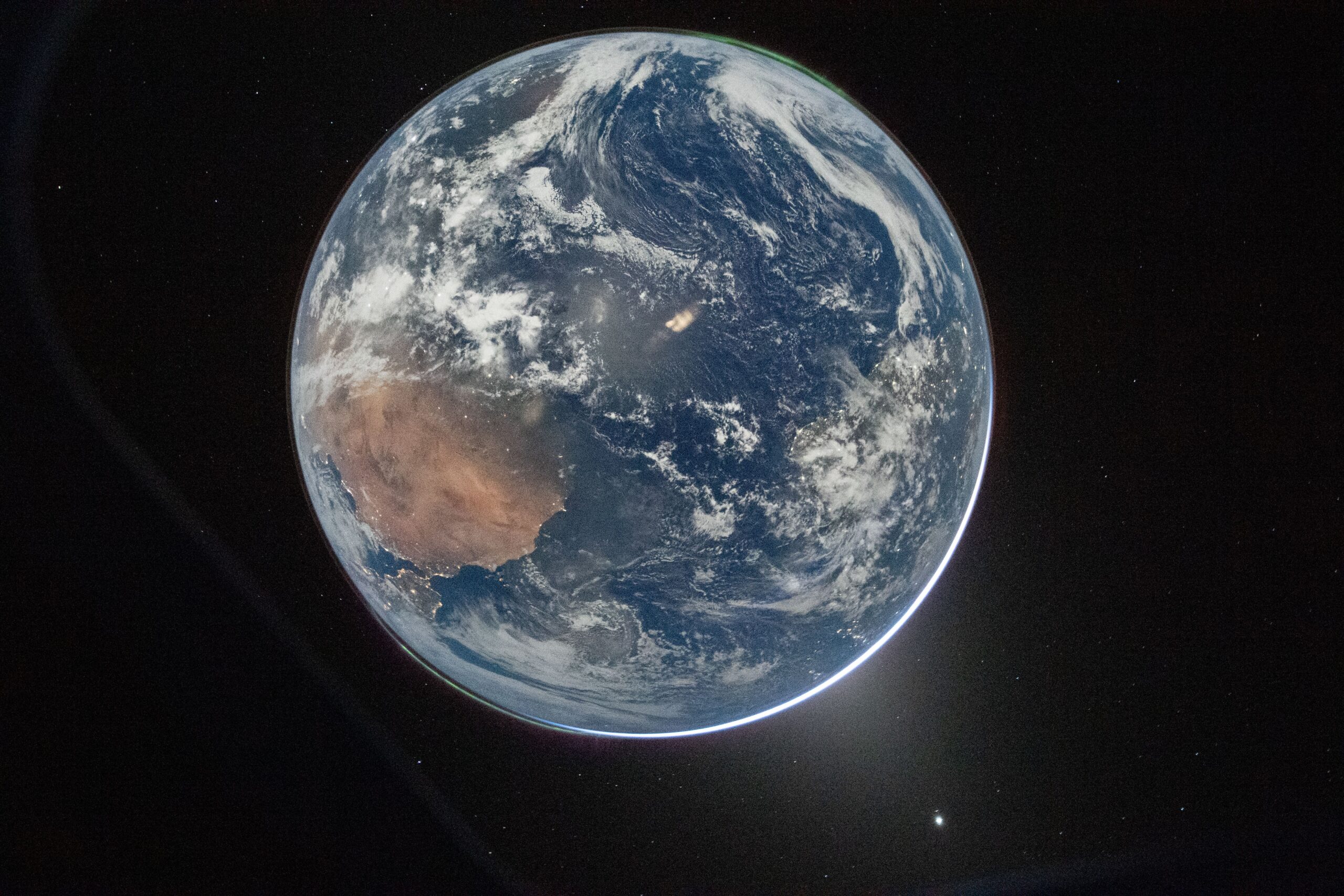
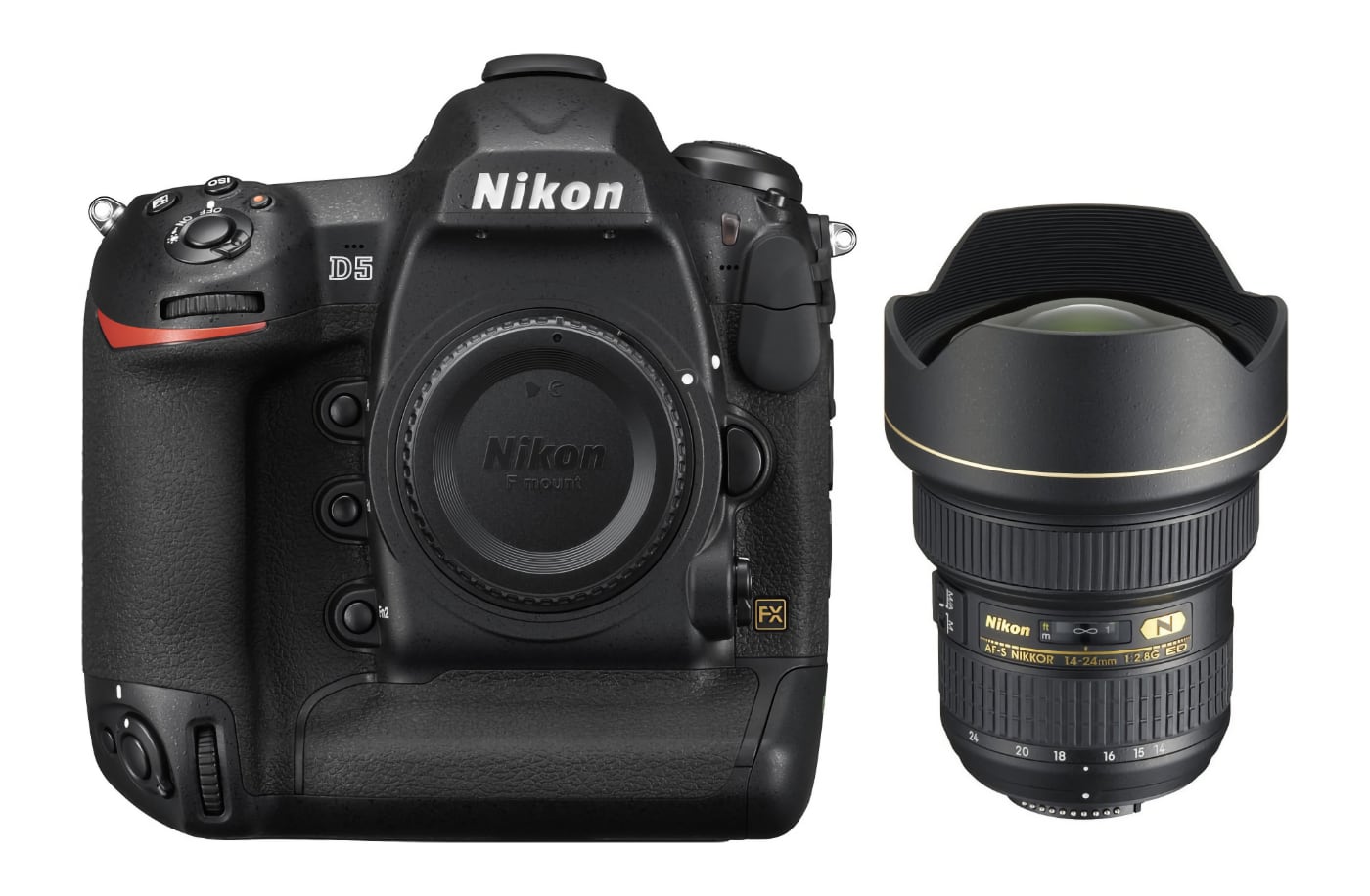
As for the gear, Hello, World was shot with a Nikon D5 and a 14-24mm f/2.8 stopped down to f/4, with a shutter speed of 1/4 of a second and at 51,200 ISO. These are clearly nighttime photography settings.
It is this combination of factors that explains the “dull” impression felt by viewers online. Ektachrome film produces a naturally saturated look, with deep blues and strong contrast.
A digital sensor delivers a more neutral, “flatter” image at first glance, even though this image was lightly edited in Lightroom. Add to that the fact that the Blue Marble known to the general public is a cropped version with edited colors and contrast (shown below), and that since 2002, NASA has been releasing ultra-detailed satellite composites under the same name, and it becomes clear why our mental image of Earth from space is biased. Hello, World does not suffer from the comparison, it suffers from our expectations.
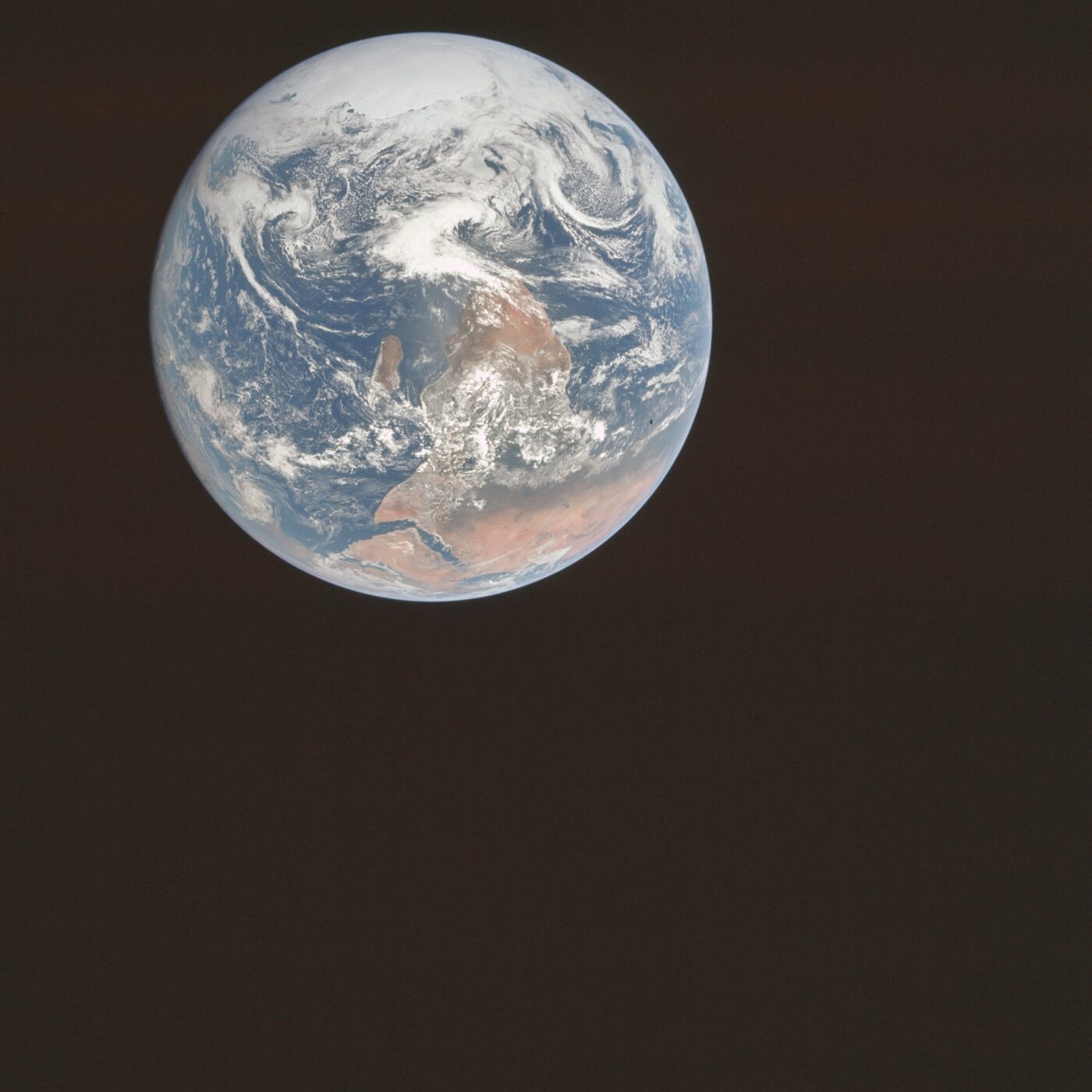
In fact, NASA shared another photograph, captured just seconds apart, but with a faster shutter speed, clearly showing that Earth is in near-total darkness, lit only by the glow of the Moon reflecting sunlight.
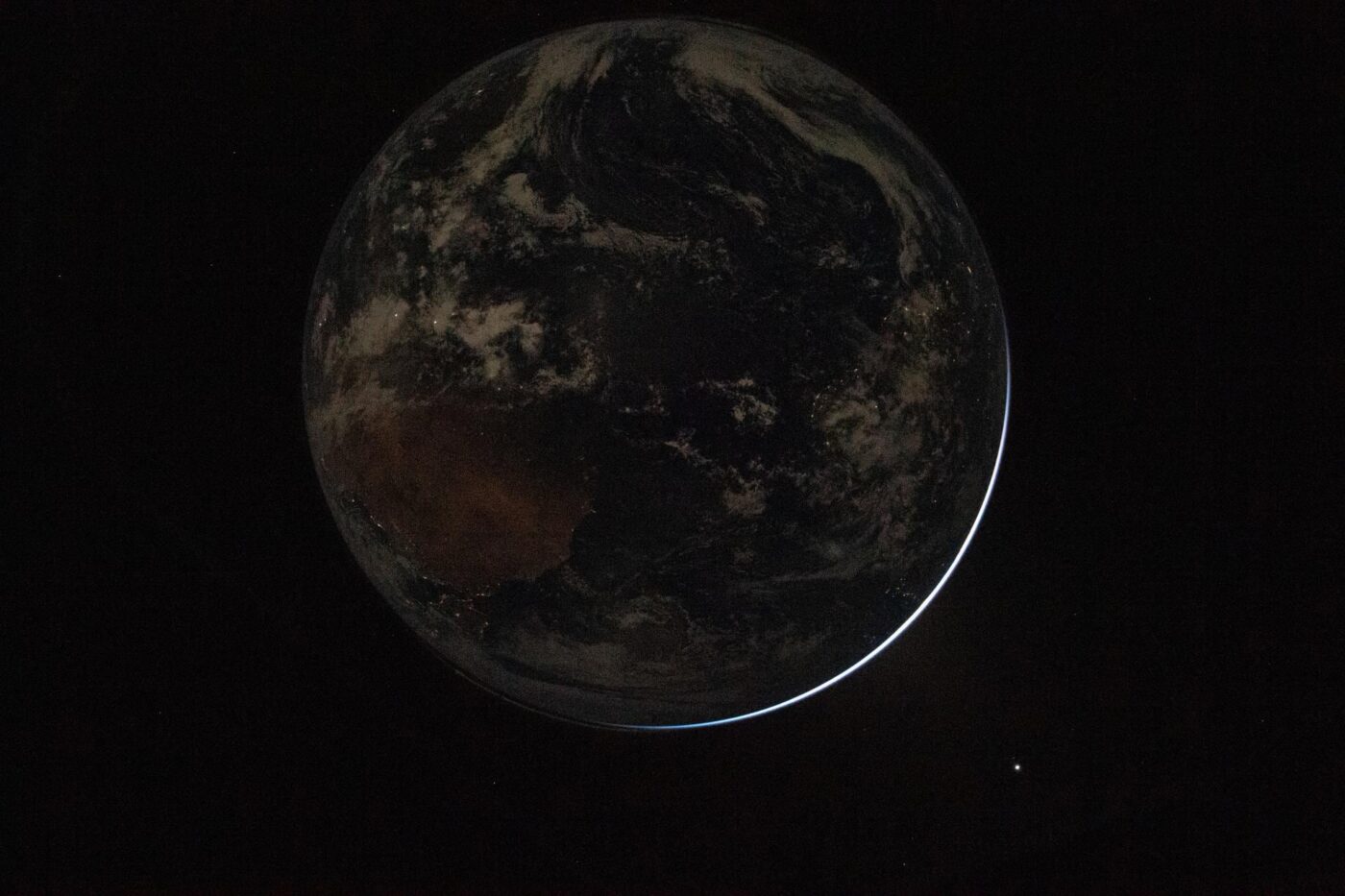
Ultimately, both images were post-processed, each with the tools of its era: one by pushing contrast, the other by increasing the exposure time to gather more light.

This photograph of Earth lit by the Moon simply could not have existed on Ektachrome film. Hello, World does not compete with Blue Marble, it shows something no one had ever captured before.
Shot on iPhone, from space
The other notable development involves a more familiar device. Each astronaut was equipped with an iPhone 17 Pro Max, certified by NASA for extended use in orbit after safety testing focused in particular on the risks of glass breakage in zero gravity.
The phones are however limited to photo and video use only, as wireless connectivity was simply disabled (no Wi-Fi, no Bluetooth). And there is a small nuance: NASA provided these smartphones to the astronauts as a “personal tool.” They are therefore used more for personal documentation than as mission instruments.
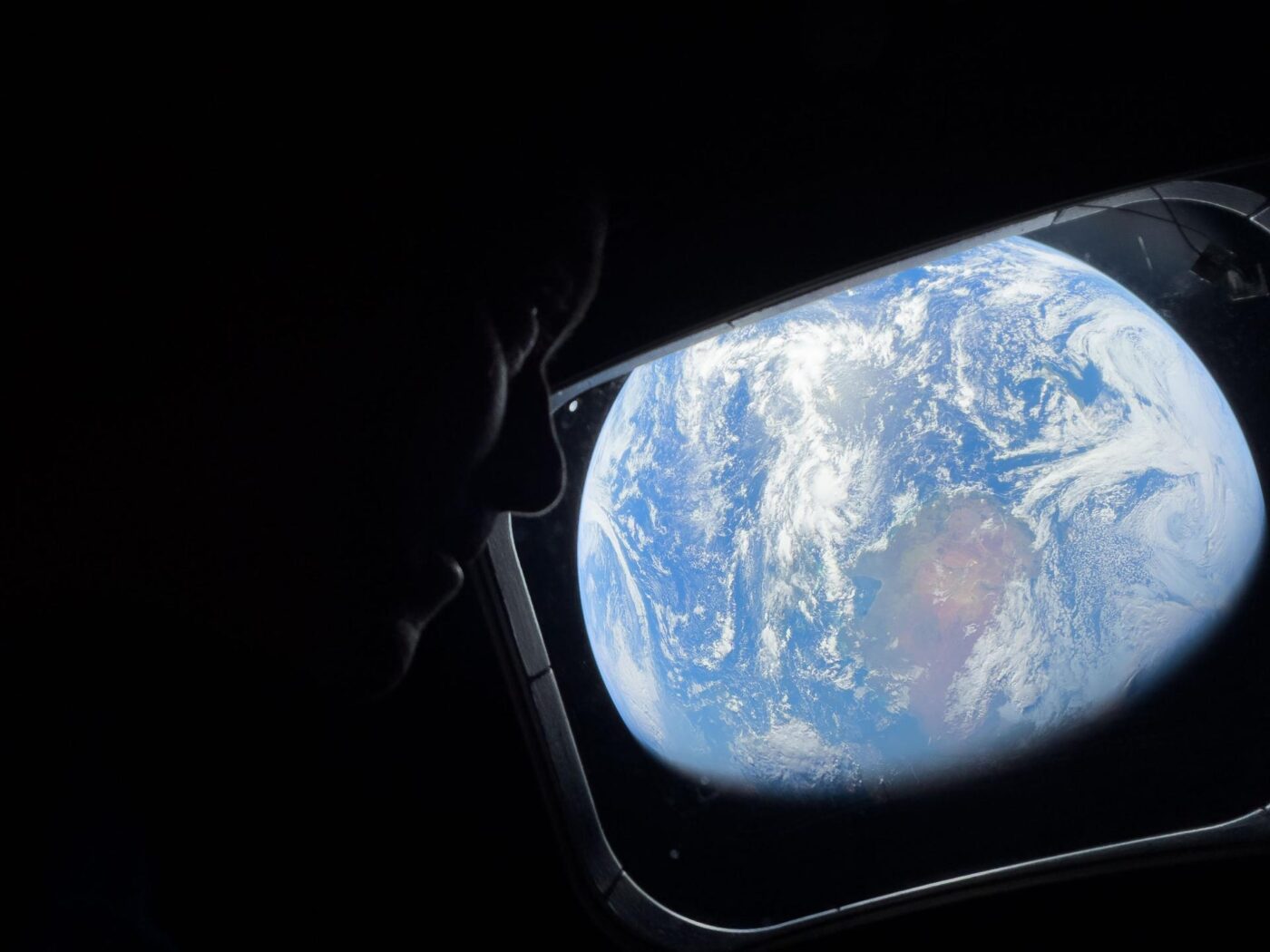
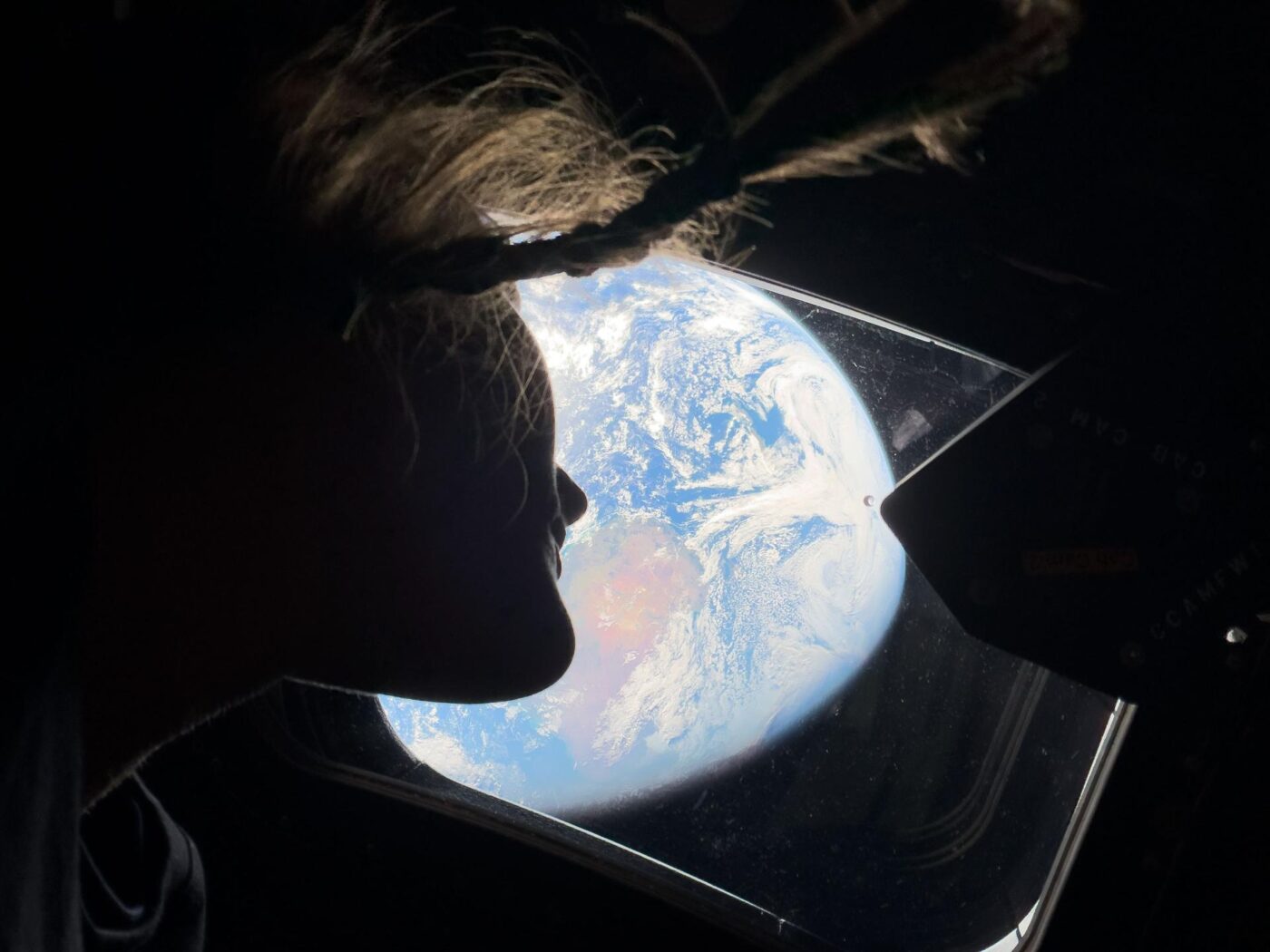
The metadata from the first published images confirms that several shots, including the portraits of Reid Wiseman and Christina Koch in front of the window, were taken with the iPhone 17 Pro Max front camera. These are the highest-altitude photographs ever taken with a smartphone. We even saw, in videos shared on X, the crew tossing iPhones to each other in zero gravity inside the Orion cabin.
In 1972, photographing Earth from space required a medium format Hasselblad and lab processing upon return. In 2026, an unmodified phone slipped into a spacesuit pocket does the job. Quite the spotlight for Apple, even though the company says it was not involved in NASA’s certification process.
Conclusion
No, Earth has not changed color in 54 years. The difference between these two photographs is entirely explained by shooting conditions. Where Blue Marble was captured in sunlight, with direct, even illumination, the new image from the Artemis II mission was far more challenging to produce, as it relied solely on indirect moonlight, which is much dimmer.
Hello, World is, in its own right, a remarkable achievement. Photographing Earth lit by the Moon at 51,200 ISO, capturing two auroras in the same frame, all with a 2016 DSLR and iPhones serving as logbooks: this image could not have been possible with Apollo 17’s technology, nor from the ISS’s low orbit. It took both the journey and the tools.