
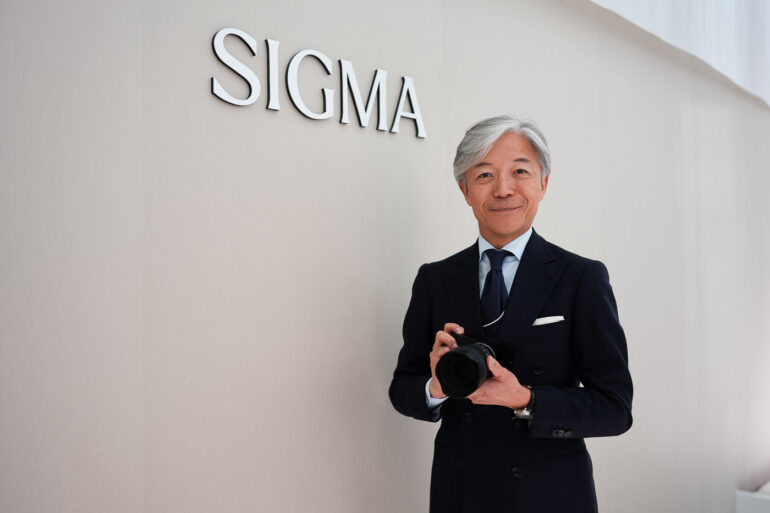

CP+ 2026 has just wrapped up in Yokohama, Japan. Phototrend was on the ground and had the opportunity to sit down with Kazuto Yamaki, CEO of Sigma Corp.
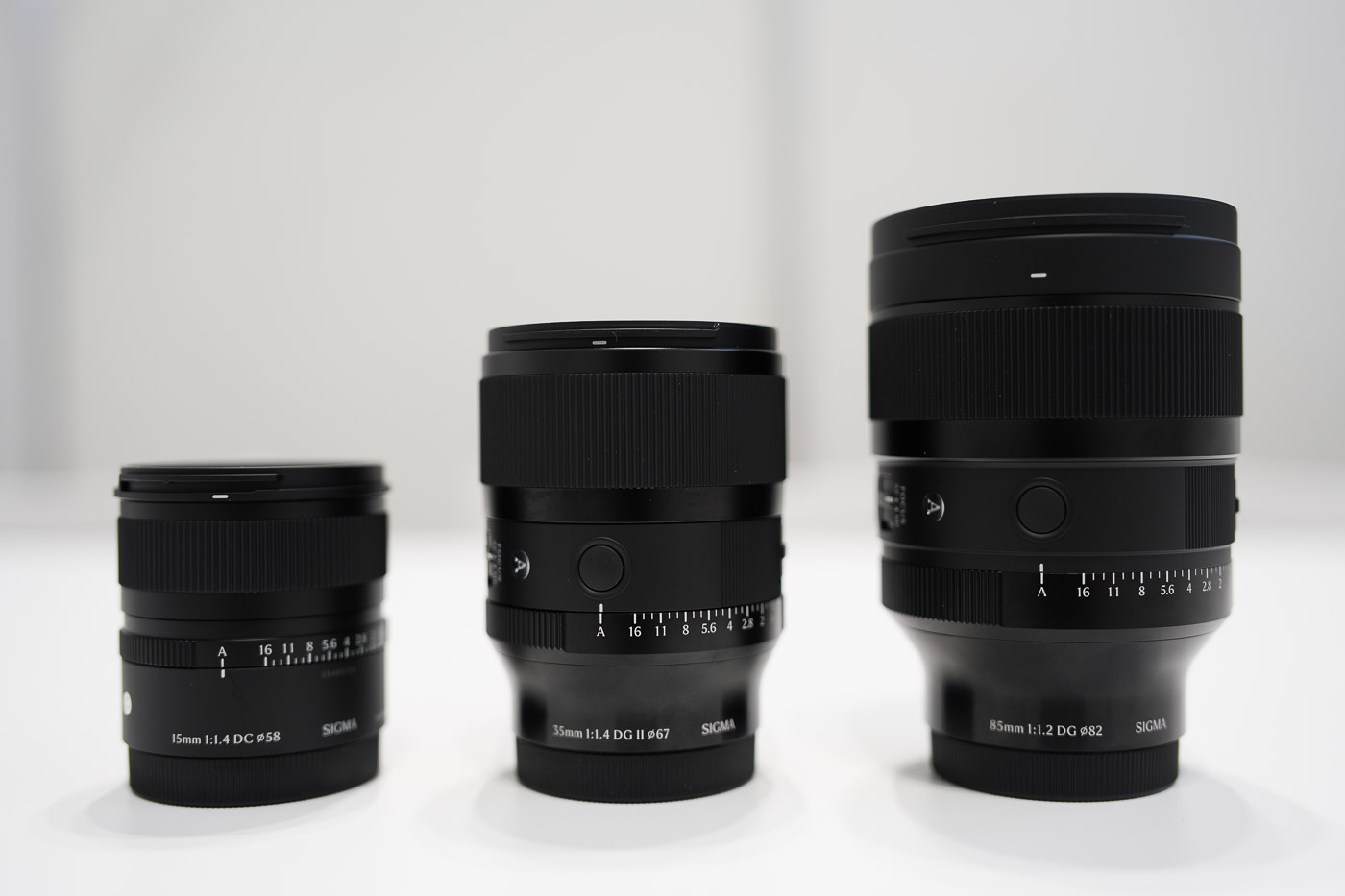
With the announcement of the Sigma 35mm f/1.4 DG II Art and 85mm f/1.2 DG Art, Mr. Yamaki walks us through the genesis of these unique lenses. He also shared insights on the overwhelming demand for the 300–600mm f/4 and 200mm f/2 lenses released last year. And yes, he also addresses the company’s surprising venture into rice farming. Let’s dive in.
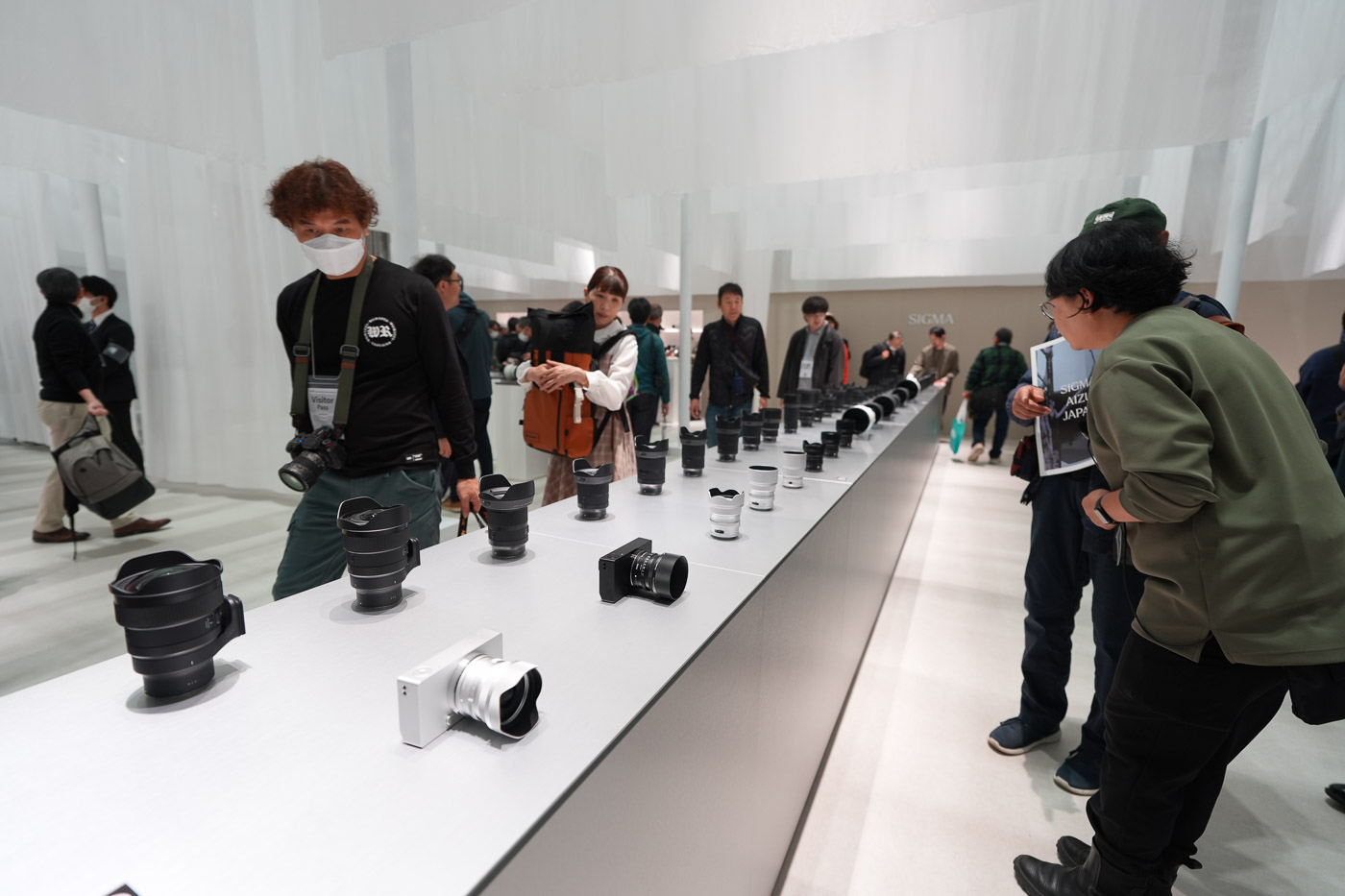
Sigma released eight lenses and one camera body in 2025. That’s a pace we’d usually associate with Canon, Nikon or Sony rather than Sigma. What has concretely changed at Aizu to make this possible ? Have you hired more people, reorganized teams, or have the design and manufacturing processes been optimized?
We did not increase the number of engineers significantly in recent years. We always hire engineers constantly, a few people per year. We are very fortunate because we can retain most of our employees and engineers. Very, very few people leave the company – less than 1% of our staff, including not only the engineers but also the factory workers and sales staff.
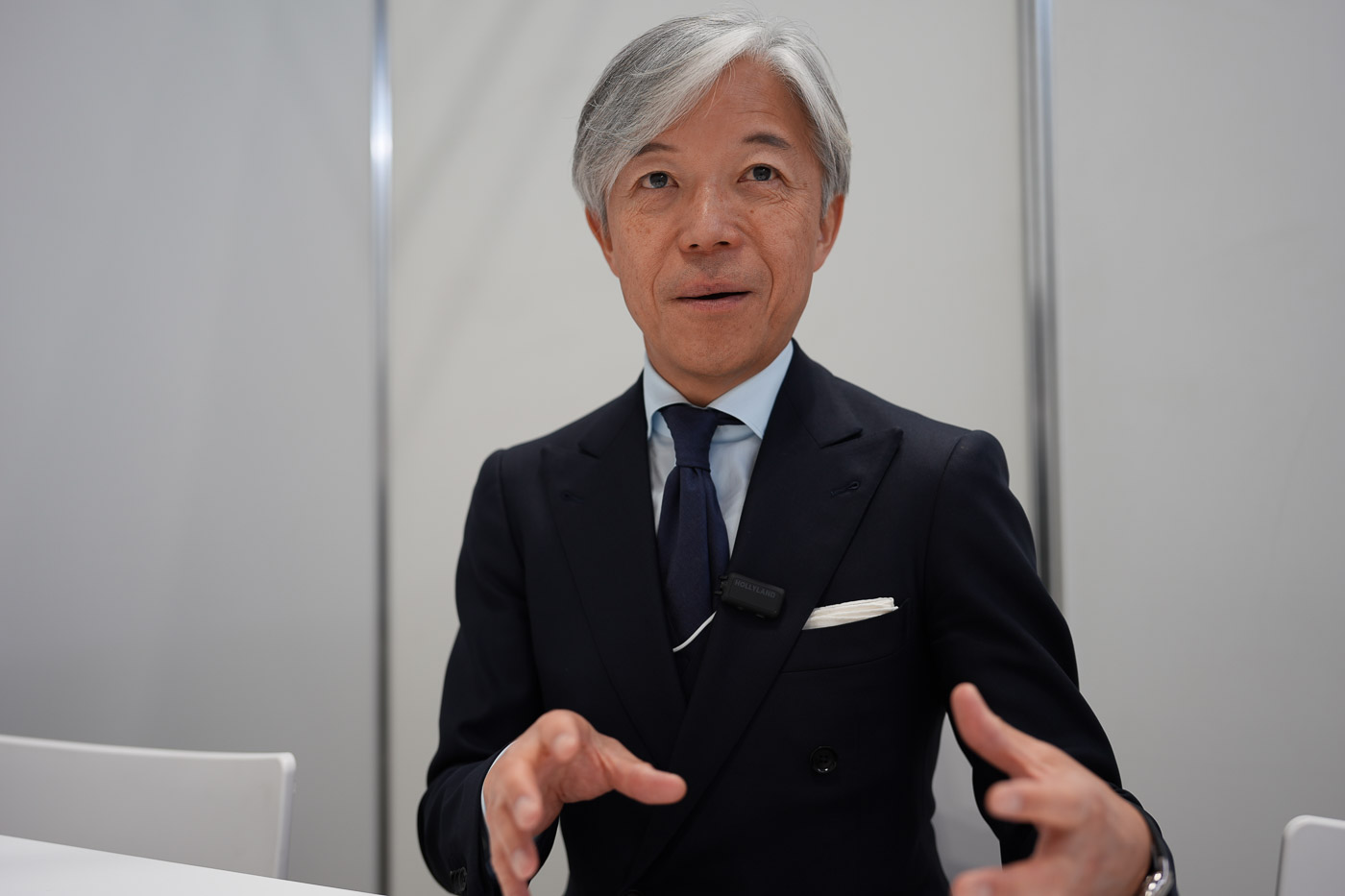
Back in the 2022-2023 timeframe, the demand for SLR lenses had declined significantly, and we realized we needed to survive in this industry by delivering exciting, innovative products. Since then, we started seriously discussing how we can survive in this industry, and I just really appreciate that the engineers did a great job.
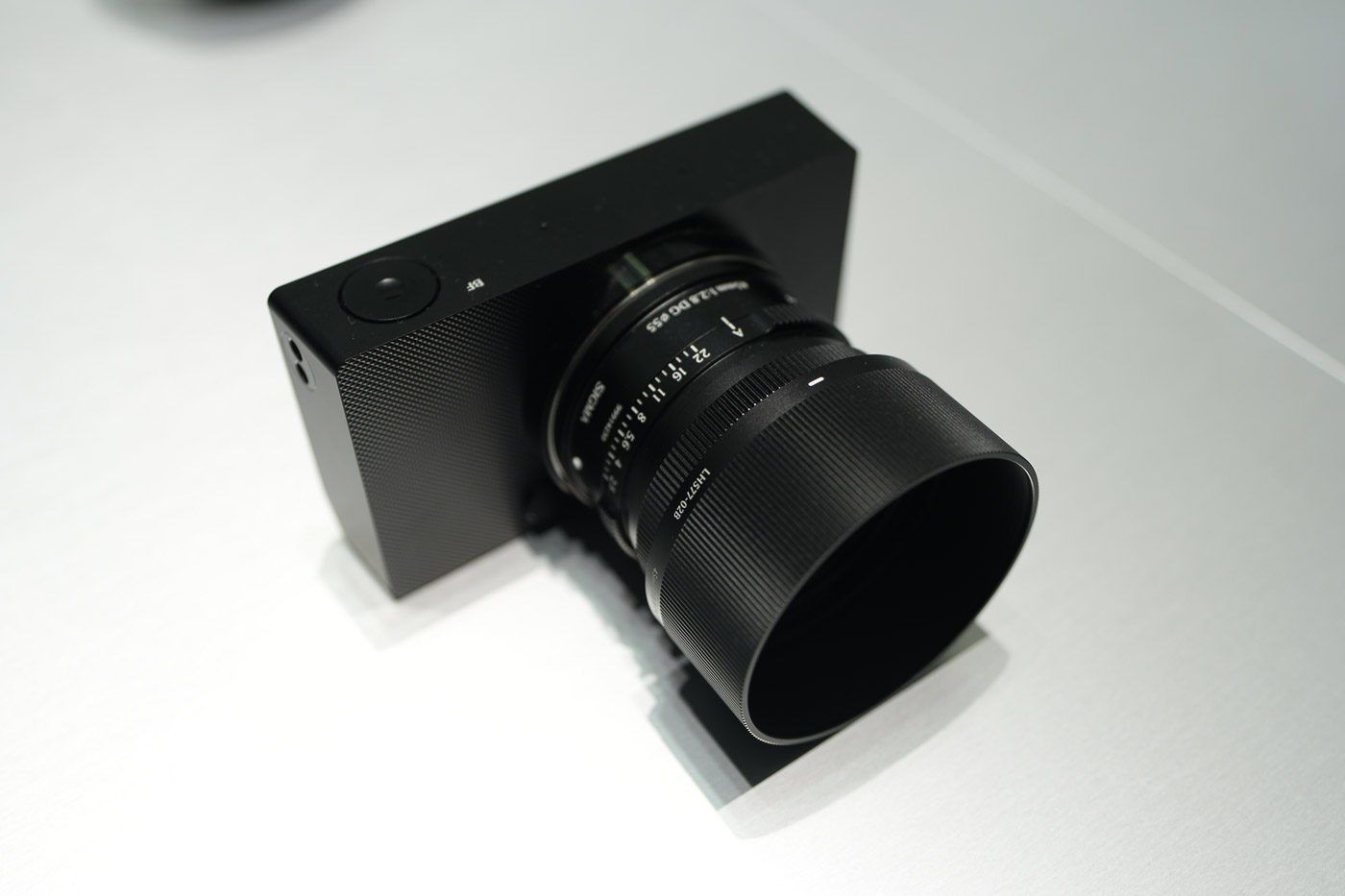
Last year, right here at CP+, you told us you were “quite nervous” before the Sigma BF announcement and expected around 40% negative feedback. One year later, what has the response been like, both in terms of how people use it and in terms of sales?
In general, the feedback from users has been quite positive, which I really appreciate, and I’m very happy with it. Some customers fall in love with the camera immediately, but other customers are a little bit confused about how to use it because the user interface is quite different from other cameras. But once they get used to it, they love the user interface and love using the BF.
Some customers told me that by using the BF, they changed their own shooting style. Of course, there are some complaints: features are missing, things like an EVF or in-body stabilization. But still, most of the feedback from users has been very positive.
Our sales are still constant because we have more back orders than our production capacity. Since the beginning, we have been running at full production and just delivering, but we still have not caught up with all the demand.
When you presented the 300-600mm f/4 DG OS Sports, you talked about motorsport photographers who have to carry multiple large telephoto lenses across racetracks. Now that this lens is available, have those photographers adopted it? What do you hear most in the feedback?
The feedback on the 300-600mm f/4 DG OS Sports has been really positive. Especially one of the motorsport photographers really appreciates it because it’s so powerful in the field. And of course, the optical performance is great.
Because of that, we have more orders than we expected. I had expected a very small amount of demand, so I set the production capacity accordingly. But once I heard the feedback from the market, we increased it. It was not enough, so within a week, we increased it again. We were really amazed.
Is it difficult for you to forecast the demand for such a product?
Last year was a series of surprises, not only for the 300-600mm. We had more orders than expected for the 200mm f/2 DG OS Sports as well. Because it’s such a niche lens, we expected the demand to be very small, but actually it was much bigger than we anticipated.
And the demand for the 17-40mm f/1.8 DC Art for APS-C cameras was way more than we expected. Even today, we can’t catch up with the back orders.
These days, the trend of the market changes quite a lot. I don’t know the exact reason why, but popular items go really popular and not-so-popular products have really, really low demand. The gap between popular and non-popular lenses has become bigger and bigger.

Do you think it’s because of social media?
It could be. I don’t know the exact reason behind it, but social media may influence such an extreme gap between popular and non-popular products.
The L-Mount Alliance now includes many players beyond the founding members Leica, Panasonic, and Sigma. We’ve even seen Viltrox announce its first L-mount lens. How do you see the L-mount ecosystem today? Does it need more members?
I think in general it’s a great benefit for users if they can have more choices. So the basic idea is: the more choice they have, the better it is as a system. But we need to be very careful about having more companies in the alliance, because we have to make sure of the compatibility between cameras and lenses across multiple brands.

Last year, when we asked whether we’d ever see full-frame Sigma lenses on Canon RF Mount, you replied “I can’t comment on that.” We’ll take the liberty of asking again one year later: are we any closer to that reality than we were in February 2025?
I still cannot comment on this. I’m sorry.
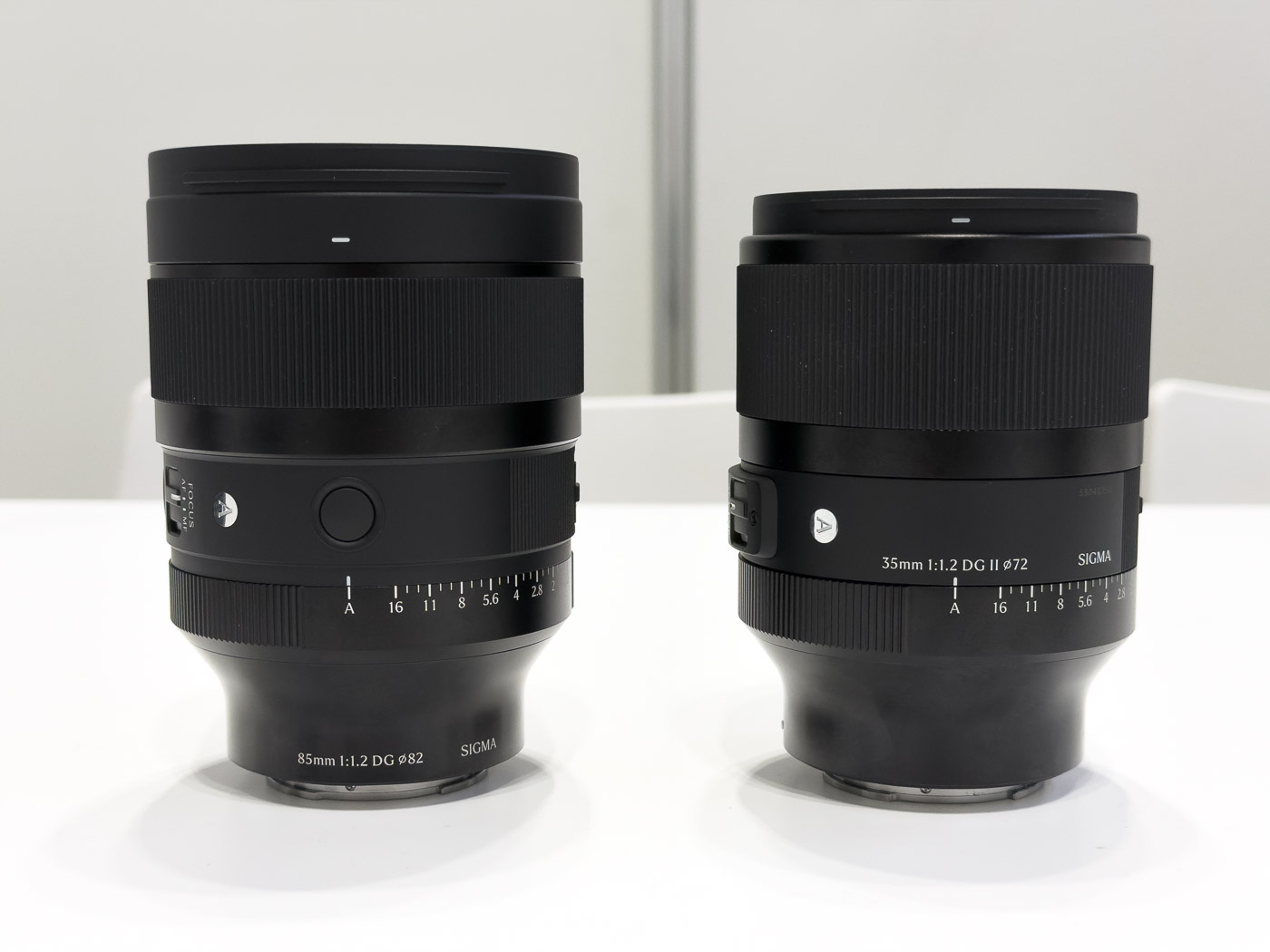
Here at CP+, you announced the development of an 85mm f/1.2 DG Art lens. Canon and Nikon both offer an 85mm f/1.2 on their own mounts, but no third-party lens maker has yet crossed that barrier in autofocus full-frame mirrorless. What makes an f/1.2 85 mm lens so difficult to design compared to an f/1.4? is it a proportional leap in difficulty, or is it an entirely different world?
Well, it’s quite difficult to develop an f/1.2 lens with high optical performance in a relatively compact size and weight. Thanks to several technologies we have, we are able to develop not only the 85mm, but also the 35mm, 50mm, and 85mm f/1.2 with very high optical performance within a decent size and weight.
Recently, Canon and Nikon have been releasing f/1.2 and f/1.4 lenses that are more affordable and compact. Could we say that camera manufacturers are trying to replace some third-party lens makers?
That’s an interesting question. First of all, I don’t know the reason why they developed such lenses. But I think it’s quite a good offer, especially the Canon 45mm f/1.2 at a reasonable price. It gives an opportunity to the younger generation who have a limited budget to enjoy a very fast f/1.2 lens.
Manufacturers like Viltrox are offering very fast and high-quality prime lenses at very aggressive prices. How does Sigma view this new competition?
I’m quite impressed by the progress they’ve made in recent years. The quality of their products has improved, and the speed at which they release new products is really fast, so I respect them.
I think we need to learn from them, how quickly they can make decisions and take action. But still, I believe there is a significant difference in performance and quality.
When it comes to lenses, they are basically analog devices. With digital technology, it’s relatively easier to copy and transfer technology from one place to another. But with analog devices, it’s the accumulation of experience, of small refinements that makes the product so much different.
At Sigma, we pay attention to all the details of quality and performance. If you test just in a laboratory, you may not see a significant difference, but if you have it for a long time and use it in many different situations, I believe users will tell the difference. So again, I respect them, but there is still a significant difference in the value of the product.
You mentioned the speed of development of new lenses by Viltrox. Do you think AI, as applied to software coding, could also be applied to lens design and development?
I think we can use it partially for the development of lenses. You may be able to make a decent level of lens or product utilizing AI. But in order to make the best quality products, such knowledge, technology, and know-how still reside within the company. Each company has its own proprietary knowledge to make good products, and those technologies are not available in the cloud or in large language models.
Yes, but it could be available inside Sigma with your proprietary AI. You could learn from all your history in terms of development and maybe help engineers go from zero to one faster.
It may be possible, and actually we are discussing internally whether we can utilize our proprietary knowledge using AI.
But right now, we don’t use it that way, because our engineering team works at our head office and they come to the office every day, they do not work remotely. They meet each other and transfer one person’s knowledge to another because we value teamwork. Also, our Aizu factory is under the same umbrella, Sigma Corporation, so they work together. Right now, we don’t need AI, and we develop our products in a kind of traditional way.
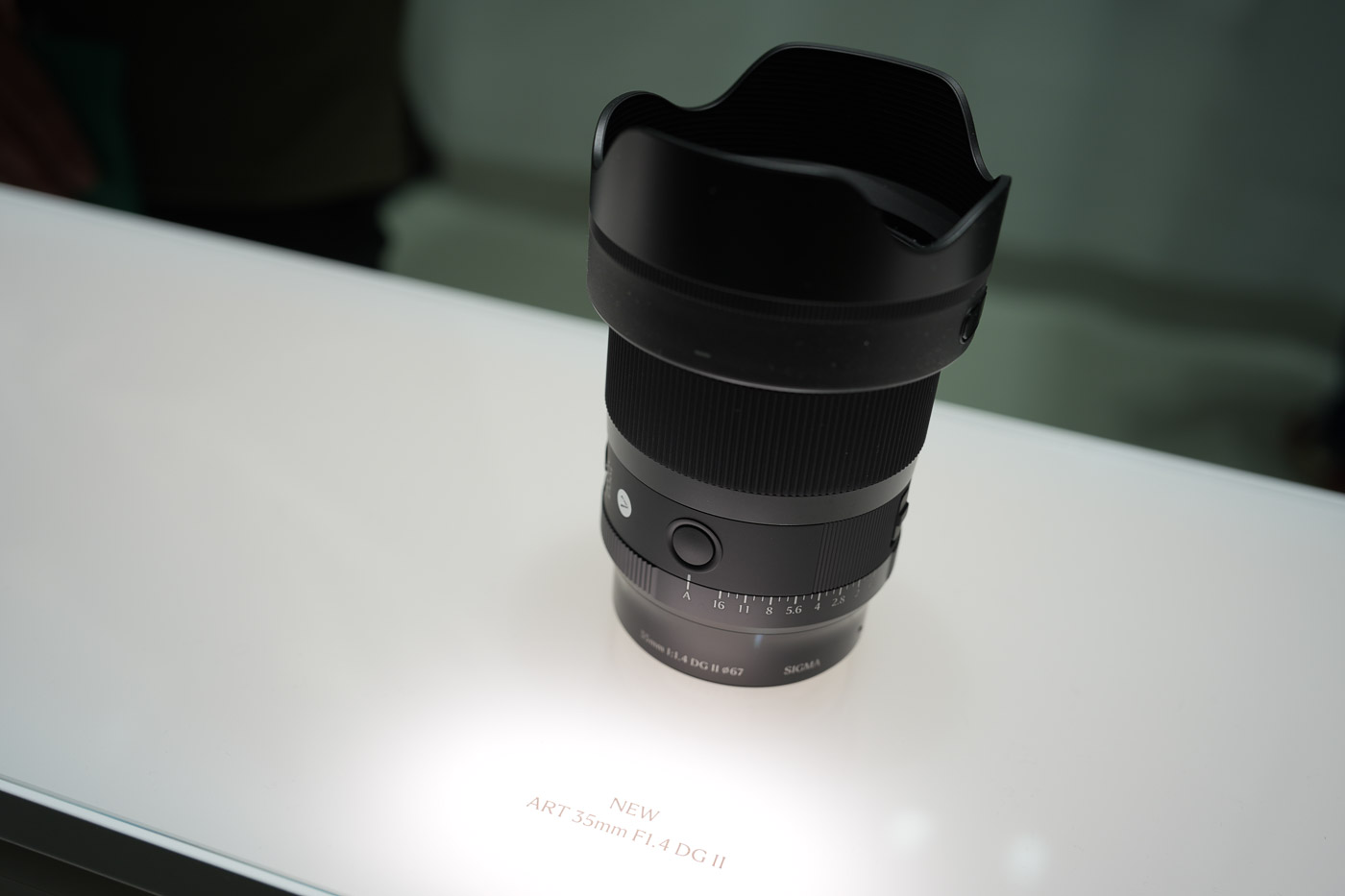
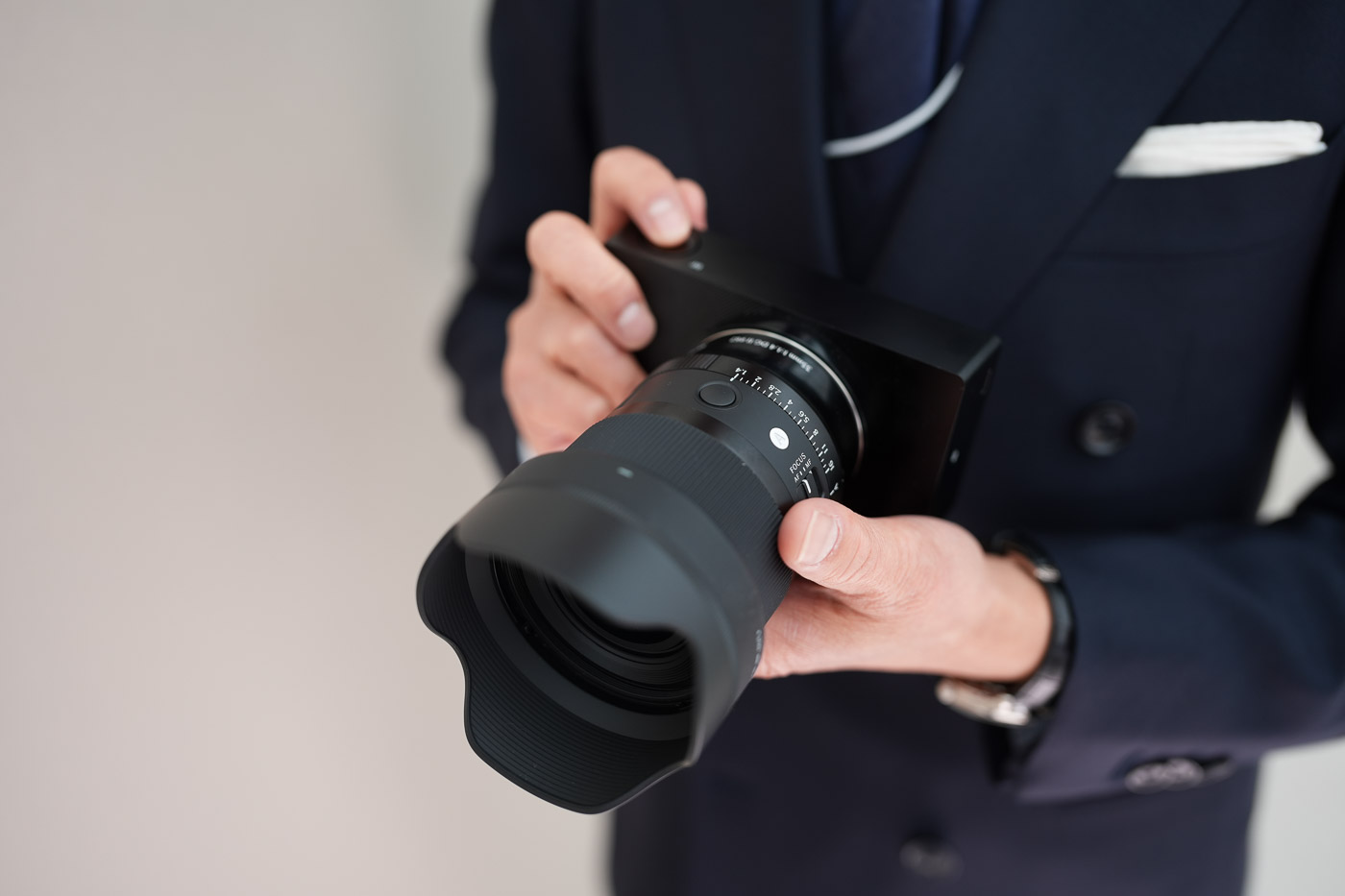
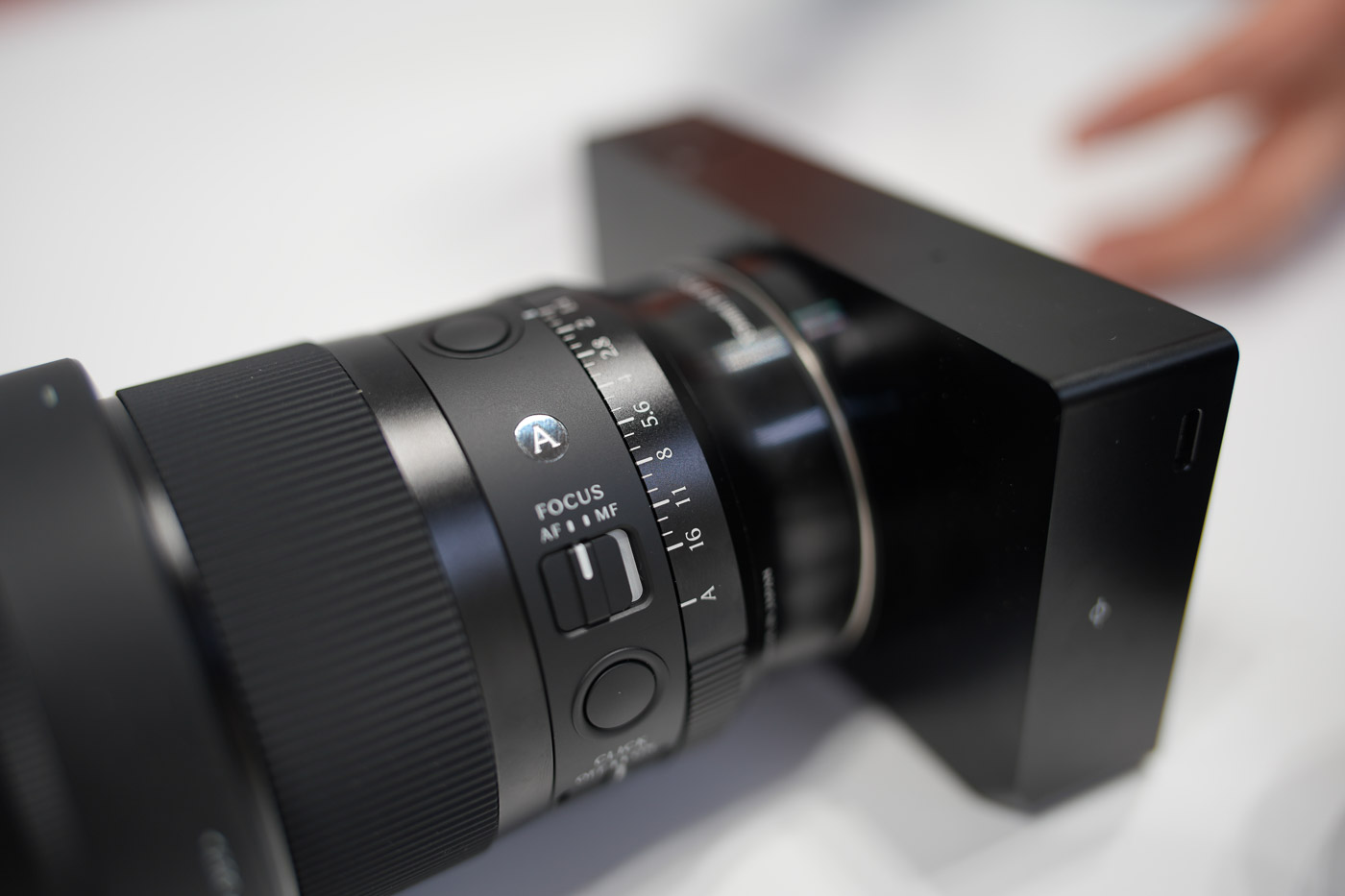
The 35mm f/1.4 Art lens from 2012 is probably the lens that changed the perception of Sigma worldwide with the Art line. Thirteen years later, you’re introducing a version II. Was it an intimidating lens to design, precisely because the original has such an aura? What can you do today in optical design that you couldn’t do in 2012?
First of all, as you said, the 35mm f/1.4 prime lens is very important for us because it was the first Art lens and it brought us huge success. On designing a lens for SLR and for mirrorless, the basic theory is the same. When we developed the first generation of 35mm f/1.4 for mirrorless cameras, we did not have the technology that we have today.
For example, our HLA linear motor was not available at the time. And some very exotic shapes of aspherical glass elements were not available either. So there are several technologies that have become available today that allow us to make an even better 35mm f/1.4. That’s why we decided to make a second generation. I’m really proud of this lens.
More broadly, does Sigma have a roadmap for developing second-generation Art lenses? How do you choose which lens to update?
If we become confident that we can make a significantly better product than the existing model, we do not hesitate to make a second-generation version. But if there is not so much difference between Gen 1 and Gen 2, we will not make it. So we decide whether or not to make a Generation 2 depending on those possibilities.
But because of all the evolution between the DSLR era and mirrorless, as you say, autofocus motors and so on, a lot of lenses could potentially be improved, right?
It depends. For example, the optical design of our 85mm f/1.4 DG DN Art [launched in 2018. Editor’s Note] is really well made. It achieved a compact, lightweight design while delivering very high optical performance. So I’m personally very happy with the Gen 1 85mm f/1.4. I think the situation is different from one lens to another.
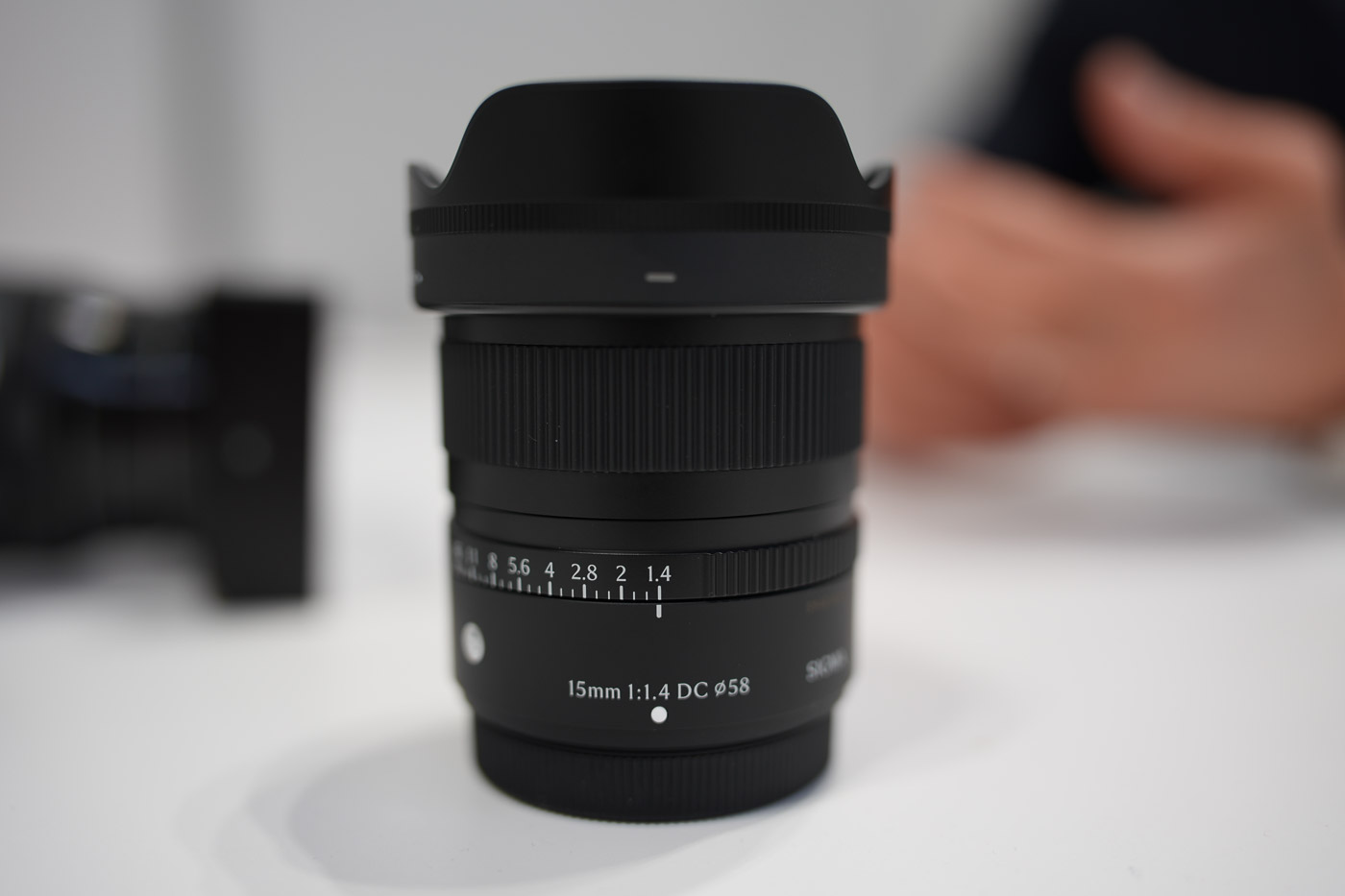
Sigma also unveiled a 15mm f/1.4 for APS-C. What role does APS-C play in Sigma’s strategy?
I don’t know if the APS-C market will grow in the future, but it’s true that there is a significant number of users in the market. Of course, I know that the majority of customers and the trend is moving towards full frame.
However, I like the APS-C system because it’s a nice balance between quality, performance, price.
Especially, we can make the lenses significantly more compact. Last year, we released the 16-300mm, which is equivalent to 24-450mm, which is crazy. We can’t make such a lens for full frame, but we can make it in quite a decent size and weight for APS-C.
So I think the APS-C format is really nice when it comes to the balance between lens and camera. And also, unfortunately, the prices of cameras and lenses have been increasing a lot, mainly due to the increase in production costs, material costs, energy costs, and labor costs.

I think the price point of APS-C system cameras is affordable compared to full frame. So I believe the APS-C format has great potential in the future.
And on that note, why not release this 15mm lens in L-mount? Is that a signal that L-mount is primarily geared towards full frame?
In the beginning, we decided to make all APS-C lenses for L-mount. But starting last year, we stopped making the L-mount version for APS-C lenses, because the demand for APS-C L-mount lenses is really, really small.
We sell very few units, maybe because there is no APS-C L-mount camera available. So maybe in the future, whether it’s Sigma, Panasonic, or Leica, if some camera manufacturer makes an APS-C sensor camera in L-mount, we would be very happy to make this lens in L-mount as well.
Hum, you’re opening up a lot of ideas for me. For example, a smaller Sigma BF with an APS-C sensor.
I think it might be a good idea.
To wrap up, let’s talk about something we wouldn’t expect from a lens manufacturer: rice farming. You’ve announced the creation of Sigma Aizu Farm Corporation. Every time we interview you, you come back to your responsibility towards Aizu. “Without our factory, the town could disappear,” you told us. Can you tell us about how this project came about, and what was the trigger?
My father liked Aizu, and he really loved the landscape of the area, including the rice paddies. It’s really beautiful. You can see it in winter, but from spring to fall, just watching the rice fields is wonderful.
Unfortunately, these days, some rice fields are being abandoned, because Japan is a rapidly aging country. We have fewer and fewer farmers, even in the Aizu area. And children of farmers may not want to take over the farmland.
We set up Sigma Aizu Farm Corporation to preserve the traditional landscape of Aizu, which is called “satoyama” in Japanese. There is no exact English equivalent.
As I understand it, it’s the area between cities and mountains, right?
Yes. Mountains, cities, and in between there are rice fields. And actually, if we lose the rice fields, it creates a lot of problems for the environment.
First of all, the paddy fields contain a lot of water. If they are abandoned, it may cause flooding because the water goes directly from the mountains to the sea. It may also create mudslides, for the same reason.
There are lots of creatures in the paddy fields, small fish, frogs, and they would lose the place where they can live. It may also invite harmful insects or animals from the mountains.
So I think preserving the rice fields is really important to protect the local environment. I like the expression “think globally, act locally.” As a manufacturer, unfortunately, we use a lot of energy, we use a lot of materials to make our products. So we are having some kind of negative impact on the global environment. This is one of the small things we can do to protect the local environment.
And how will it work?
For the first two to three years, we will work with existing farmers. But they are quite old, the farmers we know are already in their mid-70s, so they need to retire at some point. But fortunately, it’s quite lucky for us, because some of our employees, the factory workers, are farmers. So once they reach the age of 60 or 65, we can ask them not to work in the factory anymore but to work in the rice fields instead.
What about retirement?
Well, they can work in the rice fields even if they can no longer work in the factory [In Japan, since April 2021, companies are required to make efforts to provide employment opportunities for those aged 65-70, though this is not mandatory, Editor’s Note.] We already have the resources. They know how to grow rice. They have machines, tractors, combine harvesters, so we can borrow such equipment from them.
That’s a good idea. Maybe, more than the environmental aspect, it might also be really important in terms of community. Because as you told me, most of the people from the area are either moving to the big cities, working at Sigma, or working at the Olympus stethoscope factory. It’s good to have more community, more options to stay in the area.
Yes, yes. And also, preserving the rice fields, the traditional “satoyama” landscape of the Aizu area, contributes to the mental health of the local people. Because if they see just an abandoned field, they may lose confidence or pride in their hometown.
And one last question : aren’t you afraid of losing your focus, with Sigma making lenses and camera bodies?
Well, I don’t think so, because the rice fields should be taken care of by our staff. And I myself will continuously focus on our main business, almost 100%. I’m not concerned about it.
Thank you to Mr. Yamaki for answering our questions. We would also like to thank the Sigma France team for making this interview possible.