

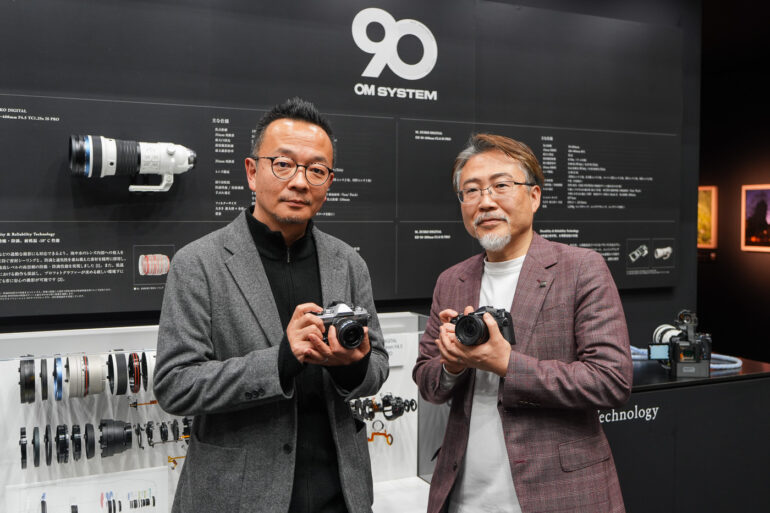

2025 was a milestone year for OM System, with two camera bodies and four lenses released in a single year. At CP+ 2026, we sat down with Kazuhiro Togashi, Senior Vice President of Product Planning and Brand Strategy, and Nobuaki Tanaka, Director of Product Communication and Global Brand & Marketing Strategy at OM Digital Solutions (OMDS).
We discussed OM System’s dedication to compact, high-performance gear, highlighted by the OM-3 launch and its astrophotography version. We also explored the balance between AI integration and preserving the integrity of authentic photography. Let’s dive in.
Since OM Digital Solutions became an independent company following the spin-off of Olympus’s imaging business, how would you assess its financial performance? What is your market share in Japan? And in the rest of the world?
Kazuhiro Togashi: Since the establishment of OM Digital Solutions, we have achieved our business plan targets every year and have continued to generate operating profit on an internal management accounting basis. And as we are not a publicly listed company, we do not publicly disclose financial figures. By focusing our resources and streamlining our operations, we believe we have built a sustainable business model. This also means we are in a position to fund new product development independently.
As for market share, while I cannot disclose specific figures, we are close to a 10% share in the Japanese market. Globally, we have significant potential, but we have not yet reached that same level as in Japan.
Competition in Micro Four Thirds is shrinking (Panasonic seems to be focusing on full frame). How do you view this situation: as a threat or an opportunity?
Kazuhiro Togashi: As you can imagine, there are both challenges and opportunities.
In that context, we believe it is important to continue clearly communicating the value of the Micro Four Thirds system, while at the same time adding new value to it. For a system to be loved over the long term, continuity is essential. That is why OM SYSTEM continues to focus on product development centered on Micro Four Thirds.
Precisely because the competitive environment is changing, we see an opportunity to more clearly highlight the unique value that only Micro Four Thirds can offer.
We know that certain products don’t have the same appeal across continents. How do you balance the demands of different markets when developing a new product?
Kazuhiro Togashi: That is a good question. In our product development process, we incorporate quantitative market research as well as feedback from users in different regions.
It is true that for certain specifications, preferences can differ significantly by region, sometimes even in completely opposite directions. However, in reality, differences in shooting subjects and purposes, in other words, what people want to photograph, have a much greater impact on our specification decisions than regional differences.
Therefore, we begin by carefully considering what kind of subjects the camera is intended to capture, and we plan the product accordingly. As a result, based on our internal user research, we see very little variation in customer satisfaction levels across different countries. We focus on the needs of photographers.
2025 was an interesting year for OM System, with 2 camera bodies and 4 lenses (OM-3, OM-5 Mark II, M.Zuiko 17mm and 25mm f/1.8 II, 100-400mm II, and especially the 50-200mm f/2.8 IS Pro). How do you explain this?
Kazuhiro Togashi: As we mentioned when introducing the OM-3, 2025 marked an important milestone for OM SYSTEM. It was the first year in which we launched products developed entirely from the ground up under the new company structure.
In particular, the introduction of weather-sealed prime lenses allowed us to clearly communicate the direction and identity of our new brand.
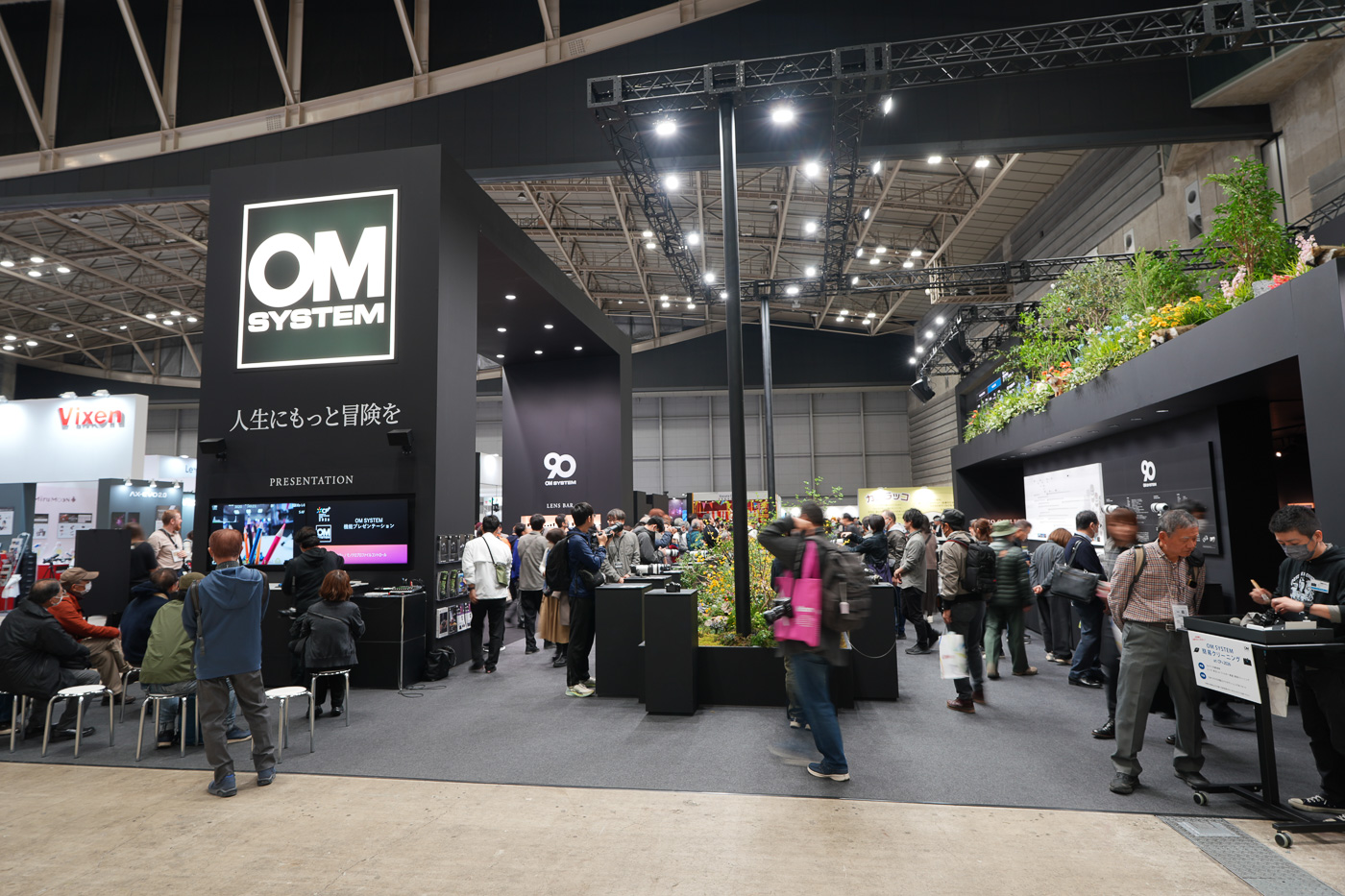
Within that context, the 50-200mm lens represents what we consider the complete outdoor photography experience in a single lens. It is positioned as a professional lens capable of covering a wide range of subjects, from bird photography and wildlife to macro, landscapes, and even outdoor winter sports.
We are pleased that it has been so well received by many customers. In some markets, delivery times have been extended due to strong demand, but we hope that more users will continue to experience the appeal of this product. The French market also shows strong demand for these lenses.
Last year at CP+, you unveiled a lens roadmap. Few manufacturers still do this, as lens portfolios are now well established. What lens development requests do you receive?
Kazuhiro Togashi: We receive requests for even longer telephoto lenses, and at the same time, we also hear expectations for additional prime and wide-angle lenses. In particular, since the launch of the OM-3, we have seen a significant number of users requesting more compact wide-angle and prime lenses.
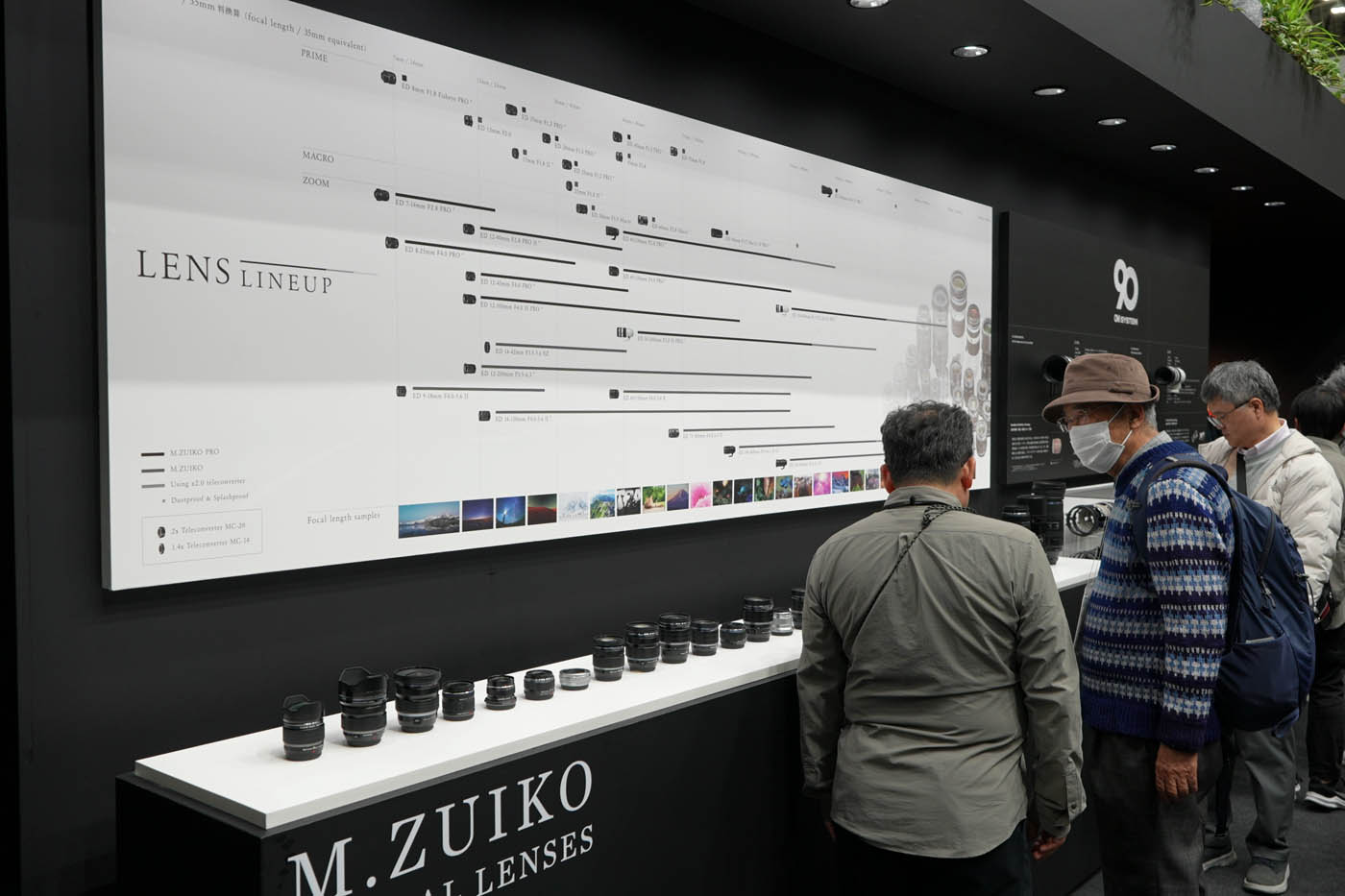
While we cannot share details about our roadmap, we are not only focusing on telephoto lenses but also exploring lenses that are better suited for everyday photography.
During our review of the M.Zuiko ED 50-200mm f/2.8 IS PRO, we noted that the teleconverters significantly degraded image quality. Isn’t it time to update their optical design?
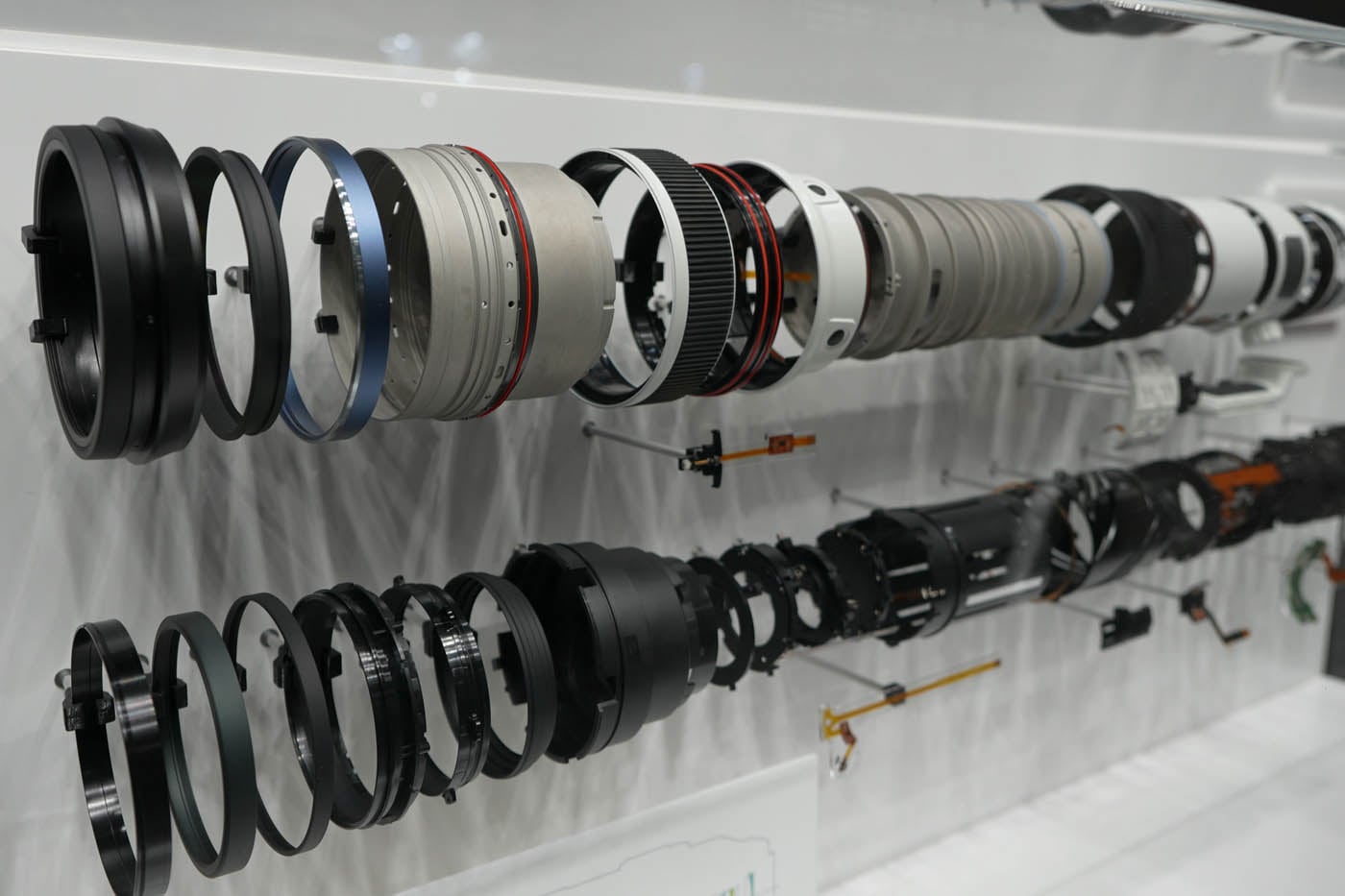
Nobuaki Tanaka: Actually, the current 1.4x and 2x teleconverters have been designed to such a high optical standard that there is very little room for meaningful improvement at this time. Since image quality is affected by the combination of the teleconverter and the lens, we paid particular attention to the optical design of the 50–200mm lens to minimize image degradation when a teleconverter is attached.
Theoretically, with current technology, attaching a teleconverter will inevitably affect image quality. We take this feedback seriously and see it as valuable input for our future lens design considerations.
But since the camera can detect when a teleconverter is attached, would it be possible to use software to compensate for any resulting degradation in image quality?
Kazuhiro Togashi: That’s an excellent point. We are actually considering similar approaches using AI or internal camera software. However, as mentioned, this remains a significant challenge that cannot be easily resolved. Nevertheless, it is an option we are actively exploring.
Several manufacturers indicate there is strong demand for vintage-looking cameras. Does the OM-3 meet this expectation?
Nobuaki Tanaka: Yes, we believe it meets those expectations. In addition, the OM-3 is not simply a nostalgic and vintage design. Under the product concept of “Heritage x Innovation,” we drew on the traditional design language of the classic OM series while integrating modern shooting styles, usability, and performance.
Our goal was to create a camera that pleases not only in appearance, but also in everyday use.
Have you received feedback suggesting that the specifications of the OM-3 are too similar to the OM-1 Mark II? Some might feel this model offers more than necessary, resulting in a price point that seems a bit high.
Nobuaki Tanaka: Our intention is to give each camera its own distinct character. The concept of the OM-1 series is that of a one-of-a-kind tool for photographers who go deep into nature to capture decisive moments and create images that have never been photographed before.
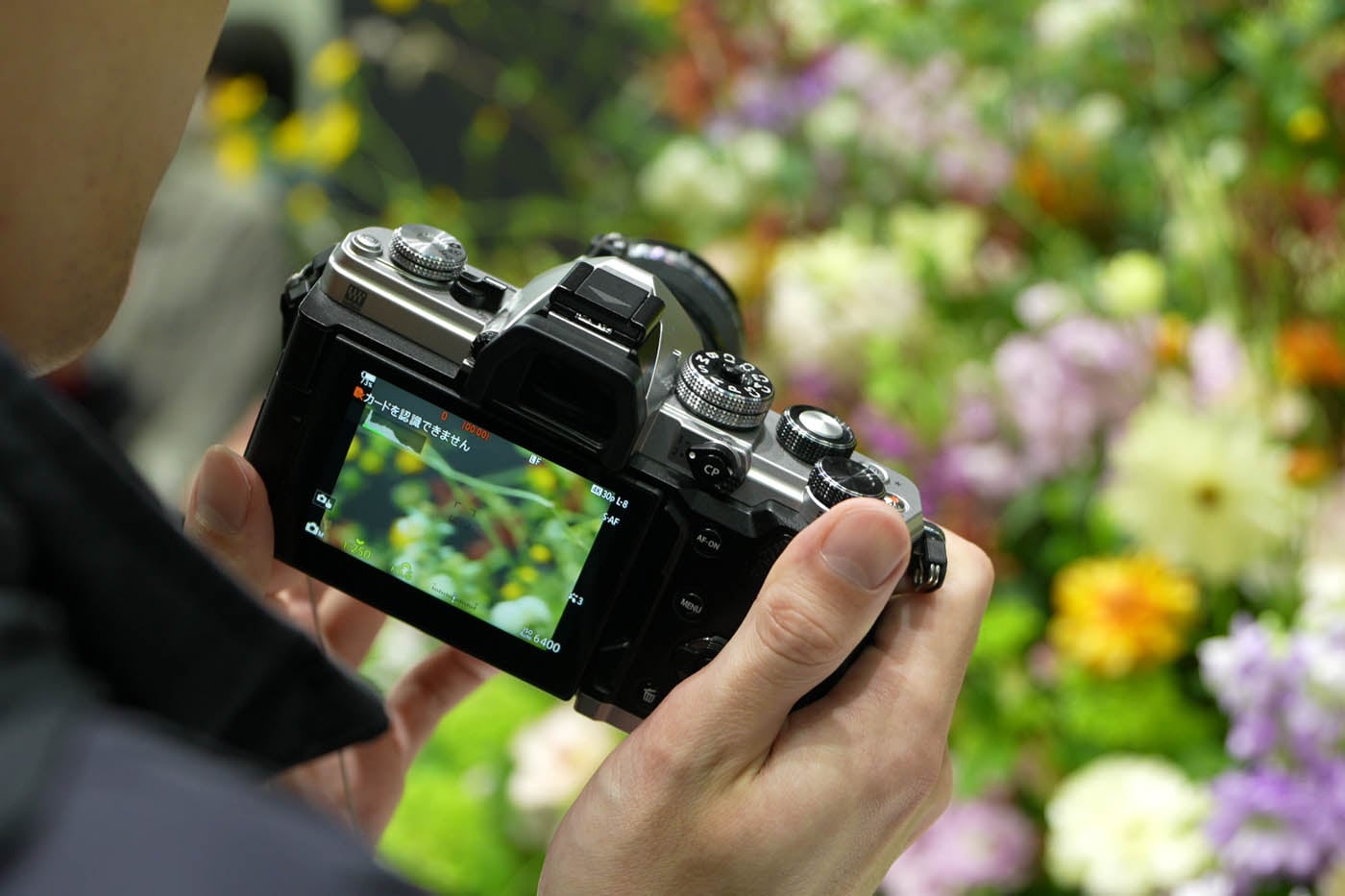
The OM-3, on the other hand, is a camera for everyday outdoor use, one that fits naturally into photographers’ daily lives, to realize unprecedented expressions by focusing on their own unique photographic and creative vision. Our goal was to provide high performance, bringing it to the same level as the OM-1 Mark II, but within its own specific category.
Maybe my question is: Will there be an OM-30 for like an entry-level camera but with the same design?
Nobuaki Tanaka: It’s a good idea. We are considering it. But in that case, it may need to clearly differentiate itself from the OM-5 Mark II, which is already positioned as a compact and capable model in our lineup and covers a wide range of uses. We are exploring all possibilities for the future.
The PEN-F is Olympus’s most sought-after camera and sells used at new prices. Do you think you can respond to this market demand?
Kazuhiro Togashi: We frequently receive requests for a successor to the PEN-F. As we have mentioned before, we consider the PEN series to be an important lineup for us, and of course we are considering future new products within the series.
While we cannot share details about what the next PEN model will be like at this moment, we are committed to releasing a PEN camera we can be proud of and that will truly satisfy our customers.
At CP+, you’re presenting the OM-3 ASTRO, which uses the OM-3 base with a modified IR filter. Why this product? Why not offer this treatment on the OM-1 Mark II, your flagship?
Nobuaki Tanaka: There are several reasons. One of them is that the OM-3 has color profile control, which allows photographers to further expand the range of color tones and overall image rendering in astrophotography. Usually, astrophotographers want to create their own colors, maybe strengthen the red or blue, something that is easy to do on this camera.
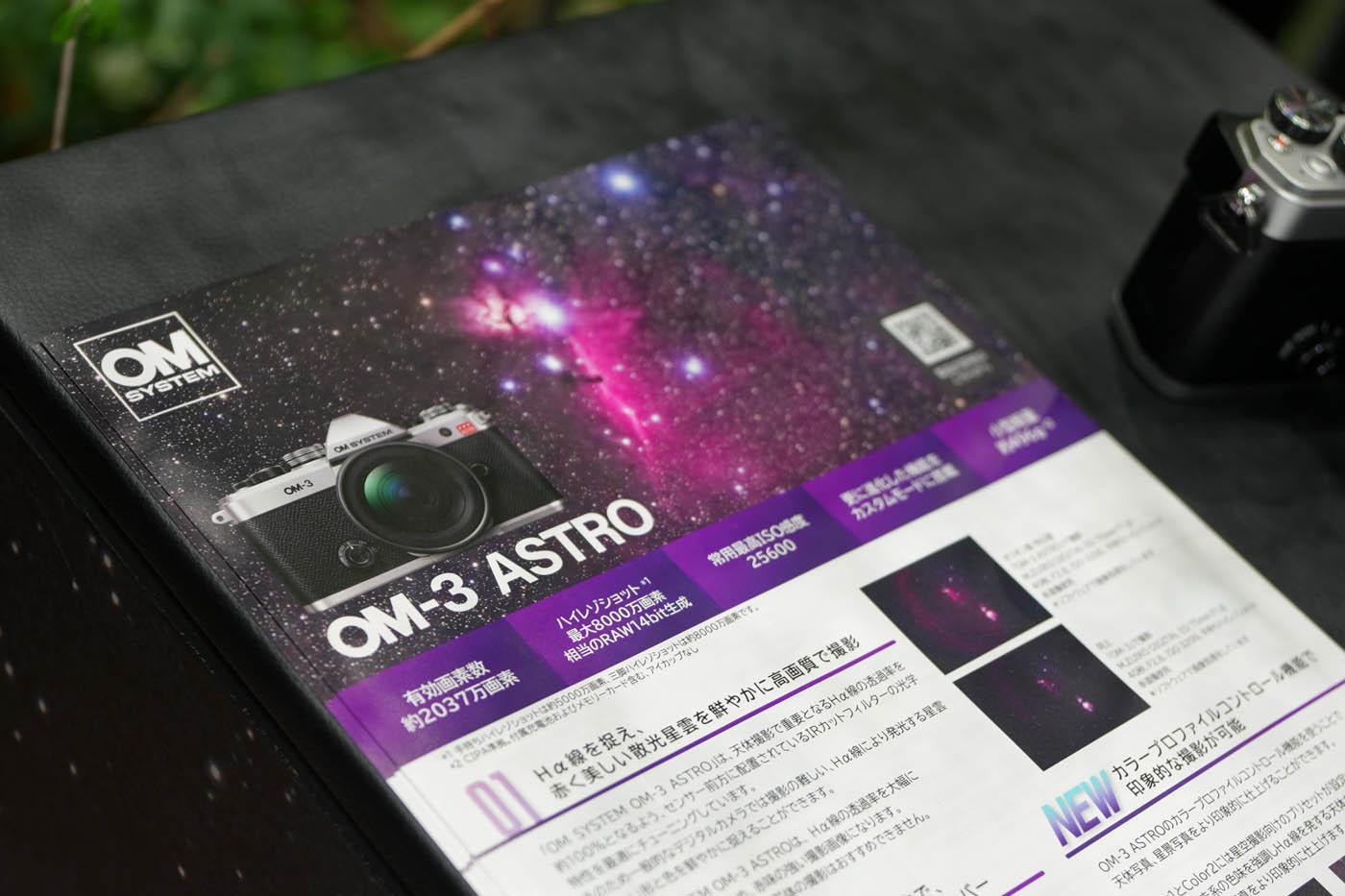
Another reason is that the OM-3 is so much smaller and lighter than the OM-1 Mark II. It lightens the load when traveling and minimizes the load on a tripod or equatorial mount.
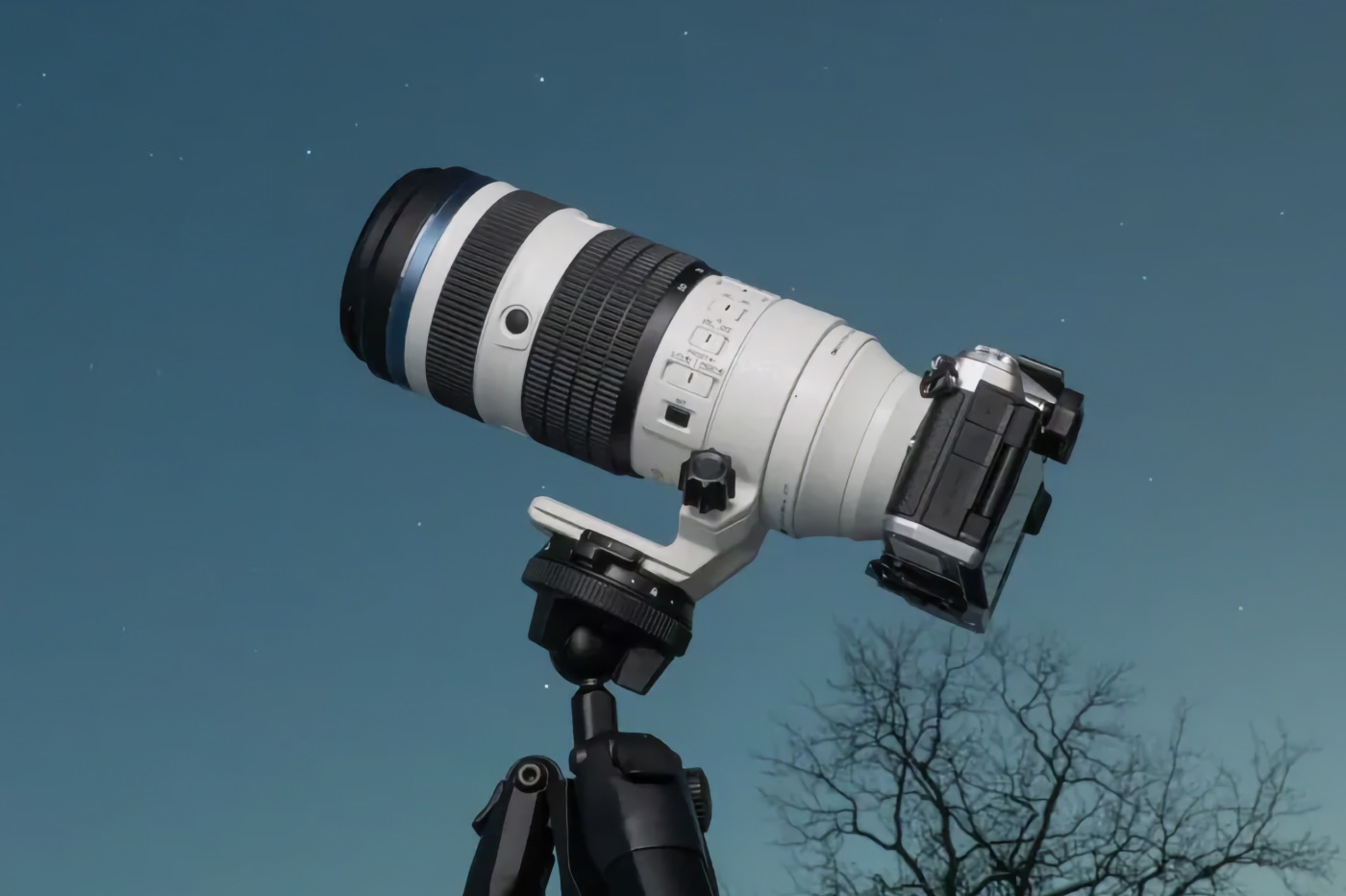
Both cameras share the same image sensor and engine. That’s why the OM-3 was the natural choice for our new astro camera. The previous model was based on the E-M1 Mark III, one generation behind in terms of engine and sensor.
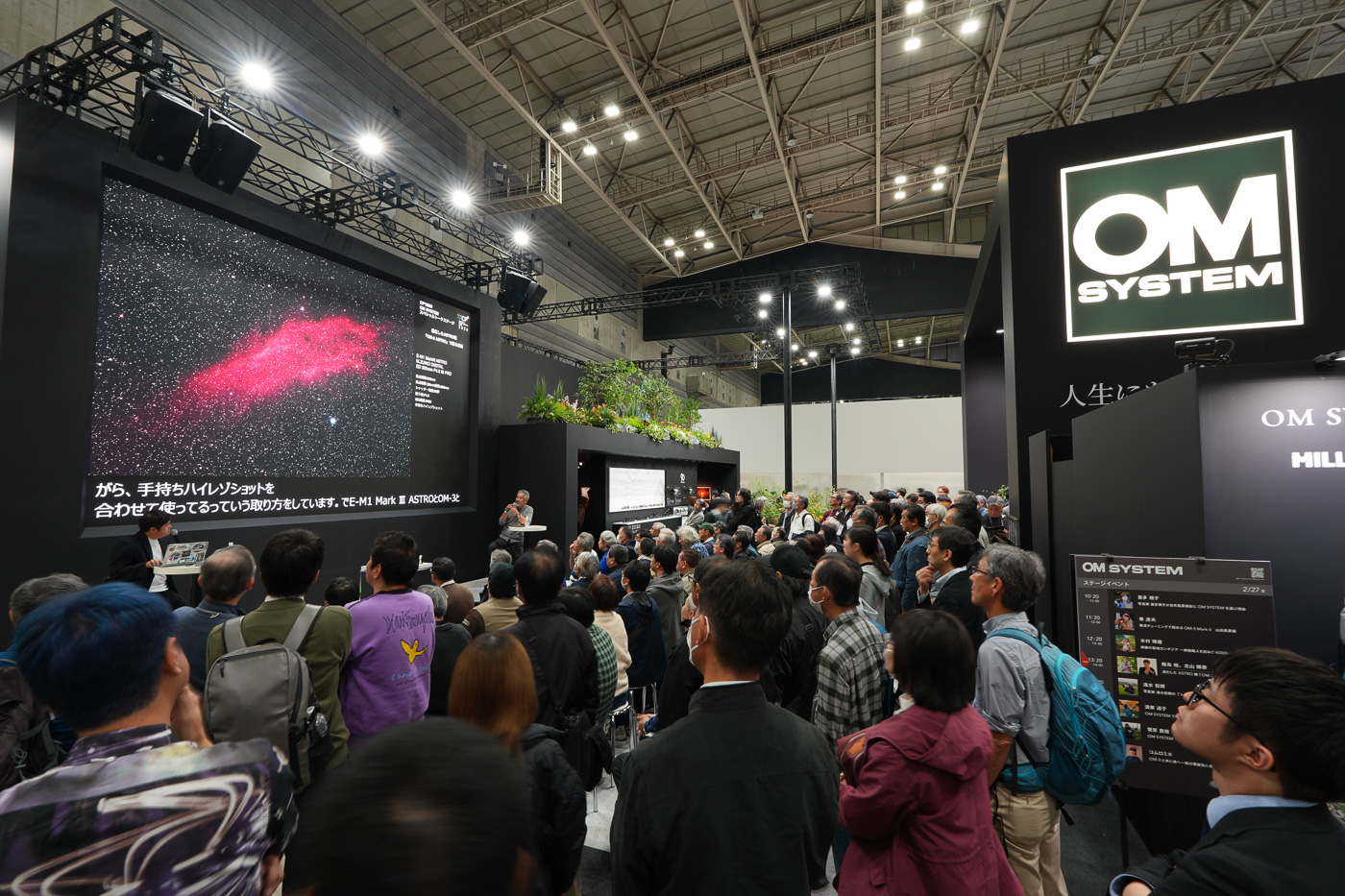
Kazuhiro Togashi: Regarding market demand for astrophotography: our initial model was exclusive to Japan, but demand exceeded our expectations. Consequently, we decided to launch this new model globally. In Europe, pre-orders have already surpassed our initial forecasts.
Feedback in the US has also been exceptionally positive, especially since almost no other brand currently offers a similar product. It complements our lineup perfectly. As our engineers like to say: astrophotography is the ultimate form of outdoor photography.

Canon has long offered EOS Ra or R5a models with modified filters. In your view, what is the advantage of Micro Four Thirds for astrophotography compared to full frame?
Nobuaki Tanaka: Many users travel to the countryside or climb mountains to capture better astrophotographs shots. From this perspective, we believe that the compact size, light weight, and portability offered by the Micro Four Thirds system represent significant advantages.
In addition, the OM-3 ASTRO is equipped with a High Res Shot function optimized for astrophotography, which supports in-camera stacking. For this model, we have introduced a new processing method in which a dark frame captured after exposure is applied to each frame prior to compositing, enabling effective noise reduction.
As a result, this significantly reduces long-exposure noise during Handheld High Res Shot shooting, allowing photographers to capture smoother, higher-quality astronomical images.
The 20 MP sensor has been used for several generations. What are the technical obstacles to moving to a higher resolution on Micro Four Thirds at OM System while maintaining high ISO performance?
Nobuaki Tanaka: We think balancing high sensitivity performance with high resolution is a major challenge.
In addition, we are carefully evaluating sensor readout speed, which is essential for computational photography. As you know, for High Res shots, this camera takes 12 photos when used on a tripod. Therefore, the camera has to read out the data very fast. We also need to maintain a smooth and responsive shooting workflow from capture to image recording.
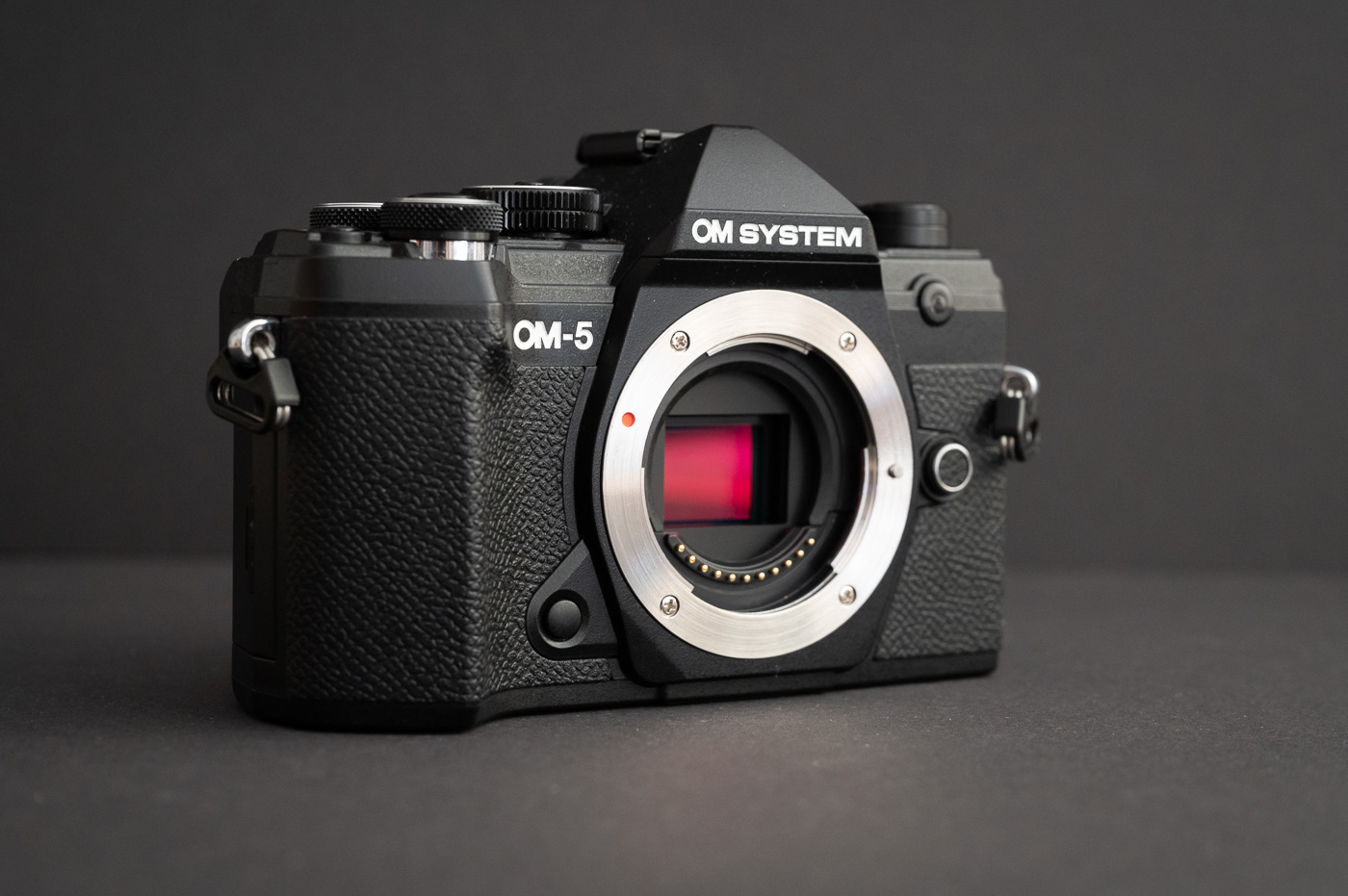
Sensor readout speed remains a priority. Maybe in the future we will offer higher-resolution sensors. But we believe our current resolution allows for much easier data management, which is a significant benefit for our customers.
Computational processing compensates for some limitations of Micro Four Thirds. How far do you think you can go with software before reaching the physical limits of the sensor?
Nobuaki Tanaka: We believe that advances in software have been narrowing the image quality gap traditionally attributed to differences in sensor size.
At the same time, our computational photography technologies are not simply intended to compensate for the physical limitations of the sensor. Rather, we see them as tools to expand creative possibilities and enhance the shooting experience, without the need for physical accessories such as filters.

We believe there is still significant potential in the value that software can deliver to users. Of course, it is not possible to eliminate all physical constraints. However, our challenge is to push creative expression and the shooting experience as far as possible.
On-board AI is progressing rapidly (subject detection, noise reduction). What AI developments are you considering for future generations?
Nobuaki Tanaka: Since the introduction of AI Subject Detection – Bird with the E-M1X, we have continuously explored and evaluated AI-based features.
We believe AI can be used both to enhance in-camera shooting functions at the time of capture and to support post-capture image adjustments. Maybe in the future, the camera will be able to handle everything internally. This is a big part of our research.
In addition, with regard to the use of AI for post-capture images, we believe that technologies to certify that an image has not been AI-generated may become increasingly important in the future.
Is OM System considering the integration of C2PA technology directly into its cameras?
Kazuhiro Togashi: We are exploring ways to distinguish original images from AI-generated ones. For instance, in Japan, we have already seen cases where AI-generated images have won prizes at photo festivals, which highlights the importance of this issue.
In my view, we must prioritize the authentic shooting experience for photographers. That sense of satisfaction is what differentiates a real photograph from an AI-generated one. While we aim to harness AI technology, we must also protect the integrity of the act of shooting.
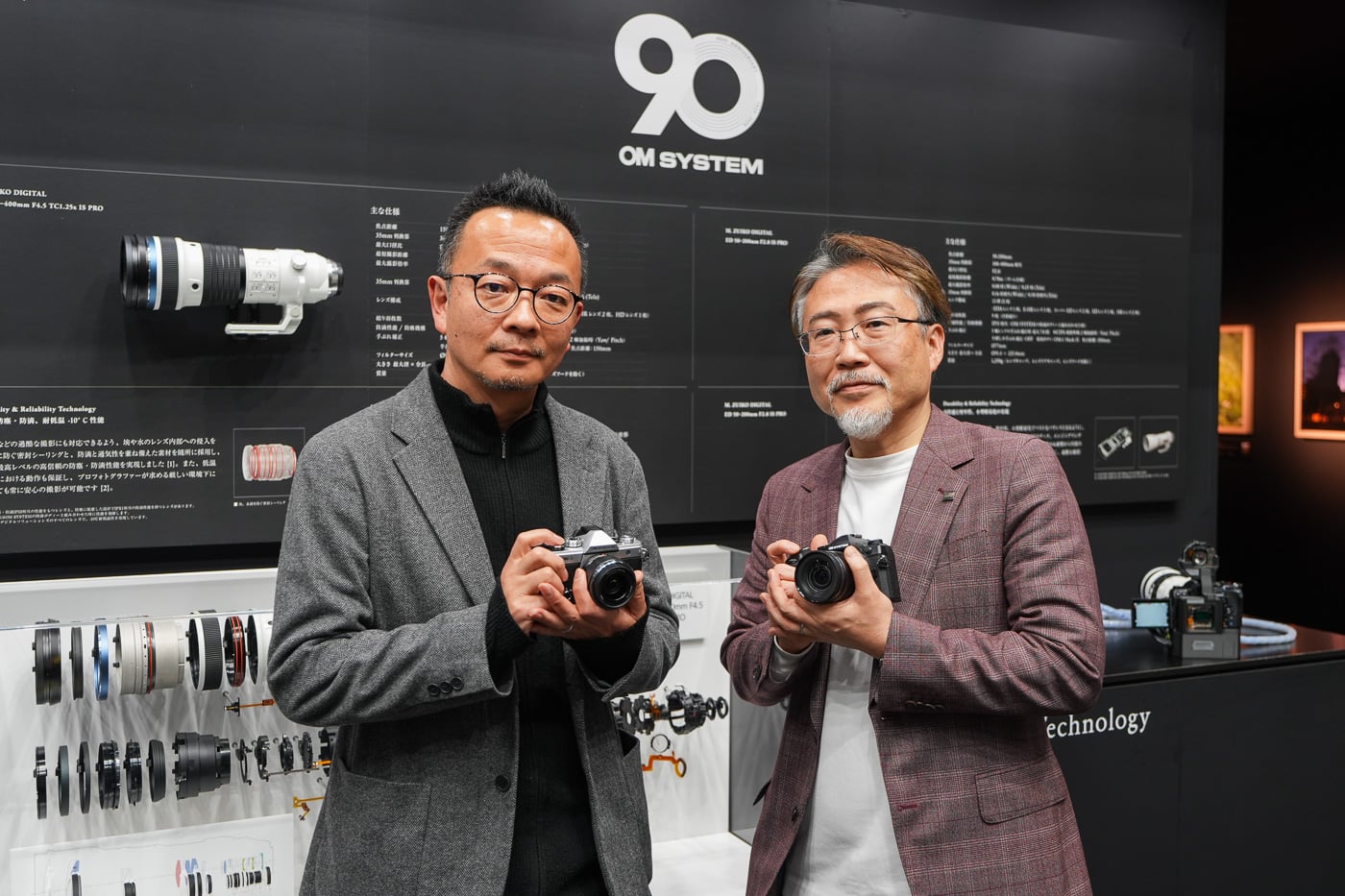
Thank you to Kazuhiro Togashi and Nobuaki Tanaka for answering our questions. We would also like to thank the team at OMDS France for making this interview possible.