

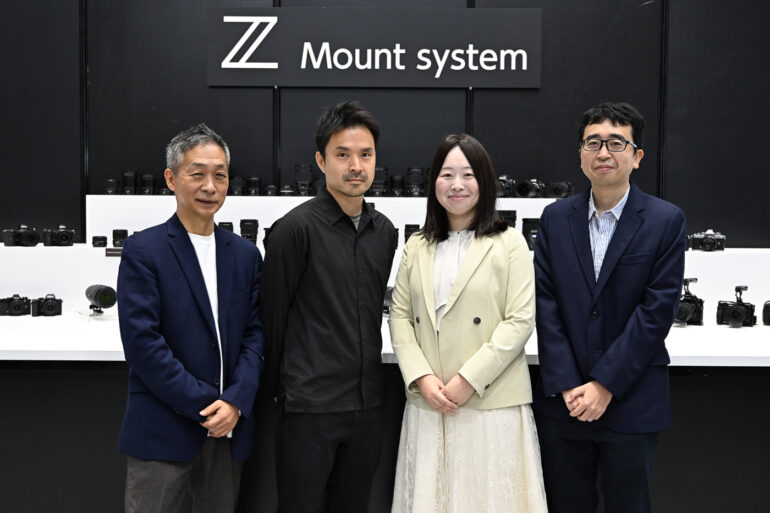

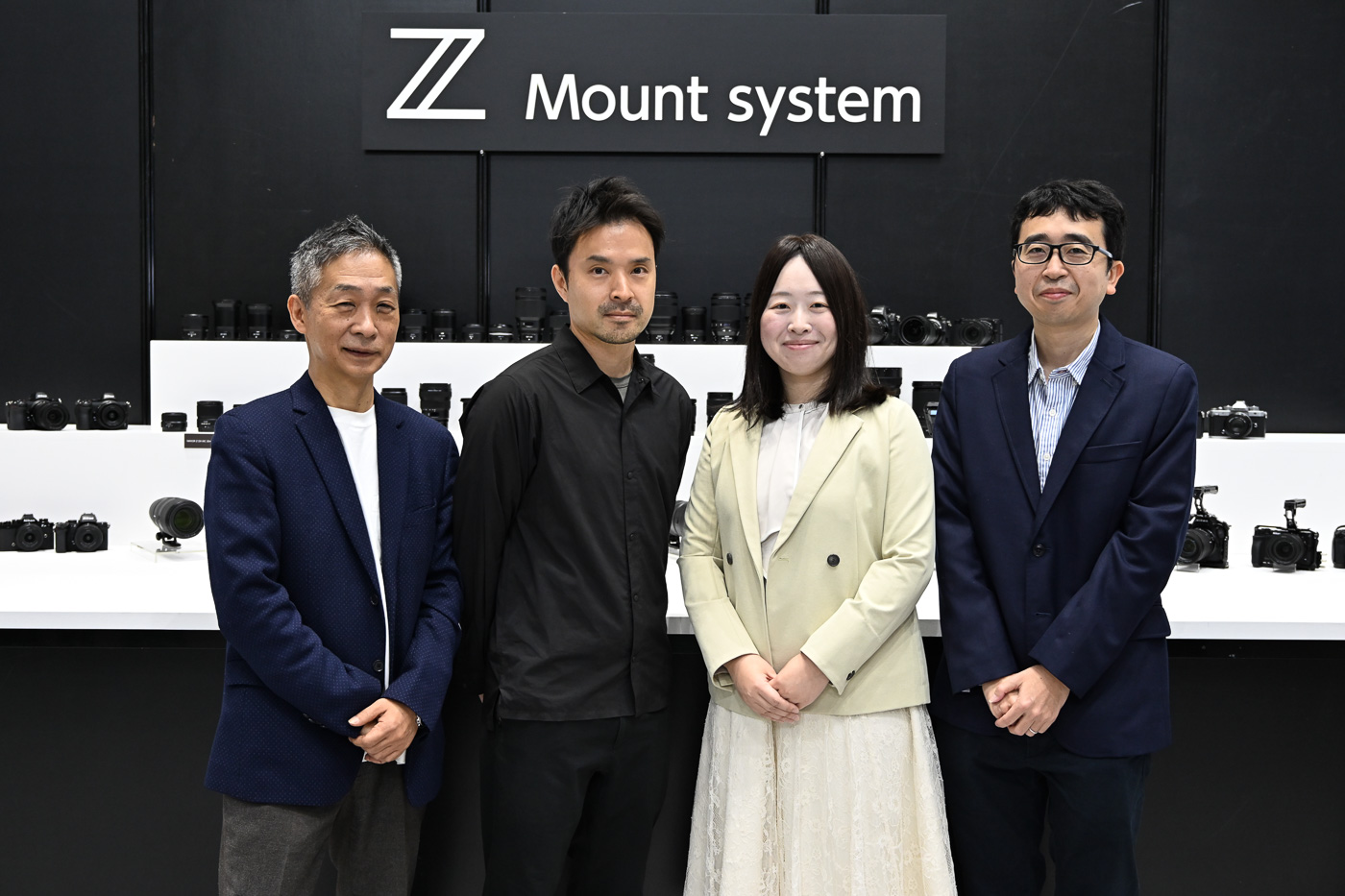
At CP+ 2026, we met with four Nikon engineers to dig into the development of the Nikkor Z 70-200 mm f/2.8 VR S II. Around the table: Satoshi Yamada and Takahiro Sakai from the development department of the optical engineering division, Akino Kondo from the optical design department, and Akiyuki Usui from the UX planning department at Nikon.
From the optical formula to AF algorithms, to the relentless pursuit of weight savings, they walk us through the choices that shaped this telephoto lens. Here is the interview.
When you start developing a second version of a lens, what does the initial specification look like? Do you start from scratch, or do you optimize the existing optical design? What feedback from the field had the greatest influence on the decisions behind the Nikkor 70-200mm f/2.8 VR S II: weight, AF speed, or something else?
Satoshi Yamada: In developing the NIKKOR Z 70–200mm f/2.8 VR S II, we first conducted a thorough analysis of user feedback on its predecessor.
The most common request was for a lighter lens. Since the optical quality was already highly regarded, the challenge was to reduce the weight without compromising image quality.

We have also prioritized improving autofocus performance through the Silky Swift VCM (SSVCM) to support the future capabilities of camera bodies, as well as enhancing ergonomics for both professional and advanced amateur users. Features such as a shorter minimum focusing distance, a control ring with an on/off click switch, a filter adjustment window, and Arca-Swiss compatibility have been added in response to specific feedback.
Nevertheless, the initial development started from scratch, exploring numerous options for optical systems, mechanical configurations, and focal lengths before settling on the current design.
The Nikkor Z 70-200mm f/2.8 VR S II has been redesigned from 21 elements in 18 groups to 18 elements in 16 groups, while improving performance. For a long time, more lenses meant better correction. Today, do advances in specialty glass types allow you to achieve more with fewer elements? Where is the limit to this simplification?
Akino Kondo: Yes, advances in aspherical and specialty glass material technologies now make it possible to maintain optical performance with fewer lens elements.
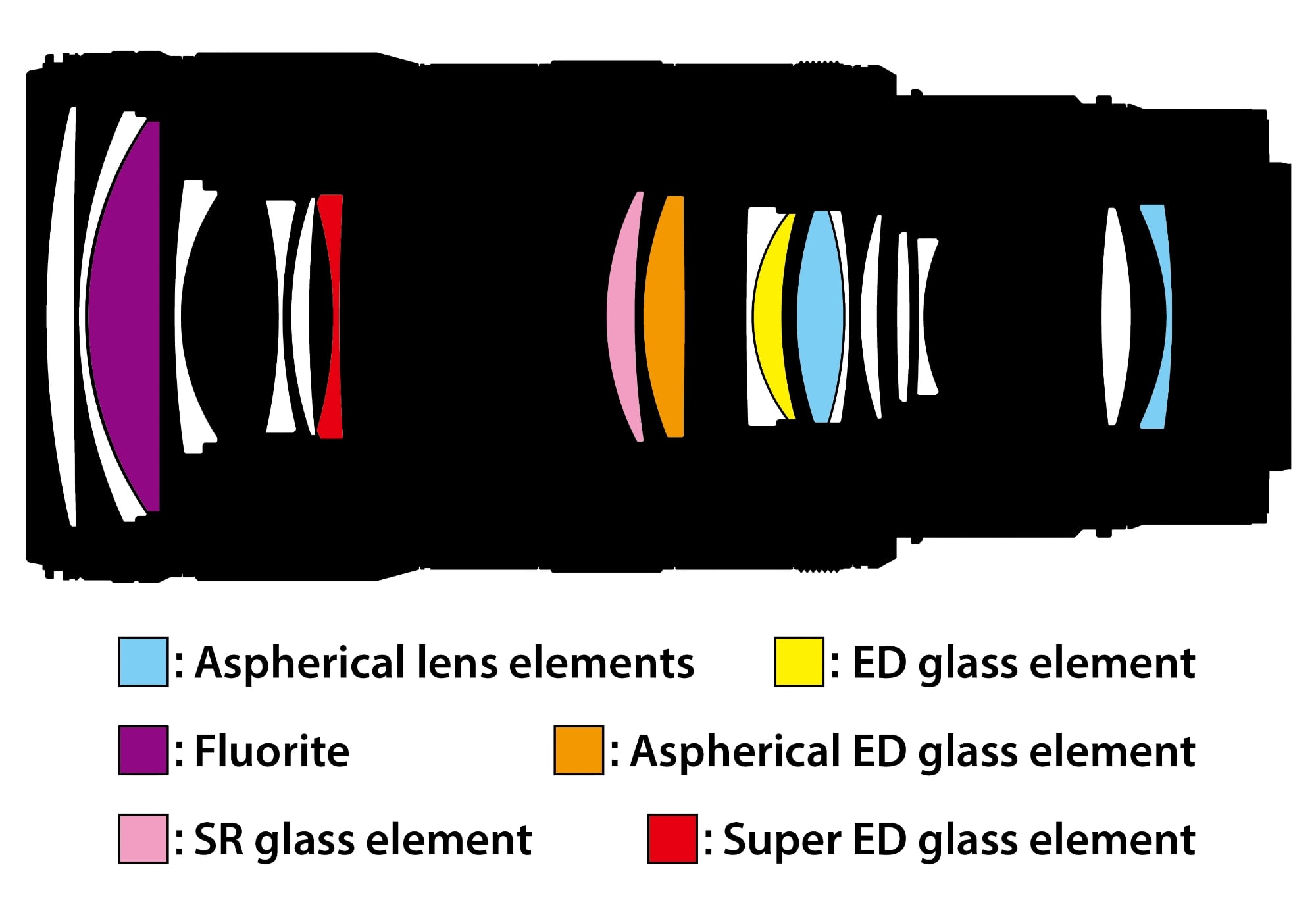
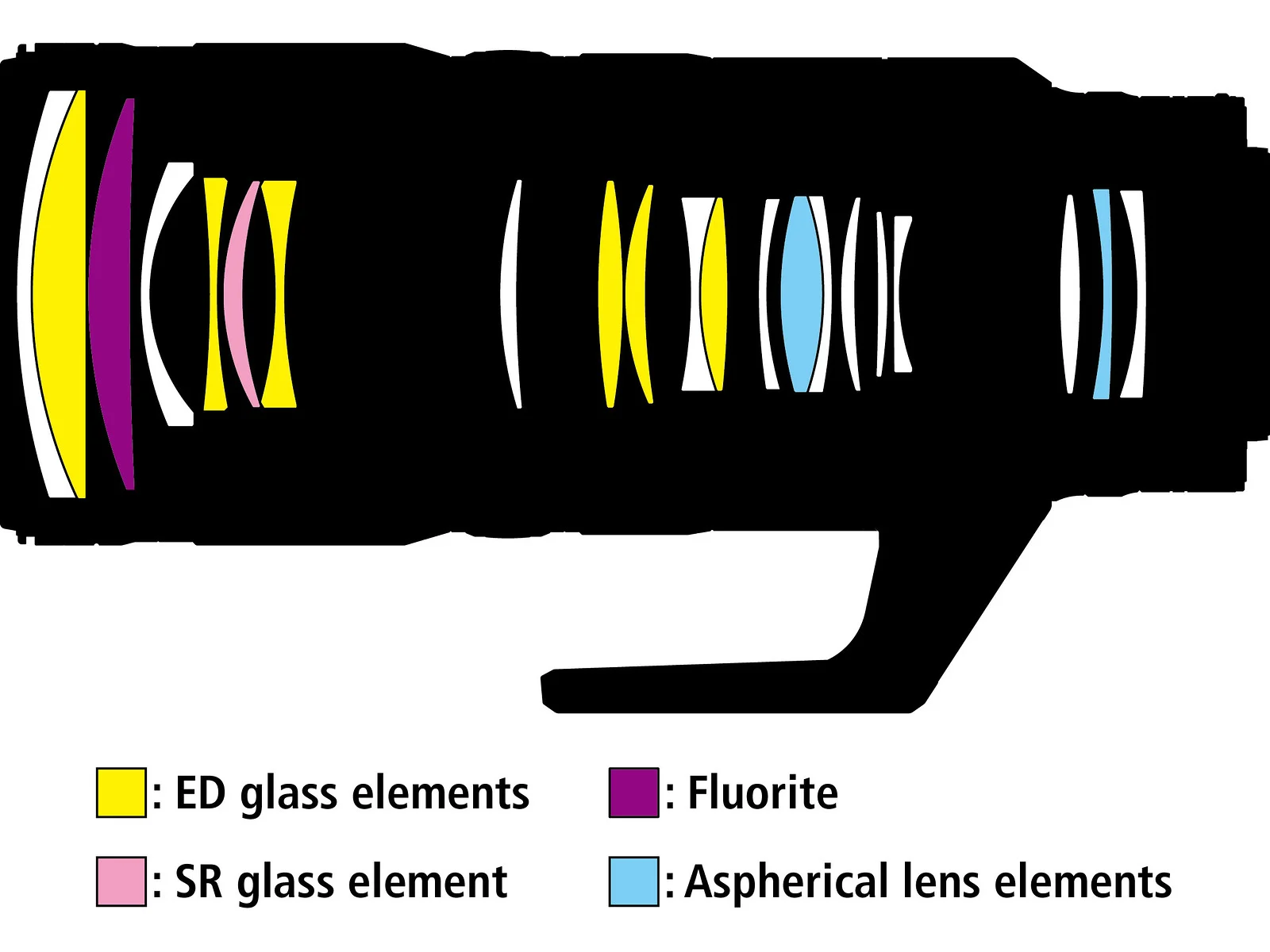
For example, in the NIKKOR Z 70–200 mm f/2.8 VR S II, the use of an aspherical ED glass element allows a single element to correct chromatic aberration and other resolution-related aberrations that previously required multiple lense, thereby reducing the total number of elements.
We can’t specify the exact limits, but thanks to advances in materials and technology, we’ve been able to achieve this.
What is the current balance between purely optical correction and software correction (built-in profiles, software processing) in the final rendering of a lens like the Nikkor 70-200mm f/2.8 VR S II? Are there any aberrations that you deliberately leave to digital processing in order to optimize other parameters?
Akino Kondo: Essentially, on the 70-200mm f/2.8 VR S II, corrections are performed optically, maintaining a balance similar to its predecessor.
We apply an overall color balance adjustment so that subjects appear with more natural tones in photographs.
On other lenses, when digital correction offers a tangible benefit in terms of size or weight, we may adopt it if these factors are decisive for the customer. For the 70-200mm f/2.8 VR S II, optical correction remains the primary focus.
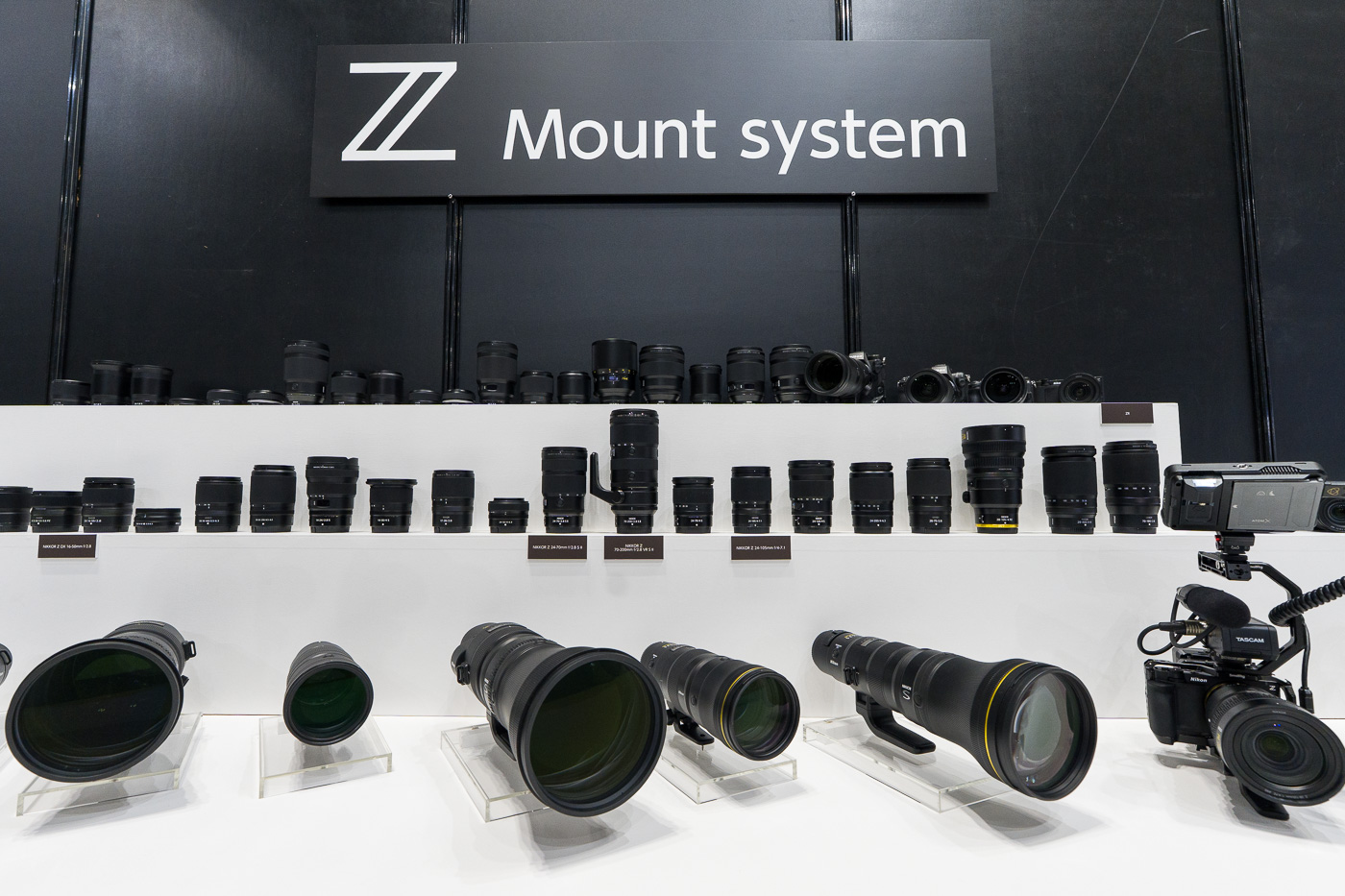
Going from 1,360 g to 998 g represents a 27% reduction in weight. In practical terms, where does this weight savings come from?
Satoshi Yamada: To achieve a weight reduction of more than 300 g compared to its predecessor, we thoroughly redesigned both the optical and mechanical aspects.
From an optical standpoint, we have reduced the number of lens groups that move during zooming and modified the group configurations to require fewer mechanical parts, while also shortening the overall length of the lens to further reduce weight.
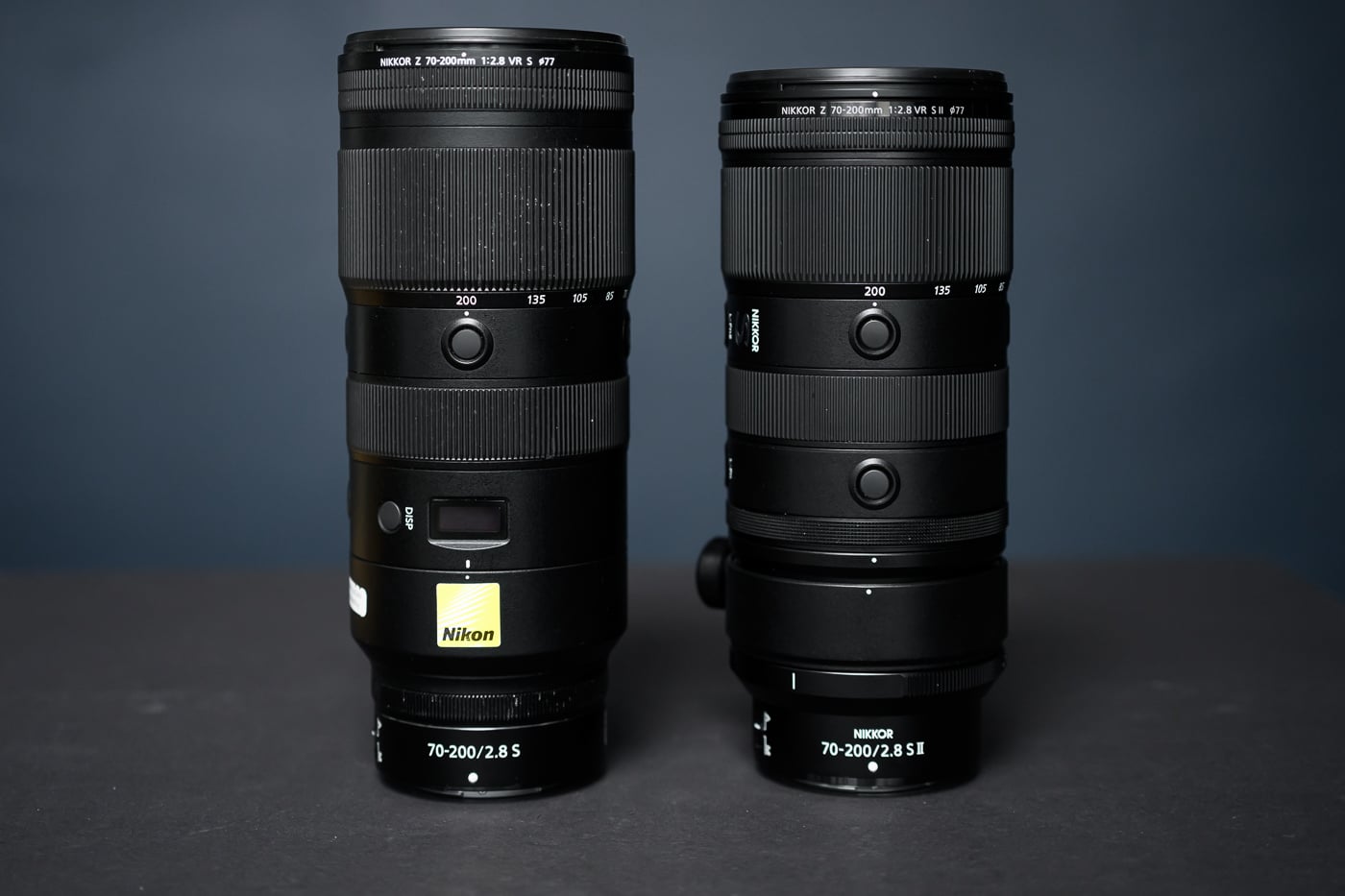
From a mechanical standpoint, we have completely redesigned the structure compared to the conventional system in order to reduce the weight of the components themselves.
While reducing the number of elements, we adopted fluorite and changed the front-most element from concave to convex, which allowed us to reduce the diameter and thickness of the downstream elements and thereby decrease the mass of the lens itself.
We also utilized the latest machining technologies to reduce the thickness of the lenses in 0.1 mm increments and lighten the components by 0.1 g at a time, through repeated impact resistance simulations and real-world testing.
This comprehensive optimization, both optical and mechanical, has resulted in a significant reduction in weight.
With the Silky Swift VCM motors, Nikon promises autofocus that’s 3.5 times faster. In practical terms, how does this translate to tracking erratic subjects?
Satoshi Yamada: AF performance also depends on the camera body, so we can’t specify the exact proportions. However, as camera bodies evolve, we’ve anticipated the need for more responsive AF that can track subjects more quickly and maintain focus even on moving subjects.
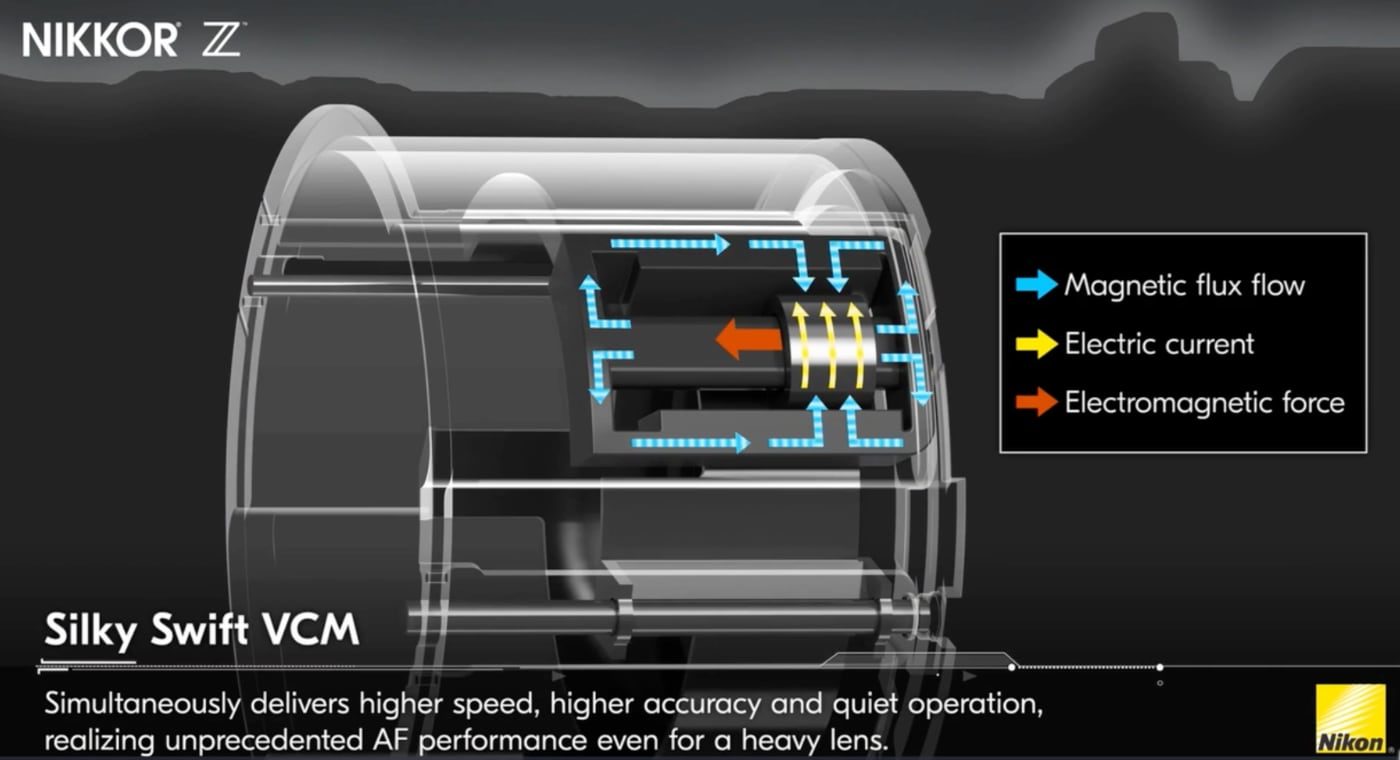
For this new lens, we have adopted an SSVCM motor, improved the control algorithms, and integrated a new ABS optical encoder. The latter provides more precise position detection, allowing the focusing lenses to stop with greater accuracy, even at high speeds.
The mechanical structure has also been optimized for this new control, improving AF performance.

And to what extent does AF performance depend on the camera body (the Z8/Z9 algorithms) rather than the lens itself?
Takahiro Sakai: Both are important. The camera body sends a signal to the lens instructing it to move at a certain speed. If the lens actuators are unable to respond to this command, the system cannot perform to its full potential.

Actual performance depends on the interaction between the hardware-side computation and the lens-side execution, so both are important.
With this 70-200mm lens, we’ve specifically designed its capabilities to exceed current needs, anticipating future advancements in camera bodies. The lens is therefore capable of fully leveraging the system’s potential, both in terms of speed and precision.
Why was the aperture of the lens changed from 9 to 11 blades?
Satoshi Yamada: This choice directly addresses the expectations of users, who place great importance on rendering performance. With 11 blades, the bokeh circles are more circular, and the transitions between focus and blur are smoother and more natural.
Although this adds a certain degree of structural complexity, we prioritized image quality and implemented this change.
The 70-200mm introduces an innovative tripod collar system: two interchangeable rings, one equipped with an Arca-Swiss mount, the other serving simply as a barrel protector. What was the thinking behind this design? Is this system intended to be extended to other telephoto zoom lenses in the lineup?
Satoshi Yamada: Our user surveys revealed two distinct user profiles for lenses weighing around 1 kg: those who prioritize compactness and easy storage, and those who want to be able to work with a tripod while quickly switching between horizontal and vertical orientations.
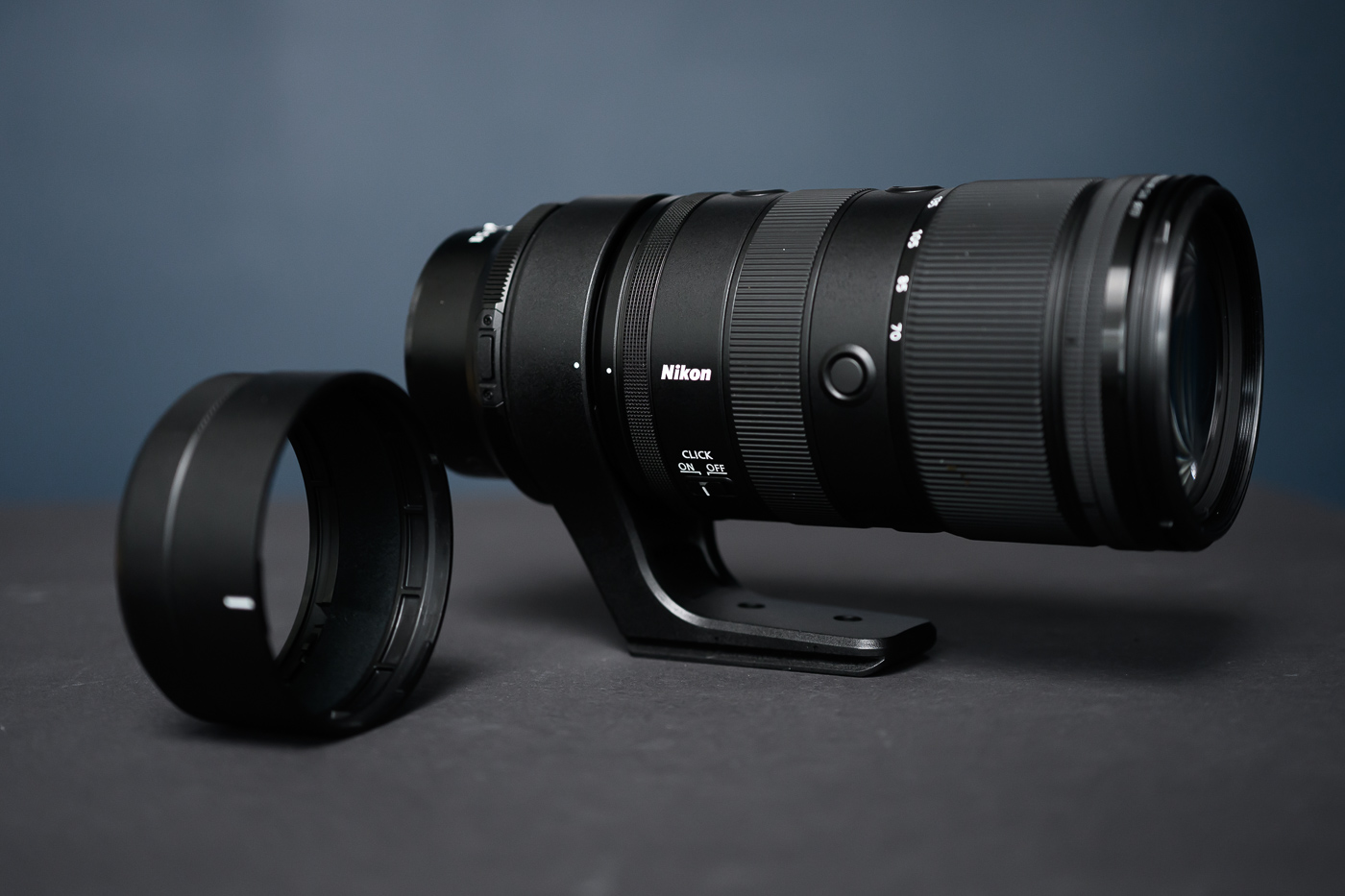
To accommodate both of these uses, we have designed a removable collar that, like its predecessor, allows for smooth rotation. A protective ring is included for users who remove the collar, to protect the bayonet area from scratches caused by daily use.
As for a potential rollout to other zoom lenses, we cannot comment at this time, but we will continue to respond flexibly to user expectations.
With the second-generation Nikkor Z S-Line lenses, Nikon seems to have struck a new balance between optical performance, weight, and compactness. Will this approach be applied across the entire S-Line lineup? Can we expect a 14-24mm f/2.8 S II, for example?
Akiyuki Usui: Unfortunately, we don’t have any information about future products to share at this time. We will continue to plan and develop products that meet our customers’ needs by incorporating new technologies and ideas, while remaining attentive to user feedback.
Thank you to the team at Nikon Corp. for answering our questions, and to Nikon France for making this interview possible.